Antimicrobiens
Les antimicrobiens sont des agents qui détruisent ou inhibent la croissance des microorganismes, y compris les bactéries, les virus, les champignons et les parasites. Ces composés sont essentiels dans la prévention et le traitement des infections, jouant un rôle crucial en médecine, en agriculture et dans l'industrie alimentaire. Chez CymitQuimica, nous proposons une vaste gamme d'antimicrobiens de haute qualité et pureté, adaptés à diverses applications scientifiques et industrielles. Notre catalogue comprend des antibiotiques, des antifongiques, des antiviraux et des désinfectants, tous conçus pour répondre aux besoins de la recherche et du développement, ainsi qu'aux applications cliniques et de production. Avec nos produits, les professionnels peuvent garantir l'efficacité et la sécurité dans le contrôle des infections et la protection de la santé publique.
Sous-catégories appartenant à la catégorie "Antimicrobiens"
- Antibiotiques(4.129 produits)
- Antifongiques(904 produits)
- Antiparasitaires(702 produits)
- Antiviraux(765 produits)
2424 produits trouvés pour "Antimicrobiens"
Trier par
Degré de pureté (%)
0
100
|
0
|
50
|
90
|
95
|
100
Ceftizoxime alapivoxil
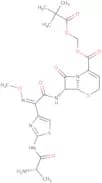
CAS :Ceftizoxime alapivoxil is a prodrug antibiotic, which is derived from ceftizoxime, a third-generation cephalosporin. This semi-synthetic source enables the compound to effectively combat a wide range of bacterial infections by improving oral bioavailability compared to its parent compound. Once administered, ceftizoxime alapivoxil is metabolized in the body to release ceftizoxime, which exerts its antibacterial activity by binding to penicillin-binding proteins (PBPs) on bacterial cell walls. This binding action inhibits the transpeptidation step critical for cell wall synthesis, leading to cell lysis and bacterial death.Degré de pureté :Min. 95%Vebufloxacin
CAS :<p>Vebufloxacin is an antibacterial agent, which is synthesized as a member of the fluoroquinolone class of antibiotics. This compound is derived from chemical synthesis, specifically designed to target and inhibit bacterial DNA gyrase and topoisomerase IV. These enzymes play crucial roles in DNA replication and transcription, making them ideal targets for disrupting bacterial cell function.</p>Formule :C19H22FN3O3Degré de pureté :Min. 95%Masse moléculaire :359.4 g/molAqabamycin F
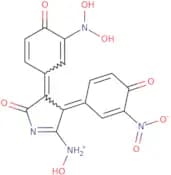
CAS :Aqabamycin F is a type of antibiotic compound, which is derived from marine natural sources, specifically from bacteria found in oceanic environments. This product is characterized by its unique molecular structure that offers potent antimicrobial properties. The mode of action of Aqabamycin F involves inhibiting essential bacterial enzymes, thus disrupting the cellular processes necessary for bacteria to survive and proliferate. This mechanism makes it effective against a wide range of bacterial pathogens, contributing to its potential in treating infections that are resistant to conventional antibiotics. Research into Aqabamycin F continues to explore its full spectrum of activity, offering insights into new therapeutic pathways for antibiotic-resistant bacterial infections. Its unique origin and molecular activity position Aqabamycin F as a promising candidate for addressing the growing challenge of antibiotic resistance.Formule :C16H11N4O8Degré de pureté :Min. 95%Masse moléculaire :387.28 g/mol2,6-Bis(2-ethylhexyl)-7a-methylhexahydro-1H-imidazo[1,5-c]imidazole (hexedine)
CAS :<p>2,6-Bis(2-ethylhexyl)-7a-methylhexahydro-1H-imidazo[1,5-c]imidazole, known as hexedine, is a synthetic compound, which is primarily utilized in industrial applications. It is derived from a chemical synthesis process involving imidazo-imidazole structures, allowing for specific modifications to yield its characteristic properties. Hexedine operates through a mechanism that enhances surface adhesion and stability when applied to various substrates. The compound’s molecular architecture enables it to form a durable, resistant layer, thereby improving the surface’s integrity and lifespan.</p>Formule :C22H45N3Degré de pureté :Min. 95%Masse moléculaire :351.6 g/molDeacetoxycephalothin
CAS :<p>Deacetoxycephalothin is a cephalosporin antibiotic, which is derived from the fungus Acremonium. It functions by inhibiting bacterial cell wall synthesis. This bactericidal activity is primarily focused on gram-positive bacteria, where it interferes with the final transpeptidation step of peptidoglycan synthesis, an essential component of the bacterial cell wall structure. By doing so, deacetoxycephalothin compromises cell wall integrity, leading to the lysis and death of bacterial cells.</p>Formule :C14H14N2O4S2Degré de pureté :Min. 95%Masse moléculaire :338.4 g/molSofosbuvir - Bio-X ™
CAS :<p>Sofosbuvir is an antiviral agent that is used for the treatment of hepatitis C infections and is used in combination with other antiviral agents. This drug is an inhibitor of viral RNA polymerase called non-structural protein 5B (NS5B). As a result, it inhibits viral RNA replication.</p>Formule :C22H29FN3O9PDegré de pureté :Min. 95%Couleur et forme :PowderMasse moléculaire :529.45 g/molStavudine sodium
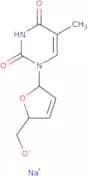
CAS :<p>Stavudine sodium is an antiretroviral medication, which is a synthetic nucleoside analogue. It is primarily sourced from chemical synthesis processes, enabling precise control over its molecular structure to ensure efficacy in its intended application. The mode of action for stavudine sodium involves its incorporation into viral DNA through reverse transcription. Once integrated, it acts as a chain terminator, inhibiting the elongation of the viral DNA and thus effectively halting the replication of the human immunodeficiency virus type 1 (HIV-1).</p>Formule :C10H11N2NaO4Degré de pureté :Min. 95%Masse moléculaire :246.19 g/molPristinamycin IA
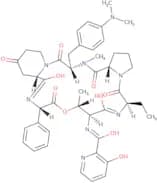
CAS :<p>Pristinamycin IA is a streptogramin antibiotic, which is a natural product derived from the bacterium *Streptomyces pristinaespiralis*. It operates by inhibiting bacterial protein synthesis through the disruption of ribosomal function, specifically targeting the 50S ribosomal subunit. This mode of action is effective in halting bacterial growth, making it particularly significant in combating resistant strains.</p>Formule :C45H54N8O10Degré de pureté :Min. 95%Masse moléculaire :866.96 g/molLevomecol
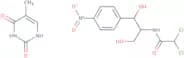
CAS :<p>Levomekol is a topical antibiotic ointment, which is a synthesized pharmaceutical product with antibacterial and anti-inflammatory properties. It contains chloramphenicol, a broad-spectrum antibiotic, and methyluracil, which promotes tissue repair and regeneration. The mode of action involves the inhibition of bacterial protein synthesis by binding to the 50S ribosomal subunit of susceptible microorganisms, effectively curbing bacterial growth and proliferation. Concurrently, methyluracil stimulates leukocyte activity and enhances the healing process by promoting cellular regeneration and collagen production.</p>Formule :C16H18Cl2N4O7Degré de pureté :Min. 95%Masse moléculaire :449.2 g/molIonomycin
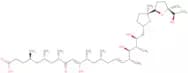
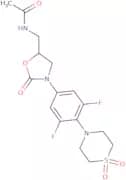
CAS :<p>Ionomycin is an ionophore compound with a mode of action that facilitates calcium ion transport across cell membranes. It is used in research to study calcium signaling and T-cell activation.</p>Formule :C41H72O9Degré de pureté :Min. 98 Area-%Couleur et forme :PowderMasse moléculaire :709.01 g/molN-((3-(4-(1,1-Dioxidothiomorpholin-4-yl)-3,5-difluorophenyl)-2-oxo-1,3-oxazolidin-5-yl)methyl)acetamide
CAS :N-((3-(4-(1,1-Dioxidothiomorpholin-4-yl)-3,5-difluorophenyl)-2-oxo-1,3-oxazolidin-5-yl)methyl)acetamide is a synthetic compound, often considered within the realm of small-molecule pharmacology. This compound is derived through complex organic synthesis, involving the incorporation of dioxidothiomorpholine and oxazolidinone rings, as well as fluorination, which are critical for its biochemical properties.Formule :C16H19F2N3O5SDegré de pureté :Min. 95%Masse moléculaire :403.4 g/molTizoxanide - 98%
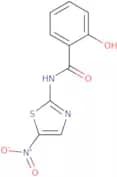
CAS :<p>Anti-parasitic; pyruvate ferredoxin oxidoreductase inhibitor</p>Formule :C10H7N3O4SDegré de pureté :Min. 95%Masse moléculaire :265.01573Sulfamoyldapsone
CAS :<p>Sulfamoyldapsone is a synthetic antimicrobial compound, which is derived from the dapsone family. Its source is primarily synthetic, designed through chemical modifications of the parent compound dapsone, a well-known antibacterial agent. The mode of action of sulfamoyldapsone involves the inhibition of bacterial folic acid synthesis. By targeting dihydropteroate synthase, an enzyme essential for the production of folic acid in microorganisms, the compound effectively interferes with bacterial growth and replication.</p>Formule :C12H13N3O4S2Degré de pureté :Min. 95%Masse moléculaire :327.4 g/molNeoaureothin
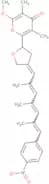
CAS :Neoaureothin is a natural antibiotic product, which is derived from marine actinomycetes with a complex polyketide structure. Its mode of action involves the inhibition of bacterial protein synthesis by binding selectively to the ribosomal subunits, thereby obstructing the translation process in susceptible microbial strains. The specificity of its action allows it to target a broad spectrum of Gram-positive bacteria while presenting a lower risk of resistance development compared to traditional antibiotics.Formule :C28H31NO6Degré de pureté :Min. 95%Masse moléculaire :477.5 g/molImazethapyr-1-hydroxyethyl
CAS :Imazethapyr-1-hydroxyethyl is a selective, systemic herbicide, which is synthesized through chemical processes. It functions primarily by inhibiting the acetohydroxyacid synthase (AHAS) enzyme, also known as acetolactate synthase (ALS). This enzyme is vital for the biosynthesis of branched-chain amino acids like valine, leucine, and isoleucine, which are essential for plant growth. By hindering this enzyme's action, Imazethapyr-1-hydroxyethyl effectively stunts the growth and development of susceptible plant species.Formule :C15H19N3O4Degré de pureté :Min. 95%Masse moléculaire :305.33 g/molPentosan polysulfate
CAS :<p>Pentosan polysulfate is a semi-synthetic polysaccharide, which is derived from xylan, sourced from beechwood hemicellulose. It functions as a heparin-like compound with anticoagulant and fibrinolytic properties. Its sulfated polysaccharide form allows it to adhere to the urothelium of the bladder, forming a protective layer that can prevent irritating solutes in urine from reaching bladder cells. Through this mechanism, it mitigates the pain and discomfort associated with interstitial cystitis (IC), a chronic condition characterized by bladder pain and urinary urgency.</p>Formule :C10H18O21S4Degré de pureté :Min. 95%Masse moléculaire :602.5 g/molL-689502
CAS :<p>L-689502 is a synthetic compound that functions as a selective antagonist for neuropeptide Y1 receptors. It is derived from chemical synthesis processes specifically designed to target and modulate these receptors. As an antagonist, its primary mode of action involves binding to the neuropeptide Y1 receptors and inhibiting their activity, thereby blocking the effects of the naturally occurring ligand, neuropeptide Y (NPY).</p>Formule :C39H51N3O7Degré de pureté :Min. 95%Masse moléculaire :673.8 g/molGrazoprevir hydrate
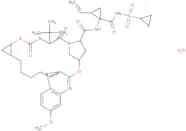
CAS :<p>Grazoprevir hydrate is a direct-acting antiviral agent used in the treatment of hepatitis C virus (HCV) infections. It is a synthetic compound derived through targeted pharmaceutical synthesis aimed at inhibiting viral replication. This compound operates by selectively inhibiting the NS3/4A protease, an enzyme critically involved in the post-translational processing and replication of the HCV polyprotein. By blocking this protease, grazoprevir effectively disrupts the virus's life cycle, thereby reducing viral load in patients.</p>Formule :C38H52N6O10SDegré de pureté :Min. 95%Masse moléculaire :784.9 g/mol8-epiAtazanavir
CAS :<p>8-epiAtazanavir is a stereoisomer of the antiretroviral drug Atazanavir, which is derived from synthetic sources. It acts as an HIV-1 protease inhibitor, where it binds to the active site of the viral protease enzyme, thereby preventing the cleavage of precursor proteins required for the maturation of infectious viral particles. This interference with viral replication is achieved by the structural mimicry of the natural substrate of the protease, allowing it to competitively inhibit the enzyme's activity.</p>Formule :C38H52N6O7Degré de pureté :Min. 95%Masse moléculaire :704.38975Sofosbuvir impurity N
CAS :<p>Sofosbuvir impurity N is a chemical impurity found as a byproduct in the synthesis of sofosbuvir, a nucleotide analog used as an antiviral drug. Its origin is directly linked to the complex chemical processes involved in producing the active pharmaceutical ingredient. This impurity is specifically identified and analyzed to ensure the purity and efficacy of the sofosbuvir drug. Impurities like these are of significant interest in pharmaceutical development, as they provide insights into the synthetic pathways and potential degradation products.</p>Formule :C20H25FN3O9PDegré de pureté :Min. 95%Masse moléculaire :501.4 g/mol

![2,6-Bis(2-ethylhexyl)-7a-methylhexahydro-1H-imidazo[1,5-c]imidazole (hexedine)](/_next/image/?url=https%3A%2Fstatic.cymitquimica.com%2Fproducts%2F3D%2Fthumb-webp%2FFAA98031.webp&w=3840&q=75)