Antimicrobiens
Les antimicrobiens sont des agents qui détruisent ou inhibent la croissance des microorganismes, y compris les bactéries, les virus, les champignons et les parasites. Ces composés sont essentiels dans la prévention et le traitement des infections, jouant un rôle crucial en médecine, en agriculture et dans l'industrie alimentaire. Chez CymitQuimica, nous proposons une vaste gamme d'antimicrobiens de haute qualité et pureté, adaptés à diverses applications scientifiques et industrielles. Notre catalogue comprend des antibiotiques, des antifongiques, des antiviraux et des désinfectants, tous conçus pour répondre aux besoins de la recherche et du développement, ainsi qu'aux applications cliniques et de production. Avec nos produits, les professionnels peuvent garantir l'efficacité et la sécurité dans le contrôle des infections et la protection de la santé publique.
Sous-catégories appartenant à la catégorie "Antimicrobiens"
- Antibiotiques(4.115 produits)
- Antifongiques(841 produits)
- Antiparasitaires(704 produits)
- Antiviraux(763 produits)
2422 produits trouvés pour "Antimicrobiens"
Trier par
Degré de pureté (%)
0
100
|
0
|
50
|
90
|
95
|
100
BA-53038B
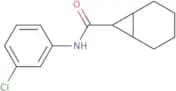
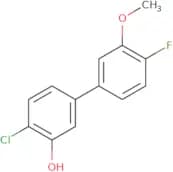
CAS :<p>BA-53038B is a microbial-based insecticide, which is derived from a naturally occurring bacterium. It functions through a specific mode of action involving the disruption of the digestive processes in target insect larvae. Once ingested by the larvae, the bacterial spores produce endotoxins that bind to receptors in the gut of susceptible insect species, causing cell lysis and eventual death. This product is highly selective, targeting specific insect pests while minimizing harm to non-target organisms and beneficial insects.</p>Formule :C14H16ClNODegré de pureté :Min. 95%Masse moléculaire :249.73 g/molChlortetracycline-13C-d3 hydrochloride
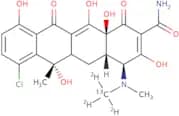
Produit contrôlé<p>Chlortetracycline-13C-d3 hydrochloride is a stable isotope-labeled antibiotic with action on bacterial protein synthesis inhibition and is used for research in bacterial resistance and analytical studies.</p>Formule :C2113CH21D3Cl2N2O8Couleur et forme :PowderMasse moléculaire :519.35 g/molNeosartoricin B
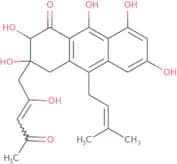
CAS :<p>Neosartoricin B is a promising antibiotic compound, which is derived from fungal sources, specifically the genus *Neosartorya*. Its unique mode of action involves disrupting the cell wall synthesis of target fungal organisms, making it highly effective against a range of pathogenic fungi. This compound works by interfering with the biosynthesis of essential components required for cell wall integrity, ultimately leading to cell lysis and death of the fungal cells.</p>Formule :C24H26O8Degré de pureté :Min. 95%Masse moléculaire :442.5 g/molImipenem Monohydrate, Antibiotic for Culture Media Use Only
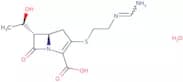
CAS :<p>Imipenem acts as an antimicrobial through inhibiting cell wall synthesis of various gram-positive and gram-negative bacteria. It remains very stable in the presence of beta-lactamase (both penicillinase andcephalosporinase) produced by some bacteria, and is a strong inhibitor of beta-lactamases from some gram-negative bacteria that are resistant to most beta-lactam antibiotics.</p>Formule :C12H19N3O5SDegré de pureté :Min. 98.0 Area-%Masse moléculaire :317.36 g/molML406
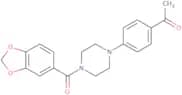
CAS :<p>ML406 is a synthetic small molecule compound, which is a chemically-engineered agent with a precise mode of action targeting specific biological pathways. It is synthesized through controlled laboratory processes to achieve high purity and specificity. The compound functions by modulating target proteins or receptors, thereby influencing cellular pathways of interest. Due to its high specificity, ML406 is utilized primarily within a research context to elucidate complex biological mechanisms and validate the roles of potential therapeutic targets.</p>Formule :C20H20N2O4Degré de pureté :Min. 95%Masse moléculaire :352.4 g/molE-Ceftazidime
CAS :<p>E-Ceftazidime is a third-generation cephalosporin antibiotic, which is derived from the mold Acremonium. It functions by inhibiting bacterial cell wall synthesis, a crucial component for bacterial survival and replication. This inhibition occurs through the binding to specific penicillin-binding proteins (PBPs) within the bacterial cell wall, thus preventing cross-linking of the peptidoglycan chains, which results in the eventual lysis and death of the bacterial cell.</p>Formule :C22H22N6O7S2Degré de pureté :Min. 95%Masse moléculaire :546.60 g/molDesciclovir
CAS :<p>Desciclovir is an antiviral agent, which is a synthetic nucleoside analog derived from guanine. Its mode of action involves the selective inhibition of viral DNA polymerase, leading to the termination of viral DNA chain elongation. By mimicking the natural substrates of the viral nucleic acid synthesis machinery, Desciclovir effectively disrupts the replication of viral genetic material, impeding the proliferation of the virus within the host cells.</p>Formule :C8H11N5O2Degré de pureté :Min. 95%Masse moléculaire :209.21 g/mol6-Amino-1-cyclopropyl-7-(3,4-dihydro-1H-isoquinolin-2-yl)-8-methyl-4-oxoquinoline-3-carboxylic acid
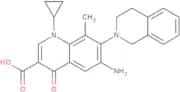
CAS :<p>6-Amino-1-cyclopropyl-7-(3,4-dihydro-1H-isoquinolin-2-yl)-8-methyl-4-oxoquinoline-3-carboxylic acid is a synthetic quinolone antibiotic, which is derived from chemical synthesis processes designed to mimic the naturally occurring quinolone core structure. With a specific mechanism of action, it inhibits bacterial DNA gyrase and topoisomerase IV. These enzymes are critical for supercoiling and uncoiling DNA, meaning that their inhibition results in an inability of bacterial cells to properly replicate their DNA, ultimately leading to cell death.</p>Formule :C23H23N3O3Degré de pureté :Min. 95%Masse moléculaire :389.4 g/molTobramycin sulfate
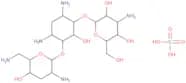
CAS :<p>Tobramycin sulfate is an aminoglycoside antibiotic, which is derived from selected strains of Streptomyces tenebrarius. It functions by binding irreversibly to the 30S subunit of bacterial ribosomes, thereby inhibiting protein synthesis. This disruption in essential protein formation results in bactericidal activity, particularly against Gram-negative bacteria.</p>Formule :C18H39N5O13SDegré de pureté :Min. 95%Masse moléculaire :565.6 g/molVineomycin A1
CAS :<p>Vineomycin A1 is a cytotoxic antibiotic, which is isolated from the fermentation broth of certain Streptomyces species. This compound is a member of the anthracycline class of antibiotics, known for their potent antitumor activity. Vineomycin A1 exerts its effects by intercalating into DNA, disrupting the DNA replication process and ultimately inducing apoptosis in rapidly dividing cells. This mode of action makes it a valuable tool in studying cellular responses to DNA damage and has potential implications in cancer research. Leveraging its ability to target malignant cells, Vineomycin A1 is primarily examined for its therapeutic potential in oncology, particularly in treating certain types of cancers that are resistant to standard therapies. As a research chemical, it enables scientists to gain insights into the mechanisms of drug resistance and DNA repair pathways, contributing to the development of novel cancer treatment strategies.</p>Formule :C49H58O18Degré de pureté :Min. 95%Masse moléculaire :935.00 g/molContezolid
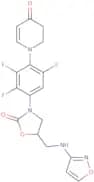
CAS :<p>Contezolid is an oxazolidinone antibiotic, which is a class of synthetic compounds primarily derived through chemical synthesis. It functions by inhibiting bacterial protein synthesis, specifically by binding to the 50S subunit of the bacterial ribosome. This action prevents the formation of the initiation complex, thereby hindering the growth and replication of bacteria.</p>Formule :C18H15F3N4O4Degré de pureté :Min. 95%Masse moléculaire :408.3 g/molHomoembelin
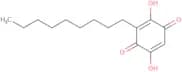
CAS :<p>Homoembelin is a chemical compound that is classified as a natural product alkaloid, which is derived from specific plant sources, notably the fruit of the plant Embelia ribes. It operates through a variety of biochemical interactions at the molecular level, including the inhibition of specific enzymes and modulation of signaling pathways. This mode of action has garnered interest due to its potential effects in various therapeutic contexts.</p>Formule :C15H22O4Degré de pureté :Min. 95%Masse moléculaire :266.33 g/molParvodicin C2
CAS :<p>Parvodicin C2 is a natural antibiotic compound, which is derived from the fermentation of specific actinomycete strains. This antibiotic functions through the inhibition of bacterial protein synthesis, specifically targeting the ribosomal subunits and leading to disruption in the peptide chain elongation process. The targeted mode of action allows it to effectively limit the replication and survival of susceptible bacterial strains.</p>Formule :C83H88Cl2N8O29Degré de pureté :Min. 95%Masse moléculaire :1,732.5 g/molFenpicoxamid-phenol
CAS :<p>Fenpicoxamid-phenol is a fungicide, which is a synthetic chemical compound primarily used in agriculture. It originates from advanced chemical synthesis methods that leverage specific molecular architectures to inhibit fungal growth effectively. The mode of action involves targeting and disrupting fungal respiration at the mitochondrial level, specifically inhibiting complex III of the electron transport chain. This selective interference curtails energy production in the fungal cells, thereby halting their growth and propagation.</p>Formule :C26H30N2O9Degré de pureté :Min. 95%Masse moléculaire :514.5 g/molHerbimycin
CAS :<p>Herbimycin is an antibiotic, which is a natural product derived from Streptomyces bacteria. It functions primarily as a tyrosine kinase inhibitor, disrupting cellular signaling pathways by binding to the ATP-binding site of kinases and inhibiting phosphorylation events. This mode of action makes it an effective tool for scientists studying signal transduction processes and oncogenic transformation.</p>Formule :C30H42N2O9Degré de pureté :Min. 95%Masse moléculaire :574.66 g/molAlbendazole-2-aminosulfoxide
CAS :<p>Albendazole-2-aminosulfoxide is a metabolite of the benzimidazole class of antiparasitic agents, which is derived from the biotransformation of albendazole in the liver. As a potent bioactive compound, its mode of action primarily involves the selective binding to the β-tubulin of parasitic organisms, disrupting the polymerization of microtubules necessary for their cellular structures. This disruption impedes vital processes such as glucose uptake and cellular division, leading to parasite death.</p>Formule :C10H13N3OSDegré de pureté :Min. 95%Masse moléculaire :223.3 g/molChloraniformethan
CAS :<p>Please enquire for more information about Chloraniformethan including the price, delivery time and more detailed product information at the technical inquiry form on this page</p>Formule :C9H7Cl5N2ODegré de pureté :Min. 95%Masse moléculaire :336.4 g/molMalformin C
CAS :<p>Malformin C is a cyclic pentapeptide, which is a secondary metabolite derived from certain strains of the fungus Aspergillus. Its mode of action involves disrupting cellular processes by interfering with cell division. Specifically, it is thought to affect mitotic spindle formation, leading to abnormal cell cycle progression.</p>Formule :C23H39N5O5S2Degré de pureté :Min. 95%Couleur et forme :PowderMasse moléculaire :529.72 g/mol25-Desacetyl rifapentin
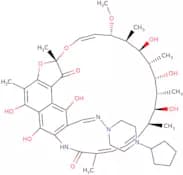
CAS :<p>25-Desacetyl rifapentin is a derivative of rifapentin, an antibiotic belonging to the rifamycin class, sourced from the bacterial species *Amycolatopsis rifamycinica*. This compound functions by inhibiting bacterial DNA-dependent RNA polymerase, which is crucial for transcription in susceptible bacterial strains. By inhibiting this enzyme, 25-Desacetyl rifapentin effectively hampers RNA synthesis, ultimately leading to bacterial cell death.</p>Formule :C45H62N4O11Degré de pureté :Min. 95%Couleur et forme :PowderMasse moléculaire :834.99 g/molTunicamycin V
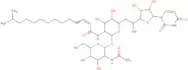
CAS :<p>Tunicamycin V is an antibiotic and nucleoside analog, which is a secondary metabolite derived from various Streptomyces species. It functions predominantly by inhibiting the initial step of N-linked glycosylation, a critical post-translational modification process in eukaryotic cells. This inhibition occurs through the blockage of UDP-N-acetylglucosamine: dolichyl-phosphate N-acetylglucosamine-1-phosphate transferase, thereby preventing the synthesis of dolichol-linked oligosaccharides and ultimately affecting protein folding and quality control mechanisms within the endoplasmic reticulum.</p>Formule :C38H62N4O16Degré de pureté :Min. 95%Masse moléculaire :830.9 g/mol