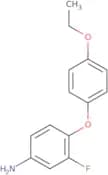
Antimicrobiens
Sous-catégories appartenant à la catégorie "Antimicrobiens"
- Antibiotiques(4.139 produits)
- Antifongiques(908 produits)
- Antiparasitaires(703 produits)
- Antiviraux(767 produits)
2430 produits trouvés pour "Antimicrobiens"
Erythromycylamine
CAS :Erythromycylamine is a semisynthetic antibiotic, which is derived from the parent compound erythromycin. This compound is sourced from the fermentation product of the bacterium *Saccharopolyspora erythraea*. Erythromycylamine acts by inhibiting bacterial protein synthesis, specifically targeting the 50S ribosomal subunit, which ultimately leads to the disruption of bacterial cell growth and replication.
Formule :C37H70N2O12Degré de pureté :Min. 95%Masse moléculaire :734.96 g/molArtefenomel
CAS :Artefenomel is an antimalarial agent, which is a synthetic derivative originally based on artemisinin, primarily sourced from the Artemisia annua plant. It exhibits its mode of action by targeting and disrupting the Plasmodium parasite's life cycle within the human host. Specifically, artefenomel interferes with the parasite's ability to degrade hemoglobin, leading to the accumulation of toxic levels of heme, ultimately causing the parasite's death.
Formule :C28H39NO5Degré de pureté :Min. 95%Masse moléculaire :469.6 g/molHexazinone metabolite D
CAS :Hexazinone metabolite D is a derivative compound that results from the biotransformation of Hexazinone, which is a systemic herbicide. This metabolite originates from the breakdown processes mediated by biological or environmental factors in ecosystems where Hexazinone is applied. Its mode of action involves the inhibition of photosynthesis by targeting photosystem II, ultimately reducing the transfer of electrons, which leads to the disruption of energy production in susceptible plant species.
Formule :C10H15N3O3Degré de pureté :Min. 95%Masse moléculaire :225.24 g/molLenampicillin
CAS :Lenampicillin is a semi-synthetic antibiotic, which is derived from ampicillin, a widely used beta-lactam antibiotic. It originates from the penicillin group of compounds, which are produced by the Penicillium fungi. This group of antibiotics is characterized by their bactericidal properties, which function through the inhibition of bacterial cell wall synthesis. Specifically, Lenampicillin targets and binds to penicillin-binding proteins present in susceptible bacteria. This action inhibits the transpeptidation step of peptidoglycan synthesis, weakening the cell wall and eventually causing cell lysis and death.Formule :C21H23N3O7SDegré de pureté :Min. 95%Masse moléculaire :461.5 g/molD 13-9001
CAS :Please enquire for more information about D 13-9001 including the price, delivery time and more detailed product information at the technical inquiry form on this pageFormule :C31H39N11O6SDegré de pureté :Min. 95%Masse moléculaire :693.8 g/molValidamycin B
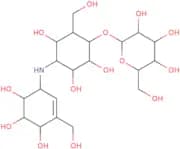
CAS :Validamycin B is an aminoglycoside antibiotic, which is a type of product derived from the bacterium *Streptomyces hygroscopicus*. Its mode of action involves inhibiting the trehalase enzyme, an essential component for fungal cell viability, thereby disrupting the energy supply within the fungal cells. This disruption leads to impediments in fungal growth and proliferation.Formule :C20H35NO14Degré de pureté :Min. 95%Masse moléculaire :513.5 g/molClomeprop (free acid)
CAS :Clomeprop (free acid) is a selective herbicide, which is synthesized chemically to target grass species. Its mode of action involves the inhibition of the enzyme acetyl-CoA carboxylase, crucial for fatty acid synthesis. This interferes with lipid production, which is vital for plant growth and development.
Formule :C10H10Cl2O3Degré de pureté :Min. 95%Masse moléculaire :249.09 g/molTobramycin, Antibiotic for Culture Media Use Only
CAS :Produit contrôléTobramycin is used to treat severe infections with gram-negative bacteria and it is often applied in combination with beta-lactams. It has similar antimicrobial effects to gentamicin and is effective against all Enterobacteriacae, but more effective than gentamicin against P. aeruginosa, which is why it is often used for gentamicin-resistant strains, especially in the case of cystic fibrosis.Formule :C18H37N5O9Degré de pureté :Min. 97 Area-%Masse moléculaire :467.51 g/molRef: 3D-Q-201837
-Unit-ggÀ demander10gÀ demander25gÀ demander50gÀ demander100gÀ demander250gÀ demanderSyncytial virus inhibitor-1
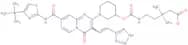
CAS :Syncytial virus inhibitor-1 is a potent antiviral compound, which is a synthetic small molecule with a specific mode of action targeting respiratory syncytial virus (RSV). This compound is engineered to inhibit the fusion process between the viral envelope and the host cell membrane, thereby preventing the virus from entering and infecting the cells.Formule :C23H26N4O3SDegré de pureté :Min. 95%Masse moléculaire :438.5 g/molS-Ethyl (3-hydroxypropyl)propylthiocarbamate
CAS :S-Ethyl (3-hydroxypropyl)propylthiocarbamate is a selective herbicide used primarily in the agricultural sector. Derived from synthetic organic chemistry, it belongs to the thiocarbamate class of herbicides. These compounds are known for their ability to inhibit the growth of undesirable plant species by interfering with lipid synthesis.Formule :C9H19NO2SDegré de pureté :Min. 95%Masse moléculaire :205.32 g/molInpyrfluxam
CAS :Inpyrfluxam is a fungicide with a mode of action as a succinate dehydrogenase inhibitor (SDHI), disrupting mitochondrial respiration in fungi. It is used for controlling plant diseases like rust and blight in crops such as cereals and soybeans.Formule :C18H21F2N3ODegré de pureté :Min. 95%Couleur et forme :PowderMasse moléculaire :333.4 g/molBisphenol A d14
CAS :Bisphenol A d14 is an isotopically labeled compound, which is a variant of Bisphenol A (BPA) where hydrogen atoms are partially replaced with deuterium isotopes. This compound is produced through chemical synthesis, ensuring that 14 of the hydrogen atoms in the BPA molecule are replaced by deuterium to create a stable form with a slightly higher atomic mass, facilitating advanced analytical studies.
Formule :C15H16O2Degré de pureté :Min. 95%Masse moléculaire :242.37 g/molPosaconazole-d5
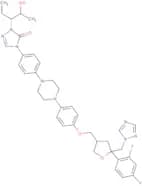
CAS :Posaconazole-d5 is a deuterated form of the antifungal agent posaconazole, which is a synthetic compound derived from triazole. The substitution of hydrogen atoms with deuterium in this compound allows for enhanced stability and differentiation in analytical applications, particularly in pharmacokinetic and metabolic studies.Formule :C37H42F2N8O4Degré de pureté :Min. 95%Masse moléculaire :705.8 g/molSARS-CoV-IN-1
CAS :SARS-CoV-IN-1 is a small-molecule inhibitor, which is a synthetic compound designed to interfere with viral replication. This compound is sourced through rigorous combinatorial chemistry methods, enabling the precise targeting of viral enzymes. SARS-CoV-IN-1 specifically inhibits the activity of the SARS-CoV-2 main protease (Mpro), an essential enzyme responsible for processing viral polyproteins into functional units necessary for virus replication.Formule :C23H16ClFEN3ODegré de pureté :Min. 95%Masse moléculaire :441.69 g/molFenamiphos-sulfoxide d3 (S-methyl d3)
CAS :Fenamiphos-sulfoxide d3 (S-methyl d3) is a deuterated, labeled pesticide intermediate, which is often utilized in advanced laboratory settings for precise analytical studies. This compound is synthesized as a stable isotope-labeled analog, enabling researchers to conduct sophisticated mass spectrometric analyses. Its mode of action involves serving as a reference or tracer in studies concerning the metabolism and degradation of fenamiphos, a well-known organophosphate pesticide.
Formule :C13H22NO4PSDegré de pureté :Min. 95%Masse moléculaire :322.38 g/molPhthalic acid, bis[2-(2-ethoxyethoxy)ethyl] ester
CAS :Phthalic acid, bis[2-(2-ethoxyethoxy)ethyl] ester is a specialized industrial plasticizer, which is a type of additive used to enhance the flexibility and durability of polymer-based materials. It is derived from phthalic acid through esterification with ethylene glycol ether derivatives, resulting in a compound that effectively reduces the brittleness of plastic formulations by increasing their plasticity.Formule :C20H30O8Degré de pureté :Min. 95%Masse moléculaire :398.4 g/molAWZ1066S
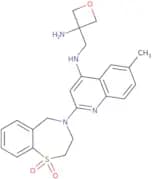
CAS :AWZ1066S is a synthetic analog, which is a chemically engineered compound designed to mimic or influence biological molecules. This product is derived from sophisticated organic synthesis techniques that enable the precise modification of its molecular structure to enhance its specificity and efficacy. AWZ1066S operates through targeted binding to specific biomolecules or receptors, thereby modulating their function or facilitating their detection in complex biological systems.Formule :C19H19F3N6ODegré de pureté :Min. 95%Masse moléculaire :404.4 g/molFosmanogepix
CAS :Fosmanogepix is a novel antifungal prodrug, which is derived from manogepix. This product is a synthetic compound, designed to target invasive fungal infections through its unique mechanism of action. The prodrug itself is inactive until metabolized in the body, where it converts into its active form, manogepix. This activation occurs through enzymatic hydrolysis, enabling it to exert its antifungal effects.
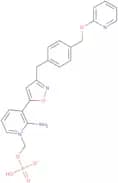
Formule :C22H21N4O6PDegré de pureté :Min. 95%Couleur et forme :PowderMasse moléculaire :468.4 g/mol6-[(1,1-Dimethylethyl)amino]-1,3,5-triazine-2,4(1H,3H)-dione,1,3,5-triazine-2,4(1H,3H)-dione
CAS :6-[(1,1-Dimethylethyl)amino]-1,3,5-triazine-2,4(1H,3H)-dione, commonly known as Terbuthylazine, is a selective systemic herbicide, which is synthesized chemically and primarily sourced from the triazine group of compounds. It operates by inhibiting photosynthesis, specifically interfering with the electron transport in photosystem II. This disruption in the photosynthetic pathway effectively halts the growth of susceptible weed species.
Formule :C7H12N4O2Degré de pureté :Min. 95%Masse moléculaire :184.2 g/molBPH-1358
CAS :BPH-1358 is a novel synthetic inhibitor, which is derived from a series of advanced chemoinformatics-based design strategies. It functions through the targeted binding to specific cell surface receptors involved in the modulation of immune responses. By blocking these receptors, BPH-1358 effectively alters signaling pathways that are crucial for immune activation and inflammatory responses.Formule :C32H28N6O2Degré de pureté :Min. 95%Masse moléculaire :528.6 g/molFGI 106
CAS :FGI 106 is an antifungal agent, which is derived from natural sources with a mechanism of action involving disruption of fungal cell wall integrity. The compound is isolated from naturally occurring substances, specifically targeting the structural components of the cell walls in various fungal species. By compromising the protective barrier of the cell wall, FGI 106 effectively inhibits fungal growth and proliferation, making it a potent tool against a variety of fungal pathogens.Formule :C28H42Cl4N6Degré de pureté :Min. 95%Masse moléculaire :604.5 g/molMBX-4132
CAS :Please enquire for more information about MBX-4132 including the price, delivery time and more detailed product information at the technical inquiry form on this pageFormule :C18H15FN4O2Degré de pureté :Min. 95%Masse moléculaire :338.3 g/molUniconazole
CAS :Uniconazole is a synthetic plant growth regulator, which is derived from triazole compounds. It acts as a potent inhibitor of gibberellin biosynthesis, specifically targeting enzymes involved in gibberellin production. By inhibiting gibberellins, uniconazole reduces internode elongation and alters growth patterns, resulting in shorter, more compact plants.Formule :C15H18ClN3ODegré de pureté :Min. 95%Masse moléculaire :291.78 g/molThiabendazole NH d6
CAS :Thiabendazole NH d6 is a deuterated derivative of Thiabendazole, which is an antifungal agent and pesticide. It is derived from synthetic sources, specifically designed by incorporating deuterium atoms into the molecular structure. This subtle isotopic modification enhances its utility in research settings, particularly in studies related to pharmacokinetics and metabolic profiling. The mode of action of Thiabendazole involves the inhibition of the enzyme fumarate reductase, interfering with the energy metabolism of fungal and parasitic organisms. Additionally, it disrupts microtubule formation, preventing cell division and growth.Formule :C10H7N3SDegré de pureté :Min. 95%Masse moléculaire :207.29 g/mol3-(2,4,6-Trimethylphenylsulfonyl)-1,2,4-triazole
CAS :3-(2,4,6-Trimethylphenylsulfonyl)-1,2,4-triazole is a sulfonyl-triazole reagent, which is widely utilized in the field of organic chemistry. This compound is synthetically derived, serving as an important tool in the construction of sulfonyl-protected intermediates and heterocyclic structures. Its mode of action involves acting as a versatile electrophile in conditions favoring nucleophilic attack, facilitating the formation of carbon-nitrogen and carbon-sulfur bonds.Formule :C11H13N3O2SDegré de pureté :Min. 95%Masse moléculaire :251.31 g/molBAY-Y 3118
CAS :BAY-Y 3118 is a synthetic compound specifically designed as a radiolabeled dopamine D4 receptor antagonist. It is sourced from chemical synthesis processes that enable modification of molecular structures to target specific biological receptors. The mode of action of BAY-Y 3118 involves binding to the D4 subtype of dopamine receptors, which are G protein-coupled receptors located in the central nervous system. This binding is typically labeled with a radiolabel to facilitate tracking and visualization in biological assays.Formule :C20H21ClFN3O3Degré de pureté :Min. 95%Masse moléculaire :405.8 g/molAcivicin hydrochloride
CAS :Acivicin hydrochloride is a synthetic compound that acts as a glutamine antagonist, sourced from microbial fermentation processes. It functions primarily through the inhibition of glutamine-utilizing enzymes, such as gamma-glutamyl transferase and carbamoyl phosphate synthetase, which play critical roles in nucleotide biosynthesis and other metabolic pathways. By disrupting these biochemical processes, Acivicin hydrochloride can hinder the proliferation of rapidly dividing cells, displaying potential antitumor properties.Formule :C5H8Cl2N2O3Degré de pureté :Min. 95%Masse moléculaire :215.03 g/molOxfendazole
CAS :Oxfendazole is a benzimidazole anthelmintic with action on microtubule formation in parasitic worms and is used for treating gastrointestinal parasites in livestock.Formule :C15H13N3O3SDegré de pureté :Min. 98 Area-%Couleur et forme :White PowderMasse moléculaire :315.35 g/molPropiconazole
CAS :Propiconazole is a triazole fungicide with action on fungal cell membranes by inhibiting ergosterol biosynthesis and is used for controlling fungal diseases in crops and turf.
Formule :C15H17Cl2N3O2Degré de pureté :Min. 95%Couleur et forme :Clear LiquidMasse moléculaire :342.22 g/molFluconazole hydrate
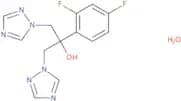
CAS :Fluconazole hydrate is an antifungal medication, which is a synthetic triazole antifungal agent derived from the compound fluconazole. It functions as a powerful inhibitor of the enzyme lanosterol 14α-demethylase, a critical component in the biosynthesis of ergosterol. Ergosterol is an essential component of fungal cell membranes, and its inhibition disrupts membrane synthesis, leading to impaired fungal cell growth and replication.
Formule :C13H14F2N6O2Degré de pureté :Min. 95%Masse moléculaire :324.29 g/molWybutosine
CAS :Modified nucleoside of phenylalanine tRNAFormule :C21H28N6O9Degré de pureté :Min. 95%Masse moléculaire :508.48 g/molFosravuconazole
CAS :Fosravuconazole is an antifungal agent, classified as a triazole antifungal, which is developed from a synthetic chemical source. It operates as a prodrug of ravuconazole, meaning that after administration, fosravuconazole is converted into its active form in the body. This conversion enhances the absorption and bioavailability of the drug, providing improved treatment efficacy against fungal infections.Formule :C23H20F2N5O5PSDegré de pureté :Min. 95%Masse moléculaire :547.5 g/molRilopirox
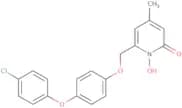
CAS :Please enquire for more information about Rilopirox including the price, delivery time and more detailed product information at the technical inquiry form on this page
Formule :C19H16ClNO4Degré de pureté :Min. 95%Masse moléculaire :357.8 g/molAlbendazole-2-aminosulfoxide
CAS :Albendazole-2-aminosulfoxide is a metabolite of the benzimidazole class of antiparasitic agents, which is derived from the biotransformation of albendazole in the liver. As a potent bioactive compound, its mode of action primarily involves the selective binding to the β-tubulin of parasitic organisms, disrupting the polymerization of microtubules necessary for their cellular structures. This disruption impedes vital processes such as glucose uptake and cellular division, leading to parasite death.Formule :C10H13N3OSDegré de pureté :Min. 95%Masse moléculaire :223.3 g/molPhenamacril
CAS :Phenamacril is a synthetic fungicide, which is derived from chemical synthesis processes with a unique mode of action that targets fungal signaling pathways. It operates by inhibiting the myosin-5 ATPase activities within filamentous fungi, disrupting key cellular functions and effectively halting fungal growth.
Formule :C12H12N2O2Degré de pureté :Min. 95%Masse moléculaire :216.24 g/molBO3482
CAS :Please enquire for more information about BO3482 including the price, delivery time and more detailed product information at the technical inquiry form on this pageFormule :C14H20N2NaO5S2Degré de pureté :Min. 95%Masse moléculaire :383.4 g/molCyclosporin L
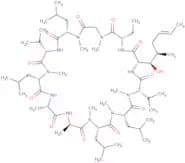
CAS :Cyclosporin L is an immunosuppressive agent, which is a cyclic polypeptide derived from the soil fungus Tolypocladium inflatum. It primarily functions by inhibiting the activity of calcineurin, a key phosphatase involved in the activation of T-cells. This inhibition prevents the transcription of interleukin-2 and other cytokines critical for T-cell proliferation.
Formule :C61H109N11O12Degré de pureté :90%MinMasse moléculaire :1,188.59 g/mol4''-(p-Fluorobenzyl)tylosin A
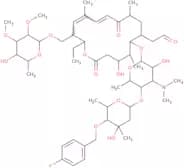
CAS :4''-(p-Fluorobenzyl)tylosin A is a semi-synthetic derivative of tylosin, which is a macrolide antibiotic produced by fermentation of the bacterium *Streptomyces fradiae*. This compound demonstrates a modified structure by incorporating a p-Fluorobenzyl group at the 4'' position of tylosin, enhancing its pharmaceutical properties. The mode of action involves binding to the 50S subunit of the bacterial ribosome, thereby inhibiting protein synthesis and exerting its bacteriostatic effects against Gram-positive bacteria.Formule :C53H82FNO17Degré de pureté :Min. 95%Masse moléculaire :1,024.2 g/molCefdinir monohydrate
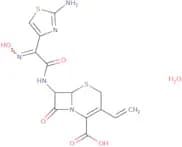
CAS :Cefdinir monohydrate is a third-generation cephalosporin antibiotic, which is synthetically derived from cephalosporin C, a compound originally isolated from the fungus Acremonium. This antibiotic works by inhibiting bacterial cell wall synthesis through binding to penicillin-binding proteins (PBPs), which results in the interruption of peptidoglycan cross-linking. Consequently, this action leads to cell lysis and death of the bacterium.
Formule :C14H15N5O6S2Degré de pureté :Min. 95%Masse moléculaire :413.4 g/molDimethenamid-oxalamid
CAS :Dimethenamid-oxalamid is a pre-emergent herbicide, which is a synthetic compound developed for agricultural use. It is derived from research focused on improving crop protection through chemical innovation. The mode of action involves inhibiting the synthesis of very long-chain fatty acids (VLCFAs) in weeds, disrupting their cell division and growth processes, ultimately leading to the prevention of weed emergence.
Formule :C12H17NO4SDegré de pureté :Min. 95%Masse moléculaire :271.33 g/mol(Z)-Fenpyroximate
CAS :(Z)-Fenpyroximate is a selective acaricide, which is a chemical agent specifically designed to control mite populations. It is derived from the chemical class of pyrazole compounds. The mode of action of (Z)-Fenpyroximate involves the inhibition of the mitochondrial electron transport chain, particularly targeting complex I (NADH: ubiquinone oxidoreductase). This disruption prevents ATP production, leading to mite mortality due to energy starvation.Formule :C20H19N3O4Degré de pureté :Min. 95%Masse moléculaire :365.4 g/molRifamycin PR-14
CAS :Rifamycin PR-14 is a semi-synthetic antibiotic, which is derived from the naturally occurring antibiotic rifamycin. Originating from a fermentation process involving the bacterium Amycolatopsis mediterranei, rifamycin is modified to create the PR-14 variant to enhance its antibacterial properties and pharmacokinetic profile. This compound functions by inhibiting bacterial DNA-dependent RNA polymerase, effectively halting RNA synthesis and subsequent protein production, leading to bacterial cell death.
Formule :C43H54N2O12Degré de pureté :Min. 95%Masse moléculaire :790.9 g/molMetalaxyl-hydroxymethyl
CAS :Metalaxyl-hydroxymethyl is a systemic fungicide, which is synthesized chemically. With its unique mechanism of action as an acylalanine fungicide, it targets and disrupts RNA synthesis specifically in oomycetes—a group of fungus-like organisms. This disruption inhibits the growth and spread of pathogenic fungi.Formule :C15H21NO5Degré de pureté :Min. 95%Masse moléculaire :295.33 g/molIvermectin 8α-hydroperoxide
**Ivermectin 8α-hydroperoxide** is a derivative of the antiparasitic agent ivermectin, which is synthesized through chemical modification. Ivermectin originally derives from the fermentation products of the bacterium *Streptomyces avermitilis*. The modification to form 8α-hydroperoxide involves the addition of a hydroperoxide group, potentially altering its biological properties.Formule :C48H74O16Degré de pureté :Min. 95%Masse moléculaire :907.09 g/molMGB-BP-3
CAS :MGB-BP-3 is a synthetic antimicrobial agent, which is derived from natural DNA-binding minor groove binder (MGB) compounds. Its structure is based on distamycin, known for targeting the minor groove of DNA. MGB-BP-3 operates by binding to specific sequences within the DNA minor groove, thereby interfering with the replication and transcription processes of bacterial cells. This binding disrupts the DNA function and inhibits the growth and proliferation of bacterial pathogens.
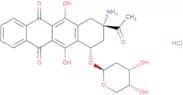
Formule :C36H37N7O4Degré de pureté :Min. 95%Masse moléculaire :631.7 g/molAmrubicin hydrochloride
CAS :Amrubicin hydrochloride is an anthracycline chemotherapeutic agent, which is a synthetic anthracycline derivative derived from reductive amination. It functions primarily by intercalating into DNA and inhibiting topoisomerase II, an enzyme crucial to DNA replication. This mode of action disrupts DNA synthesis, leading to apoptosis in rapidly proliferating cancer cells.
Formule :C25H25NO9•HClDegré de pureté :Min. 95%Masse moléculaire :519.93 g/mol6-Chloro didesacetyl famciclovir
CAS :6-Chloro didesacetyl famciclovir is a synthetic antiviral compound, which is derived from famciclovir, with specific modifications to enhance its biochemical properties. It is a chlorinated analog resulting from structural alterations to famciclovir, a prodrug of the antiviral agent penciclovir.
Formule :C10H14ClN5O2Degré de pureté :Min. 95%Masse moléculaire :271.7 g/molOmadacycline mesylate
CAS :Omadacycline mesylate is a broad-spectrum antibiotic, which is a semi-synthetic derivative from the natural product tetracycline with enhanced stability and efficacy. It functions by inhibiting bacterial protein synthesis through binding to the 30S ribosomal subunit. This prevents the addition of amino acids to the nascent peptide chain, effectively halting bacterial growth.Formule :C30H44N4O10SDegré de pureté :Min. 95%Masse moléculaire :652.76 g/molCefepime-d3 sulfate
CAS :Produit contrôléCefepime-d3 sulfate is an isotopically labeled antibiotic, which is derived from the fourth-generation cephalosporin, cefepime. The source of this compound is synthetic, utilizing deuterium to label the parent cefepime molecule, allowing for detailed metabolic and pharmacokinetic studies. With deuterium's stable, non-radioactive nature, it serves as a powerful tool in mass spectrometry-based analyses.
Formule :C19H23D3N6O9S3Degré de pureté :Min. 95%Masse moléculaire :581.66 g/molN-Demethylclindamycin
CAS :N-Demethylclindamycin is a metabolite of clindamycin, which is a semi-synthetic antibiotic derived from the naturally occurring compound lincomycin. This product is synthesized by enzymatic or chemical processes that remove the N-methyl group from clindamycin's molecular structure, making it an important derivative in the study of antibiotic activity and metabolic pathways.
Formule :C17H31ClN2O5SDegré de pureté :Min. 95%Masse moléculaire :411 g/mol






![Phthalic acid, bis[2-(2-ethoxyethoxy)ethyl] ester](/_next/image/?url=https%3A%2Fstatic.cymitquimica.com%2Fproducts%2F3D%2Fthumb-webp%2FAAA11785.webp&w=3840&q=75)
![6-[(1,1-Dimethylethyl)amino]-1,3,5-triazine-2,4(1H,3H)-dione,1,3,5-triazine-2,4(1H,3H)-dione](/_next/image/?url=https%3A%2Fstatic.cymitquimica.com%2Fproducts%2F3D%2Fthumb-webp%2FJMA92318.webp&w=3840&q=75)