Antimicrobiens
Sous-catégories appartenant à la catégorie "Antimicrobiens"
- Antibiotiques(4.140 produits)
- Antifongiques(908 produits)
- Antiparasitaires(703 produits)
- Antiviraux(767 produits)
2430 produits trouvés pour "Antimicrobiens"
Hexazinone metabolite A
CAS :Hexazinone metabolite A is a chemical compound derived from the degradation of the parent herbicide hexazinone, which is commonly used in agriculture and forestry for broad-spectrum weed control. This metabolite is a result of microbial and environmental processes that modify the original chemical structure, altering its behavior and ecological interactions. With a mode of action involving the disruption of photosynthetic processes, Hexazinone metabolite A impacts plant growth by inhibiting photosystem II, thereby impeding electron transfer required for photosynthesis.Formule :C12H20N4O3Degré de pureté :Min. 95%Masse moléculaire :268.31 g/molNalidixic acid ethyl ester
CAS :Nalidixic acid ethyl ester is a chemical compound that functions as a pro-drug antibacterial agent, specifically belonging to the quinolone class of antibiotics. It is synthesized from nalidixic acid, which is derived from the older synthetic derivative class of naphthyridines. Nalidixic acid ethyl ester exhibits its antibacterial properties through the inhibition of DNA gyrase and topoisomerase IV. These are essential enzymes for bacterial DNA replication, transcription, and repair, leading to the disruption of DNA synthesis in susceptible bacterial cells.Formule :C14H16N2O3Degré de pureté :Min. 95%Masse moléculaire :260.29 g/molColistin A
CAS :Colistin A is an antimicrobial peptide, which is a type of polymyxin antibiotic derived from the bacterium *Paenibacillus polymyxa*. It exerts its bactericidal effect by interacting electrostatically with the lipopolysaccharides and phospholipids in the outer membrane of Gram-negative bacteria. This action disrupts the bacterial cell membrane, leading to increased permeability and cell death.Formule :C53H100N16O13Degré de pureté :Min. 95%Masse moléculaire :1,169.5 g/molTris(4'-carboxy-1,1'-biphenyl)amine
CAS :Tris(4'-carboxy-1,1'-biphenyl)amine is an organic compound commonly employed as a building block in the development of advanced materials. It is synthesized through a series of chemical reactions involving biphenyl and aniline derivatives, ultimately producing a triphenylamine core with carboxylic acid functional groups. The unique molecular architecture allows this compound to participate in various chemical interactions, including π-π stacking and hydrogen bonding, which are pivotal in its applications.
Formule :C39H27NO6Degré de pureté :Min. 95%Masse moléculaire :605.6 g/mol25-Desacetyl rifapentin
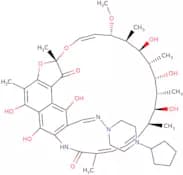
CAS :25-Desacetyl rifapentin is a derivative of rifapentin, an antibiotic belonging to the rifamycin class, sourced from the bacterial species *Amycolatopsis rifamycinica*. This compound functions by inhibiting bacterial DNA-dependent RNA polymerase, which is crucial for transcription in susceptible bacterial strains. By inhibiting this enzyme, 25-Desacetyl rifapentin effectively hampers RNA synthesis, ultimately leading to bacterial cell death.Formule :C45H62N4O11Degré de pureté :Min. 95%Couleur et forme :PowderMasse moléculaire :834.99 g/molFibracillin
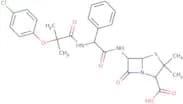
CAS :Fibracillin is a bioengineered peptide, which is derived from specifically modified bacterial strains with advanced genetic manipulation techniques. Its mode of action involves the stimulation of fibroblast activity through targeted binding to cellular receptors, promoting collagen synthesis and extracellular matrix formation. This action facilitates the regeneration of connective tissues and supports wound healing processes.Formule :C26H28ClN3O6SDegré de pureté :Min. 95%Masse moléculaire :546 g/molRolitetracycline
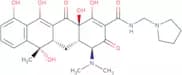
CAS :Rolitetracycline is a semi-synthetic tetracycline antibiotic, which is derived from the natural compound tetracycline. It functions primarily by inhibiting protein synthesis in susceptible bacteria. This is achieved through the binding to the 30S ribosomal subunit, effectively blocking the attachment of aminoacyl-tRNA to the mRNA-ribosome complex, thereby preventing the addition of new amino acids to the nascent peptide chain. As a result, bacterial cell growth is inhibited, leading to bacteriostatic effects.Formule :C27H33N3O8Degré de pureté :Min. 95%Couleur et forme :PowderMasse moléculaire :527.57 g/mol2'-Deoxycoformycin
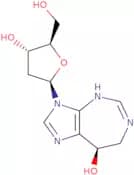
CAS :2'-Deoxycoformycin is a potent adenosine deaminase inhibitor, which is derived from the fermentation of Streptomyces antibioticus, a species of actinomycete bacteria. This compound acts by specifically inhibiting the enzyme adenosine deaminase, leading to an accumulation of toxic deoxyadenosine triphosphate in lymphocytes. This buildup hinders DNA synthesis, effectively suppressing the proliferation of lymphoid cells.Formule :C11H16N4O4Degré de pureté :Min. 95%Masse moléculaire :268.27 g/molDimidazon
CAS :Dimidazon is a synthetic herbicide, which is derived from chemical synthesis processes involving aromatic and heterocyclic compounds. It possesses a mode of action that primarily inhibits specific enzymatic pathways required for plant growth, targeting essential biosynthesis mechanisms within the plant's cellular structure. This disruption leads to the cessation of vital processes, eventually causing plant death.Formule :C12H12N2O3Degré de pureté :Min. 95%Masse moléculaire :232.23 g/molTenatoprazole sodium
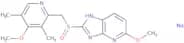
CAS :Tenatoprazole sodium is a proton pump inhibitor, which is a synthetic pharmaceutical compound designed to selectively inhibit the hydrogen-potassium ATPase enzyme in the gastric parietal cells. This enzyme is essential for the final step of gastric acid production. Originating from organic chemical synthesis processes, Tenatoprazole sodium features a unique imidazopyridine structure, distinguishing it from other members of the proton pump inhibitor class such as omeprazole, which belongs to the benzimidazole family.Formule :C16H18N4NaO3SDegré de pureté :Min. 95%Masse moléculaire :369.4 g/molArbekacin sulfate
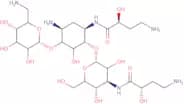
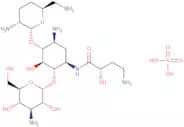
CAS :Inhibitor of DNA replication; aminoglycoside classFormule :C22H44N6O10·xH2SO4Degré de pureté :Min. 95%Couleur et forme :White PowderMasse moléculaire :650.7 g/molSecorapamycin B
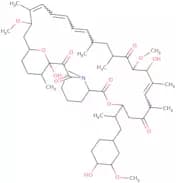
CAS :Secorapamycin B is a secondary metabolite, which is a macrolide lactam produced by the actinobacterium species Amycolatopsis. This compound is characterized by its unique structural features, including a polyketide backbone, which is biosynthesized via modular polyketide synthases. The mode of action for Secorapamycin B involves binding to FK-binding proteins (FKBP), inhibiting calcineurin function, and subsequently suppressing T-cell activation.
Formule :C51H81NO14Degré de pureté :Min. 95%Masse moléculaire :932.20 g/mol(2S)-2-[N-(Furan-2-carbonyl)-2,6-dimethylanilino]propanoic acid
CAS :(2S)-2-[N-(Furan-2-carbonyl)-2,6-dimethylanilino]propanoic acid is a synthetic compound classified as a potentially bioactive molecule. It is derived through a series of organic synthesis steps that involve the coupling of furan-2-carbonyl chloride with 2,6-dimethylaniline, followed by modification with a chiral propanoic acid moiety.Formule :C16H17NO4Degré de pureté :Min. 95%Masse moléculaire :287.31 g/mol28-Epirapamycin
CAS :28-Epirapamycin is a semisynthetic derivative of the macrolide antibiotic rapamycin, which is derived from the bacterium *Streptomyces hygroscopicus*. This compound functions primarily as an mTOR (mechanistic target of rapamycin) inhibitor. The mTOR pathway is crucial for regulating cell growth, proliferation, and survival by integrating signals from nutrients, growth factors, and cellular energy status.Formule :C51H79NO13Degré de pureté :Min. 95%Masse moléculaire :914.2 g/molGramicidin
CAS :Gramicidin is an antibiotic, which is derived from soil bacteria of the genus Bacillus, specifically Bacillus brevis. This polypeptide antibiotic exerts its antibacterial effects by disrupting the cell membranes of susceptible bacteria. Gramicidin forms channels in the phospholipid bilayers of bacterial cell membranes, leading to uncontrolled cation fluxes, which ultimately results in cell death. This mechanism is particularly effective against Gram-positive bacteria due to their specific cell wall structure.
Formule :C99H140N20O17Degré de pureté :A1.A2.B1.C1 And C2) 95%Couleur et forme :PowderMasse moléculaire :1,882.3 g/molTizoxanide - 98%
CAS :Anti-parasitic; pyruvate ferredoxin oxidoreductase inhibitorFormule :C10H7N3O4SDegré de pureté :Min. 95%Masse moléculaire :265.01573Sulfamoyldapsone
CAS :Sulfamoyldapsone is a synthetic antimicrobial compound, which is derived from the dapsone family. Its source is primarily synthetic, designed through chemical modifications of the parent compound dapsone, a well-known antibacterial agent. The mode of action of sulfamoyldapsone involves the inhibition of bacterial folic acid synthesis. By targeting dihydropteroate synthase, an enzyme essential for the production of folic acid in microorganisms, the compound effectively interferes with bacterial growth and replication.Formule :C12H13N3O4S2Degré de pureté :Min. 95%Masse moléculaire :327.4 g/molImazethapyr-1-hydroxyethyl
CAS :Imazethapyr-1-hydroxyethyl is a selective, systemic herbicide, which is synthesized through chemical processes. It functions primarily by inhibiting the acetohydroxyacid synthase (AHAS) enzyme, also known as acetolactate synthase (ALS). This enzyme is vital for the biosynthesis of branched-chain amino acids like valine, leucine, and isoleucine, which are essential for plant growth. By hindering this enzyme's action, Imazethapyr-1-hydroxyethyl effectively stunts the growth and development of susceptible plant species.Formule :C15H19N3O4Degré de pureté :Min. 95%Masse moléculaire :305.33 g/molVicriviroc malate
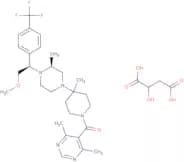
CAS :Vicriviroc malate is a CCR5 antagonist with action on blocking HIV entry into cells by targeting the CCR5 receptor and is used for research on HIV treatment.Formule :C28H38F3N5O2•C4H6O5Degré de pureté :Area-% Min. 90 Area-%Couleur et forme :PowderMasse moléculaire :667.72 g/molHerbimycin
CAS :Herbimycin is an antibiotic, which is a natural product derived from Streptomyces bacteria. It functions primarily as a tyrosine kinase inhibitor, disrupting cellular signaling pathways by binding to the ATP-binding site of kinases and inhibiting phosphorylation events. This mode of action makes it an effective tool for scientists studying signal transduction processes and oncogenic transformation.Formule :C30H42N2O9Degré de pureté :Min. 95%Masse moléculaire :574.66 g/mol3-Phenanthrenebutyric acid
CAS :3-Phenanthrenebutyric acid is a synthetic compound that serves as an analogue of phenanthrene derivatives, commonly utilized in biochemical and pharmacological research. Its source lies in laboratory synthesis, designed to mimic the structural properties of naturally occurring phenanthrene compounds, which are typically found in fossil fuels and plant sources.Formule :C18H16O2Degré de pureté :Min. 95%Masse moléculaire :264.3 g/molPenipurdin A
CAS :Please enquire for more information about Penipurdin A including the price, delivery time and more detailed product information at the technical inquiry form on this pageFormule :C18H16O6Degré de pureté :Min. 95%Masse moléculaire :328.3 g/molCefixime methyl ester
CAS :Cefixime methyl ester is a chemical compound often used in the development of antibiotics, specifically as a semi-synthetic cephalosporin derivative. It is derived from Cephalosporium acremonium, a type of fungus, which serves as a source for the initial cephalosporin structure. The compound functions as a beta-lactam antibiotic by inhibiting bacterial cell wall synthesis. It achieves this through the acylation of penicillin-binding proteins, effectively halting the transpeptidation or cross-linking of the peptidoglycan layer, which is crucial for bacterial survival and division.Formule :C17H17N5O7S2Degré de pureté :Min. 95%Masse moléculaire :467.50 g/molGatifloxacin hydrochloride
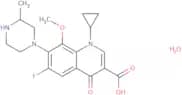
CAS :Gatifloxacin hydrochloride is a synthetic antibacterial agent, which is derived from the fourth-generation fluoroquinolone class of antibiotics. It exhibits a broad-spectrum bactericidal activity by targeting bacterial DNA gyrase and topoisomerase IV enzymes, essential for bacterial DNA replication, transcription, and repair processes.Formule :C19H24FN3O5Degré de pureté :Min. 95%Masse moléculaire :393.4 g/molCephradine monohydrate
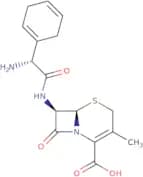
CAS :Cephradine monohydrate is a first-generation cephalosporin antibiotic, which is derived from the fungus Acremonium. It operates by inhibiting bacterial cell wall synthesis, a critical process necessary for bacterial growth and replication. This inhibition occurs through the binding of the antibiotic to penicillin-binding proteins, leading to cell lysis and subsequent bacterial death.
Formule :C16H19N3O4S·H2ODegré de pureté :Min. 95%Masse moléculaire :367.42 g/mol1,3''-Di-HABA kanamycin A
CAS :1,3''-Di-HABA kanamycin A is a chemically modified antibiotic derivative. It is derived from kanamycin A, a well-known aminoglycoside antibiotic that is originally sourced from the bacterium *Streptomyces kanamyceticus*. The modification with 1,3''-Di-HABA alters its pharmacodynamic properties, potentially influencing its specificity and interaction with biological targets.Formule :C26H50N6O15Degré de pureté :Min. 95%Masse moléculaire :686.71 g/molKanamycin C
CAS :Inhibitor of protein synthesis; aminoglycosideFormule :C18H36N4O11Degré de pureté :Min. 95%Masse moléculaire :484.5 g/molAmidithion
CAS :Amidithion is an insecticidal and acaricidal compound, which is a derivative of organophosphorus chemistry. This compound is chiefly synthesized through the complex chemical manipulation of phosphoryl groups, rendering it a potent inhibitor of enzymatic activity in target organisms.Formule :C7H16NO4PS2Degré de pureté :Min. 95%Masse moléculaire :273.3 g/molPeplomycin sulfate
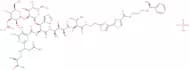
CAS :Peplomycin sulfate is an anticancer antibiotic, which is a derivative of the bleomycin family of glycopeptide antibiotics produced by the bacterium *Streptomyces verticillus*. This antibiotic operates through a mode of action that involves the induction of DNA strand breaks by forming a complex with iron and oxygen, leading to the generation of free radicals. These radicals cleave DNA strands, thereby inhibiting DNA synthesis and inducing apoptosis in cancerous cells.Formule :C61H90N18O25S3Degré de pureté :Min. 95%Masse moléculaire :1,571.67 g/molGanciclovir hydrate
CAS :Ganciclovir hydrate is an antiviral compound, which is a synthetic analogue of 2'-deoxy-guanosine derived from chemical synthesis. It functions through selective inhibition of viral DNA polymerase, specifically by incorporating into the viral DNA during replication. This incorporation leads to chain termination, effectively impeding the synthesis of viral DNA and curbing viral proliferation.
Formule :C9H15N5O5Degré de pureté :Min. 95%Masse moléculaire :273.25 g/molPlazomicin sulfate
CAS :An aminoglycoside antibiotic. Found applications in treatment of UTi's as it decreases the ability of bacteria to make protein.
Formule :C25H48N6O10·XH2SO4Degré de pureté :Min. 85%Couleur et forme :PowderMasse moléculaire :592.69 g/mol4-Epitetracycline hydrochloride
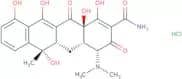
CAS :4-Epitetracycline hydrochloride is a tetracycline antibiotic derivative, which is a secondary metabolite derived from bacterial sources, particularly Streptomyces species. It functions primarily by inhibiting protein synthesis in bacteria through binding to the 30S ribosomal subunit, preventing the attachment of aminoacyl-tRNA to the RNA-ribosome complex. This action hinders bacterial growth by interfering with vital processes necessary for bacterial survival and replication.Formule :C22H25ClN2O8Degré de pureté :Min. 95%Couleur et forme :PowderMasse moléculaire :480.9 g/molAAI101
CAS :Please enquire for more information about AAI101 including the price, delivery time and more detailed product information at the technical inquiry form on this pageFormule :C11H14N4O5SDegré de pureté :Min. 95%Masse moléculaire :314.32 g/molSulfadiazine-d4
CAS :Sulfadiazine-d4 is an isotopically labeled antibiotic, which is a derivative of sulfadiazine containing four deuterium atoms. This compound is synthesized using advanced chemical techniques to replace hydrogen atoms with deuterium in the molecular structure. The mechanism of action involves inhibition of bacterial dihydropteroate synthase, an enzyme critical in the folate synthesis pathway. By preventing the production of folic acid, sulfadiazine-d4 effectively halts bacterial growth and replication.Formule :C10H6D4N4O2SDegré de pureté :Min. 95%Masse moléculaire :254.3 g/mol(S)-4-(((R)-6-(2-Chloro-4-fluorophenyl)-5-(methoxycarbonyl)-2-(thiazol-2-yl)-3,6-dihydropyrimidin-4-yl)methyl)morpholine-3-carboxyli c acid
CAS :(S)-4-(((R)-6-(2-Chloro-4-fluorophenyl)-5-(methoxycarbonyl)-2-(thiazol-2-yl)-3,6-dihydropyrimidin-4-yl)methyl)morpholine-3-carboxylic acid is a selective chemical inhibitor, derived from synthetic organic chemistry methodologies. This compound is engineered for precise interaction with a target protein, modulating cellular pathways involved in disease progression. Its unique structure, including the chlorofluorophenyl and thiazolyl moieties, confers high binding affinity and specificity, making it a valuable tool in biochemical research.
Formule :C21H20ClFN4O5SDegré de pureté :Min. 95%Masse moléculaire :494.9 g/molOxysanguinarine
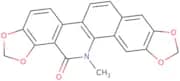
CAS :Oxysanguinarine is an alkaloid compound, which is derived from the plant species of the Papaveraceae family. As a benzophenanthridine alkaloid, it is predominantly extracted from plants such as Sanguinaria canadensis. Its mode of action involves disrupting microbial cell membranes and interfering with enzyme systems, leading to antimicrobial and antifungal effects. This compound exhibits potential in inhibiting the growth of various pathogens, making it a subject of interest in pharmaceutical and microbiological research. Applications of oxysanguinarine extend to studying its efficacy in antimicrobial treatments, exploring its potential as a natural pesticide, and investigating its role in traditional medicine. Due to its complex biochemical interactions, ongoing research aims to better understand its mechanisms and potential therapeutic uses.
Formule :C20H13NO5Degré de pureté :Min. 95%Masse moléculaire :347.3 g/molEnzaplatovir
CAS :Enzaplatovir is a novel antiviral agent, which is a synthetic compound developed through advanced medicinal chemistry techniques. It functions as an inhibitor of RNA-dependent RNA polymerase, a critical enzyme in the replication cycle of various RNA viruses. By targeting this enzyme, Enzaplatovir effectively impedes viral RNA synthesis, thus disrupting viral replication.Formule :C20H19N5O3Degré de pureté :Min. 95%Masse moléculaire :377.4 g/molBRD-K98645985
CAS :BRD-K98645985 is a synthetic biochemical reagent, likely developed through chemical synthesis or natural product isolation. It functions as a modulator of specific biochemical pathways, potentially acting as an enzyme inhibitor, receptor agonist, or antagonist. This compound interacts with targeted proteins or cellular mechanisms, altering physiological responses or signaling cascades. The precise mode of action often involves binding to active sites, thereby influencing molecular conformation and activity.
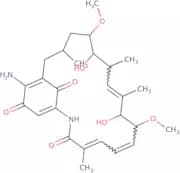
Formule :C33H43N5O4Degré de pureté :Min. 95%Masse moléculaire :573.7 g/mol7-Descarbamoyl 17-amino geldanamycin
CAS :7-Descarbamoyl 17-amino geldanamycin is a semi-synthetic derivative of the benzoquinone ansamycin antibiotic geldanamycin, which is naturally produced by the bacterium *Streptomyces hygroscopicus*. As an inhibitor of the Heat Shock Protein 90 (Hsp90), it targets this molecular chaperone crucial for the stability and function of numerous oncoproteins. By inhibiting Hsp90, 7-Descarbamoyl 17-amino geldanamycin disrupts protein folding processes, leading to the degradation of client proteins and subsequent disruption of cell signaling pathways involved in tumor growth and survival.Formule :C27H38N2O7Degré de pureté :Min. 95%Masse moléculaire :502.6 g/molAlthiomycin
CAS :Althiomycin is a macrolide antibiotic, which is derived from Actinobacteria, specifically the genus Streptomyces. Its mode of action involves binding to the 50S subunit of the bacterial ribosome, thereby inhibiting protein synthesis. This mechanism effectively suppresses bacterial growth by interfering with the translation process, ultimately leading to pathogen elimination.Formule :C16H17N5O6S2Degré de pureté :Min. 95%Masse moléculaire :439.50 g/molPPA-904
CAS :PPA-904 is an organophosphate compound, which is a chemically synthesized product. It functions as an additive, often utilized in industrial applications due to its unique chemical properties. As an organophosphate, PPA-904 acts through phosphorylation processes, interacting with various substrates to alter their chemical and physical characteristics. This mechanism is utilized to enhance material properties such as stability, functionality, or resistance to environmental conditions.Formule :C28H42BrN3SDegré de pureté :Min. 95%Masse moléculaire :532.6 g/mol3'-N-Desmethyl-3'-N-tosyl azithromycin
CAS :3'-N-Desmethyl-3'-N-tosyl azithromycin is a semi-synthetic macrolide antibiotic analog, which is a derivative of azithromycin, a well-known member of the macrolide class of antibiotics. This compound is synthesized through chemical modifications of the parent molecule, azithromycin, to potentially enhance its pharmacokinetic and pharmacodynamic properties.Formule :C44H76N2O14SDegré de pureté :Min. 95%Masse moléculaire :889.15 g/molFenoprofen sodium salt dihydrate
CAS :Fenoprofen sodium salt dihydrate is a nonsteroidal anti-inflammatory drug (NSAID), which is a synthetic compound derived from propionic acid. It acts by inhibiting the cyclooxygenase (COX) enzymes, COX-1 and COX-2, leading to decreased synthesis of prostaglandins. This reduction in prostaglandin synthesis is responsible for its analgesic, anti-inflammatory, and antipyretic effects.
Formule :C15H13NaO3·2H2ODegré de pureté :Min. 95%Masse moléculaire :264.25 g/molVancomycin hydrochloride from streptomyces orientalis
CAS :Vancomycin hydrochloride is a glycopeptide antibiotic, derived from the bacterium *Streptomyces orientalis*. This compound functions by inhibiting bacterial cell wall synthesis, specifically targeting the D-alanyl-D-alanine termini in peptidoglycan chains. It disrupts transglycosylation and transpeptidation, critical steps in cell wall biosynthesis, ultimately leading to cell lysis.Formule :C66H75Cl2N9O24·HClDegré de pureté :Min. 95%Masse moléculaire :1,485.71 g/mol25-O-Deacetyl rifabutin
CAS :25-O-Deacetyl rifabutin is an antibiotic derivative, which is sourced from the semi-synthetic modification of rifabutin, a compound originally derived from the fermentation of the bacterium Amycolatopsis mediterranei. This derivative works by inhibiting bacterial RNA synthesis. It achieves this by specifically targeting the DNA-dependent RNA polymerase enzyme, which is essential for bacterial transcription. The mechanism involves binding to the beta-subunit of the polymerase, thereby blocking the elongation of the RNA chain, which ultimately leads to the death of the bacterial cell.Formule :C44H60N4O10Degré de pureté :Min. 95%Couleur et forme :Purple PowderMasse moléculaire :804.97 g/molLobucavir
CAS :Lobucavir is an antiviral compound with a mode of action that inhibits viral DNA polymerase. It is used for treating infections caused by herpesviruses and hepatitis B virus.
Formule :C11H15N5O3Degré de pureté :Min. 95%Masse moléculaire :265.27 g/molAqabamycin A
CAS :Aqabamycin A is an antibiotic compound, which is derived from marine microorganisms, specifically actinomycetes. These marine bacteria are known for producing a wide array of bioactive compounds, including antibiotics, due to their unique metabolites shaped by the oceanic environment. Aqabamycin A operates by inhibiting bacterial RNA polymerase, thereby disrupting the transcription process essential for bacterial protein synthesis. This specific mode of action targets the growth and replication of bacteria, making it a potent agent against pathogenic strains.Formule :C16H11NO3Degré de pureté :Min. 95%Masse moléculaire :265.26 g/molPotassium clavulanate - 1:1 mixture with cellulose, Antibiotic for Culture Media Use Only
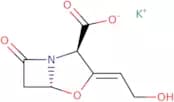
CAS :Potassium clavulanate is a beta-lactamase inhibitor and an antibacterial agent. The presence of potassium clavulanate in culture media inhibits the activity of beta-lactamases, which are enzymes that confer resistance to penicillin and other beta-lactam antibiotics. It also has been shown to be active against bacterial infections such as tuberculosis, sepsis, and pneumonia, where it can inhibit the growth of bacteria by interfering with their ability to form cell walls.Formule :C8H8KNO5Degré de pureté :Min. 95.0 Area-%Masse moléculaire :237.25 g/molDichlobentiazox
CAS :Dichlobentiazox is a fungicide, which is synthesized from synthetic chemical sources with a mode of action that targets specific fungal processes. It works by inhibiting the biosynthesis of essential cellular components in pathogenic fungi, thereby disrupting their growth and ability to proliferate.Formule :C11H6Cl2N2O3S2Degré de pureté :Min. 95%Masse moléculaire :349.2 g/molLedipasvir diacetone
CAS :Ledipasvir is a synthetic drug that inhibits the viral enzyme NS5A, which is necessary for viral replication. Ledipasvir has been shown to inhibit the growth of microorganisms such as bacteria and fungi. It also has antiviral properties, and is active against HIV-1. Ledipasvir can be used in chemotherapy to treat cancer and other diseases. This drug has high purity and is available at life science stores.Formule :C55H66F2N8O8Degré de pureté :Min. 95%Masse moléculaire :1,005.2 g/mol



![(2S)-2-[N-(Furan-2-carbonyl)-2,6-dimethylanilino]propanoic acid](/_next/image/?url=https%3A%2Fstatic.cymitquimica.com%2Fproducts%2F3D%2Fthumb-webp%2FTEA59719.webp&w=3840&q=75)