Antimicrobiens
Sous-catégories appartenant à la catégorie "Antimicrobiens"
- Antibiotiques(4.135 produits)
- Antifongiques(896 produits)
- Antiparasitaires(696 produits)
- Antiviraux(766 produits)
2434 produits trouvés pour "Antimicrobiens"
Acetophos
CAS :Acetophos is an organophosphate insecticide, which is a synthetic chemical compound derived from phosphoric acid. It functions by inhibiting acetylcholinesterase, an essential enzyme in the nervous systems of insects. This inhibition leads to the accumulation of acetylcholine, causing continuous nerve impulses that result in the paralysis and eventual death of the pest.
Formule :C8H17O5PSDegré de pureté :Min. 95%Masse moléculaire :256.26 g/molNonactin
CAS :Nonactin is a macrotetrolide antibiotic with action as an ionophore for potassium and ammonium ions and is used for research on ion transport and bacterial inhibition.
Formule :C40H64O12Degré de pureté :Min. 95%Couleur et forme :PowderMasse moléculaire :736.93 g/molCefotiam
CAS :Cefotiam is a broad-spectrum cephalosporin antibiotic, which is a beta-lactam compound derived from the mold Acremonium. It functions by inhibiting bacterial cell wall synthesis, particularly by targeting penicillin-binding proteins, which leads to cell lysis and death in susceptible bacteria. This mechanism of action makes it effective against various Gram-positive and Gram-negative bacteria.
Formule :C18H23N9O4S3Degré de pureté :Min. 95%Couleur et forme :PowderMasse moléculaire :525.62 g/molCephradine
CAS :Cephradine is a broad-spectrum antibiotic, which is a synthetic derivative of cephalosporin C, originating from the mold Cephalosporium acremonium. Its mode of action involves interfering with bacterial cell wall synthesis. Cephradine binds to penicillin-binding proteins (PBPs) located inside the bacterial cell wall, inhibiting the final transpeptidation step of peptidoglycan synthesis, which leads to cell lysis and death.
Formule :C16H23N3O6SDegré de pureté :Min. 95%Masse moléculaire :385.4 g/molLeptomycin A
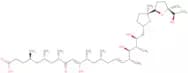
CAS :Leptomycin A is a Streptomyces-produced inhibitor, which is derived from the bacterium Streptomyces spiroverticillatus. It functions by specifically binding to and inhibiting the CRM1 (exportin 1), a nuclear export receptor. This action blocks the nuclear export of proteins that contain a leucine-rich nuclear export signal (NES), thereby leading to their accumulation within the nucleus. The inhibition of CRM1 disrupts various cellular processes, including cell cycle regulation and signal transduction pathways.
Formule :C32H46O6Degré de pureté :Min. 95%Masse moléculaire :526.7 g/molTolnifanide
CAS :Tolnifanide is a fungicidal product, which is a synthetic compound derived from chemical synthesis. It operates by interfering with the normal cellular function of fungi, inhibiting their growth and reproduction. This mode of action involves disrupting key processes within the fungal cells, rendering them unable to thrive in their host environment.
Formule :C15H15ClN2O4SDegré de pureté :Min. 95%Masse moléculaire :354.8 g/mol26-Oxofusidic acid
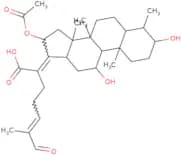
CAS :26-Oxofusidic acid is a derivative of fusidic acid, which is a potent antibacterial compound originally isolated from the fungus Fusidium coccineum. This compound exhibits a unique mode of action by inhibiting bacterial protein synthesis through interference with the elongation factor G (EF-G), a critical component in the translocation step of translation. By targeting this specific aspect of bacterial metabolism, 26-Oxofusidic acid effectively disrupts the growth of gram-positive bacteria, making it an invaluable tool in combating resistant bacterial strains.
Formule :C31H46O7Degré de pureté :Min. 95%Masse moléculaire :530.69 g/molTaxiphyllin
CAS :Taxiphyllin is a type of cyanogenic glucoside, which is a naturally occurring compound found in certain plants. It is derived primarily from bamboo shoots, among other plant sources. The compound undergoes hydrolysis when the plant tissue is damaged, such as during chewing or processing. This hydrolytic reaction, typically catalyzed by the enzyme β-glucosidase, results in the release of hydrogen cyanide, a potent defense mechanism for the plant against herbivores and pests.
Formule :C14H17NO7Degré de pureté :Min. 95%Masse moléculaire :311.29 g/mol(R)-Ambrisentan
CAS :(R)-Ambrisentan is an endothelin receptor antagonist, which is a pharmacological agent derived synthetically to target and inhibit specific cellular pathways. It is primarily utilized in the treatment of pulmonary arterial hypertension (PAH), where it plays a crucial role in modulating vascular function. The mode of action of (R)-Ambrisentan involves selective antagonism of the endothelin type A (ETA) receptors, which are responsible for vasoconstriction and proliferation of vascular smooth muscle cells. By blocking these receptors, it mitigates the effects of endothelin, a potent vasoconstrictor, thus reducing blood pressure and improving blood flow in pulmonary arteries.
Formule :C22H22N2O4Degré de pureté :Min. 95%Masse moléculaire :378.40 g/mol(S,S)-Valifenalate
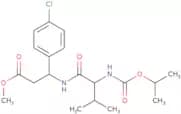
CAS :(S,S)-Valifenalate is a chemical compound that serves as a systemic fungicide, a class of products designed to prevent or eliminate fungal diseases in plants. It is synthetically derived, indicating that its molecular structure is chemically engineered rather than extracted from natural sources. The compound operates by disrupting the fungal life cycle, specifically interfering with cell wall biosynthesis, ultimately inhibiting the growth and reproduction of fungal pathogens.
Formule :C19H27ClN2O5Degré de pureté :Min. 95%Masse moléculaire :398.9 g/molIonomycin
CAS :Ionomycin is an ionophore compound with a mode of action that facilitates calcium ion transport across cell membranes. It is used in research to study calcium signaling and T-cell activation.
Formule :C41H72O9Degré de pureté :Min. 98 Area-%Couleur et forme :PowderMasse moléculaire :709.01 g/molPenciclovir diacetate
CAS :Penciclovir diacetate is an antiviral compound, which is synthesized as a prodrug derivative of penciclovir. This compound originates from chemical modification processes designed to improve the pharmacokinetic properties of its active metabolite. Once administered, penciclovir diacetate undergoes in vivo conversion to penciclovir, an active nucleoside analog. The mode of action involves selective inhibition of viral DNA polymerase after being phosphorylated to its triphosphate form, thereby impeding viral DNA synthesis and replication.
Formule :C14H19N5O5Degré de pureté :Min. 95%Masse moléculaire :337.33 g/molFormycin A
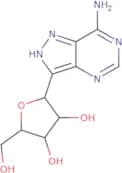
CAS :Formycin A is a nucleoside analog, which is an antibiotic product derived from certain Streptomyces species. Its mode of action involves mimicking adenosine, one of the four nucleosides in RNA. By doing so, it interferes with the RNA processing of certain microorganisms, ultimately disrupting their ability to synthesize proteins effectively. This interference results in the inhibition of bacterial and parasitic growth.
Formule :C10H13N5O4Degré de pureté :Min. 95%Masse moléculaire :267.24 g/mol21-Norrapamycin
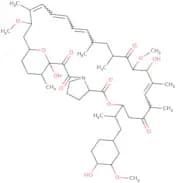
CAS :21-Norrapamycin is a macrocyclic lactone antibiotic, which is derived from the bacterium Streptomyces hygroscopicus. Its chemical structure is closely related to that of rapamycin, a well-known immunosuppressant. The mode of action of 21-Norrapamycin involves the inhibition of the mechanistic target of rapamycin (mTOR) signaling pathway. By binding to the FK506-binding protein 12 (FKBP12), it forms a complex that then inhibits mTOR, a crucial regulator of cell growth, proliferation, and survival.
Formule :C50H77NO13Degré de pureté :Min. 95%Masse moléculaire :900.1 g/molIsoflucypram
CAS :Please enquire for more information about Isoflucypram including the price, delivery time and more detailed product information at the technical inquiry form on this page
Formule :C19H21ClF3N3ODegré de pureté :Min. 95%Masse moléculaire :399.8 g/molCephamycin C
CAS :Cephamycin C is a cephalosporin antibiotic, which is a type of β-lactam antibiotic. It is derived from the fermentation process of certain Streptomyces species and other actinomycetes. Its mode of action involves inhibiting bacterial cell wall synthesis by binding to penicillin-binding proteins (PBPs). This inhibition disrupts the structural integrity of the bacterial cell wall, leading to cell lysis and death.
Formule :C16H22N4O9SDegré de pureté :Min. 95%Couleur et forme :PowderMasse moléculaire :446.4 g/mol1-(6-Amino-3,5-difluoropyridin-2-yl)-8-bromo-6-fluoro-7-[3-(methylamino)azetidin-1-yl]-4-oxoquinoline-3-carboxylic acid
CAS :1-(6-Amino-3,5-difluoropyridin-2-yl)-8-bromo-6-fluoro-7-[3-(methylamino)azetidin-1-yl]-4-oxoquinoline-3-carboxylic acid is a synthetically derived quinoline derivative, which is produced through advanced organic chemistry methodologies involving halogenated pyridines and quinoline frameworks. The compound functions primarily as an antibacterial agent, targeting bacterial topoisomerase enzymes, thereby disrupting DNA replication and transcription processes.Formule :C19H15BrF3N5O3Degré de pureté :Min. 95%Masse moléculaire :498.3 g/mol1-Naphthol-o-sulfate potassium
CAS :1-Naphthol-o-sulfate potassium is a sulfate ester, which is a derivative of naphthol. It is synthesized from 1-naphthol, a phenolic compound, through sulfation, typically using chlorosulfonic acid or oleum, followed by neutralization with potassium hydroxide to produce the potassium salt form. This particular compound is involved in various biochemical pathways, especially as a conjugated metabolite in phase II metabolism.
Formule :C10H8KO4SDegré de pureté :Min. 95%Masse moléculaire :263.33 g/molCephalexin hydrochloride
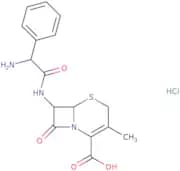
CAS :Cephalexin hydrochloride is a cephalosporin antibiotic, which is a type of beta-lactam antibiotic. It is derived from the fungus Acremonium, previously known as Cephalosporium, with a bactericidal mode of action. This compound works by inhibiting bacterial cell wall synthesis. Specifically, it binds to one or more of the penicillin-binding proteins (PBPs), which in turn disrupts the final stages of bacterial cell wall formation and results in cell lysis mediated through autolytic enzyme action.
Formule :C16H18ClN3O4SDegré de pureté :Min. 95%Masse moléculaire :383.9 g/molRef: 3D-JCA69559
Produit arrêtéPNU 142300
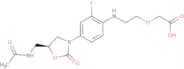
CAS :PNU 142300 is a non-peptidyl anticoagulant, which is a synthetically derived small molecule. This compound is sourced from advanced chemical synthesis techniques that focus on mimicking biological activity through non-biological materials. PNU 142300 acts by specifically inhibiting factor Xa, a crucial enzyme in the coagulation cascade responsible for the conversion of prothrombin to thrombin. By targeting this enzyme, it effectively prevents the formation of blood clots, thereby exhibiting potent anticoagulant properties.
Formule :C16H20FN3O6Degré de pureté :Min. 95%Masse moléculaire :369.35 g/molFervenulin
CAS :Fervenulin is a synthetic compound, which is a chemically designed product developed for laboratory use. It is synthesized through a series of organic reactions, allowing for precise control over its molecular structure and properties. The mode of action for Fervenulin involves altering microbial growth pathways, particularly targeting specific enzymes and cellular processes critical for microbial proliferation. This mode of action effectively inhibits or modifies the activity of these cellular components, providing a tool for microbiologists to investigate microbial behavior under controlled conditions.
Formule :C7H7N5O2Degré de pureté :Min. 95%Masse moléculaire :193.16 g/molClarithromycin-13CD3
CAS :Clarithromycin-13CD3 is an isotopically labeled macrolide antibiotic, which is synthesized to include deuterium (D) and carbon-13 (^13C) in its molecular structure. This modified compound serves as a stable isotope-labeled standard, primarily sourced from chemical synthesis. The incorporation of these isotopes differentiates it from the naturally occurring antibiotic, enabling its use in precise analytical studies.
Formule :C37CH66D3NO13Degré de pureté :Min. 95%Masse moléculaire :751.97 g/molNifursemizone
CAS :Nifursemizone is an antimicrobial agent, which is a synthetic nitrofuran derivative. It is engineered from chemical precursors through targeted synthetic processes designed to maximize its antibacterial properties. The mode of action of Nifursemizone involves the inhibition of bacterial enzymes and interference with nucleic acid synthesis. This action disrupts essential bacterial functions, leading to the inhibition of bacterial growth and eventual cell death.
Formule :C8H10N4O4Degré de pureté :Min. 95%Masse moléculaire :226.19 g/molCephalosporin 87/359(cefoxitin impurity H)
CAS :Cephalosporin 87/359 (cefoxitin impurity H) is an analytical reference standard, which is a secondary metabolite that can arise during the synthesis or degradation of the cephalosporin antibiotic, cefoxitin. It is sourced from chemical synthesis processes where isolation and purification of impurities are essential for ensuring the efficacy and safety of pharmaceutical products. The mode of action of this impurity is not therapeutic but crucial for analytical purposes, serving as a comparator to detect and quantify potential contaminants in cefoxitin production.
Formule :C15H15N3O6S2Degré de pureté :Min. 95%Masse moléculaire :397.40 g/molThienamycin
CAS :Thienamycin is a β-lactam antibiotic, which originates from the fermentation of the bacterium *Streptomyces cattleya*. Its mode of action involves inhibiting the synthesis of bacterial cell walls. Thienamycin accomplishes this by binding to penicillin-binding proteins (PBPs) critical for peptidoglycan construction, thereby disrupting cell wall integrity and leading to bacterial lysis.
Formule :C11H16N2O4SDegré de pureté :80%MinCouleur et forme :PowderMasse moléculaire :272.32 g/molVirginiamycin - Complex of M1+S1
CAS :Virginiamycin - Complex of M1+S1 is an antibiotic compound, which is derived from the actinobacterium Streptomyces virginiae. It functions through the inhibition of bacterial protein synthesis by binding to the 50S ribosomal subunit, thereby obstructing peptide bond formation and impeding microbial growth. The complex is composed of two major components: Virginiamycin M1 and Virginiamycin S1, which synergistically enhance antimicrobial efficacy.
Formule :C71H84N10O17Degré de pureté :Min. 95%Masse moléculaire :1,349.48 g/molPhleomycin
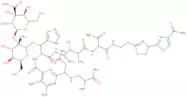
CAS :Phleomycin is an antibiotic, which is derived from the bacterium *Streptomyces verticillus*. Its mode of action involves binding to DNA and inducing breaks by generating free radicals in the presence of oxygen and ferrous ions, leading to cell death. Phleomycin is prominently used in molecular biology applications as a selective agent in the generation of stable transfectants. It is particularly effective in selecting for cells that have integrated vectors conferring resistance, such as the Sh ble gene used in yeast, plant, and mammalian cell systems. Due to its potent DNA-cleaving ability, Phleomycin is valuable in studies requiring stringent selection pressure. Researchers commonly utilize it in experiments focusing on genetic modification and cellular resistance development.
Formule :C51H75N17O21S2Degré de pureté :Min. 95%Masse moléculaire :1,326.38 g/mol(4S)-2-[Carboxy[[[3-(2-chloro-6-fluorophenyl)-5-methylisoxazol-4-yl]carbonyl]amino]methyl]-5,5-dimethylthiazolidine-4-carboxylic aci d disodium salt (penicilloic acids of flucloxacillin disodium salt)
CAS :(4S)-2-[Carboxy[[[3-(2-chloro-6-fluorophenyl)-5-methylisoxazol-4-yl]carbonyl]amino]methyl]-5,5-dimethylthiazolidine-4-carboxylic acid disodium salt, known as the penicilloic acids of flucloxacillin disodium salt, is a β-lactam antibiotic. This compound is derived from the penicillin family and exhibits potent antibacterial properties. The mode of action involves the inhibition of bacterial cell wall synthesis, primarily targeting the transpeptidase enzyme, which plays a crucial role in cross-linking the peptidoglycan layers of the bacterial cell wall. By acylating this enzyme, the penicilloic acids disrupt the integrity of the cell wall, leading to cell lysis and death of the bacteria.
Formule :C19H17ClFN3Na2O6SDegré de pureté :Min. 95%Masse moléculaire :515.9 g/molAntimicrobial compound 1
CAS :Antimicrobial Compound 1 is a broad-spectrum antimicrobial agent, which is derived from natural sources, specifically from marine bacteria with known potent antimicrobial properties. This compound acts by targeting and disrupting the synthesis of bacterial cell walls, specifically inhibiting peptidoglycan cross-linking, which ultimately leads to cell lysis and death due to osmotic instability. Such a mechanism offers a robust approach to tackling Gram-positive and Gram-negative bacteria.
Formule :C18H30BrNO2Degré de pureté :Min. 95%Masse moléculaire :372.3 g/molDeacetoxycephalothin
CAS :Deacetoxycephalothin is a cephalosporin antibiotic, which is derived from the fungus Acremonium. It functions by inhibiting bacterial cell wall synthesis. This bactericidal activity is primarily focused on gram-positive bacteria, where it interferes with the final transpeptidation step of peptidoglycan synthesis, an essential component of the bacterial cell wall structure. By doing so, deacetoxycephalothin compromises cell wall integrity, leading to the lysis and death of bacterial cells.
Formule :C14H14N2O4S2Degré de pureté :Min. 95%Masse moléculaire :338.4 g/molRef: 3D-JBA69102
Produit arrêtéN-Biotinyl-12-aminododecanoyltobramycin amide
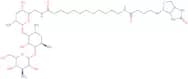
CAS :N-Biotinyl-12-aminododecanoyltobramycin amide is a synthetic bioconjugate, which is derived from the aminoglycoside antibiotic tobramycin. This compound is chemically modified by the addition of a biotin moiety linked through a 12-aminododecanoyl spacer. The source of this product is rooted in the conjugation of biotin to tobramycin, allowing for targeted delivery and potential hybrid applications in both therapeutic and diagnostic fields.
Formule :C40H74N8O12SDegré de pureté :Min. 95%Masse moléculaire :891.13 g/molStavudine sodium
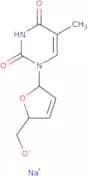
CAS :Stavudine sodium is an antiretroviral medication, which is a synthetic nucleoside analogue. It is primarily sourced from chemical synthesis processes, enabling precise control over its molecular structure to ensure efficacy in its intended application. The mode of action for stavudine sodium involves its incorporation into viral DNA through reverse transcription. Once integrated, it acts as a chain terminator, inhibiting the elongation of the viral DNA and thus effectively halting the replication of the human immunodeficiency virus type 1 (HIV-1).
Formule :C10H11N2NaO4Degré de pureté :Min. 95%Masse moléculaire :246.19 g/molLydicamycin
CAS :Lydicamycin is an antibacterial compound, which is a polyketide-derived antibiotic produced by the microorganism Streptomyces. This natural compound functions by inhibiting bacterial protein synthesis, effectively interrupting critical cellular processes within susceptible bacteria. The mode of action primarily focuses on binding to the bacterial ribosome, thereby disrupting protein production and inhibiting bacterial growth.
Formule :C47H74N4O10Degré de pureté :Min. 95%Masse moléculaire :855.11 g/molSanfetrinem cilexetil
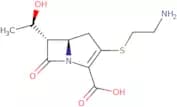
CAS :Sanfetrinem cilexetil is an oral prodrug, which is derived from trinem antibiotics, a subgroup of β-lactams. It is a synthetic compound developed to enhance the pharmacokinetic properties of its active form, sanfetrinem. Upon oral administration, sanfetrinem cilexetil undergoes hydrolysis in the digestive tract to release the active β-lactam antibiotic, sanfetrinem.
Formule :C23H33NO8Degré de pureté :Min. 95%Masse moléculaire :451.50 g/molAbacavir sulfate
CAS :Abacavir sulfate is a pharmaceutical compound classified as a nucleoside reverse transcriptase inhibitor (NRTI), which is derived from synthetic sources. Its mode of action involves the inhibition of the reverse transcriptase enzyme, essential for the replication of HIV. By incorporating itself into the viral DNA chain during replication, Abacavir effectively halts the process, preventing further multiplication of the virus within the host cells.
This antiretroviral medication is primarily used in the management and treatment of human immunodeficiency virus (HIV-1) infections. Abacavir sulfate is a critical component in highly active antiretroviral therapy (HAART), contributing to the reduction of viral load, enhancing immune function, and improving the long-term clinical outcomes in patients living with HIV. Its application in combination therapies has been instrumental in transforming HIV from a fatal disease into a manageable chronic condition.Formule :C14H18N6O·H2O4SDegré de pureté :Min. 95%Masse moléculaire :384.41 g/mol(E)-Ceftriaxone disodium
CAS :(E)-Ceftriaxone disodium is a broad-spectrum cephalosporin antibiotic, which is derived from the fermentation of the fungus Acremonium. This semi-synthetic antibiotic works by inhibiting bacterial cell wall synthesis. It achieves this by binding to the penicillin-binding proteins (PBPs) in the bacterial cell membrane, which ultimately interferes with peptidoglycan cross-linking, leading to cell lysis and death.
Formule :C18H16N8Na2O7S3Degré de pureté :Min. 95 Area-%Masse moléculaire :598.54 g/molOligomycin B
CAS :Oligomycin B is an antibiotic compound, which is derived from Streptomyces species. It is an inhibitor of the mitochondrial ATP synthase complex, specifically targeting the F₀ subunit of ATP synthase. This action obstructs the proton channel, preventing the flow of protons across the mitochondrial membrane. As a result, Oligomycin B effectively halts ATP synthesis by oxidative phosphorylation, which is crucial for the survival of aerobic organisms.
Formule :C45H72O12Degré de pureté :Min. 95%Couleur et forme :PowderMasse moléculaire :805.05 g/molThiadiazin
CAS :Thiadiazin is a synthetic compound, belonging to the class of heterocyclic chemical substances, which is primarily derived from chemical synthesis processes involving sulfur, nitrogen, and carbon atoms. It is characterized by a five-membered ring structure containing both sulfur and nitrogen atoms, which contributes to its diverse chemical properties.
Formule :C12H22N4S4Degré de pureté :Min. 95%Masse moléculaire :350.6 g/molMinocycline hydrochloride dihydrate
CAS :Minocycline hydrochloride dihydrate is a broad-spectrum antibiotic, which is a synthetic derivative of tetracycline. It is sourced from chemical synthesis processes and possesses potent antimicrobial properties. The mode of action involves inhibiting bacterial protein synthesis by binding to the 30S ribosomal subunit, thereby preventing the addition of amino acids to the growing peptide chain. This mechanism effectively disrupts bacterial growth and replication.
Formule :C23H32ClN3O9Degré de pureté :Min. 95%Masse moléculaire :530 g/molNeuraminidase-in-1
CAS :Neuraminidase-in-1 is a chemical compound known as a neuraminidase inhibitor, which is synthetically derived. This inhibitor functions by blocking the activity of the neuraminidase enzyme, a glycoprotein found on the surface of various viruses, including influenza. The enzyme is crucial for the viral life cycle as it facilitates the release of new viral particles from infected host cells. By inhibiting this enzyme, Neuraminidase-in-1 effectively halts the replication and spread of the virus within the host organism.
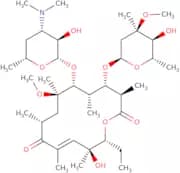
Formule :C14H11N3O6Degré de pureté :Min. 95%Masse moléculaire :317.25 g/mol(10E)-10,11-Didehydro-11-deoxy-6-O-methylerythromycin
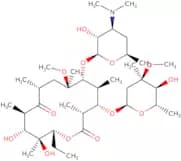
CAS :(E)-10,11-Didehydro-11-deoxy-6-O-methylerythromycin is a semisynthetic macrolide antibiotic, which is derived from erythromycin, a natural product obtained from the bacterium *Saccharopolyspora erythraea*. This compound functions as an inhibitor of protein synthesis by binding to the 50S ribosomal subunit of bacteria, thus preventing the growth and proliferation of susceptible bacterial strains. The alteration in its chemical structure, notably the methylation at the 6-O position, enhances its stability and improves its pharmacokinetic profile compared to the parent compound, erythromycin.
Formule :C38H67NO12Degré de pureté :Min. 95%Masse moléculaire :729.94 g/molTropodithietic acid
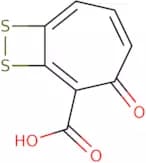
CAS :Tropodithietic acid is a bioactive compound, which is a potent antibacterial agent derived from certain marine bacteria, including the genus Phaeobacter. This antibiotic is characterized by its ability to disrupt quorum sensing, a mechanism that bacteria use for communication and coordination of group behaviors, including virulence. By interfering with this process, tropodithietic acid impedes bacterial colonization and biofilm formation, effectively inhibiting pathogenic activity.
Degré de pureté :Min. 95%Imazamox-o-desmethyl
CAS :Imazamox-o-desmethyl is a herbicide metabolite, which is derived from the biotransformation of the imazamox compound, typically occurring during degradation processes. Its mode of action involves targeting the acetohydroxyacid synthase (AHAS) enzyme—a critical component in the biosynthesis of branched-chain amino acids in plants. This inhibition disrupts plant growth, leading to effective weed control.
Formule :C14H17N3O4Degré de pureté :Min. 95%Masse moléculaire :291.3 g/molDL-chloramphenicol
CAS :DL-chloramphenicol is a broad-spectrum antibiotic, which is a synthetic compound derived from natural chloramphenicol originally isolated from the bacterium Streptomyces venezuelae. This compound exerts its effects by inhibiting bacterial protein synthesis. It binds to the 50S subunit of the bacterial ribosome, preventing peptide bond formation and consequently halting the growth of susceptible bacteria. The optical isomer, DL-chloramphenicol, contains equal parts of both D- and L- isomers, with the L-form being responsible for its antibiotic activity.
Formule :C11H12Cl2N2O5Degré de pureté :Min. 95%Masse moléculaire :323.13 g/molBentaluron
CAS :Bentaluron is a synthetic fungicide, which is a chemical compound developed to combat fungal pathogens in agriculture. Its source originates from rigorous industrial chemical synthesis, ensuring efficacy and stability. The mode of action of Bentaluron involves disrupting essential biochemical pathways within fungal cells, specifically targeting and inhibiting enzymes critical for fungal growth and metabolism. This precise interference prevents the synthesis of vital cellular components, ultimately halting the proliferation of the fungus.
Formule :C11H13N3OSDegré de pureté :Min. 95%Masse moléculaire :235.31 g/molAzaconazole
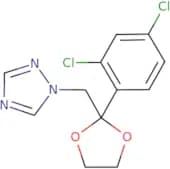
CAS :Azaconazole is a systemic fungicide, which is derived from synthetic chemical processes, specifically within the class of triazoles. This compound functions by interfering with the biosynthesis of ergosterol, a critical component of fungal cell membranes. By inhibiting the cytochrome P450 enzyme 14α-demethylase, azaconazole disrupts the production of ergosterol, thereby compromising membrane integrity and inhibiting fungal growth.
Formule :C12H11Cl2N3O2Degré de pureté :Min. 95%Masse moléculaire :300.14 g/molPC 190723
CAS :PC 190723 is a synthetic chemical compound, which is derived through targeted chemical synthesis processes involving precise organic reactions. Its mode of action involves disrupting cellular division by inhibiting specific protein functions essential for the mitotic process. This molecular interaction results in potent effects on cell division, making it a valuable tool for studying cellular mechanics and developing therapeutic strategies.
Formule :C14H8ClF2N3O2SDegré de pureté :Min. 95%Masse moléculaire :355.75 g/molE-Ceftazidime
CAS :E-Ceftazidime is a third-generation cephalosporin antibiotic, which is derived from the mold Acremonium. It functions by inhibiting bacterial cell wall synthesis, a crucial component for bacterial survival and replication. This inhibition occurs through the binding to specific penicillin-binding proteins (PBPs) within the bacterial cell wall, thus preventing cross-linking of the peptidoglycan chains, which results in the eventual lysis and death of the bacterial cell.
Formule :C22H22N6O7S2Degré de pureté :Min. 95%Masse moléculaire :546.60 g/molOxohongdenafil
CAS :Please enquire for more information about Oxohongdenafil including the price, delivery time and more detailed product information at the technical inquiry form on this page
Formule :C25H32N6O4Degré de pureté :Min. 95%Masse moléculaire :480.6 g/molDimoxystrobin-5-benzoic acid
CAS :Dimoxystrobin-5-benzoic acid is a chemical fungicide, which is a synthetic compound derived from the strobilurin class of fungicides. It functions by inhibiting mitochondrial respiration in fungi, specifically blocking the electron transfer at the Qo site of the cytochrome bc1 complex. This mode of action disrupts energy production in fungal cells, thereby curbing their growth and proliferation.
Formule :C19H20N2O5Degré de pureté :Min. 95%Masse moléculaire :356.4 g/mol




![1-(6-Amino-3,5-difluoropyridin-2-yl)-8-bromo-6-fluoro-7-[3-(methylamino)azetidin-1-yl]-4-oxoquinol…](/_next/image/?url=https%3A%2Fstatic.cymitquimica.com%2Fproducts%2F3D%2Fthumb-webp%2FPHA28013.webp&w=3840&q=75)
![(4S)-2-[Carboxy[[[3-(2-chloro-6-fluorophenyl)-5-methylisoxazol-4-yl]carbonyl]amino]methyl]-5,5-dim…](/_next/image/?url=https%3A%2Fstatic.cymitquimica.com%2Fproducts%2F3D%2Fthumb-webp%2FTCA72850.webp&w=3840&q=75)