Antimicrobiens
Les antimicrobiens sont des agents qui détruisent ou inhibent la croissance des microorganismes, y compris les bactéries, les virus, les champignons et les parasites. Ces composés sont essentiels dans la prévention et le traitement des infections, jouant un rôle crucial en médecine, en agriculture et dans l'industrie alimentaire. Chez CymitQuimica, nous proposons une vaste gamme d'antimicrobiens de haute qualité et pureté, adaptés à diverses applications scientifiques et industrielles. Notre catalogue comprend des antibiotiques, des antifongiques, des antiviraux et des désinfectants, tous conçus pour répondre aux besoins de la recherche et du développement, ainsi qu'aux applications cliniques et de production. Avec nos produits, les professionnels peuvent garantir l'efficacité et la sécurité dans le contrôle des infections et la protection de la santé publique.
Sous-catégories appartenant à la catégorie "Antimicrobiens"
- Antibiotiques(4.128 produits)
- Antifongiques(901 produits)
- Antiparasitaires(701 produits)
- Antiviraux(764 produits)
2423 produits trouvés pour "Antimicrobiens"
Trier par
Degré de pureté (%)
0
100
|
0
|
50
|
90
|
95
|
100
Foscarnet sodium
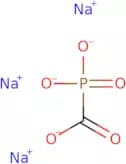
CAS :<p>Foscarnet sodium is a pyrophosphate analog antiviral agent with action on viral DNA polymerase and is used for treating cytomegalovirus and herpes simplex virus infections.</p>Formule :CNa3O5PDegré de pureté :Min. 95%Couleur et forme :White PowderMasse moléculaire :191.95 g/molHexazinone metabolite B
CAS :<p>Hexazinone metabolite B is a chemical byproduct of the breakdown of Hexazinone, which is an herbicide. This metabolite emerges from an extensive metabolic pathway in plants, fungi, and soil microorganisms as they degrade the parent compound. Its mode of action involves interacting with plant processes, potentially affecting growth and development, as it may influence photosynthetic pathways or other vital physiological functions.</p>Formule :C11H18N4O2Degré de pureté :Min. 95%Masse moléculaire :238.29 g/molHexazinone metabolite E
CAS :Hexazinone metabolite E is a degradation product of the herbicide Hexazinone, which is derived from synthetic chemical processes. This metabolite emerges as a result of the biochemical breakdown of Hexazinone in soil and water environments. The mode of action involves the contamination and persistence in various environmental matrices, making it a key compound of interest for understanding the environmental impact of herbicide application. Hexazinone initially acts by inhibiting photosynthesis in plants, and its metabolites, including metabolite E, provide insights into the degradation pathways and long-term behavior of the herbicide in ecosystems.Formule :C10H15N3O4Degré de pureté :Min. 95%Masse moléculaire :241.24 g/molTazobactam diphenylmethyl ester
CAS :<p>Tazobactam diphenylmethyl ester is a chemical compound that serves as a precursor or intermediate in the synthesis of beta-lactamase inhibitors. This product originates from synthetic organic chemistry and plays a crucial role in antibiotic research and development. Its mode of action involves modifying or blocking the active site of beta-lactamase enzymes, which are responsible for granting bacteria resistance to beta-lactam antibiotics.</p>Formule :C23H22N4O5SDegré de pureté :Min. 95%Masse moléculaire :466.5 g/molDemethylbleomycin A2 sulfate
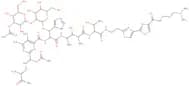
CAS :Demethylbleomycin A2 sulfate is an antineoplastic agent, which is derived from the bacterium Streptomyces verticillus. This compound functions by binding to DNA, inducing strand breaks and inhibiting DNA synthesis, ultimately leading to apoptosis or programmed cell death. Its mechanism of action involves the generation of free radicals, which cause oxidative damage to the DNA strands, impairing cellular replication and tumor growth.Formule :C55H84N17O21S3Degré de pureté :Min. 95%Masse moléculaire :1,415.6 g/molPyrametostrobin
CAS :<p>Pyrametostrobin is a fungicide, which is derived from strobilurin compounds. These compounds are originally sourced from natural antifungal substances produced by certain fungi, specifically the wood-decay fungus Strobilurus tenacellus. Pyrametostrobin functions by inhibiting mitochondrial respiration in fungal cells, specifically targeting the cytochrome bc1 complex within the electron transport chain. This action disrupts the energy production of the fungal cells, ultimately leading to their death.</p>Formule :C21H23N3O4Degré de pureté :Min. 95%Masse moléculaire :381.4 g/molOxaquin
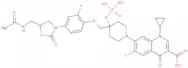
CAS :<p>Oxaquin is a synthetic antibiotic, which is a derivative of the fluoroquinolone class, developed through chemical synthesis. It disrupts bacterial DNA replication by inhibiting the DNA gyrase and topoisomerase IV enzymes, which are crucial for DNA synthesis and repair. This mode of action prevents bacterial cells from dividing and leading to cell death.</p>Formule :C31H33F2N4O11PDegré de pureté :Min. 95%Masse moléculaire :706.6 g/molKanamycin A Related Compound 1
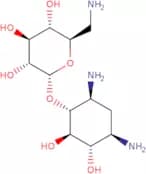
CAS :<p>Kanamycin A Related Compound 1 is an analytical reference standard, which is derived from aminoglycoside antibiotics. Its source stems from the chemical structures related to the aminoglycoside class, primarily used to ensure precise identification and quantification of kanamycin residues or impurities in pharmaceutical formulations. The mode of action of Kanamycin A Related Compound 1 involves serving as a comparator or reference point in chromatographic and spectroscopic methods, facilitating accurate analysis by providing a consistent baseline for research laboratories.</p>Formule :C12H25N3O7Degré de pureté :Min. 95%Masse moléculaire :323.34 g/mol3-(2-(2,4-Dichlorophenyl)-2-hydroxyethyl)-3,4-imidazolidinedione
CAS :<p>3-(2-(2,4-Dichlorophenyl)-2-hydroxyethyl)-3,4-imidazolidinedione is a synthetic compound, which is a derivative of imidazolidinedione. It is primarily characterized as an antifungal agent with broad-spectrum activity against various fungal species. Its mode of action involves disrupting the synthesis of ergosterol, an essential component of fungal cell membranes. This disruption leads to increased membrane permeability and ultimately, cell death. The efficacy of this compound is attributed to its ability to inhibit the growth of pathogens by targeting critical pathways necessary for fungal survival.</p>Formule :C11H12Cl2N2O3Degré de pureté :Min. 95%Masse moléculaire :291.13 g/molPiericidin A
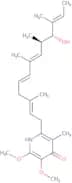
CAS :<p>Piericidin A is a microbial metabolite, specifically a type of polyketide, which is derived from the bacterium of the genus Streptomyces. This compound acts as an electron transport chain inhibitor by specifically binding to the ubiquinone binding site of complex I (NADH:ubiquinone oxidoreductase) in mitochondria. This mode of action results in the disruption of ATP production through oxidative phosphorylation.</p>Formule :C25H37NO4Degré de pureté :Min. 95%Masse moléculaire :415.57 g/molClindamycin B hydrochloride
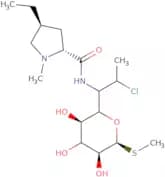
CAS :<p>Clindamycin B hydrochloride is a semi-synthetic antibiotic, which is derived from the parent compound, lincomycin, obtained from the bacterium *Streptomyces lincolnensis*. It exerts its antibacterial effects by binding to the 50S subunit of the bacterial ribosome, inhibiting protein synthesis by preventing peptide bond formation, which is essential for bacterial growth and survival.</p>Formule :C17H31ClN2O5S•HClDegré de pureté :Min. 95%Couleur et forme :White To Off-White SolidMasse moléculaire :447.42 g/molPhleomycin
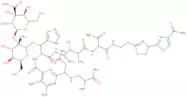
CAS :<p>Phleomycin is an antibiotic, which is derived from the bacterium *Streptomyces verticillus*. Its mode of action involves binding to DNA and inducing breaks by generating free radicals in the presence of oxygen and ferrous ions, leading to cell death. Phleomycin is prominently used in molecular biology applications as a selective agent in the generation of stable transfectants. It is particularly effective in selecting for cells that have integrated vectors conferring resistance, such as the Sh ble gene used in yeast, plant, and mammalian cell systems. Due to its potent DNA-cleaving ability, Phleomycin is valuable in studies requiring stringent selection pressure. Researchers commonly utilize it in experiments focusing on genetic modification and cellular resistance development.</p>Formule :C51H75N17O21S2Degré de pureté :Min. 95%Masse moléculaire :1,326.38 g/molPicloxydine digluconate
CAS :<p>Picloxydine digluconate is an antiseptic agent, which is derived from synthetic chemical processes designed to produce highly effective antimicrobial compounds. It operates through the disruption of microbial cell membranes, leading to the leakage of cell contents and subsequent cell death. This mode of action is particularly efficient against a wide spectrum of bacteria, including both Gram-positive and Gram-negative strains, as well as fungi and some viruses.</p>Formule :C26H36Cl2N10O7Degré de pureté :Min. 95%Masse moléculaire :671.5 g/molBalapiravir hydrochloride
CAS :<p>Balapiravir hydrochloride is an antiviral agent, which is synthesized through chemical processes. It operates as a prodrug, meaning it is metabolized in the body to produce the active compound that inhibits viral replication. The mode of action of Balapiravir involves targeting the viral RNA polymerase, an essential enzyme for the replication of viral genomes. By inhibiting this enzyme, the drug effectively reduces viral load within the host, impairing the spread and establishment of the virus.</p>Formule :C21H31ClN6O8Degré de pureté :Min. 95%Masse moléculaire :531 g/molRPW-24
CAS :<p>RPW-24 is a microbial inoculant, which is derived from specifically cultivated microbial strains with known capabilities of enhancing soil fertility. Utilizing a proprietary selection of Bacillus and Pseudomonas species, this product functions by facilitating the solubilization of inorganic phosphate compounds in the soil. These microbes secrete organic acids and enzymes that convert insoluble forms of phosphorus into forms that are more readily available to plants, thereby enhancing nutrient uptake and promoting plant growth.</p>Formule :C15H13ClN4Degré de pureté :Min. 95%Masse moléculaire :284.74 g/molErythromycylamine
CAS :<p>Erythromycylamine is a semisynthetic antibiotic, which is derived from the parent compound erythromycin. This compound is sourced from the fermentation product of the bacterium *Saccharopolyspora erythraea*. Erythromycylamine acts by inhibiting bacterial protein synthesis, specifically targeting the 50S ribosomal subunit, which ultimately leads to the disruption of bacterial cell growth and replication.</p>Formule :C37H70N2O12Degré de pureté :Min. 95%Masse moléculaire :734.96 g/molArtefenomel
CAS :<p>Artefenomel is an antimalarial agent, which is a synthetic derivative originally based on artemisinin, primarily sourced from the Artemisia annua plant. It exhibits its mode of action by targeting and disrupting the Plasmodium parasite's life cycle within the human host. Specifically, artefenomel interferes with the parasite's ability to degrade hemoglobin, leading to the accumulation of toxic levels of heme, ultimately causing the parasite's death.</p>Formule :C28H39NO5Degré de pureté :Min. 95%Masse moléculaire :469.6 g/molOfloxacin d3 hydrochloride
CAS :<p>Ofloxacin d3 hydrochloride is a deuterated form of the quinolone antibiotic, which is a synthetic derivative designed for research purposes. It is sourced from the fluorinated carboxyquinolone class, where deuterium atoms replace certain hydrogen atoms to study metabolic pathways involving ofloxacin with minimal isotopic interference. Ofloxacin d3 inhibits bacterial DNA gyrase and topoisomerase IV, enzymes crucial for DNA replication, transcription, and repair. By stabilizing the transient cleavable complex with DNA, it prevents the ligation of DNA strands, leading to bacterial cell death. This compound is utilized primarily in laboratory settings for studying the pharmacokinetics and biodistribution of quinolones, as well as for elucidating resistance mechanisms in bacterial strains. Its stable isotopic composition makes it ideal for advanced analytical techniques such as mass spectrometry. Through these investigations, insights into drug metabolism, efficacy, and resistance can be gleaned, contributing to the broader understanding of quinolone antibiotic activity.</p>Formule :C18H21ClFN3O4Degré de pureté :Min. 95%Masse moléculaire :400.8 g/molOxpoconazole fumarate
CAS :<p>Oxpoconazole fumarate is a systemic antifungal agent, which is a synthetic compound derived from chemical synthesis. It functions by inhibiting the biosynthesis of ergosterol, a critical component of fungal cell membranes, ultimately disrupting cell growth and replication. This inhibition interferes with the integrity and functionality of the fungal cell membrane, leading to cell death.</p>Formule :C42H52Cl2N6O8Degré de pureté :Min. 95%Masse moléculaire :839.8 g/molClomocycline
CAS :<p>Clomocycline is an antibiotic, which is a derivative of tetracycline originating from Streptomyces species. The mechanism of action involves inhibition of bacterial protein synthesis by binding to the 30S ribosomal subunit. This action blocks the attachment of aminoacyl-tRNA to the acceptor site on the mRNA-ribosome complex, ultimately impeding the addition of amino acids to the growing peptide chain and thus hindering bacterial growth.</p>Formule :C23H25ClN2O9Degré de pureté :Min. 95%Masse moléculaire :508.9 g/mol