Antimicrobiens
Les antimicrobiens sont des agents qui détruisent ou inhibent la croissance des microorganismes, y compris les bactéries, les virus, les champignons et les parasites. Ces composés sont essentiels dans la prévention et le traitement des infections, jouant un rôle crucial en médecine, en agriculture et dans l'industrie alimentaire. Chez CymitQuimica, nous proposons une vaste gamme d'antimicrobiens de haute qualité et pureté, adaptés à diverses applications scientifiques et industrielles. Notre catalogue comprend des antibiotiques, des antifongiques, des antiviraux et des désinfectants, tous conçus pour répondre aux besoins de la recherche et du développement, ainsi qu'aux applications cliniques et de production. Avec nos produits, les professionnels peuvent garantir l'efficacité et la sécurité dans le contrôle des infections et la protection de la santé publique.
Sous-catégories appartenant à la catégorie "Antimicrobiens"
- Antibiotiques(4.132 produits)
- Antifongiques(897 produits)
- Antiparasitaires(702 produits)
- Antiviraux(764 produits)
2423 produits trouvés pour "Antimicrobiens"
Trier par
Degré de pureté (%)
0
100
|
0
|
50
|
90
|
95
|
100
Magainin 1
CAS :Magainin 1 is a peptide antibiotic, which is sourced from the skin secretions of the African clawed frog, *Xenopus laevis*. It operates through a membranolytic mode of action, whereby it integrates into microbial cell membranes, forming pores and causing cell lysis by disrupting membrane integrity. This mechanism is largely non-specific, making it effective against a broad spectrum of bacteria and fungi.Formule :C112H177N29O28SDegré de pureté :Min. 95%Masse moléculaire :2,409.85 g/molTerrelulamide A
CAS :Terrelulamide A is a bioactive compound, specifically a cyclic peptide, which is derived from marine cyanobacteria. The source of Terrelulamide A is primarily marine environments where these cyanobacteria undergo complex biosynthetic processes to produce such metabolites. This compound's mode of action involves the disruption of cellular processes by binding to specific molecular targets that are critical in cell cycle regulation. It exhibits cytotoxic activity, effectively inhibiting cancer cell proliferation through its interaction with those pathways.Formule :C20H26N6O7Degré de pureté :Min. 95%Masse moléculaire :462.5 g/molSulfadiazine-d4
CAS :<p>Sulfadiazine-d4 is an isotopically labeled antibiotic, which is a derivative of sulfadiazine containing four deuterium atoms. This compound is synthesized using advanced chemical techniques to replace hydrogen atoms with deuterium in the molecular structure. The mechanism of action involves inhibition of bacterial dihydropteroate synthase, an enzyme critical in the folate synthesis pathway. By preventing the production of folic acid, sulfadiazine-d4 effectively halts bacterial growth and replication.</p>Formule :C10H6D4N4O2SDegré de pureté :Min. 95%Masse moléculaire :254.3 g/molRifamycin PR-14
CAS :<p>Rifamycin PR-14 is a semi-synthetic antibiotic, which is derived from the naturally occurring antibiotic rifamycin. Originating from a fermentation process involving the bacterium Amycolatopsis mediterranei, rifamycin is modified to create the PR-14 variant to enhance its antibacterial properties and pharmacokinetic profile. This compound functions by inhibiting bacterial DNA-dependent RNA polymerase, effectively halting RNA synthesis and subsequent protein production, leading to bacterial cell death.</p>Formule :C43H54N2O12Degré de pureté :Min. 95%Masse moléculaire :790.9 g/molCyclopentylalbendazole
CAS :<p>Cyclopentylalbendazole is an anthelmintic compound, which is a synthetic derivative of benzimidazole, originally sourced from chemical synthesis processes. Its mode of action involves the selective binding to beta-tubulin, disrupting the polymerization of microtubules within the parasites. This inhibition of microtubule formation is crucial for cellular processes such as nutrient uptake and intracellular transport, eventually leading to immobilization and subsequent death of the parasites.</p>Formule :C14H17N3O2SDegré de pureté :Min. 95%Masse moléculaire :291.37 g/molPerfluidone
CAS :Perfluidone is a systematic herbicide, which is a synthetic chemical compound with a specific mode of action targeting pre-emergent weed growth. It functions by inhibiting the synthesis of carotenoids, essential pigments in photosynthesis, thereby disrupting the cellular processes required for plant growth. This inhibition leads to an accumulation of toxic intermediates, causing the bleaching and eventual death of susceptible plant tissues.Formule :C14H12F3NO4S2Degré de pureté :Min. 95%Masse moléculaire :379.4 g/molEnzaplatovir
CAS :<p>Enzaplatovir is a novel antiviral agent, which is a synthetic compound developed through advanced medicinal chemistry techniques. It functions as an inhibitor of RNA-dependent RNA polymerase, a critical enzyme in the replication cycle of various RNA viruses. By targeting this enzyme, Enzaplatovir effectively impedes viral RNA synthesis, thus disrupting viral replication.</p>Formule :C20H19N5O3Degré de pureté :Min. 95%Masse moléculaire :377.4 g/molAlthiomycin
CAS :<p>Althiomycin is a macrolide antibiotic, which is derived from Actinobacteria, specifically the genus Streptomyces. Its mode of action involves binding to the 50S subunit of the bacterial ribosome, thereby inhibiting protein synthesis. This mechanism effectively suppresses bacterial growth by interfering with the translation process, ultimately leading to pathogen elimination.</p>Formule :C16H17N5O6S2Degré de pureté :Min. 95%Masse moléculaire :439.50 g/molPPA-904
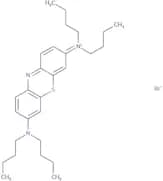
CAS :PPA-904 is an organophosphate compound, which is a chemically synthesized product. It functions as an additive, often utilized in industrial applications due to its unique chemical properties. As an organophosphate, PPA-904 acts through phosphorylation processes, interacting with various substrates to alter their chemical and physical characteristics. This mechanism is utilized to enhance material properties such as stability, functionality, or resistance to environmental conditions.Formule :C28H42BrN3SDegré de pureté :Min. 95%Masse moléculaire :532.6 g/mol3'-N-Desmethyl-3'-N-tosyl azithromycin
CAS :<p>3'-N-Desmethyl-3'-N-tosyl azithromycin is a semi-synthetic macrolide antibiotic analog, which is a derivative of azithromycin, a well-known member of the macrolide class of antibiotics. This compound is synthesized through chemical modifications of the parent molecule, azithromycin, to potentially enhance its pharmacokinetic and pharmacodynamic properties.</p>Formule :C44H76N2O14SDegré de pureté :Min. 95%Masse moléculaire :889.15 g/molN,N′-1,2-Ethanediylbis[3-nitrobenzenesulfonamide]
CAS :N,N′-1,2-Ethanediylbis[3-nitrobenzenesulfonamide] is a chemical compound, specifically a bis-sulfonamide derivative. It is synthesized through the reaction of sulfonamide derivatives with ethylenediamine, resulting in a unique structure characterized by its two nitrobenzenesulfonamide groups linked by an ethylene bridge. As a source, it is obtained through synthetic organic chemistry methods involving nitration and sulfonamidation processes.Formule :C14H14N4O8S2Degré de pureté :Min. 95%Masse moléculaire :430.4 g/molFenoprofen sodium salt dihydrate
CAS :<p>Fenoprofen sodium salt dihydrate is a nonsteroidal anti-inflammatory drug (NSAID), which is a synthetic compound derived from propionic acid. It acts by inhibiting the cyclooxygenase (COX) enzymes, COX-1 and COX-2, leading to decreased synthesis of prostaglandins. This reduction in prostaglandin synthesis is responsible for its analgesic, anti-inflammatory, and antipyretic effects.</p>Formule :C15H13NaO3·2H2ODegré de pureté :Min. 95%Masse moléculaire :264.25 g/molAcequinocyl-hydroxy
CAS :<p>Acequinocyl-hydroxy is an acaricide, which is a chemical agent used to manage and control mite populations in various agricultural settings. It is derived from a combination of synthetic organic compounds designed specifically to disrupt the normal biological processes of target pests. The mode of action of Acequinocyl-hydroxy involves interference with the mitochondrial electron transport chain of mites, ultimately disrupting cellular respiration and leading to the death of the pest.</p>Formule :C22H30O3Degré de pureté :Min. 95%Masse moléculaire :342.5 g/molVancomycin hydrochloride from streptomyces orientalis
CAS :Vancomycin hydrochloride is a glycopeptide antibiotic, derived from the bacterium *Streptomyces orientalis*. This compound functions by inhibiting bacterial cell wall synthesis, specifically targeting the D-alanyl-D-alanine termini in peptidoglycan chains. It disrupts transglycosylation and transpeptidation, critical steps in cell wall biosynthesis, ultimately leading to cell lysis.Formule :C66H75Cl2N9O24·HClDegré de pureté :Min. 95%Masse moléculaire :1,485.71 g/mol8-Oxo-gtp 8-hydroxy-gtp
CAS :<p>8-Oxo-GTP, also known as 8-Hydroxy-GTP, is a nucleotide analog, which is synthetically derived. It closely resembles the naturally occurring guanosine triphosphate (GTP) but contains a modified 8-hydroxy group, making it a valuable tool for studying oxidative damage and nucleotide modification processes.</p>Formule :C10H16N5O15P3Degré de pureté :Min. 95%Masse moléculaire :539.18 g/molLobucavir
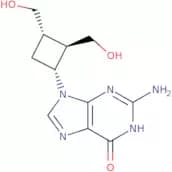
CAS :<p>Lobucavir is an antiviral compound with a mode of action that inhibits viral DNA polymerase. It is used for treating infections caused by herpesviruses and hepatitis B virus.</p>Formule :C11H15N5O3Degré de pureté :Min. 95%Masse moléculaire :265.27 g/molNITD-916
CAS :NITD-916 is an antiviral compound, which is a synthetic molecule designed for therapeutic purposes. Its source lies in medicinal chemistry, where it was developed through a detailed process of molecular optimization and testing to enhance its efficacy and pharmacokinetic properties. The mode of action of NITD-916 involves inhibiting viral replication by targeting specific non-structural proteins essential for the replication process of certain RNA viruses.Formule :C20H25NO2Degré de pureté :Min. 95%Masse moléculaire :311.4 g/molFosravuconazole
CAS :<p>Fosravuconazole is an antifungal agent, classified as a triazole antifungal, which is developed from a synthetic chemical source. It operates as a prodrug of ravuconazole, meaning that after administration, fosravuconazole is converted into its active form in the body. This conversion enhances the absorption and bioavailability of the drug, providing improved treatment efficacy against fungal infections.</p>Formule :C23H20F2N5O5PSDegré de pureté :Min. 95%Masse moléculaire :547.5 g/molTyrothricin
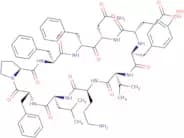
CAS :<p>Tyrothricin is a peptide antibiotic, which is derived from the bacterium Bacillus brevis. This compound comprises a mixture of polypeptides, primarily gramicidin and tyrocidine, both of which are instrumental in its antimicrobial activity. The mode of action of tyrothricin involves disrupting bacterial cell membranes, leading to cell lysis and death. Gramicidin increases the permeability of the bacterial membrane to ions, while tyrocidine promotes disruption of membrane integrity, which together exert bactericidal and bacteriostatic effects.</p>Formule :C65H85N11O13Degré de pureté :Min. 95%Masse moléculaire :1,228.44 g/molAqabamycin A
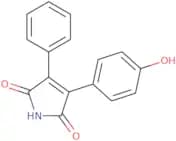
CAS :Aqabamycin A is an antibiotic compound, which is derived from marine microorganisms, specifically actinomycetes. These marine bacteria are known for producing a wide array of bioactive compounds, including antibiotics, due to their unique metabolites shaped by the oceanic environment. Aqabamycin A operates by inhibiting bacterial RNA polymerase, thereby disrupting the transcription process essential for bacterial protein synthesis. This specific mode of action targets the growth and replication of bacteria, making it a potent agent against pathogenic strains.Formule :C16H11NO3Degré de pureté :Min. 95%Masse moléculaire :265.26 g/mol







![N,N′-1,2-Ethanediylbis[3-nitrobenzenesulfonamide]](/_next/image/?url=https%3A%2Fstatic.cymitquimica.com%2Fproducts%2F3D%2Fthumb-webp%2FAAA09662.webp&w=3840&q=75)