Antimicrobiens
Sous-catégories appartenant à la catégorie "Antimicrobiens"
- Antibiotiques(4.502 produits)
- Antifongiques(939 produits)
- Antiparasitaires(807 produits)
- Antiviraux(1.056 produits)
2643 produits trouvés pour "Antimicrobiens"
AT-511
CAS :AT-511 is an antiviral compound, which is derived from organic synthesis processes associated with the development of nucleotide analogs. It acts by targeting the RNA-dependent RNA polymerase, a crucial enzyme in the replication process of RNA viruses. By inhibiting this enzyme, AT-511 effectively halts viral replication, reducing the viral load within the host.
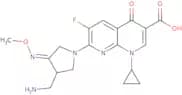
Formule :C24H33FN7O7PDegré de pureté :Min. 95%Masse moléculaire :581.5 g/molGemifioxacin
CAS :Gemifloxacin is an antibacterial agent primarily classified as a fluoroquinolone antibiotic, which is a synthetic compound derived from chemical processes in pharmaceutical manufacturing. Its mechanism of action involves the inhibition of key bacterial enzymes, namely DNA gyrase and topoisomerase IV. These enzymes are crucial for bacterial DNA replication, transcription, repair, and recombination. By obstructing these enzymes, Gemifloxacin effectively inhibits bacterial cell division and growth, leading to the eradication of susceptible bacterial strains.Formule :C18H20FN5O4Degré de pureté :Min. 95%Masse moléculaire :389.38 g/mol6-(2-Chlorophenoxy)-5-fluoro-4(3H)-pyrimidinone
CAS :6-(2-Chlorophenoxy)-5-fluoro-4(3H)-pyrimidinone is a heterocyclic compound, which is a synthetic derivative developed for biochemical research. This compound is synthesized through a series of organic reactions, involving halogenation and cyclization techniques, typically conducted in a controlled laboratory setting. Its design incorporates specific structural features, such as the chlorophenoxy and fluoro groups, which are strategically positioned to enhance its binding affinity and specificity.
Formule :C10H6ClFN2O2Degré de pureté :Min. 95%Masse moléculaire :240.62 g/molFuraprofen
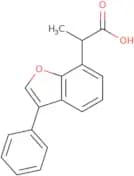
CAS :Furaprofen is a nonsteroidal anti-inflammatory drug (NSAID), which is a synthetic pharmaceutical compound derived from the carboxylic acid class. Its mode of action involves inhibiting the enzyme cyclooxygenase (COX), which plays a crucial role in the biosynthesis of pro-inflammatory prostaglandins. By blocking COX activity, Furaprofen reduces the formation of these signaling molecules, thereby alleviating inflammation and pain.
Formule :C17H14O3Degré de pureté :Min. 95%Masse moléculaire :266.29 g/molThiamphenicol
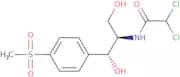
CAS :Thiamphenicol is a semisynthetic derivative of chloramphenicol with action on bacterial protein synthesis inhibition and is used for treating bacterial infections, particularly in veterinary medicine.Formule :C12H15Cl2NO5SDegré de pureté :Min. 98 Area-%Couleur et forme :PowderMasse moléculaire :356.22 g/molNoracronycine
CAS :Please enquire for more information about Noracronycine including the price, delivery time and more detailed product information at the technical inquiry form on this page
Formule :C19H17NO3Degré de pureté :Min. 95%Masse moléculaire :307.3 g/molDSHS00884
CAS :DSHS00884 is a CRISPR-associated enzyme, which is a type of gene-editing tool derived from bacterial immune systems. This enzyme functions as a molecular scissor that targets specific DNA sequences and introduces breaks or modifications at defined loci. The mode of action involves recognizing specific guide RNA sequences that direct the enzyme to complementary DNA sites where it executes precise edits. This precision stems from its ability to form base-pair interactions with the targeted DNA, ensuring minimal off-target effects.Formule :C12H12N4O2S2Degré de pureté :Min. 95%Masse moléculaire :308.4 g/molSARS-CoV-IN-3
CAS :SARS-CoV-IN-3 is a small-molecule inhibitor, which is derived through synthetic organic chemistry targeting SARS-CoV-2. It exhibits its mode of action by specifically inhibiting the viral RNA-dependent RNA polymerase (RdRp) enzyme. This enzyme is crucial for viral RNA synthesis, and by inhibiting its activity, SARS-CoV-IN-3 effectively suppresses viral replication within host cells.Formule :C25H20ClFEN3ODegré de pureté :Min. 95%Masse moléculaire :469.74 g/molFenamiphos-sulfoxide d3 (S-methyl d3)
CAS :Fenamiphos-sulfoxide d3 (S-methyl d3) is a deuterated, labeled pesticide intermediate, which is often utilized in advanced laboratory settings for precise analytical studies. This compound is synthesized as a stable isotope-labeled analog, enabling researchers to conduct sophisticated mass spectrometric analyses. Its mode of action involves serving as a reference or tracer in studies concerning the metabolism and degradation of fenamiphos, a well-known organophosphate pesticide.
Formule :C13H22NO4PSDegré de pureté :Min. 95%Masse moléculaire :322.38 g/molNapyradiomycin A
CAS :Napyradiomycin A is a secondary metabolite, classified as a type of antibiotic, which is derived from marine Streptomyces bacteria. This natural product is of considerable interest due to its unique biosynthetic origin, found specifically in marine ecosystems. Napyradiomycin A exhibits its mode of action primarily through the inhibition of bacterial RNA synthesis. This is achieved by interacting with bacterial enzymes, subsequently halting their reproductive and metabolic processes, which makes it a potent antibacterial agent.
Formule :C25H30Cl2O5Degré de pureté :Min. 95%Masse moléculaire :481.40 g/molAcetophos
CAS :Acetophos is an organophosphate insecticide, which is a synthetic chemical compound derived from phosphoric acid. It functions by inhibiting acetylcholinesterase, an essential enzyme in the nervous systems of insects. This inhibition leads to the accumulation of acetylcholine, causing continuous nerve impulses that result in the paralysis and eventual death of the pest.
Formule :C8H17O5PSDegré de pureté :Min. 95%Masse moléculaire :256.26 g/molFluhexafon
CAS :Fluhexafon is an innovative acaricide, which is derived from advanced chemical synthesis. Its mode of action involves disrupting critical biological processes in mites, specifically targeting nerve receptor pathways to inhibit their survival and reproduction. By interfering with the neurotransmission, it effectively reduces mite populations, ensuring healthier crops.
Formule :C12H17F3N2O3SDegré de pureté :Min. 95%Masse moléculaire :326.34 g/molLicoflavone B
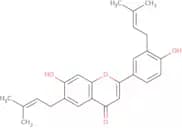
CAS :Licoflavone B is a naturally occurring flavonoid, which is primarily derived from the roots of licorice plants, such as Glycyrrhiza inflata. It functions as a bioactive compound with potential antioxidant and anti-inflammatory activities. The mode of action of Licoflavone B involves the scavenging of free radicals, modulation of signaling pathways, and inhibition of pro-inflammatory mediators. These biological activities render it valuable in research focused on chronic diseases and oxidative stress.Formule :C25H26O4Degré de pureté :Min. 95%Masse moléculaire :390.5 g/molPantoprazole magnesium
CAS :Pantoprazole magnesium is a pharmaceutical compound that belongs to the class of proton pump inhibitors (PPIs). It is derived from the benzimidazole chemical family and synthesized through a chemical process that involves the formation of a magnesium salt of pantoprazole. This compound's mode of action involves the irreversible inhibition of the H+/K+ ATPase enzyme system located on the gastric parietal cell surface. By blocking this enzyme system, pantoprazole magnesium effectively reduces the secretion of gastric acid.Formule :C32H28F4MgN6O8S2Degré de pureté :Min. 95%Masse moléculaire :789.00 g/molGentamicin C2 pentaacetate (2 : 1 Mixture of C2 and C2a)
CAS :Produit contrôléGentamicin C2 pentaacetate (2 : 1 Mixture of C2 and C2a) is an aminoglycoside class antibiotic derivative, primarily derived from the fermentation of Micromonospora species. This product is a semi-synthetic compound, combining two closely related gentamicin components, C2 and C2a, in a specified ratio. Its mode of action involves binding to the 30S subunit of the bacterial ribosome, which disrupts protein synthesis resulting in bactericidal activity against a wide spectrum of Gram-negative and some Gram-positive bacteria.
Formule :C30H61N5O17Degré de pureté :Min. 95%Masse moléculaire :763.83 g/molBPH-1358
CAS :BPH-1358 is a novel synthetic inhibitor, which is derived from a series of advanced chemoinformatics-based design strategies. It functions through the targeted binding to specific cell surface receptors involved in the modulation of immune responses. By blocking these receptors, BPH-1358 effectively alters signaling pathways that are crucial for immune activation and inflammatory responses.Formule :C32H28N6O2Degré de pureté :Min. 95%Masse moléculaire :528.6 g/molThiabendazole NH d6
CAS :Thiabendazole NH d6 is a deuterated derivative of Thiabendazole, which is an antifungal agent and pesticide. It is derived from synthetic sources, specifically designed by incorporating deuterium atoms into the molecular structure. This subtle isotopic modification enhances its utility in research settings, particularly in studies related to pharmacokinetics and metabolic profiling. The mode of action of Thiabendazole involves the inhibition of the enzyme fumarate reductase, interfering with the energy metabolism of fungal and parasitic organisms. Additionally, it disrupts microtubule formation, preventing cell division and growth.Formule :C10H7N3SDegré de pureté :Min. 95%Masse moléculaire :207.29 g/molTriazoxide-desoxy
CAS :Triazoxide-desoxy is an investigational compound, which is a synthetic derivative of triazoxide, originating from pharmacological research aimed at modulating physiological pathways. This compound acts primarily by influencing ion channel activity at a cellular level, impacting the regulation of potassium channels which are crucial for maintaining cellular homeostasis and signaling.Formule :C10H6ClN5Degré de pureté :Min. 95%Masse moléculaire :231.64 g/molButafenacil
CAS :Butafenacil is a herbicide, which is a chemical formulation sourced from synthetic compounds. It acts by inhibiting protoporphyrinogen oxidase (PPO), an enzyme critical in the biosynthesis of chlorophyll. This inhibition disrupts the photosynthetic process, leading to the accumulation of reactive oxygen species that cause cell membrane damage and ultimately result in plant death.
Formule :C17H14ClF3N2O6Degré de pureté :Min. 95%Masse moléculaire :434.7 g/molGriseoluteic acid
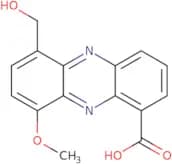
CAS :Griseoluteic acid is a cyclic lipopeptide that inhibits bacterial growth by binding to the enzyme cyclase, which is involved in the production of cyclic AMP. Griseoluteic acid also inhibits the synthesis of rRNA (ribosomal RNA), which is required for protein synthesis. The compound has been shown to have a high degree of resistance against antibiotic-resistant strains and exhibits a low toxicity profile in vitro. Griseoluteic acid also has an inhibitory effect on hydrogen bonding interactions, which may be due to its ability to inhibit energy metabolism. This compound also exhibits anti-inflammatory properties and has been shown to have neurodevelopmental effects in animal models.
Formule :C15H12N2O4Degré de pureté :Min. 95%Masse moléculaire :284.27 g/mol