Antimicrobiens
Les antimicrobiens sont des agents qui détruisent ou inhibent la croissance des microorganismes, y compris les bactéries, les virus, les champignons et les parasites. Ces composés sont essentiels dans la prévention et le traitement des infections, jouant un rôle crucial en médecine, en agriculture et dans l'industrie alimentaire. Chez CymitQuimica, nous proposons une vaste gamme d'antimicrobiens de haute qualité et pureté, adaptés à diverses applications scientifiques et industrielles. Notre catalogue comprend des antibiotiques, des antifongiques, des antiviraux et des désinfectants, tous conçus pour répondre aux besoins de la recherche et du développement, ainsi qu'aux applications cliniques et de production. Avec nos produits, les professionnels peuvent garantir l'efficacité et la sécurité dans le contrôle des infections et la protection de la santé publique.
Sous-catégories appartenant à la catégorie "Antimicrobiens"
- Antibiotiques(4.115 produits)
- Antifongiques(841 produits)
- Antiparasitaires(704 produits)
- Antiviraux(763 produits)
2422 produits trouvés pour "Antimicrobiens"
Trier par
Degré de pureté (%)
0
100
|
0
|
50
|
90
|
95
|
100
Virginiamycin - Complex of M1+S1
CAS :<p>Virginiamycin - Complex of M1+S1 is an antibiotic compound, which is derived from the actinobacterium Streptomyces virginiae. It functions through the inhibition of bacterial protein synthesis by binding to the 50S ribosomal subunit, thereby obstructing peptide bond formation and impeding microbial growth. The complex is composed of two major components: Virginiamycin M1 and Virginiamycin S1, which synergistically enhance antimicrobial efficacy.</p>Formule :C71H84N10O17Degré de pureté :Min. 95%Masse moléculaire :1,349.48 g/molSARS-CoV-IN-2
CAS :<p>SARS-CoV-IN-2 is a highly specific and potent antiviral inhibitor, which is chemically synthesized to target SARS-CoV-2, the virus responsible for COVID-19. This compound functions by interfering with the viral replication process, specifically targeting the viral 3CL protease enzyme, crucial for viral polyprotein cleavage. By inhibiting this protease, SARS-CoV-IN-2 effectively hampers the replication cycle of the virus, limiting its ability to proliferate within the host cells.</p>Formule :C24H18ClFEN3ODegré de pureté :Min. 95%Masse moléculaire :455.72 g/mol(4S)-2-[Carboxy[[[3-(2-chloro-6-fluorophenyl)-5-methylisoxazol-4-yl]carbonyl]amino]methyl]-5,5-dimethylthiazolidine-4-carboxylic aci d disodium salt (penicilloic acids of flucloxacillin disodium salt)
CAS :<p>(4S)-2-[Carboxy[[[3-(2-chloro-6-fluorophenyl)-5-methylisoxazol-4-yl]carbonyl]amino]methyl]-5,5-dimethylthiazolidine-4-carboxylic acid disodium salt, known as the penicilloic acids of flucloxacillin disodium salt, is a β-lactam antibiotic. This compound is derived from the penicillin family and exhibits potent antibacterial properties. The mode of action involves the inhibition of bacterial cell wall synthesis, primarily targeting the transpeptidase enzyme, which plays a crucial role in cross-linking the peptidoglycan layers of the bacterial cell wall. By acylating this enzyme, the penicilloic acids disrupt the integrity of the cell wall, leading to cell lysis and death of the bacteria.</p>Formule :C19H17ClFN3Na2O6SDegré de pureté :Min. 95%Masse moléculaire :515.9 g/mol2-Methyl-4-isothiazolin-3-one
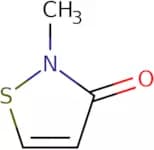
CAS :Produit contrôlé<p>2-Methyl-4-isothiazolin-3-one or MIT is a powerful antimicrobial and antifungal agent which is widely used in personal care products. It is also used in industrial applications as a preservative and antifouling agent.</p>Formule :C4H5NOSDegré de pureté :Min. 96%Couleur et forme :Yellow PowderMasse moléculaire :115.15 g/mol(4E)-1-(3,4-Dichlorophenyl)-4-[(4-ethoxyphenyl)methylidene]pyrazolidine-3,5-dione
CAS :(4E)-1-(3,4-Dichlorophenyl)-4-[(4-ethoxyphenyl)methylidene]pyrazolidine-3,5-dione is a synthetic compound belonging to the class of pyrazolidine diones. This compound is mainly derived from chemical synthesis in a laboratory setting. It acts through its interaction with specific biological pathways, potentially affecting enzyme activity or receptor sites involved in various physiological processes.Formule :C18H14Cl2N2O3Degré de pureté :Min. 95%Masse moléculaire :377.2 g/molNeuraminidase-in-1
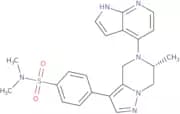
CAS :<p>Neuraminidase-in-1 is a chemical compound known as a neuraminidase inhibitor, which is synthetically derived. This inhibitor functions by blocking the activity of the neuraminidase enzyme, a glycoprotein found on the surface of various viruses, including influenza. The enzyme is crucial for the viral life cycle as it facilitates the release of new viral particles from infected host cells. By inhibiting this enzyme, Neuraminidase-in-1 effectively halts the replication and spread of the virus within the host organism.</p>Formule :C14H11N3O6Degré de pureté :Min. 95%Masse moléculaire :317.25 g/molAlamethacin
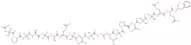
CAS :<p>Alamethacin is a peptide antibiotic, which is derived from the soil fungus Trichoderma viride. This compound consists of a sequence of amino acids that form a helical structure, enabling its interaction with lipid membranes. Alamethacin functions by inserting itself into cellular membranes and forming voltage-dependent ion channels. As a result, it alters membrane permeability, causing ion imbalance and leading to cell death.</p>Formule :C92H150N22O25Degré de pureté :Min. 95%Couleur et forme :SolidMasse moléculaire :1,964.31 g/moltert-Butyl 4-[3-(4,4,5,5-tetramethyl-1,3,2-dioxaborolan-2-yl)pyrazol-1-yl]piperidine-1-carboxylate
CAS :<p>Tert-Butyl 4-[3-(4,4,5,5-tetramethyl-1,3,2-dioxaborolan-2-yl)pyrazol-1-yl]piperidine-1-carboxylate is a boronic ester compound used primarily in organic synthesis. It is derived from the reaction of a piperidine-based carboxylate with a dioxaborolane moiety, forming a unique structural entity that serves as a versatile building block in molecular modification and drug development.</p>Formule :C19H32BN3O4Degré de pureté :Min. 95%Masse moléculaire :377.3 g/molAcorafloxacin
CAS :<p>Acorafloxacin is a synthetic fluoroquinolone antibiotic, which is derived from the chemical modification of the quinolone core structure. It acts by inhibiting bacterial DNA gyrase and topoisomerase IV, enzymes crucial for bacterial DNA replication and transcription. The bactericidal action results from preventing the supercoiling and relaxation of the bacterial DNA, ultimately interrupting essential cellular processes.</p>Formule :C21H23F2N3O4Degré de pureté :Min. 95%Masse moléculaire :419.4 g/molLevofloxacin
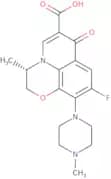
CAS :<p>Levofloxacin is a fluoroquinolone antibiotic with a mode of action that inhibits bacterial DNA gyrase and topoisomerase IV. It is used for treating bacterial infections like pneumonia and urinary tract infections.</p>Formule :C18H20FN3O4Degré de pureté :Min. 95%Couleur et forme :PowderMasse moléculaire :361.37 g/mol7-Ethyl-10-(4-amino-1-piperidino)carbonyloxycamptothecin-d3
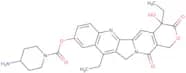
CAS :<p>7-Ethyl-10-(4-amino-1-piperidino)carbonyloxycamptothecin-d3 is a synthetic chemical compound, which is a deuterated derivative of irinotecan. Deuteration involves the substitution of deuterium for hydrogen atoms, which is often utilized to enhance the metabolic stability and pharmacokinetic properties of compounds in research applications. The compound is derived from camptothecin, a natural alkaloid sourced from the Chinese tree Camptotheca acuminata.</p>Formule :C28H30N4O6Degré de pureté :Min. 95%Masse moléculaire :521.6 g/molPazufloxacin
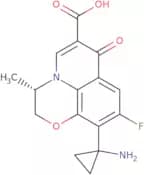
CAS :<p>Pazufloxacin is an antibacterial agent, which is a synthetic derivative originating from the fluoroquinolone class of compounds. This source categorizes it alongside a group of broad-spectrum antibiotics known for their efficacy against a wide variety of bacterial pathogens. The mode of action of pazufloxacin involves the inhibition of bacterial DNA gyrase and topoisomerase IV. These are essential enzymes for bacterial DNA replication, transcription, repair, and recombination processes. By inhibiting these enzymes, pazufloxacin disrupts the bacterial DNA processes, ultimately leading to cell death.</p>Formule :C16H15FN2O4Degré de pureté :Min. 95%Masse moléculaire :318.3 g/molCefminox Sodium
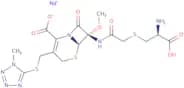
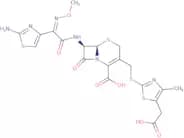
CAS :<p>Cefminox Sodium is a beta-lactam antibiotic, which is synthesized through chemical modification of naturally occurring compounds. This product is classified as a second-generation cephalosporin, derived from cephalosporin C obtained from the fungus Acremonium. It exerts its mode of action by inhibiting bacterial cell wall synthesis. This occurs through the binding to penicillin-binding proteins, ultimately disrupting the cross-linking of peptidoglycan chains which are essential for bacterial cell wall integrity.</p>Formule :C16H20N7O7S3·NaDegré de pureté :Min. 95%Masse moléculaire :541.56 g/molCefodizime
CAS :<p>Cefodizime is a third-generation cephalosporin antibiotic, which is derived from the fungus Acremonium. It exerts its bactericidal effects by inhibiting bacterial cell wall synthesis. This action is achieved through binding to penicillin-binding proteins (PBPs), leading to the interruption of peptidoglycan cross-linking essential for the bacterial cell wall integrity. The breakdown of cell wall synthesis results in the lysis and death of the bacterial cell.</p>Degré de pureté :Min. 95%(±)-Salbutamol
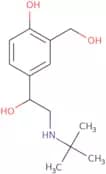
CAS :Produit contrôlé<p>(±)-Salbutamol is a racemic mixture of a beta-2 adrenergic agonist, which is synthetically derived. This compound functions primarily by selectively stimulating beta-2 adrenergic receptors, which are predominantly located on the smooth muscle cells lining the airways. The activation of these receptors leads to the relaxation of bronchial muscle tissue, resulting in bronchodilation and improved airflow.</p>Formule :C13H21NO3Masse moléculaire :239.31 g/molAntimicrobial compound 1
CAS :<p>Antimicrobial Compound 1 is a broad-spectrum antimicrobial agent, which is derived from natural sources, specifically from marine bacteria with known potent antimicrobial properties. This compound acts by targeting and disrupting the synthesis of bacterial cell walls, specifically inhibiting peptidoglycan cross-linking, which ultimately leads to cell lysis and death due to osmotic instability. Such a mechanism offers a robust approach to tackling Gram-positive and Gram-negative bacteria.</p>Formule :C18H30BrNO2Degré de pureté :Min. 95%Masse moléculaire :372.3 g/molPC 190723
CAS :<p>PC 190723 is a synthetic chemical compound, which is derived through targeted chemical synthesis processes involving precise organic reactions. Its mode of action involves disrupting cellular division by inhibiting specific protein functions essential for the mitotic process. This molecular interaction results in potent effects on cell division, making it a valuable tool for studying cellular mechanics and developing therapeutic strategies.</p>Formule :C14H8ClF2N3O2SDegré de pureté :Min. 95%Masse moléculaire :355.75 g/molPorfiromycin
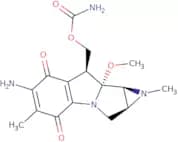
CAS :<p>Porfiromycin is an antineoplastic antibiotic with action on DNA alkylation and cross-linking and is used for research on cancer treatment, particularly for hypoxic tumors.</p>Formule :C16H20N4O5Degré de pureté :Min. 95 Area-%Couleur et forme :PowderMasse moléculaire :348.35 g/molUrdamycin B
CAS :<p>Urdamycin B is an anthracycline antibiotic, which is derived from the bacterium *Streptomyces fradiae*. This compound acts by intercalating into DNA, disrupting the replication and transcription processes, leading to cell death. Its mode of action involves inhibiting topoisomerase II, an enzyme critical for DNA replication and cell cycle progression. This mechanism impairs cellular proliferation, making it effective against rapidly dividing cells.</p>Formule :C37H44O13Degré de pureté :Min. 95%Masse moléculaire :696.70 g/mol

![(4S)-2-[Carboxy[[[3-(2-chloro-6-fluorophenyl)-5-methylisoxazol-4-yl]carbonyl]amino]methyl]-5,5-dim…](/_next/image/?url=https%3A%2Fstatic.cymitquimica.com%2Fproducts%2F3D%2Fthumb-webp%2FTCA72850.webp&w=3840&q=75)
![(4E)-1-(3,4-Dichlorophenyl)-4-[(4-ethoxyphenyl)methylidene]pyrazolidine-3,5-dione](/_next/image/?url=https%3A%2Fstatic.cymitquimica.com%2Fproducts%2F3D%2Fthumb-webp%2FISA23884.webp&w=3840&q=75)
![tert-Butyl 4-[3-(4,4,5,5-tetramethyl-1,3,2-dioxaborolan-2-yl)pyrazol-1-yl]piperidine-1-carboxylate](/_next/image/?url=https%3A%2Fstatic.cymitquimica.com%2Fproducts%2F3D%2Fthumb-webp%2FFP181624.webp&w=3840&q=75)