Acides gras
Sous-catégories appartenant à la catégorie "Acides gras"
- Acylglycérols/Glycérides(43 produits)
- Eicosanoïdes(6 produits)
- Esters d'acides gras(947 produits)
- Acides gras halogénés(32 produits)
2448 produits trouvés pour "Acides gras"
N-Hexadecanol-D31
CAS :Produit contrôléApplications N-Hexadecanol (2,2,3,3...16,16,16-D31, 98%) (cas# 203633-15-2) is a useful research chemical.
Formule :C16D31H3OCouleur et forme :NeatMasse moléculaire :273.63Lauroylcholine Chloride
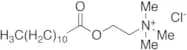
CAS :Produit contrôléApplications Lauroylcholine Chloride (cas# 25234-60-0) is a compound useful in organic synthesis.
Formule :C17H36NO2·ClCouleur et forme :NeatMasse moléculaire :321.93Oxalic Acid Ethyl Ester
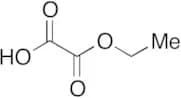
CAS :Produit contrôléApplications Oxalic Acid Ethyl Ester is a useful synthetic intermediate. It is used to synthesize 2-substituted 3-aryl-4(3H)-quinazolinones with anticonvulsant activities. It is also used to prepare nonbenzamidine tetrazole derivatives as factor Xa inhibitors.
References Wolfe, J., et al.: J. Med. Chem., 33, 161 (1009); Quan, M., et al.: bioorg. Med. Chem. Lett., 13, 369 (2003)Formule :C4H6O4Couleur et forme :NeatMasse moléculaire :118.09Propargyl Alcohol
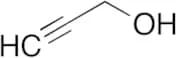
CAS :Produit contrôléApplications Propargyl Alcohol is used as a corrosion inhibitor, a metal complex solution, a solvent stabilizer and an electroplating brightener additive. It is also used as an intermediate in organic synthesis.
Not a dangerous good if item is equal to or less than 1g/ml and there is less than 100g/ml in the package
References Zhang, T., et al.: Res. Chem. Interm. (2013); Choudhary, Y., et al.: SPE Product. Operat., 28, 268 (2013); Hed, Y., et al.: J. Mater. Chem. Mater. Bio. Med., 1, 6015 (2013);Formule :C3H4OCouleur et forme :NeatMasse moléculaire :56.06Palmitoyl Chloride
CAS :Produit contrôléStability Moisture Sensitive
Applications Palmitoyl Chloride was used as a polymeric carriers for plasmid DNA (pDNA) delivery to 293T cells.
References Remant, B.K.C., et al.: J. Biomaterials. Sci. Poly. Ed., 22, 873 (2011); Allard, E., et al.: Int. J. Pharma., 379, 217 (2009);Formule :C16H31ClOCouleur et forme :Light YellowMasse moléculaire :274.87Hexadecanoic-9,9,10,10,11,11,12,12,13,13,14,14,15,15,16,16,16-d17 Acid
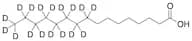
CAS :Produit contrôléApplications Hexadecanoic-9,9,10,10,11,11,12,12,13,13,14,14,15,15,16,16,16-d17 Acid (CAS# 81462-28-4) is a useful isotopically labeled research compound.
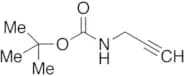
Formule :C16H15D17O2Couleur et forme :White To Off-WhiteMasse moléculaire :273.53N-Boc-propargylamine
CAS :Produit contrôléApplications N-Boc-propargylamine is used in the preparation of triazolobenzylidene-thiazolopyrimidines which act as CDC25 phosphatase inhibitors. Also used in the synthesis of β-glucan polysaccharide analogs.
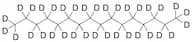
References Duval, R. et al.: J. Comb. Chem., 11, 947 (2009); Tanaka, H. et al.: Tetrahedron Lett., 53, 4104 (2012);Formule :C8H13NO2Couleur et forme :NeatMasse moléculaire :155.2n-Hexadecane-d34
CAS :Produit contrôléApplications n-Hexadecane-d34 is the labeled compound of Hexadecane(H293630). Hexadecane has been used to prepare emulsions in water. It is also used as a substrate for the bacterial production of biosurfactants.
References Rang, M., et al.: J. Colloid Interface Sci., 209, 179 (1999); Hills, B., et al.: Magn. Reson. Imaging, 18, 319 (2000); Noordman, W., et al.: Appl. Environ. Microbiol., 68, 4502 (2002)Formule :C162H34Couleur et forme :ColourlessMasse moléculaire :260.651-Hexadecanol
CAS :Applications 1-Hexadecanol, is used in the cosmetic industry as an opacifier in shampoos, or as an emollient, emulsifier or thickening agent in the manufacture of skin creams and lotions.
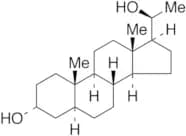
References Smolinske S. C., et al.: Handbook Food Drug and Cosmetic Exipients, 75 (1992);Formule :C16H34OCouleur et forme :White To Off-WhiteMasse moléculaire :242.445a-Pregnane-3a,20a-diol
CAS :Produit contrôléApplications Progesterone metabolite.
References Beall, et al.: Biochem. J., 31, 35 (1937), Okuda, A., et al.: J. Biol. Chem., 259, 7519 (1984), Russell, D., et al.: Biochemistry, 31, 4737 (1992), Kondo, K., et al.: Eur. J. Biochem., 219, 357 (1994), Westerbacka, J., et al.: J. Clin. Endocrinol. Metab., 88, 4924 (2003),Formule :C21H36O2Couleur et forme :NeatMasse moléculaire :320.512-Morpholinecarboxylic Acid Ethyl Ester
CAS :Produit contrôléFormule :C7H13NO3Couleur et forme :NeatMasse moléculaire :159.18Desacetyl Forskolin
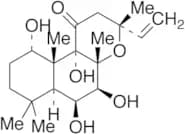
CAS :Produit contrôléApplications Desacetyl Forskolin is an analogue of Forskolin (F701800). Desacetyl Forskolin was tested for its ability to activate rat brain adenylate cyclase, activate detergent-solubilized rat brain adenylate cyclase, increase cyclic AMP in intact S49 wild-type cells, and inhibit the binding of 3H-forskolin to rat brain membranes.
References Desouza, N., et al.: Med. Res. Rev., 3, 201 (1983); Seamon, K., et al.: J. Med. Chem., 26, 436 (1983); Seguin, E., et al.: Planta Medica, 54, 4 (1988);Formule :C20H32O6Couleur et forme :NeatMasse moléculaire :368.465-Bromopentanoic Acid Ethyl Ester
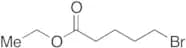
CAS :Produit contrôléApplications 5-Bromopentanoic Acid Ethyl Ester was used in the preparation of S(γ-Carboxypropyl)-DL-homocysteine and S(δ-Carboxybutyl)-DL-homocysteine. It was also used in the preparation of ethyl 5-azidovalerate.
References Awad, W.: J. Biol. Chem., 258, 12790 (1983); Li, Z., et al.: Tetrahedron Lett., 45, 3143 (2004)Formule :C7H13BrO2Couleur et forme :NeatMasse moléculaire :209.085,7-Docosadiynoic Acid
CAS :Produit contrôléApplications Amphiphilic molecule used in the synthesis of artificial cell membranes for diagnostics and therapeutics.
References Deckert, A.A., et al.: Langmuir, 11, 643 (1995); Charych, D., and Nagy, J.O.: Chemtech, 26(9), 24 (1996); Pan, J.J. and Charych, D.: Langmuir, 13, 1365 (1997)Formule :C23H38O2Couleur et forme :NeatMasse moléculaire :346.552,4-Dimethyl-1H-pyrrole-3-carboxylic Acid Ethyl Ester
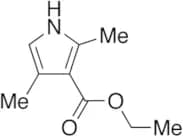
CAS :Produit contrôléApplications 2,4-Dimethyl-1H-pyrrole-3-carboxylic Acid Ethyl Ester is used in the preparation of blue pyrrole dyes. 2,4-Dimethyl-1H-pyrrole-3-carboxylic Acid Ethyl Ester is also used as an intermediate in the synthesis of receptor tyrosine kinase (RTK) inhibitors and their metabolites.
References Treibs, A. et al.: Lieb. Ann. Chem., 2, 289 (1978); Elsinghorst, P. et al.: J. Lab. Comp. Radiopharm., 52, 360 (2009);Formule :C9H13NO2Couleur et forme :NeatMasse moléculaire :167.21N-Succinimidyl Palmitate
CAS :Produit contrôléStability Moisture Sensitive; Store in Freezer, Hygroscopic
Applications N-hydroxysuccinimide ester of palmitic acid. Esters of N-hydroxysuccinimide have been used for the preparation of N-acylamino acids, aminoacyl-tRNA, coenzyme A, thioglycolic acid, ceramides, etc.
References Lapidot, Y., et al.: J. Lipid Res., 8, 142 (1967); Lapidot, Y., et al.: Biochim. Biophys. Acta, 145, 292 (1967); Al-Arif, A., et al.: J. Lipid Res., 10, 344 (1969); Ong, D.E., and Brady, R.N., J. Lipid Res., 13, 819 (1972)Formule :C20H35NO4Couleur et forme :NeatMasse moléculaire :353.508-Chloro-6-oxo-octanoic Acid Ethyl Ester
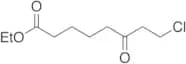
CAS :Produit contrôléApplications Intermediate in the synthesis of Lipoic Acid and its derivatives.
Formule :C10H17ClO3Couleur et forme :NeatMasse moléculaire :220.69a-Cortol
CAS :Produit contrôléStability Hygroscopic
Applications α-Cortol, is a derivative of Cortisone (C696500), a Glucocorticoid, and an anti-inflammatory agent.
References Honda, A., et al.: J. Biol. Chem., 268, 7759 (1993), Narko, K., et al.: J. Clin. Endocrinol. Metab., 86, 1765 (2001), Michael, A., et al.: Reproduction, 126, 425 (2003),Formule :C21H36O5Couleur et forme :NeatMasse moléculaire :368.51DL-alpha-Hydroxypalmitic acid
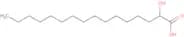
CAS :Palmitic acid is a fatty acid that is found in animal and vegetable fats. It is also an important component of the cell membrane. Palmitic acid has been shown to inhibit the growth of bacteria by interfering with the synthesis of cell membranes, which are largely composed of lipids. Palmitic acid has been shown to be active against Gram-positive bacteria, including Bacillus subtilis and Staphylococcus epidermidis, as well as Gram-negative bacteria such as Salmonella enterica Serovar Typhi and Escherichia coli O157:H7. Palmitic acid can be used to produce monolayers for use in magnetic resonance spectroscopy. These monolayers have been shown to have an effect on the rate at which glucose is transported across the surface of the membrane. Palmitic acid also inhibits glucosylceramide production in ganoderma lucidum, a type of fungus that causes plant diseases, by blockingFormule :C16H32O3Degré de pureté :Min. 98 Area-%Couleur et forme :PowderMasse moléculaire :272.42 g/molPropargylamine
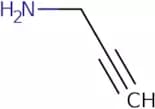
CAS :Propargylamine is an irreversible inhibitor that binds to the active site of the enzyme acetylcholinesterase (AChE) and blocks the breakdown of acetylcholine. This leads to increased levels of acetylcholine in the synaptic cleft, which enhances neurotransmission and causes increased muscle contractions. Propargylamine has been shown to be a potent chemotherapy agent against cancer cells, causing neuronal death. It also inhibits epidermal growth factor receptor (EGFR) signaling pathways, leading to decreased tumor cell proliferation. The drug may also have neurotrophic effects by stimulating nerve growth factors or preventing neuronal apoptosis.Formule :C3H5NDegré de pureté :Min. 95%Couleur et forme :Colorless Yellow Clear LiquidMasse moléculaire :55.08 g/mol