Acides gras
Les acides gras sont des acides carboxyliques avec de longues chaînes d'hydrocarbures, qui peuvent être saturées ou insaturées. Ils sont des composants essentiels des lipides, servant de building blocks clés pour les lipides complexes, les sources d'énergie et les molécules de signalisation. Les acides gras sont impliqués dans divers processus biologiques, y compris le métabolisme, la structure des membranes cellulaires et l'inflammation. Chez CymitQuimica, nous offrons une large gamme d'acides gras de haute qualité pour soutenir vos recherches en biochimie lipidique, nutrition et domaines connexes.
Sous-catégories appartenant à la catégorie "Acides gras"
- Acylglycérols/Glycérides(43 produits)
- Eicosanoïdes(6 produits)
- Esters d'acides gras(946 produits)
- Acides gras halogénés(32 produits)
2447 produits trouvés pour "Acides gras"
Trier par
Degré de pureté (%)
0
100
|
0
|
50
|
90
|
95
|
100
1-Palmitoyl-rac-glycerol
CAS :<p>1-Palmitoyl-rac-glycerol is a fatty acid that contains nitrogen atoms. It has hypoglycemic effects and is used to treat metabolic disorders. 1-Palmitoyl-rac-glycerol has been shown to have a protective effect on the liver by decreasing the levels of triglycerides in the blood and preventing lipid peroxidation. It also improves glucose metabolism and insulin sensitivity. 1-Palmitoyl-rac-glycerol is an important component of biological membranes, where it forms a hydrophobic region that helps maintain membrane structure. This compound also has hemolytic activity, which may be due to its ability to bind with phospholipids or cell membranes, leading to changes in their permeability or stability. The stability of 1-palmitoyl-rac glycerol can be tested by adding reagents such as sodium nitrite or potassium permanganate, which will cause a color change from yellow to brown if it reacts</p>Formule :C19H38O4Degré de pureté :Min. 95%Couleur et forme :PowderMasse moléculaire :330.5 g/mol3-Bromocinnamic acid ethyl ester
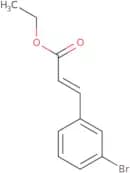
CAS :3-Bromocinnamic acid ethyl ester is a chemical that is useful as a building block for the synthesis of more complex compounds. It is an intermediate in the synthesis of organic compounds and can be used as a reaction component. 3-Bromocinnamic acid ethyl ester has CAS No. 24398-80-9 and is a reagent that can be used to synthesize other chemicals. 3-Bromocinnamic acid ethyl ester is also useful as a scaffold in the development of new drugs, because it has an amide bond, which may lead to new types of drug molecules with different properties.Formule :C11H11BrO2Degré de pureté :Min. 95%Masse moléculaire :255.11 g/mol1-Palmitoyl-2-oleoyl-rac-glycerol
CAS :<p>1-Palmitoyl-2-oleoyl-rac-glycerol is a fatty acid that is made in the mitochondria and is an intermediate in the production of diacylglycerol. It has been shown to have a linear response with cellular protein levels, and it has been shown to be involved in the genetic mechanisms of cells. 1-Palmitoyl-2-oleoyl-rac-glycerol has been found to have a number of protein targets, including phosphatidylinositide 3 kinase, PKC, and Akt. This molecule also has been used as an analytical method for measuring fatty acids in tissue samples and has been shown to alter enzyme levels, such as those found in prostaglandin synthase 2. 1-Palmitoyl-2-oleoyl-rac-glycerol can be synthesized by laser ablation or chromatographic science methods.</p>Formule :C37H70O5Degré de pureté :Min. 95%Couleur et forme :Solidified MassMasse moléculaire :594.95 g/mol7-Ethylindole-3-glyoxylic acid ethyl ester
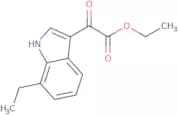
CAS :7-Ethylindole-3-glyoxylic acid ethyl ester is a versatile building block that can be used in the synthesis of complex compounds. It is a useful intermediate in the synthesis of pharmaceuticals, which can also be used as a reagent and speciality chemical. The compound has been shown to have high quality and is a useful scaffold for the synthesis of new compounds.Formule :C14H15NO3Degré de pureté :Min. 95%Masse moléculaire :245.27 g/mol4-Bromophenylacetic acid ethyl ester
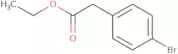
CAS :4-Bromophenylacetic acid ethyl ester is a synthetic compound that binds to the cytochrome P450 enzyme and inhibits its activity. This inhibition prevents the production of estrogen, which may be useful in the treatment of breast cancer. 4-Bromophenylacetic acid ethyl ester has also been shown to inhibit aromatase, an enzyme that catalyzes the conversion of androgens into estrogens. Inhibition of this enzyme by 4-bromophenylacetic acid ethyl ester may be useful in the treatment of prostate cancer. The chemical has also been shown to inhibit glycoprotein synthesis in herpes simplex virus and human plasma proteins involved in drug metabolism. This inhibition may be useful for treating patients with HIV.Formule :C10H11BrO2Degré de pureté :Min. 95%Couleur et forme :PowderMasse moléculaire :243.1 g/mol1,1,3,3,4,4,4a,5,5,6,6,7,7,8,8,8a-Hexadecafluoro-2-(trifluoromethyl)decahydroisoquinoline
CAS :Produit contrôlé1,1,3,3,4,4,4a,5,5,6,6,7,7,8,8,8a-Hexadecafluoro-2-(trifluoromethyl)decahydroisoquinoline is an organic solvent that has a very low boiling point and high volatility. It can be used in dry powder inhalers or as a component of hydrogel compositions for oxygen delivery to the lungs. The uptake of 1HF-2TFI into human colon carcinoma cells was found to be significantly higher than uptake by mammary carcinomas. This may be due to the difference in cell types and/or the phosphate group on the molecule. The binding constants of this molecule are also higher than those of other organic solvents such as acetone and ethanol. The results from a questionnaire study also indicated that 1HF-2TFI can be used for perfusion with oxygenated gas mixtures forFormule :C10F19NDegré de pureté :Min. 95%Masse moléculaire :495.08 g/mol3,5-Dimethoxy-4-hydroxycinnamic acid ethyl ester
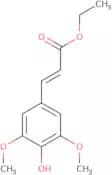
CAS :3,5-Dimethoxy-4-hydroxycinnamic acid ethyl ester is a redox potential with an acidic character. It can be synthesized from p-hydroxybenzoic acid and acetate extract of the plant Carthamus tinctorius. The synthesis starts with an asymmetric synthesis of protocatechuic acid and its derivatives. This compound is also found in the surface methodology of fatty acids and radiation that has been studied by nmr spectroscopic data. 3,5-Dimethoxy-4-hydroxycinnamic acid ethyl ester has bioactive phenolic properties and can be used for the treatment of various diseases such as cancer or diabetes.Formule :C13H16O5Degré de pureté :Min. 95%Couleur et forme :PowderMasse moléculaire :252.26 g/molPropargyl chloride
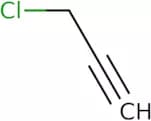
CAS :Propargyl chloride is a chemical that is used as an inhibitor in organic synthesis. It can be used to synthesize compounds with reactive groups such as alkenes, ketones, and amines. Propargyl chloride reacts with the hydroxyl group of an alcohol to form a propargyl alcohol. The reaction mechanism involves intramolecular hydrogen bonding between the hydroxyl group of the propargyl chloride and the carbon atom adjacent to it. Kinetic energy is required for this reaction to occur. The product of this reaction can then react with other molecules in order to form new compounds. Propargyl chloride has been shown to have therapeutic effects on chronic coughs due its ability to reduce the amount of kinetic energy needed for respiratory tract cells, which may have reduced coughing frequency. END>>Formule :C3H3ClDegré de pureté :Min. 95%Couleur et forme :Colorless Yellow Clear LiquidMasse moléculaire :74.51 g/mol2-Chloro-3-nitrobenzoic acid ethyl ester
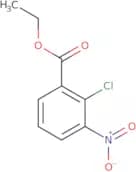
CAS :2-Chloro-3-nitrobenzoic acid ethyl ester is a reactive chemical intermediate that can be used as a building block in organic synthesis. It is a versatile reagent that can be used in many reactions, such as condensation, cyclization, amination, and oxidation. The compound has been shown to be useful in the synthesis of polymers, pharmaceuticals, and natural products. 2-Chloro-3-nitrobenzoic acid ethyl ester is an environmentally friendly compound with a low toxicity profile. It has been classified as a high quality fine chemical with CAS number 3979-45-1.Formule :C9H8ClNO4Degré de pureté :Min. 95%Couleur et forme :PowderMasse moléculaire :229.62 g/molFmoc-L-propargylglycine
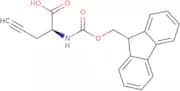
CAS :<p>Fmoc-L-propargylglycine is a cyclic peptide that is synthesized by chemical ligation. It has antiviral, anti-tumor, and anti-inflammatory activities. Fmoc-L-propargylglycine inhibits the growth of cancer cells in vitro. The mechanism of action is not fully understood, but it may involve the inhibition of cellular proliferation and the induction of apoptosis. This compound also inhibits epidermal growth factor (EGF) induced cell proliferation in caco-2 cells.</p>Formule :C20H17NO4Degré de pureté :Min. 98 Area-%Couleur et forme :White PowderMasse moléculaire :335.35 g/molIndole-5-carboxylic acid ethyl ester
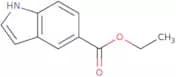
CAS :Indole-5-carboxylic acid ethyl ester is a formamide activated analog of piperidine. It is an effective antibacterial agent against Staphylococcus aureus. Indole-5-carboxylic acid ethyl ester inhibits the growth of bacteria by binding to the extracellular surface and interfering with cell membrane permeability. The compound also has anti-cancer properties, and may be used in pharmaceuticals as a pyrazole derivative.Formule :C11H11NO2Degré de pureté :Min. 95%Couleur et forme :PowderMasse moléculaire :189.21 g/molPropargyl benzenesulfonate
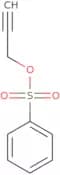
CAS :Propargyl benzenesulfonate is a chemical compound that has been shown to inhibit protease activity, an enzyme that breaks down proteins. It is also used in the synthesis of aminoindane and cyclic peptides. The chemical stability of propargyl benzenesulfonate has been demonstrated by its ability to withstand trifluoroacetic acid and hydrochloric acid, as well as malonic acid and immobilized conditions. Propargyl benzenesulfonate binds to integrin receptors on cells and inhibits depression-like behavior in animal models. It also has the ability to form hydrogen bonds with amines. The structural formula for propargyl benzenesulfonate is shown below:Formule :C9H8O3SDegré de pureté :Min. 98%Couleur et forme :Clear LiquidMasse moléculaire :196.22 g/molPalmitoyl-glycine
CAS :Palmitoyl-glycine is a fatty acid amide. It is an analog of the naturally occurring amino acid glycine that has been modified by adding a palmitoyl group to the side chain. Palmitoyl-glycine is enzymatically inactivated by bacterial enzymes and cationic surfactants and can be used as a skin cell model system for basic structure and physiological effects. Palmitoyl-glycine has been shown to have skin cell protective effects against oxidative stress, which may be due to its ability to form hydrogen bonds with the acyl chains of lipids.Formule :C18H35NO3Degré de pureté :Min. 95%Couleur et forme :White PowderMasse moléculaire :313.48 g/mol2-Bromo-3-hydroxybenzoic acid ethyl ester
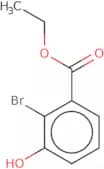
CAS :2-Bromo-3-hydroxybenzoic acid ethyl ester is a versatile building block that can be used in the synthesis of complex compounds. It is a fine chemical and research chemical with CAS No. 1260889-94-8. This compound has high quality and is used as a reagent, scaffold, or intermediate in organic syntheses. 2-Bromo-3-hydroxybenzoic acid ethyl ester is also useful for the preparation of speciality chemicals and reaction components.Formule :C9H9BrO3Degré de pureté :Min. 95%Couleur et forme :Yellow PowderMasse moléculaire :245.07 g/mol1,3-Dipalmitoyl-glycero-2-phosphoethanolamine
CAS :<p>Please enquire for more information about 1,3-Dipalmitoyl-glycero-2-phosphoethanolamine including the price, delivery time and more detailed product information at the technical inquiry form on this page</p>Formule :C37H74NO8PDegré de pureté :ReportedCouleur et forme :White/Off-White SolidMasse moléculaire :691.96 g/mol2-Palmitoylglycerol
CAS :<p>2-Palmitoylglycerol is a monoacylglycerol that is synthesized from the breakdown of dietary fats. It is also synthesized in tissues through the action of phospholipase A2 and diacylglycerol acyltransferase. 2-Palmitoylglycerol has been shown to bind to the cannabinoid receptor type 1 (CB1), which leads to activation of peroxisome proliferator-activated receptor α (PPARα). This activation induces gene expression changes that lead to increased fatty acid oxidation and decreased triglyceride synthesis in liver cells. 2-Palmitoylglycerol has been shown to reduce body weight gain and increase insulin sensitivity in mice models on high fat diets.<br>2-Palmitoylglycerol has also been shown to increase butyrate, a short chain fatty acid, levels in rats with metabolic disorders.</p>Formule :C19H38O4Degré de pureté :Min. 95%Couleur et forme :PowderMasse moléculaire :330.5 g/mol4-Acetylbenzoic acid ethyl ester
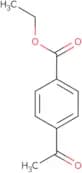
CAS :4-Acetylbenzoic acid ethyl ester is a receptor binding agent that inhibits the activity of phosphatidylinositol 3-kinase (PI3K), which is a protein involved in cell growth, differentiation and survival. It has been shown to inhibit tumor growth and induce apoptosis in cancer cells. 4-Acetylbenzoic acid ethyl ester also induces cell death in inflammatory diseases by inhibiting the activation of protein kinase C γ (PKC γ) by retinoic acid. This agent has been shown to be active against recombinant human Pparγ and can be used as an additive for cell-based assays.Formule :C11H12O3Degré de pureté :Min. 95%Couleur et forme :PowderMasse moléculaire :192.21 g/mol1,3-Dipalmitoylglycerol
CAS :1,3-Dipalmitoylglycerol is a diacylglycerol, which is a type of fatty acid that is also known as a 1,2-diacylglycerol. It has been shown to exhibit hemolytic activity in the presence of hydroxyl groups. The optimum pH for 1,3-dipalmitoylglycerol is at around 7.5 and it can be used as a biocompatible polymer to form controlled-release preparations with neutral pH that are tumoricidal.Formule :C35H68O5Degré de pureté :Min. 95%Couleur et forme :PowderMasse moléculaire :568.91 g/mol1,1',1''-Tris(1H-1,2,3-triazol-4-yl-1-acetic acid ethyl ester) trimethylamine
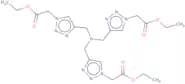
CAS :1,1',1''-Tris(1H-1,2,3-triazol-4-yl-1-acetic acid ethyl ester) trimethylamine is an organic solvent that has been used in the synthesis of azide–alkyne cycloaddition products. The solvent has shown to be soluble in water and is stable at high temperatures. It can also be used as a reagent or ligand for cycloaddition reactions with alkynes.Formule :C21H30N10O6Degré de pureté :Min. 95%Couleur et forme :White PowderMasse moléculaire :518.53 g/molAzidopalmitic acid
CAS :<p>Azidopalmitic acid is a synthetic fatty acid that is used in the detection of cellular DNA. It can be detected using methods such as tritiated, expressed, or myristic azide. Azidopalmitic acid has also been shown to be compatible with polymerase chain reaction (PCR) and immobilized metal ion affinity chromatography (IMAC). This molecule is useful for conjugates that are radiolabeled with [3H]azidoacetyl palmitate and [14C]azidoacetyl palmitate. Azidopalmitic acid has been synthetically produced by reacting malonic acid with sodium azide. This compound is also reusable, which makes it an ideal way to label nucleotides during PCR reactions.</p>Formule :C16H31N3O2Degré de pureté :Min. 95%Couleur et forme :White PowderMasse moléculaire :297.44 g/mol