Stérols
Les stérols sont un sous-groupe de stéroïdes avec un groupe hydroxyle en position 3 du cycle A. Ils sont des composants clés des membranes cellulaires, où ils modulent la fluidité et la perméabilité, et servent de précurseurs à des molécules biologiquement actives comme les hormones et les vitamines. Les stérols sont également importants dans l'étude du métabolisme du cholestérol et des maladies connexes. Chez CymitQuimica, nous offrons une large sélection de stérols de haute qualité pour soutenir vos recherches en biochimie, endocrinologie et métabolisme des lipides.
200 produits trouvés pour "Stérols"
Trier par
Degré de pureté (%)
0
100
|
0
|
50
|
90
|
95
|
100
Bufalin
CAS :<p>Bufalin is a bufadienolide compound, which is a type of steroid derived primarily from toad venom, specifically from the skin and parotid venom glands of the toad species Bufo gargarizans. Its mode of action involves the inhibition of Na+/K+-ATPase, an enzyme critical for maintaining the electrochemical gradient across cell membranes. By disrupting this gradient, Bufalin affects cellular ion homeostasis and induces apoptosis in various cancer cell lines.</p>Formule :C24H34O4Degré de pureté :Min. 95%Couleur et forme :White PowderMasse moléculaire :386.52 g/molEquilenin
CAS :<p>Equilenin is a steroidal estrogen, which is a type of naturally occurring hormone. It is derived primarily from the urine of pregnant mares and belongs to the class of conjugated equine estrogens. In terms of its mode of action, equilenin functions by binding to estrogen receptors in various tissues, thereby modulating gene expression and influencing cellular activity. This interaction supports the management of estrogen deficiencies in postmenopausal women and can influence the regulation of certain metabolic processes.</p>Formule :C18H18O2Degré de pureté :Min. 95%Couleur et forme :PowderMasse moléculaire :266.33 g/molProtodioscin
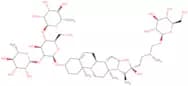
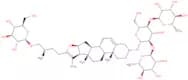
CAS :<p>Protodioscin is a steroidal saponin, which is a naturally occurring glycoside. It is predominantly sourced from the plant Tribulus terrestris but can also be found in other medicinal plants such as Dioscorea species. The mode of action of protodioscin involves its ability to influence the levels of dehydroepiandrosterone (DHEA) and other hormones, potentially affecting physiological functions related to vitality and performance.</p>Formule :C51H84O22Degré de pureté :Min. 95%Couleur et forme :PowderMasse moléculaire :1,049.22 g/molSaponins
CAS :<p>Saponins are naturally occurring glycosides, which are compounds sourced primarily from various plant species, including legumes, herbs, and certain vegetables. These compounds are characterized by their unique structure, comprising a hydrophobic aglycone linked to hydrophilic sugar moieties. This dual nature endows saponins with surfactant-like properties, allowing them to interact with both hydrophilic and hydrophobic molecules.</p>Degré de pureté :(Uv) Min. 90%Couleur et forme :Brown Off-White PowderLanosterol (Isocholesterol) - Lanosterol 60%
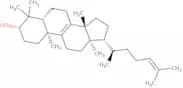
CAS :Produit contrôlé<p>Composed of Lanosterol (~65%), dihydrolanosterol, agnosterol,dihydroagnosterol.Extracted from wool.</p>Formule :C30H50ODegré de pureté :Min. 60 Area-%Couleur et forme :White Off-White PowderMasse moléculaire :426.72 g/molCoumestrol
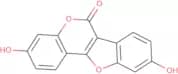
CAS :<p>Coumestrol is a phytoestrogen compound, which is a naturally occurring compound found in a variety of plants, such as soybeans, clover, and alfalfa. It is derived from the metabolic processes within these plants. Coumestrol exhibits estrogenic activity, acting as an agonist for estrogen receptors. This biological activity enables coumestrol to mimic the action of endogenous estrogens, thereby influencing estrogen-responsive pathways.</p>Formule :C15H8O5Degré de pureté :Min. 95%Couleur et forme :PowderMasse moléculaire :268.22 g/molBakuchiol
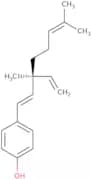
CAS :<p>Phytoestrogen with anti-cancer properties</p>Formule :C18H24ODegré de pureté :Min. 95%Couleur et forme :Clear LiquidMasse moléculaire :256.38 g/molGracillin
CAS :<p>Gracillin is a steroidal saponin, which is a bioactive compound derived from the plant genus Dioscorea. This natural product is characterized by its complex glycoside structure, where a sugar moiety is attached to a steroid-like aglycone. The mode of action of Gracillin involves its interaction with cellular membranes, leading to increased cell membrane permeability. This action is thought to disrupt normal cellular functions, making it a compound of interest for studying membrane dynamics.</p>Formule :C45H72O17Degré de pureté :Min. 95%Couleur et forme :White PowderMasse moléculaire :885.04 g/molErizimoside
CAS :<p>Please enquire for more information about Erizimoside including the price, delivery time and more detailed product information at the technical inquiry form on this page</p>Formule :C35H52O14Degré de pureté :Min. 95%Couleur et forme :PowderMasse moléculaire :696.78 g/molPabulenol
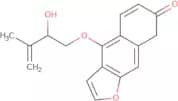
CAS :<p>Pabulenol is an innovative biopolymer, which is synthesized from renewable plant-based resources through advanced biotechnological methods involving enzymatic polymerization. With its unique molecular structure, Pabulenol exhibits specific mode of action by facilitating biodegradation under ambient conditions, catalyzed by naturally occurring microbes. The polymer’s intrinsic ability to break down into non-toxic byproducts makes it an exceptional choice for sustainable environmental applications.</p>Degré de pureté :Min. 95%7-Dehydrostigmasterol
CAS :Produit contrôlé<p>7-Dehydrostigmasterol is a phytosterol, which is a type of steroid alcohol derived from plant sources, particularly within the metabolic pathway of various sterols. This compound acts as an intermediate in the biosynthesis of other phytosterols, functioning within key enzymatic conversion processes that are part of the larger sterol metabolic network.</p>Degré de pureté :Min. 95%Pseudoprotodioscin
CAS :<p>Pseudoprotodioscin is a bioactive saponin compound, which is primarily derived from various plant sources, including members of the genus Tribulus. The compound is part of a larger family of steroidal saponins known for their diverse biological activities. Its mode of action includes influencing cellular pathways through modulation of enzyme activity and interaction with steroid hormone receptors, contributing to its bioactivity.</p>Formule :C51H82O21Degré de pureté :Min. 95%Couleur et forme :White PowderMasse moléculaire :1,031.18 g/molBetamethasone enol aldehyde Z isomer
CAS :Produit contrôlé<p>Betamethasone enol aldehyde Z isomer is a synthetic corticosteroid, which is derived from modifications of the naturally occurring glucocorticoid, cortisol. Its structure has been altered to enhance anti-inflammatory and immunosuppressive potency. As a Z isomer, it exhibits specific stereochemistry, potentially affecting its pharmacokinetics and interactions at the molecular level.</p>Formule :C22H27FO4Degré de pureté :Min. 95 Area-%Couleur et forme :PowderMasse moléculaire :374.45 g/molb-Estradiol
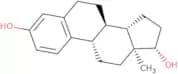
CAS :Produit contrôlé<p>Estradiol is a synthetic or naturally occurring form of estrogen, predominantly sourced from ovarian secretions in females. It performs its mode of action by binding to estrogen receptors, ERα and ERβ, subsequently regulating gene expression and modulating various biological processes including reproductive system development, bone density maintenance, and cardiovascular function.</p>Formule :C18H24O2Degré de pureté :Min. 97 Area-%Couleur et forme :PowderMasse moléculaire :272.38 g/molBetamethasone
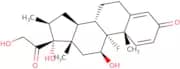
CAS :Produit contrôlé<p>Betamethasone is a synthetic corticosteroid, which is an analogue of a glucocorticoid sourced from adrenal cortex hormones. Its mode of action involves modulating the immune response by inhibiting the release of substances in the body that cause inflammation. This is achieved through its binding affinity to glucocorticoid receptors, leading to transcriptional changes that suppress pro-inflammatory cytokine production and other mediators of inflammation.</p>Formule :C22H29FO5Degré de pureté :Min. 97 Area-%Couleur et forme :White PowderMasse moléculaire :392.46 g/molCholesterol 3-sulfate sodium
CAS :<p>Cholesterol 3-sulfate sodium salt is a fine chemical that is used as a versatile building block and reagent. It is a useful intermediate that can be used in the synthesis of complex compounds, speciality chemicals, and reaction components. Cholesterol 3-sulfate sodium salt can be used to synthesize cholesterol derivatives. This compound has been shown to have high reactivity with nucleophiles and can be used as a building block for other organic compounds. The CAS number for Cholesterol 3-sulfate sodium salt is 2864-50-8.</p>Formule :C27H45NaO4SDegré de pureté :Min. 95%Couleur et forme :White PowderMasse moléculaire :488.7 g/molLanosterol - 90%
CAS :Produit contrôlé<p>Lanosterol - 90% is a sterol compound, which is a biochemical precursor to steroids. It is derived from various animal and plant sources, typically synthesized through the enzymatic conversion of squalene. Lanosterol functions through a significant role in the biosynthetic pathway of cholesterol and other essential sterols. This involves the cyclization process, where lanosterol is metabolized into cholesterol through a series of reactions catalyzed by specific enzymes.</p>Formule :C30H50ODegré de pureté :Min. 95%Couleur et forme :White Off-White PowderMasse moléculaire :426.72 g/molBrassinolide
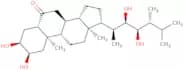
CAS :<p>Plant hormone</p>Formule :C28H48O6Degré de pureté :Min. 95 Area-%Couleur et forme :White PowderMasse moléculaire :480.68 g/mol8'-Hydroxyformononetin
CAS :<p>8'-Hydroxyformononetin is a phytoestrogen compound, which is derived from plant sources, particularly from legumes, including red clover and soy. As a naturally occurring isoflavone, it falls within the class of flavonoids, a group of polyphenolic compounds with varied biological activities. Its mode of action primarily involves binding to estrogen receptors, where it can mimic or modulate the action of estrogen in the body. This interaction can result in either estrogenic or anti-estrogenic effects, depending on the presence of endogenous estrogen and other factors within the target tissues.</p>Formule :C16H12O5Degré de pureté :Min. 95%Masse moléculaire :284.26 g/mol24-epi-castasterone
CAS :Produit contrôlé<p>24-epi-Castasterone is a brassinosteroid, which is a class of plant steroids, often extracted from various plant tissues synthesized in small quantities. This compound is primarily derived from plant sources such as seeds, pollen, and young vegetative tissues. It functions by binding to specific receptor kinases on plant cell membranes, thereby initiating a cascade of intracellular signaling that regulates gene expression. These pathways are crucial for the modulation of plant growth and development processes.</p>Formule :C28H48O5Degré de pureté :Min. 95%Masse moléculaire :464.68 g/mol