Stéroïdes
Les stéroïdes sont une classe de composés organiques caractérisés par une structure moléculaire composée de quatre anneaux fusionnés. Ils jouent un rôle essentiel dans divers processus biologiques, notamment en tant qu'hormones régulant le métabolisme, la fonction immunitaire et la reproduction. Les stéroïdes sont largement utilisés en médecine pour leurs propriétés anti-inflammatoires, immunosuppressives et anabolisantes. Dans la recherche, ils sont étudiés pour leur potentiel thérapeutique dans le traitement de conditions telles que l'arthrite, l'asthme et les déséquilibres hormonaux. Chez CymitQuimica, vous trouverez une large sélection de stéroïdes, essentiels pour la recherche en pharmacologie, biochimie et le développement de thérapies à base de stéroïdes.
Sous-catégories appartenant à la catégorie "Stéroïdes"
1700 produits trouvés pour "Stéroïdes"
Trier par
Degré de pureté (%)
0
100
|
0
|
50
|
90
|
95
|
100
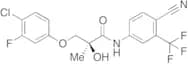
S 23
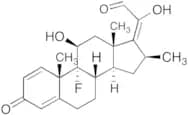
CAS :<p>Applications S 23 is a selective androgen receptor modulator.<br>References Thevis, M., et al.: Drug Testing and Analysis, 2, 589 (2010); Jones, A., et al.; Endocr., 150, 385 (2009)<br></p>Formule :C18H13ClF4N2O3Couleur et forme :White To Off-WhiteMasse moléculaire :416.75(E)-Betamethasone-∆17,20 21-Aldehyde
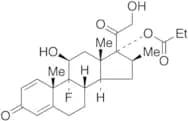
CAS :Formule :C22H27FO4Couleur et forme :NeatMasse moléculaire :374.45Betamethasone 17-Propionate
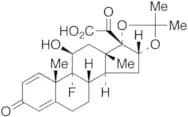
CAS :Produit contrôlé<p>Impurity Clobetasol Propionate EP Impurity A / Betamethasone Dipropionate EP Impurity B<br>Applications Betamethasone 17-Propionate (Clobetasol Propionate EP Impurity A) is a degradation product of Betamethasone. Glucocorticoid.<br>References Andersson, P., et al.: J. Pharm. Pharmacol., 36, 763 (1984), Wurthwein, G., et al.: Biopharm. Drug Dispos., 11, 381 (1990), Samtani, M., et al.: J. Pharm. Sci., 93, 726 (2004), Samtani, M., et al.: Drug Metab. Dispos., 33, 1124 (2005),<br></p>Formule :C25H33FO6Couleur et forme :Off-WhiteMasse moléculaire :448.5221-Carboxylic Acid Triamcinolone Acetonide
CAS :<p>Applications A metabolite of Triamcinolone acetonide.<br>References Edsbacker, S., et al.: Drug Metab. Dispos., 11, 590 (1983), Szefler, S., et al.: Eur. J. Clin. Pharmacol., 30, 323 (1986), Hansel, T., et al.: J. Immunol. Methods, 145, 105 (1991), Argenti, D., et al.: J. Clin. Pharmacol., 39, 695 (1999),<br></p>Formule :C24H29FO7Couleur et forme :NeatMasse moléculaire :448.48β-Sitosterol β-D-glucoside
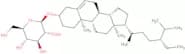
CAS :<p>β-Sitosterol β-D-glucoside is a phytosterol glycoside, which is primarily derived from plant sources such as fruits, vegetables, nuts, and seeds. As a natural component of plant cell membranes, it exhibits bioactive properties. The compound functions by modulating cholesterol metabolism and has anti-inflammatory, immunomodulatory, and antioxidant effects. It achieves this by interfering with the absorption of cholesterol in the intestines and modulating the activity of enzymes involved in its metabolism.</p>Formule :C35H60O6Degré de pureté :Min. 98 Area-%Couleur et forme :White PowderMasse moléculaire :576.85 g/molLanosta-8-en-3-one
CAS :Produit contrôlé<p>Reduced form of lanosterone</p>Formule :C30H50ODegré de pureté :Min. 95%Couleur et forme :PowderMasse moléculaire :426.72 g/molMestranol
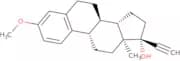
CAS :<p>Mestranol is a synthetic estrogen, which is derived from chemical synthesis. Its mode of action involves being a prodrug of ethinylestradiol, meaning it is metabolized in the liver to its active form, which then binds to estrogen receptors in target tissues. This binding alters the expression of genes, influencing the reproductive system to prevent ovulation. By inhibiting the release of gonadotropins (LH and FSH) from the pituitary, it effectively halts the maturation of ovarian follicles.</p>Formule :C21H26O2Degré de pureté :Min. 95%Couleur et forme :White PowderMasse moléculaire :310.43 g/molFormononetin-7-O-gentiobioside
CAS :<p>Formononetin-7-O-gentiobioside is an isoflavonoid glycoside, which is a type of naturally occurring compound often found in plants, specifically in the Fabaceae family. This compound is primarily sourced from various legumes and has been studied for its potential bioactive properties due to its unique chemical structure. The mode of action of formononetin-7-O-gentiobioside involves its interaction with biological pathways, where it may exhibit antioxidant, anti-inflammatory, or estrogen-like activities, similar to other isoflavonoids. These interactions are significant in modulating cellular pathways that can contribute to various physiological effects.</p>Formule :C28H32O14Degré de pureté :Min. 95%Masse moléculaire :592.55 g/molSaponin - from quillaja plant - 25%-30% sapogenin content
CAS :<p>Saponin from the quillaja plant is a natural extract characterized by a significant sapogenin content of 25%-30%. This product is derived from the bark of the Quillaja saponaria tree, a native species of Chile. The primary mode of action of these saponins involves the interaction with cell membranes due to their surfactant properties, which can lead to membrane permeabilization and subsequent cellular responses.</p>Degré de pureté :Min. 95%Couleur et forme :PowderEstriol
CAS :Produit contrôlé<p>Estriol is a steroidal estrogen, which is a naturally occurring hormone primarily sourced from the placenta during pregnancy. Its mode of action involves binding to estrogen receptors, thereby exerting its effects as part of the broader group of estrogens. Estriol has a relatively lower affinity for estrogen receptors compared to estradiol, contributing to its unique pharmacological profile.In scientific research and clinical settings, Estriol is employed in hormone replacement therapy, especially in postmenopausal women, due to its milder estrogenic effects and lower associated risks compared to other estrogens. It is also studied for its potential benefits in urogynecological health, such as the treatment of menopausal symptoms like vaginal atrophy. Furthermore, its application is under investigation for autoimmune conditions such as multiple sclerosis, given its immunomodulatory properties. Ongoing research aims to delineate the therapeutic potential and safety profile of Estriol in various clinical contexts.</p>Formule :C18H24O3Degré de pureté :Min. 97 Area-%Couleur et forme :White PowderMasse moléculaire :288.38 g/molBetamethasone - Bio-X ™
CAS :Produit contrôlé<p>Betamethasone is a potent anti-inflammatory agent that belongs to the group of corticosteroids. It is used in the treatment of a number of inflammatory diseases, such as allergic states, dermatologic disorders and gastrointestinal disorders. This drug binds to glucocorticoid receptors inhibiting inflammatory signals whilst promoting anti-inflammatory signals.</p>Formule :C22H29FO5Degré de pureté :Min. 95%Couleur et forme :PowderMasse moléculaire :392.46 g/molb-Estradiol
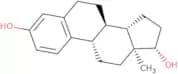
CAS :Produit contrôlé<p>Estradiol is a synthetic or naturally occurring form of estrogen, predominantly sourced from ovarian secretions in females. It performs its mode of action by binding to estrogen receptors, ERα and ERβ, subsequently regulating gene expression and modulating various biological processes including reproductive system development, bone density maintenance, and cardiovascular function.</p>Formule :C18H24O2Degré de pureté :Min. 97 Area-%Couleur et forme :PowderMasse moléculaire :272.38 g/mol2'-Hydroxyformononetin
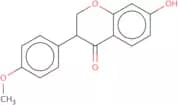
CAS :<p>2'-Hydroxyformononetin is a naturally occurring isoflavone, which is predominantly found in certain plants such as red clover and soy. It is a type of phytoestrogen, which exhibits estrogen-like activity due to its ability to bind estrogen receptors. The mode of action involves modulating estrogen receptor pathways, which in turn can affect various physiological processes related to hormone balance and cell proliferation.</p>Formule :C16H12O5Degré de pureté :Min. 95%Couleur et forme :PowderMasse moléculaire :284.26 g/molWithaferin A
CAS :<p>Withaferin A is a bioactive compound, which is a steroidal lactone with antiproliferative properties. It is derived from the medicinal plant *Withania somnifera*, commonly known as Ashwagandha. Withaferin A exerts its effects by modulating various signaling pathways, including the inhibition of NF-kB and induction of oxidative stress, which lead to apoptotic cell death in cancer cells and reduced inflammation.</p>Formule :C28H38O6Degré de pureté :Min. 98 Area-%Couleur et forme :White PowderMasse moléculaire :470.6 g/molAndrosta-1,4,6-triene-3,17-dione
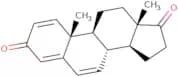
CAS :Produit contrôlé<p>Androsta-1,4,6-triene-3,17-dione is a steroidal aromatase inhibitor, which is a synthetic compound derived from modifications of naturally occurring steroid structures. Its mode of action involves the inhibition of the aromatase enzyme. Aromatase catalyzes the conversion of androgens into estrogens, a critical step in the biosynthesis of estrogens. By inhibiting this enzyme, Androsta-1,4,6-triene-3,17-dione effectively reduces estrogen levels, which can be of particular interest in research environments exploring the role of estrogens in various biological processes.</p>Formule :C19H22O2Degré de pureté :Min. 95%Couleur et forme :Yellow PowderMasse moléculaire :282.38 g/molPolyphyllin D
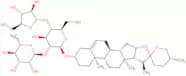
CAS :<p>Polyphyllin D is a natural compound, which is a steroidal saponin extracted from the rhizome of Paris polyphylla, a traditional Chinese medicinal plant. It exhibits significant biological activities and has garnered interest for its potential therapeutic applications. Polyphyllin D exerts its effects primarily through the disruption of cellular processes, including the induction of apoptosis, modulation of the cell cycle, and inhibition of angiogenesis. It achieves these actions by influencing multiple molecular pathways, such as the mitochondrial apoptotic pathway and autophagy regulation.</p>Formule :C44H70O16Degré de pureté :Min. 95%Couleur et forme :PowderMasse moléculaire :855.02 g/molDioscin
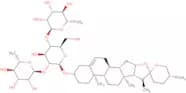
CAS :<p>Dioscin is a steroidal saponin, which is a naturally occurring compound found in various plants, notably in species such as Dioscorea nipponica and Dioscorea zingiberensis. These plants belong to the yam family, which are well-regarded for their medicinal properties. The mode of action of dioscin involves modulation of various biochemical pathways, including the suppression of inflammatory cytokines and inhibition of cancer cell proliferation. Additionally, dioscin has been shown to promote apoptosis in cancer cells through the activation of caspases and disruption of mitochondrial function.</p>Formule :C45H72O16Degré de pureté :Min. 95%Couleur et forme :PowderMasse moléculaire :869.05 g/molDihydroformononetin
CAS :<p>Dihydroformononetin is an isoflavonoid phytoestrogen, which is a type of naturally occurring compound found primarily in leguminous plants. It is derived from plant sources such as red clover and soybeans, known for their rich isoflavone content. This compound undergoes metabolic conversion in plants and potentially in the human body, exerting effects through interactions with estrogen receptors.</p>Formule :C16H14O4Degré de pureté :Min. 95%Couleur et forme :White PowderMasse moléculaire :270.28 g/molStigmasterol
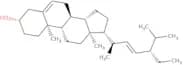
CAS :Produit contrôlé<p>Phytosterol with anti-osteoarthritic activity; inhibits cholesterol biosynthesis</p>Formule :C29H48ODegré de pureté :Min. 95 Area-%Couleur et forme :White PowderMasse moléculaire :412.69 g/molHydrocortisone acetate
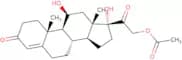
CAS :Produit contrôlé<p>Hydrocortisone acetate is a synthetic corticosteroid, which is a product derived from the modification of natural adrenal cortex hormones. It functions as an anti-inflammatory and immunosuppressive agent through its interaction with glucocorticoid receptors, leading to the modulation of gene expression involved in immune and inflammatory responses. This interaction inhibits the release of pro-inflammatory mediators and reduces the permeability of capillaries, thereby diminishing inflammation and immune activity.</p>Formule :C23H32O6Degré de pureté :Min. 97 Area-%Couleur et forme :PowderMasse moléculaire :404.5 g/mol