Stéroïdes
Sous-catégories appartenant à la catégorie "Stéroïdes"
1696 produits trouvés pour "Stéroïdes"
Pregnanediol 3α-O-β-D-glucuronide
CAS :Pregnanediol 3α-O-β-D-glucuronide is a steroid conjugate, which is primarily a urinary metabolite derived from the catabolism of progesterone. It represents an important biomarker in endocrinological studies with direct relevance to reproductive biology. The compound originates in the body during the breakdown of progesterone, where it is conjugated with glucuronic acid to increase its solubility for renal excretion. This transformation allows for convenient and non-invasive monitoring of progesterone levels in clinical and research settings.
Formule :C27H44O8Degré de pureté :Min. 95 Area-%Masse moléculaire :496.64 g/molDHED
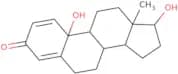
CAS :Produit contrôléDHED is a neuroactive steroid precursor, specifically a bioprecursor prodrug of estradiol, which is derived from chemical synthesis pathways. It is unique in its targeted mode of action, as it selectively converts to the active hormone estradiol within the brain via enzymatic processes that occur in situ. This specificity is facilitated by 17β-hydroxysteroid dehydrogenase type 1, which catalyzes the conversion of DHED to estradiol exclusively in the brain, minimizing peripheral estrogenic effects.
Formule :C18H24O3Degré de pureté :Min. 95%Couleur et forme :PowderMasse moléculaire :288.38 g/molSaponins
CAS :Saponins are naturally occurring glycosides, which are compounds sourced primarily from various plant species, including legumes, herbs, and certain vegetables. These compounds are characterized by their unique structure, comprising a hydrophobic aglycone linked to hydrophilic sugar moieties. This dual nature endows saponins with surfactant-like properties, allowing them to interact with both hydrophilic and hydrophobic molecules.
Degré de pureté :(Uv) Min. 90%Couleur et forme :Brown Off-White PowderWithaferin A
CAS :Withaferin A is a bioactive compound, which is a steroidal lactone with antiproliferative properties. It is derived from the medicinal plant *Withania somnifera*, commonly known as Ashwagandha. Withaferin A exerts its effects by modulating various signaling pathways, including the inhibition of NF-kB and induction of oxidative stress, which lead to apoptotic cell death in cancer cells and reduced inflammation.
Formule :C28H38O6Degré de pureté :Min. 98 Area-%Couleur et forme :White PowderMasse moléculaire :470.6 g/molAndrosta-1,4,6-triene-3,17-dione
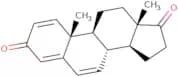
CAS :Produit contrôléAndrosta-1,4,6-triene-3,17-dione is a steroidal aromatase inhibitor, which is a synthetic compound derived from modifications of naturally occurring steroid structures. Its mode of action involves the inhibition of the aromatase enzyme. Aromatase catalyzes the conversion of androgens into estrogens, a critical step in the biosynthesis of estrogens. By inhibiting this enzyme, Androsta-1,4,6-triene-3,17-dione effectively reduces estrogen levels, which can be of particular interest in research environments exploring the role of estrogens in various biological processes.
Formule :C19H22O2Degré de pureté :Min. 95%Couleur et forme :Yellow PowderMasse moléculaire :282.38 g/molBakuchiol
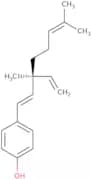
CAS :Phytoestrogen with anti-cancer properties
Formule :C18H24ODegré de pureté :Min. 95%Couleur et forme :Clear LiquidMasse moléculaire :256.38 g/molStigmasterol
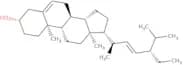
CAS :Produit contrôléPhytosterol with anti-osteoarthritic activity; inhibits cholesterol biosynthesis
Formule :C29H48ODegré de pureté :Min. 95 Area-%Couleur et forme :White PowderMasse moléculaire :412.69 g/molRef: 3D-FS12894
Produit arrêtéPrednisolone
CAS :Produit contrôléPrednisolone is a synthetic corticosteroid, which is a derivative of the natural hormone cortisol. It is derived from the modification of the corticosteroid structure to enhance its anti-inflammatory and immunosuppressive properties. The mode of action of prednisolone involves binding to glucocorticoid receptors, leading to the modulation of gene expression. This results in the suppression of pro-inflammatory cytokines and the inhibition of various immune responses.
Formule :C21H28O5Degré de pureté :Min. 95%Couleur et forme :PowderMasse moléculaire :360.44 g/molFormononetin-7-O-gentiobioside
CAS :Formononetin-7-O-gentiobioside is an isoflavonoid glycoside, which is a type of naturally occurring compound often found in plants, specifically in the Fabaceae family. This compound is primarily sourced from various legumes and has been studied for its potential bioactive properties due to its unique chemical structure. The mode of action of formononetin-7-O-gentiobioside involves its interaction with biological pathways, where it may exhibit antioxidant, anti-inflammatory, or estrogen-like activities, similar to other isoflavonoids. These interactions are significant in modulating cellular pathways that can contribute to various physiological effects.
Formule :C28H32O14Degré de pureté :Min. 95%Masse moléculaire :592.55 g/molβ-Sitosterol β-D-glucoside
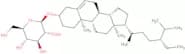
CAS :β-Sitosterol β-D-glucoside is a phytosterol glycoside, which is primarily derived from plant sources such as fruits, vegetables, nuts, and seeds. As a natural component of plant cell membranes, it exhibits bioactive properties. The compound functions by modulating cholesterol metabolism and has anti-inflammatory, immunomodulatory, and antioxidant effects. It achieves this by interfering with the absorption of cholesterol in the intestines and modulating the activity of enzymes involved in its metabolism.
Formule :C35H60O6Degré de pureté :Min. 98 Area-%Couleur et forme :White PowderMasse moléculaire :576.85 g/molAzedarachol
CAS :**Azedarachol** is a botanical compound, which is a natural product derived from the neem tree (Azadirachta indica). This compound is known for its role as a bioactive agent, working through mechanisms that involve disrupting insect endocrine systems and acting as an antifeedant. Azedarachol's mode of action is primarily through its interference with hormonal balance within target organisms, which can lead to decreased feeding, stunted growth, and interrupted reproduction, making it an area of interest for pest control research.
Degré de pureté :Min. 95%Pregnenolone acetate
CAS :Produit contrôléPregnenolone acetate is a synthetic compound classified as a steroidal hormone precursor. It is derived from pregnenolone, which is a naturally occurring steroid hormone in the body. Pregnenolone is primarily synthesized from cholesterol, a fundamental component upon which steroidogenesis is based. The acetate form is an ester derivative, which can enhance stability and bioavailability.
Formule :C23H34O3Degré de pureté :Min. 98 Area-%Couleur et forme :White PowderMasse moléculaire :358.51 g/molPregna-4,8-diene-3,20-dione
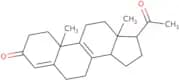
CAS :Produit contrôléPregna-4,8-diene-3,20-dione is a synthetic corticosteroid, which is an analog of naturally occurring hormones produced by the adrenal cortex. This compound is synthesized through complex chemical pathways utilizing steroidal intermediates to produce a substance with potent biological activity. The mode of action of Pregna-4,8-diene-3,20-dione involves its ability to alter the transcription of certain genes by binding to glucocorticoid receptors. This interaction induces the synthesis of proteins that inhibit the inflammatory response and suppress the immune system.
Formule :C21H28O2Degré de pureté :Min. 95%Masse moléculaire :312.45 g/mol1-Dehydroepiandrosterone
CAS :Produit contrôlé1-Dehydroepiandrosterone is a steroid hormone and a metabolic intermediate in the biosynthesis of androgen and estrogen sex steroids, which is derived from cholesterol in the adrenal glands, gonads, and brain. Acting primarily as a prohormone, it facilitates the synthesis of active steroid hormones by serving as a precursor molecule that undergoes enzymatic conversion into potent androgens like testosterone and dihydrotestosterone, as well as estrogens such as estradiol within peripheral tissues.
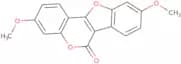
Formule :C19H28O2Degré de pureté :Min. 95%Couleur et forme :PowderMasse moléculaire :288.42 g/mol3,9-Di-O-methylcoumestrol
CAS :3,9-Di-O-methylcoumestrol is a synthetic coumestan derivative, which is primarily derived or synthesized from various plant sources that produce isoflavonoids and related compounds. As a type of phytoestrogen, it exhibits selective estrogen receptor modulating activity, interacting with estrogen receptors in a manner similar to endogenous hormones but with distinctive affinity and specificity. This mode of action suggests it could influence estrogen-responsive pathways, making it of particular interest in fields like endocrinology and pharmacology.
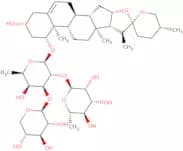
Formule :C17H12O5Degré de pureté :Min. 95%Masse moléculaire :296.27 g/molOphiopogonin D
CAS :Ophiopogonin D is a steroidal glycoside, which is a secondary metabolite sourced from the plant Ophiopogon japonicus. This compound is characterized by its presence in the roots, commonly referred to as radix Ophiopogonis, and is part of the broader group of ophiopogonins. Its mode of action primarily involves exerting anti-inflammatory and antioxidant effects. Ophiopogonin D has been shown to modulate signaling pathways that influence cellular oxidative stress and inflammatory responses, which are key in various pathological conditions.
Formule :C44H70O16Degré de pureté :Min. 95%Couleur et forme :PowderMasse moléculaire :855.02 g/mol