Terpénoïdes
Les terpénoïdes, également connus sous le nom d'isoprénoïdes, sont la plus grande classe de composés organiques naturels, dérivés d'unités d'isoprène à cinq carbones. Ils se trouvent dans diverses plantes et sont connus pour leurs propriétés aromatiques, ainsi que pour leur rôle dans la défense des plantes et la signalisation. Les terpénoïdes ont été largement étudiés pour leurs effets thérapeutiques, y compris des propriétés anti-inflammatoires, antimicrobiennes et anticancéreuses. Ils sont utilisés dans les industries pharmaceutiques, cosmétiques et alimentaires pour leurs bienfaits sur la santé et leurs qualités aromatiques. Chez CymitQuimica, vous trouverez une large sélection de terpénoïdes, essentiels pour la recherche en biologie végétale, pharmacologie et synthèse de produits naturels.
Sous-catégories appartenant à la catégorie "Terpénoïdes"
- Diterpènes (C₂₀)(671 produits)
- Hémiterpènes (C₅)(21 produits)
- Monoterpènes (C₁₀)(708 produits)
- Sesquiterpènes (C₂₅)(448 produits)
- Tétraterpènes (C₄₀)(63 produits)
- Triterpènes (C₃₀)(1.130 produits)
1423 produits trouvés pour "Terpénoïdes"
Trier par
Degré de pureté (%)
0
100
|
0
|
50
|
90
|
95
|
100
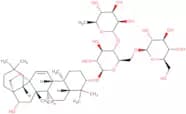
Ginsenoside Rb1 - 98%
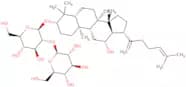
CAS :<p>Ginsenoside Rb1 - 98% is a purified chemical compound, specifically a saponin, derived from the roots of Panax ginseng, a perennial plant native to East Asia. The compound belongs to the ginsenoside family, which constitutes the primary active components of ginseng.</p>Formule :C54H92O23Degré de pureté :Min. 98 Area-%Couleur et forme :White Off-White PowderMasse moléculaire :1,109.32 g/molSaikosaponin C
CAS :<p>Saikosaponin C is a triterpene saponin, which is a bioactive compound found in various medicinal plants, particularly those in the genus Bupleurum, often used in traditional Chinese medicine. It is derived from the roots of these plants, where it coexists with other saponins, contributing to their medicinal properties.</p>Formule :C48H78O17Degré de pureté :Min. 95%Couleur et forme :PowderMasse moléculaire :927.12 g/molGinkgolide A
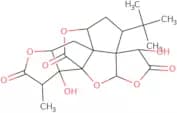
CAS :<p>Ginkgolide A is a terpenoid lactone, which is a diterpene known for its presence in the leaves of the Ginkgo biloba tree. As a bioactive compound, it is naturally sourced from this ancient plant, which has been utilized in traditional medicine for centuries. Ginkgolide A acts primarily as an antagonist of platelet-activating factor (PAF), thereby influencing a range of physiological processes. Its modulatory effects on neurotransmission and vascular function arise from its ability to inhibit PAF binding to its receptor, reducing platelet aggregation and improving microcirculatory flow.</p>Formule :C20H24O9Degré de pureté :Min. 95%Couleur et forme :White PowderMasse moléculaire :408.4 g/molHederagenin
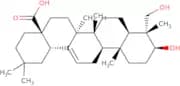
CAS :Produit contrôlé<p>Hederagenin is a triterpenoid saponin, which is a naturally occurring organic compound typically found in various plant species, particularly in the Araliaceae family. It is derived from the hydrolysis of saponins such as hederacoside C, present in plants like ivy (Hedera helix). This compound exhibits a wide array of biological activities due to its ability to interact with cellular membranes and proteins.</p>Formule :C30H48O4Degré de pureté :Min. 95.0 Area-%Couleur et forme :White PowderMasse moléculaire :472.70 g/molGinsenoside Rg2
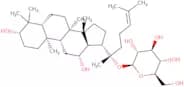
CAS :<p>Ginsenoside Rg2 is a bioactive compound, which is a saponin derived from the roots of Panax ginseng, a medicinal plant widely used in traditional medicine. Its primary mode of action involves modulating various signaling pathways and protecting nerve cells by influencing the expression of specific genes related to neuronal function. Ginsenoside Rg2 has been shown to exert antioxidant and anti-inflammatory effects, thereby playing a potential role in neuroprotection.</p>Formule :C42H72O13Degré de pureté :Min. 98 Area-%Couleur et forme :White PowderMasse moléculaire :785.01 g/molα-Cyperone
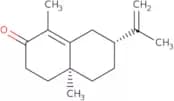
CAS :Alpha-Cyperone is a sesquiterpene compound, which is a natural product isolated from essential oils of certain plants like Cyperus rotundus. It is primarily sourced from the rhizomes of these plants and is known for its diverse biological activities. The mode of action of alpha-Cyperone involves the modulation of cellular pathways, potentially affecting inflammation and oxidation processes.Formule :C15H22ODegré de pureté :Min. 95%Couleur et forme :Yellow Clear LiquidMasse moléculaire :218.33 g/molAgnuside
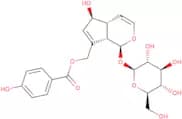
CAS :<p>Agnuside is a diterpenoid compound, which is a phytoconstituent primarily sourced from the plant Vitex agnus-castus, commonly known as chaste tree. This compound is extracted from the fruit of the plant through a series of isolation and purification processes aimed at preserving its chemical integrity.</p>Formule :C22H26O11Degré de pureté :Min. 95 Area-%Couleur et forme :Brown PowderMasse moléculaire :466.44 g/molDaucene
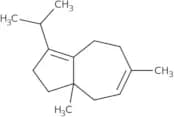
CAS :<p>Daucene is a sesquiterpene lactone, which is isolated from plant sources, particularly from certain species of the Apiaceae family. It functions through modulating cellular pathways, primarily by inhibiting the NF-κB signaling pathway and inducing apoptosis in cancerous cells. This biochemical mode of action demonstrates Daucene's potential in disrupting cancer cell proliferation and promoting cell cycle arrest.</p>Formule :C15H24Degré de pureté :Min. 95%Masse moléculaire :204.35 g/molGinsenoside C-K
CAS :<p>Anti-inflammatory; anti-cancer; anti-angiogenic</p>Formule :C36H62O8Degré de pureté :Min. 98 Area-%Couleur et forme :White PowderMasse moléculaire :622.87 g/molGinsenoside Rk1 - Ginsenoside Rk1:Ginsenoside Rz1 (5:2)
CAS :<p>Ginsenoside Rk1 - Ginsenoside Rz1 (5:2) is a complex phytochemical formulation, which is derived from Panax ginseng, a medicinal herb renowned for its bioactive compounds. Ginsenosides, the primary active components, are triterpene saponins known for their diverse pharmacological properties. In this specific formulation, Ginsenoside Rk1 and Ginsenoside Rz1 are combined in a 5:2 ratio, creating a synergistic profile that enhances their biological efficacy.</p>Formule :C42H70O12Degré de pureté :Min. 95%Couleur et forme :PowderMasse moléculaire :766.48673Oridonin
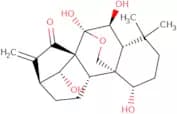
CAS :<p>A diterpenoid from Chinese medicinal plant Rabdosia rubescens with anti-inflammatory activity. It is a potent inhibitor of NF-κB and MAPK activation and suppresses the release of proinflammatory cytokines. It is also a covalent inhibitor of NLRP3, a sensor component of NLRP3 inflammasome. In a rodent model for cerebral amyloidosis, oridonin effectively prevented neuroinflammation and Alzheimer’s disease-associated neuropathological changes. It reduced numbers of amyloid-β plaques in mice brain and reversed behaviour and social impairment.</p>Formule :C20H28O6Degré de pureté :Min. 98 Area-%Couleur et forme :White PowderMasse moléculaire :364.44 g/mol14-Epitriptolide
CAS :<p>14-Epitriptolide is a diterpenoid epoxide, which is derived from the natural product triptolide. It originates from the plant species *Tripterygium wilfordii*, commonly known in traditional Chinese medicine. The mode of action of 14-Epitriptolide involves the inhibition of RNA polymerase II-mediated transcription, thereby interfering with transcriptional processes essential for cancer cell survival and proliferation. Additionally, it induces oxidative stress and disrupts cellular homeostasis.</p>Formule :C20H26O7Degré de pureté :Min. 95%Couleur et forme :SolidMasse moléculaire :378.42 g/molMomordicine I
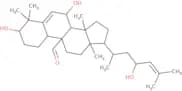
CAS :Produit contrôlé<p>Momordicine I is a bioactive compound classified as a triterpenoid. It is derived from the fruit of the plant Momordica charantia, commonly known as bitter melon, which is native to tropical and subtropical regions. The action mechanism of Momordicine I involves modulation of various signaling pathways, particularly those related to metabolic and cancer-related processes. It can influence insulin signaling pathways, contributing to glucose homeostasis, and exhibits potential inhibitory effects on tumorigenesis by inducing apoptosis and inhibiting proliferation in cancer cells.</p>Formule :C30H48O4Degré de pureté :Min. 95%Couleur et forme :PowderMasse moléculaire :472.7 g/molIsocalendin
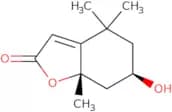
CAS :<p>Isocalendin is a natural compound derived from the calendula plant, known for its potent anti-inflammatory properties. This product is extracted through a meticulous process that maintains the bioactive compounds inherent to calendula, ensuring efficacy and purity. Isocalendin functions by modulating inflammatory pathways at the cellular level, primarily inhibiting pro-inflammatory mediators. This selective action aids in reducing inflammation and promoting tissue repair without adverse effects associated with synthetic alternatives.</p>Formule :C11H16O3Degré de pureté :Min. 95%Couleur et forme :PowderMasse moléculaire :196.24 g/mol(+)-Nerolidol
CAS :<p>(+)-Nerolidol is a sesquiterpene alcohol, which is a type of volatile organic compound. It is derived from the essential oils of various plants, including jasmine, tea tree, and lemongrass. As a natural compound, (+)-Nerolidol is synthesized by plants as part of their aromatic profile and may serve as a defense mechanism against pathogens and herbivores.</p>Formule :C15H26ODegré de pureté :Min. 95%Couleur et forme :Colorless Clear LiquidMasse moléculaire :222.37 g/molHispidol
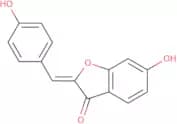
CAS :<p>Hispidol is a naturally occurring flavonoid compound, which is extracted from the Leguminosae family of plants. This class of compounds is characterized by its polyphenolic structure, contributing to its role within plant defense mechanisms. With an origin primarily in legumes, hispidol’s bioactive properties stem from its ability to interact with various enzymatic and receptor pathways.</p>Formule :C15H10O4Degré de pureté :Min. 95%Couleur et forme :Slightly Brown PowderMasse moléculaire :254.24 g/molMarrubiin
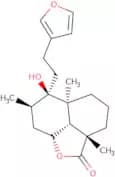
CAS :<p>Marrubiin is a plant-derived alkaloid, which is extracted from the white horehound (Marrubium vulgare) plant. This diterpenoid compound acts primarily through its ability to stimulate gastric secretion, which in turn influences the respiratory system by increasing the production of fluid mucus. This action facilitates the expectoration of phlegm, making Marrubiin useful in treating conditions that involve excessive mucus buildup in the airways, such as chronic bronchitis and asthma.</p>Formule :C20H28O4Degré de pureté :Min. 95%Couleur et forme :PowderMasse moléculaire :332.43 g/molCucurbitacin E
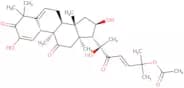
CAS :Produit contrôlé<p>Cucurbitacin E is a triterpenoid compound, which is a natural product derived from plants in the Cucurbitaceae family. This bioactive compound exerts its effects primarily through the disruption of cytoskeletal integrity, inhibition of the JAK/STAT signaling pathway, and induction of apoptosis. These molecular activities make it a potent agent in research focusing on cellular proliferation and inflammation.</p>Formule :C32H44O8Degré de pureté :Min. 95%Masse moléculaire :556.69 g/mol(1S)-(-)-(-)-Verbenone
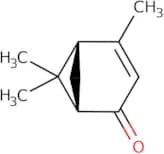
CAS :<p>(1S)-(-)-(-)-Verbenone is a bicyclic monoterpene, which is a type of terpenoid compound. It is naturally sourced from various plants, predominantly from the essential oils of pines and other coniferous trees. The mode of action of Verbenone is intriguing; it acts as an anti-aggregation pheromone in certain beetle species, disrupting their communication and reducing infestation levels. This mechanism is particularly effective against bark beetles, which are known to cause significant damage to forestry ecosystems.</p>Formule :C10H14ODegré de pureté :Min. 98 Area-%Couleur et forme :Clear LiquidMasse moléculaire :150.22 g/molCucurbitacin I
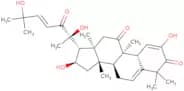
CAS :Produit contrôlé<p>Inhibitor of STAT3/JAK2 signaling; radiosensitizer</p>Formule :C30H42O7Degré de pureté :Min. 98 Area-%Couleur et forme :White PowderMasse moléculaire :514.65 g/mol