Terpénoïdes
Les terpénoïdes, également connus sous le nom d'isoprénoïdes, sont la plus grande classe de composés organiques naturels, dérivés d'unités d'isoprène à cinq carbones. Ils se trouvent dans diverses plantes et sont connus pour leurs propriétés aromatiques, ainsi que pour leur rôle dans la défense des plantes et la signalisation. Les terpénoïdes ont été largement étudiés pour leurs effets thérapeutiques, y compris des propriétés anti-inflammatoires, antimicrobiennes et anticancéreuses. Ils sont utilisés dans les industries pharmaceutiques, cosmétiques et alimentaires pour leurs bienfaits sur la santé et leurs qualités aromatiques. Chez CymitQuimica, vous trouverez une large sélection de terpénoïdes, essentiels pour la recherche en biologie végétale, pharmacologie et synthèse de produits naturels.
Sous-catégories appartenant à la catégorie "Terpénoïdes"
- Diterpènes (C₂₀)(671 produits)
- Hémiterpènes (C₅)(21 produits)
- Monoterpènes (C₁₀)(708 produits)
- Sesquiterpènes (C₂₅)(448 produits)
- Tétraterpènes (C₄₀)(63 produits)
- Triterpènes (C₃₀)(1.130 produits)
1423 produits trouvés pour "Terpénoïdes"
Trier par
Degré de pureté (%)
0
100
|
0
|
50
|
90
|
95
|
100
Ginsenoside Rb2
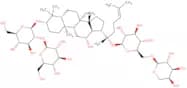
CAS :<p>Ginsenoside Rb2 is a bioactive compound, which is a type of ginsenoside found predominantly in Panax ginseng. It is sourced from the root of the ginseng plant, where it functions as one of the major active constituents contributing to the plant's medicinal properties. The mode of action of Ginsenoside Rb2 involves modulation of multiple signaling pathways, including antioxidant, anti-inflammatory, and anti-cancer pathways. It influences cellular metabolism, apoptosis, and immune responses, thereby playing a critical role in the therapeutic effects of ginseng.</p>Formule :C53H90O22Degré de pureté :Min. 98 Area-%Couleur et forme :PowderMasse moléculaire :1,079.3 g/molLanatoside C
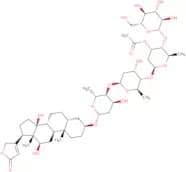
CAS :<p>Lanatoside C is a cardiac glycoside, which is a bioactive compound derived from the leaves of the plant Digitalis lanata. This compound exerts its effects primarily through inhibition of the Na⁺/K⁺-ATPase enzyme in cardiac muscle cells. By inhibiting this enzyme, Lanatoside C increases intracellular sodium levels, which indirectly leads to an increase in intracellular calcium via the sodium-calcium exchange mechanism. The elevated calcium concentrations enhance cardiac muscle contraction, thereby improving cardiac output and efficiency.</p>Formule :C49H76O20Degré de pureté :Min. 95%Couleur et forme :White PowderMasse moléculaire :985.12 g/molGeranylgeraniol
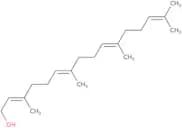
CAS :<p>Intermediate in the mevalonate pathway for biosynthesis of vitamins E and K</p>Formule :C20H34ODegré de pureté :Min. 85 Area-%Couleur et forme :Clear LiquidMasse moléculaire :290.48 g/molOryzalexin S
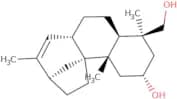
CAS :<p>Secondary plant metabolite with antimicrobial properties produced in response to plant infection and exposure to UV light. This diterpenoid phytoalexin is found in rice (Oryza sativa).</p>Formule :C20H32O2Degré de pureté :Min. 95%Couleur et forme :PowderMasse moléculaire :304.47 g/molBrusatol - Bio-X ™
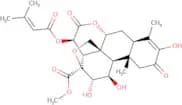
CAS :<p>Brusatol is a NRF2 inhibitor that has anti-inflammatory and immunomodulatory properties. Brusatol may have anti-cancer effects and can cause apoptosis in some cancer cells. It is a plant derived natural quassinoid.</p>Formule :C26H32O11Degré de pureté :Min. 95%Couleur et forme :PowderMasse moléculaire :520.53 g/molCineole
CAS :Produit contrôlé<p>Cineole, often referred to as eucalyptol, is a monoterpenoid and a cyclic ether that represents a key constituent of certain essential oils. It is primarily sourced from the leaves of Eucalyptus species, but also found in smaller quantities within other aromatic plants such as rosemary, sage, and tea tree. Cineole exerts its effects through a multifaceted mode of action, acting predominantly as an antimicrobial and anti-inflammatory agent. This is achieved by disrupting the lipid membrane of microbial pathogens, leading to their destabilization and eventual demise. Additionally, cineole modulates inflammatory pathways by inhibiting the production of pro-inflammatory cytokines, thereby ameliorating symptoms associated with inflammation.</p>Formule :C10H18ODegré de pureté :Min. 95%Couleur et forme :Colorless Clear LiquidMasse moléculaire :154.25 g/molTriptophenolide
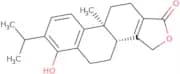
CAS :<p>Triptophenolide is a bioactive compound, which is a diterpenoid lactone extracted from the plant Tripterygium wilfordii. This compound is characterized by its ability to modulate various molecular targets and pathways associated with inflammation and immune response. The mode of action of triptophenolide involves the inhibition of nuclear factor kappa B (NF-κB) signaling, a pivotal transcription factor that regulates genes involved in inflammation, immunity, cell proliferation, and survival. By disrupting NF-κB activity, triptophenolide effectively decreases the expression of pro-inflammatory cytokines and other mediators.</p>Formule :C20H24O3Degré de pureté :Min. 95%Masse moléculaire :312.4 g/molAsiaticoside B
CAS :<p>Asiaticoside B is a natural saponin compound, which is extracted from the plant Centella asiatica. This compound predominantly acts through modulating collagen synthesis and activating fibroblasts, which are crucial for wound healing. Additionally, Asiaticoside B exhibits anti-inflammatory properties by inhibiting pro-inflammatory cytokines, thereby reducing inflammation at the cellular level.</p>Formule :C48H78O20Degré de pureté :Min. 95%Couleur et forme :PowderMasse moléculaire :975.12 g/molDihydroartemisinin
CAS :<p>Dihydroartemisinin is an antimalarial agent, which is a semi-synthetic derivative of artemisinin. Artemisinin is a naturally occurring sesquiterpene lactone derived from the sweet wormwood plant, Artemisia annua. The mode of action of dihydroartemisinin involves the generation of free radicals within the parasite's cells. This process occurs when the endoperoxide bridge in its chemical structure reacts with iron, leading to oxidative damage and subsequent parasite death.</p>Formule :C15H24O5Degré de pureté :Min. 95%Couleur et forme :White PowderMasse moléculaire :284.35 g/molGedunin
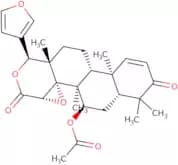
CAS :<p>Gedunin is a pentacyclic triterpenoid compound which is primarily found in the neem tree (Azadirachta indica) and other plants in the Meliaceae family.Gedunin works by inhibiting heat shock proteins (Hsp), which are involved in protein folding and stress responses in cells. It also triggers apoptosis in cancer cells and modulates inflammatory pathways to reduce inflammation.Gedunin is used for its anticancer, antimalarial, antibacterial, antifungal, anti-inflammatory, and neuroprotective properties. It has shown promise in inducing apoptosis in cancer cells, effectively combating malaria parasites, exhibiting antimicrobial properties, reducing inflammation, and potentially benefiting neurodegenerative diseases like Parkinson's.</p>Formule :C28H34O7Degré de pureté :Min. 95%Couleur et forme :PowderMasse moléculaire :482.57 g/molAsiaticoside
CAS :<p>Asiaticoside is a natural glycoside product extracted primarily from the plant Centella asiatica. It is a triterpenoid saponin derived from this medicinal herb, which is well-regarded for its therapeutic properties in traditional Ayurvedic and Chinese medicine. Asiaticoside operates primarily on a biochemical level by promoting collagen synthesis, enhancing angiogenesis, and modulating inflammatory responses. These actions are facilitated through the activation of key signaling pathways, including the TGF-β/Smad pathway, which plays a crucial role in cellular differentiation and proliferation.</p>Formule :C48H78O19Degré de pureté :Min. 95 Area-%Couleur et forme :White Off-White PowderMasse moléculaire :959.13 g/molTriptonide
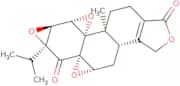
CAS :<p>Inhibits canonical Wnt/β-catenin signaling; antineoplastic</p>Formule :C20H22O6Degré de pureté :Min. 95%Couleur et forme :PowderMasse moléculaire :358.39 g/molOleanolic acid
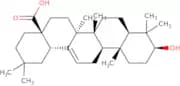
CAS :Produit contrôléOleanolic acid is a pentacyclic triterpenoid, which is a naturally occurring compound found in various plants, including olives, apples, and medicinal herbs. It exhibits a wide range of biological activities primarily due to its interaction with cellular signaling pathways. Oleanolic acid exerts its effects by modulating oxidative stress and inflammation through the inhibition of key enzymes and the regulation of gene expression related to these pathways.Formule :C30H48O3Degré de pureté :Min. 95%Couleur et forme :White PowderMasse moléculaire :456.7 g/molCycloartenol
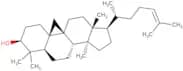
CAS :<p>Cycloartenol is a triterpenoid alcohol, which serves as a precursor in the biosynthesis of sterols. It is primarily derived from plant sources, as it plays a central role in the sterol synthesis pathway in higher plants. The mode of action of cycloartenol involves its conversion into various phytosterols through enzyme-catalyzed reactions, a process that is crucial for the formation of membrane lipids and signaling molecules in plants.</p>Formule :C30H50ODegré de pureté :Min. 90 Area-%Couleur et forme :White PowderMasse moléculaire :426.72 g/molProsaikogenin A
CAS :<p>Prosaikogenin A is a bioactive compound that belongs to the category of ginsenosides, which are saponins derived from the roots of the Panax ginseng plant. This compound is recognized for its significant pharmacological properties, primarily sourced from this traditional medicinal herb used extensively in East Asian medicine.</p>Formule :C36H57O7Degré de pureté :Min. 95%Couleur et forme :PowderMasse moléculaire :601.83 g/mol20(R)-Protopanaxadiol
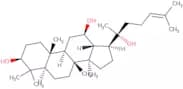
CAS :Produit contrôlé<p>20(R)-Protopanaxadiol is a bioactive compound, which is a triterpenoid saponin metabolite, derived from the processing of ginsenosides found in ginseng species. This compound is primarily sourced from the hydrolysis of specific ginsenosides, marking it as a significant component in the study of traditional medicinal plants. Its mode of action involves modulating various cellular pathways, including those related to apoptosis, antioxidant activity, and anti-inflammatory responses.</p>Formule :C30H52O3Degré de pureté :Min. 95%Couleur et forme :PowderMasse moléculaire :460.73 g/molBetulin diacetate
CAS :<p>Betulin diacetate is a synthesized compound derived from betulin, a naturally occurring triterpenoid. Betulin is primarily sourced from the bark of birch trees, specifically Betula species. The compound undergoes acetylation to form betulin diacetate, which enhances its solubility and bioavailability compared to its precursor.</p>Formule :C34H54O4Degré de pureté :Min. 95%Couleur et forme :White Off-White PowderMasse moléculaire :526.79 g/molGibberellic acid A4
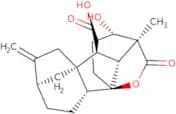
CAS :<p>Gibberellic acid A4 is a phytohormone and plant growth regulator, which is a diterpene acid derived from the fungal genus *Gibberella*. This compound functions by stimulating the production of enzymes that degrade cell wall components, allowing for cell elongation and division. Additionally, it influences the expression of genes related to growth and development processes.</p>Formule :C19H24O5Degré de pureté :Min. 90 Area-%Couleur et forme :White PowderMasse moléculaire :332.39 g/molEupatolide
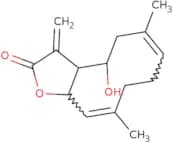
CAS :<p>Eupatolide is a sesquiterpene lactone, which is a class of naturally occurring organic compounds. It is primarily derived from certain plants in the Asteraceae family, such as Eupatorium species. Eupatolide exhibits its biological effects through the modulation of various signaling pathways, including the inhibition of the nuclear factor kappa B (NF-κB) pathway, which plays a critical role in the regulation of immune and inflammatory responses.</p>Formule :C15H20O3Degré de pureté :Min. 98 Area-%Couleur et forme :PowderMasse moléculaire :248.32 g/molToosendanin
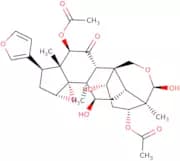
CAS :<p>Toosendanin is a bioinsecticidal compound, which is a natural product isolated from the bark of the Melia toosendan tree, also known as the Chinese Melia. The source of this compound lies in the Meliaceae family, known for its diverse array of bioactive phytochemicals.</p>Formule :C30H38O11Degré de pureté :Min. 95%Couleur et forme :Off-White PowderMasse moléculaire :574.62 g/mol