Terpénoïdes
Les terpénoïdes, également connus sous le nom d'isoprénoïdes, sont la plus grande classe de composés organiques naturels, dérivés d'unités d'isoprène à cinq carbones. Ils se trouvent dans diverses plantes et sont connus pour leurs propriétés aromatiques, ainsi que pour leur rôle dans la défense des plantes et la signalisation. Les terpénoïdes ont été largement étudiés pour leurs effets thérapeutiques, y compris des propriétés anti-inflammatoires, antimicrobiennes et anticancéreuses. Ils sont utilisés dans les industries pharmaceutiques, cosmétiques et alimentaires pour leurs bienfaits sur la santé et leurs qualités aromatiques. Chez CymitQuimica, vous trouverez une large sélection de terpénoïdes, essentiels pour la recherche en biologie végétale, pharmacologie et synthèse de produits naturels.
Sous-catégories appartenant à la catégorie "Terpénoïdes"
- Diterpènes (C₂₀)(671 produits)
- Hémiterpènes (C₅)(21 produits)
- Monoterpènes (C₁₀)(708 produits)
- Sesquiterpènes (C₂₅)(448 produits)
- Tétraterpènes (C₄₀)(63 produits)
- Triterpènes (C₃₀)(1.130 produits)
1423 produits trouvés pour "Terpénoïdes"
Trier par
Degré de pureté (%)
0
100
|
0
|
50
|
90
|
95
|
100
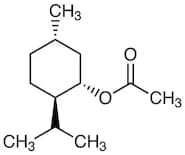
(+)-Menthyl Acetate
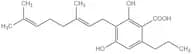
CAS :Formule :C12H22O2Degré de pureté :>98.0%(GC)Couleur et forme :Colorless to Almost colorless clear liquidMasse moléculaire :198.31Cannabigerovarinic acid
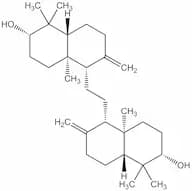
CAS :Carboxylic acid with phenol functionFormule :C20H28O4Degré de pureté :≥ 90.0 % (HPLC)Couleur et forme :PowderMasse moléculaire :332.43Α-onocerin
CAS :Cyclic alcoholFormule :C30H50O2Degré de pureté :≥ 95.0 % (HPLC)Couleur et forme :CrystalsMasse moléculaire :442.73Benzoylpaeoniflorin
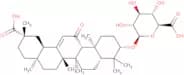
CAS :Produit contrôlé<p>Applications Benzoylpaeoniflorin is a derivative of Paeoniflorin (P133830), a monoterpene glycoside with potential anti-inflammatory activity. Paeoniflorin inhibits monocyte phagocytosis, or the TNF-α and PGE-2 production of monocytes.<br>References Zhu, X. et al.: Nat. Prod. Res., 28, 301(2014); Di, W. et al.: Int. Immunopharmacol.,, 14, 172 (2012);<br></p>Formule :C30H32O12Couleur et forme :Off-WhiteMasse moléculaire :584.57Glycyrrhetic acid 3-O-b-D-glucuronide
CAS :<p>Glycyrrhetic acid 3-O-b-D-glucuronide is a bioactive compound derived from the root of the licorice plant (Glycyrrhiza glabra). Licorice has been used for centuries in traditional medicine, and this compound is one of its active components. The compound functions by modulating inflammatory pathways, primarily through inhibiting enzymes like cyclooxygenase and phospholipase A2, which play key roles in the inflammatory response. In addition, it exhibits effects on glucocorticoid metabolism, enhancing the activity of endogenous glucocorticoids and subsequently leading to anti-inflammatory and immune-modulating effects.</p>Formule :C36H54O10Degré de pureté :Min. 95%Masse moléculaire :646.81 g/molHomoarbutin
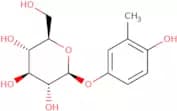
CAS :<p>Homoarbutin is a skin-brightening agent, which is sourced from certain plant species known for their medicinal properties. It operates through the inhibition of tyrosinase, an enzyme critical in the biosynthetic pathway of melanin production. By effectively reducing melanin synthesis, Homoarbutin helps mitigate hyperpigmentation and provides a more even skin tone.</p>Degré de pureté :Min. 95%Bacopaside II
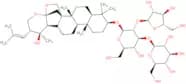
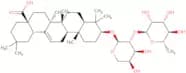
CAS :<p>Triterpene saponin</p>Formule :C47H76O18Degré de pureté :Min. 95%Masse moléculaire :929.1 g/molGinsenoside Rk3
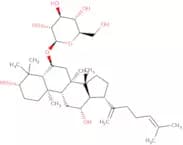
CAS :<p>Ginsenoside Rk3 is a bioactive compound, classified as a saponin, which is derived from the root of the Panax ginseng plant. This specific ginsenoside is produced through the steaming and processing of ginseng, which alters its chemical structure, resulting in various pharmacological properties. Ginsenoside Rk3 acts primarily by modulating signaling pathways and interacting with cellular receptors, leading to diverse biological activities.</p>Formule :C36H60O8Degré de pureté :Min. 95%Couleur et forme :PowderMasse moléculaire :620.86 g/molBritannin
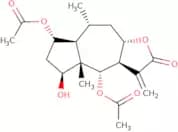
CAS :<p>Britannin is a sesquiterpene lactone, which is a type of organic compound found in certain plants. It is primarily derived from species within the Asteraceae family, known for its rich concentration of bioactive constituents. The mode of action of Britannin involves the inhibition of key signaling pathways and enzymes responsible for inflammatory responses and microbial growth. This unique mechanism disrupts the processes necessary for these biological functions, thereby exerting its therapeutic effects.</p>Formule :C19H26O7Degré de pureté :Min. 95%Masse moléculaire :366.41 g/mol(+)-Sativene
CAS :<p>(+)-Sativene is a sesquiterpene compound, which is a type of naturally occurring hydrocarbon. It is derived from various plant sources, including certain species of the Cannabis genus and other aromatic plants. As a member of the terpenoid family, (+)-Sativene is characterized by its distinctive hydrocarbon structure, contributing to its presence in essential oils and its role in natural plant fragrances.</p>Formule :C10H9ClN2Degré de pureté :Min. 95%Masse moléculaire :192.64 g/molcis-Nerolidol
CAS :<p>Essential oil; used as flavouring agent and as a scent</p>Formule :C15H26ODegré de pureté :Min. 95%Masse moléculaire :222.37 g/molNeotriptophenolide
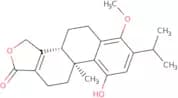
CAS :<p>Neotriptophenolide is a synthetic compound that belongs to the class of bioactive alkaloids. It is derived from a rational synthesis process, leveraging advanced organic chemistry techniques to replicate and improve upon naturally occurring compounds. The mode of action of Neotriptophenolide involves specific interactions with cellular receptors and enzymes, influencing various biochemical pathways essential for cellular regulation and signaling.</p>Degré de pureté :Min. 95%Helenalin
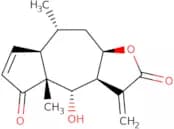
CAS :<p>Helenalin is a sesquiterpene lactone, which is a secondary metabolite derived from plants, specifically from the Arnica species. This compound is characterized by its molecular framework containing a cyclodecadiene ring along with an α-methylene-γ-lactone ring, conferring its biological activities. Helenalin exerts its effects primarily by inhibiting key transcription factors such as NF-κB and other molecules involved in critical signaling pathways. This mode of action results from its ability to form adducts with thiol groups of cysteine residues on these proteins, thus altering their activity and inhibiting inflammatory responses.</p>Degré de pureté :Min. 95%Pinifolic acid - Pinus sylvestris (Scots pine)
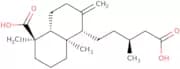
CAS :<p>Pinifolic acid is a bioactive compound, which is derived from Pinus sylvestris (Scots pine), a species of pine native to Eurasia. This compound is extracted from the needles and bark of the tree, recognized for its rich content of polyphenolic compounds. The mode of action of pinifolic acid involves potent antioxidant activity, which is facilitated by its ability to scavenge free radicals and thereby reduce oxidative stress at the cellular level. The bioactive components are believed to interact with various biochemical pathways, potentially exerting anti-inflammatory and protective effects on various tissues.</p>Formule :C20H32O4Degré de pureté :Min. 95%Masse moléculaire :336.47 g/molCycloartenol acetate
CAS :<p>Cycloartenol acetate is a natural triterpenoid, which is primarily derived from plant sources. It serves as a key intermediate in the biosynthesis of sterols, crucial components of plant cell membranes. The compound is synthesized in the plant's cellular systems through the cyclization process from 2,3-oxidosqualene, utilizing cycloartenol synthase enzymes. This enzymatic modification marks the diverging point between plant sterol and steroid biosynthesis pathways, distinguishing it from similar pathways in animals and fungi.</p>Formule :C32H52O2Degré de pureté :Min. 95%Masse moléculaire :468.75 g/molKansuiphorin C
CAS :<p>Kansuiphorin C is a diterpenoid ester that is a naturally occurring compound isolated from the root tubers of Euphorbia kansui. This compound belongs to a class of chemical compounds known for their potential therapeutic properties. Kansuiphorin C functions primarily through a mechanism that involves the induction of cytotoxicity in cancerous cells, provoking cell death through pathways that promote apoptosis.</p>Degré de pureté :Min. 95%Rotundone - 30%
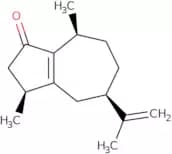
CAS :<p>Peppery aroma constituent of essential oil of Cyperus rotundus (nutgrass)</p>Formule :C15H22ODegré de pureté :Min. 95%Masse moléculaire :218.33 g/molβ-Hederin
CAS :<p>Beta-Hederin is a saponin, which is a type of soap-like compound, derived from the leaves of the ivy plant, Hedera helix. Saponins are glycosides characterized by their ability to form stable, soap-like foams in aqueous solutions. This particular compound is notable for its amphiphilic nature, allowing it to interact with biological membranes.</p>Degré de pureté :Min. 97 Area-%Carotol
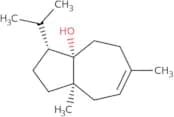
CAS :<p>Primary component found in carrot seed oil</p>Formule :C15H26ODegré de pureté :Min. 95%Masse moléculaire :222.37 g/molEsculentoside H
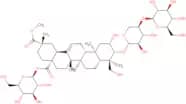
CAS :<p>Esculentoside H is a naturally occurring triterpenoid saponin, which is derived from the plant Phytolacca esculenta, commonly known as the pokeweed. This compound has garnered significant interest due to its unique mode of action as an anti-inflammatory and immunomodulatory agent. By modulating cellular signaling pathways, Esculentoside H can inhibit the expression of pro-inflammatory cytokines and suppress the activation of NF-kB, a key transcription factor involved in inflammatory responses.</p>Formule :C48H76O21Degré de pureté :Min. 95%Masse moléculaire :989.1 g/mol