Terpénoïdes
Les terpénoïdes, également connus sous le nom d'isoprénoïdes, sont la plus grande classe de composés organiques naturels, dérivés d'unités d'isoprène à cinq carbones. Ils se trouvent dans diverses plantes et sont connus pour leurs propriétés aromatiques, ainsi que pour leur rôle dans la défense des plantes et la signalisation. Les terpénoïdes ont été largement étudiés pour leurs effets thérapeutiques, y compris des propriétés anti-inflammatoires, antimicrobiennes et anticancéreuses. Ils sont utilisés dans les industries pharmaceutiques, cosmétiques et alimentaires pour leurs bienfaits sur la santé et leurs qualités aromatiques. Chez CymitQuimica, vous trouverez une large sélection de terpénoïdes, essentiels pour la recherche en biologie végétale, pharmacologie et synthèse de produits naturels.
Sous-catégories appartenant à la catégorie "Terpénoïdes"
- Diterpènes (C₂₀)(671 produits)
- Hémiterpènes (C₅)(21 produits)
- Monoterpènes (C₁₀)(708 produits)
- Sesquiterpènes (C₂₅)(448 produits)
- Tétraterpènes (C₄₀)(63 produits)
- Triterpènes (C₃₀)(1.130 produits)
1423 produits trouvés pour "Terpénoïdes"
Trier par
Degré de pureté (%)
0
100
|
0
|
50
|
90
|
95
|
100
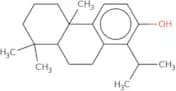
8,11,13-Totaratrien-13-ol - Thuja plicata (western red cedar)
CAS :<p>8,11,13-Totaratrien-13-ol is a sesquiterpene alcohol, which is a bioactive compound derived from the heartwood of Thuja plicata, commonly known as western red cedar. This source is renowned for its complex mixture of organic compounds, which contribute to the wood's natural resistance to decay and pests.</p>Formule :C20H30ODegré de pureté :Min. 95%Masse moléculaire :286.45 g/molGibberellic acid methyl ester
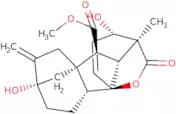
CAS :<p>Gibberellic acid methyl ester is a specialized plant growth regulator, which is synthetically derived from the naturally occurring gibberellins found in plants. These gibberellins are vital phytohormones that regulate various aspects of growth and development in higher plants. Gibberellic acid methyl ester functions by mimicking these natural gibberellins, interacting with plant cellular processes to stimulate and enhance growth. Its mode of action involves promoting cell elongation, division, and differentiation, thereby accelerating plant growth and influencing the lifecycle.</p>Formule :C20H24O6Degré de pureté :Min. 95%Masse moléculaire :360.4 g/molProsaikogenin D
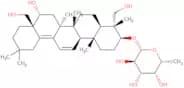
CAS :<p>Prosaikogenin D is a type of saponin, which is a secondary metabolite derived primarily from the plant species within the Araliaceae family, notably ginseng and related plants. This compound is a result of bioconversion processes involving ginsenosides, which are the primary active components found in ginseng. The mode of action of Prosaikogenin D involves its interaction with various cellular pathways, leading to modulation of immune responses, anti-inflammatory effects, and potential anticancer activity.</p>Formule :C36H58O8Degré de pureté :Min. 95%Masse moléculaire :618.84 g/mol(-)-trans-Myrtanol
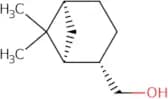
CAS :<p>(-)-trans-Myrtanol is a type of monoterpenoid, classified as a terpene alcohol. It is primarily derived from essential oils found in various plants, including those in the coniferous and Lauraceae families. Myrtanol is a chiral compound, and its stereochemistry is vital for its biological activities.</p>Formule :C10H18ODegré de pureté :Min. 95%Couleur et forme :Colorless Clear LiquidMasse moléculaire :154.25 g/molDehydroandrographolide succinate
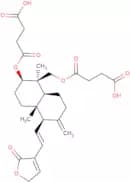
CAS :<p>Dehydroandrographolide succinate is a pharmacological agent derived from the diterpenoid lactone, andrographolide, which is found in the plant *Andrographis paniculata*. This compound exhibits its mode of action primarily by modulating inflammatory pathways, including inhibition of nuclear factor kappa-light-chain-enhancer of activated B cells (NF-κB) and the reduction of pro-inflammatory cytokines. These actions contribute to its anti-inflammatory and immunomodulatory properties.</p>Formule :C28H36O10Degré de pureté :Min. 95%Masse moléculaire :532.58 g/molPseudolaric Acid C
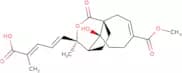
CAS :<p>Pseudolaric Acid C is a naturally occurring diterpenoid, which is extracted from the plant Pseudolarix amabilis, commonly known as the golden larch. It is characterized by its unique structural properties, contributing to its biological activity. The primary mode of action of Pseudolaric Acid C involves disrupting the integrity of fungal cell membranes, thereby inhibiting fungal growth and viability. This compound has been shown to have significant antifungal properties, making it a subject of interest in the development of antifungal agents.</p>Degré de pureté :Min. 95%Fraxinellone
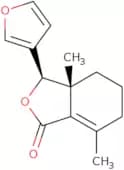
CAS :<p>Fraxinellone is a naturally occurring sesquiterpenoid lactone, which is derived from the plant species Dictamnus dasycarpus, commonly known as the burning bush. It exhibits its mode of action through the disruption of calcium ion channels, leading to neurotoxic effects in target organisms. This interaction with calcium channel pathways is crucial for its bioactivity, influencing both insecticidal and potential therapeutic effects.</p>Degré de pureté :Min. 95%20(R)Ginsenoside Rh1
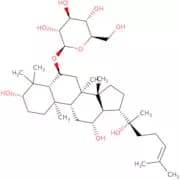
CAS :<p>20(R)-Ginsenoside Rh1 is a bioactive compound, which is a secondary metabolite extracted from Panax ginseng, a medicinal plant widely utilized in traditional medicine. This ginsenoside functions by modulating various cellular pathways, interacting with nuclear receptors and signal transduction molecules, thus influencing immune responses, anti-inflammatory activities, and neuroprotective mechanisms.</p>Degré de pureté :Min. 95%Pyrocurzerenone
CAS :<p>Please enquire for more information about Pyrocurzerenone including the price, delivery time and more detailed product information at the technical inquiry form on this page</p>Formule :C15H16ODegré de pureté :Min. 95%Masse moléculaire :212.29 g/molDarutoside
CAS :<p>Darutoside is a bioactive compound, which is a sesquiterpene lactone glycoside sourced primarily from the Siegesbeckia orientalis plant. It functions through a mechanism that enhances extracellular matrix components, particularly promoting the synthesis of collagen and elastin fibers. This action helps in reinforcing the skin's structural integrity and improving its reparative processes.</p>Formule :C26H44O8Degré de pureté :Min. 95%Masse moléculaire :484.62 g/molNeosartoricin
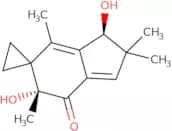
CAS :<p>Please enquire for more information about Neosartoricin including the price, delivery time and more detailed product information at the technical inquiry form on this page</p>Formule :C26H28O9Degré de pureté :Min. 95%Masse moléculaire :484.5 g/molNotoginsenoside Fa
CAS :<p>Notoginsenoside Fa is a bioactive compound, specifically a type of saponin. It is derived from the roots of Panax notoginseng, a plant renowned in traditional Chinese medicine. The mode of action of Notoginsenoside Fa involves modulation of signaling pathways, including antioxidant, anti-inflammatory, and anti-apoptotic activities, as well as influencing cellular pathways related to energy metabolism and cell proliferation.</p>Degré de pureté :Min. 95%Illudin M
CAS :<p>Illudin M is a natural compound, categorized as a sesquiterpene. It is derived from certain species of mushrooms, notably those in the Omphalotus genus, such as the jack-o'-lantern mushroom (Omphalotus illudens). The mode of action of Illudin M involves targeting and damaging DNA within cells. Due to its cytotoxic nature, it interferes with DNA synthesis, leading to cell death, particularly in rapidly dividing cells.</p>Formule :C15H20O3Degré de pureté :Min. 95%Masse moléculaire :248.14124Incensole acetate
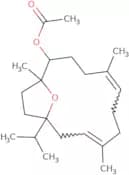
CAS :<p>Incensole acetate is a bioactive diterpene compound, which is a significant constituent of the Boswellia genus, commonly known as frankincense. This compound is primarily derived from the resin of Boswellia species, notably Boswellia sacra. Incensole acetate functions as a psychoactive agent, exhibiting its effects primarily through interactions with ion channels and receptors in the brain, modulating neuroinflammation and possibly influencing synaptic transmission.</p>Formule :C22H36O3Degré de pureté :Min. 95%Masse moléculaire :348.52 g/molLanatoside A
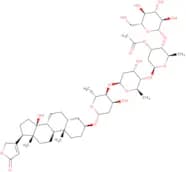
CAS :<p>Lanatoside A is a cardiac glycoside found in the plant "Lantana camara" and other plants of the family Verbenaceae. Lanatoside A is structurally characterized by an oxygenated hydroxyl group at C-3, which is present in the natural compound secoisolariciresinol. It has been shown to have inhibitory effects on enzymes involved in congestive heart failure such as myosin light chain kinase and serine/threonine protein kinase. Lanatoside A also has been shown to have immunomodulatory properties and may be beneficial for autoimmune diseases such as rheumatoid arthritis. The enzyme activities are inhibited by lanatosides at low pH values (pH 5-6) but not at high pH values (pH 7-8).</p>Degré de pureté :Min. 95%Prosaikogenin H
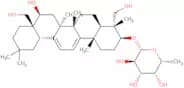
CAS :<p>Prosaikogenin H is a naturally occurring compound, classified as a saponin, which is derived from specific plant sources, particularly within the family Araliaceae. It is obtained through extraction and purification processes from plants known for their bioactive compounds. The mode of action of prosaikogenin H involves interacting with cellular pathways to modulate biological responses, including anti-inflammatory and antioxidant effects. These interactions are facilitated by its structural properties that enable it to engage with cell membranes and influence signaling cascades.</p>Formule :C36H58O8Degré de pureté :Min. 95%Masse moléculaire :618.84 g/molPseudolaric acid B-O-β-D-glucopyranoside
CAS :<p>Pseudolaric acid B-O-beta-D-glucopyranoside is a secondary metabolite, which is a bioactive compound sourced from the bark of the Pseudolarix amabilis, a coniferous tree native to China. It exhibits its mode of action primarily through the disruption of fungal cell integrity and inhibition of fungal growth by interfering with the synthesis of key structural components in the cell wall. This action makes it a potent antifungal agent with secondary antibacterial properties.</p>Degré de pureté :Min. 95%Pseudoginsenoside RT5
CAS :<p>Pseudoginsenoside RT5 is a saponin, which is a type of glycoside found in certain plants, particularly in the Panax ginseng species. It is extracted from the root of this traditional medicinal plant, which is well-known for its therapeutic properties. The mode of action of Pseudoginsenoside RT5 involves modulating various cellular pathways, including the inhibition of certain enzymes and receptors involved in disease processes such as inflammation and cell proliferation. This compound is also implicated in antioxidant activities, which further contribute to its potential therapeutic effects.</p>Degré de pureté :Min. 95%Jasminoside N
CAS :<p>Jasminoside N is a natural compound, specifically a glycoside, which is derived from certain plant species, particularly in the genus *Jasminum*. As a natural metabolite found in these species, it exhibits an interesting profile in pharmacological research. The mode of action of Jasminoside N primarily involves its interaction with specific cellular pathways, often influencing anti-inflammatory and antioxidant responses. Its ability to modulate these pathways makes it a subject of interest in the study of plant-based therapeutic agents.</p>Formule :C22H38O11Degré de pureté :Min. 95%Masse moléculaire :478.53 g/molSaikosaponin B1
CAS :<p>Saikosaponin B1 is a triterpenoid saponin, which is primarily derived from the roots of Bupleurum species, particularly Bupleurum falcatum. This bioactive compound exhibits a plethora of pharmacological activities through various modes of action, including modulation of immune responses and inhibition of inflammatory pathways. It interacts with cellular components to influence signal transduction mechanisms that are crucial in the pathophysiology of various diseases.</p>Degré de pureté :Min. 95%