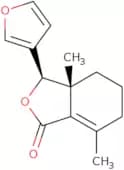
Terpénoïdes
Les terpénoïdes, également connus sous le nom d'isoprénoïdes, sont la plus grande classe de composés organiques naturels, dérivés d'unités d'isoprène à cinq carbones. Ils se trouvent dans diverses plantes et sont connus pour leurs propriétés aromatiques, ainsi que pour leur rôle dans la défense des plantes et la signalisation. Les terpénoïdes ont été largement étudiés pour leurs effets thérapeutiques, y compris des propriétés anti-inflammatoires, antimicrobiennes et anticancéreuses. Ils sont utilisés dans les industries pharmaceutiques, cosmétiques et alimentaires pour leurs bienfaits sur la santé et leurs qualités aromatiques. Chez CymitQuimica, vous trouverez une large sélection de terpénoïdes, essentiels pour la recherche en biologie végétale, pharmacologie et synthèse de produits naturels.
Sous-catégories appartenant à la catégorie "Terpénoïdes"
- Diterpènes (C₂₀)(671 produits)
- Hémiterpènes (C₅)(21 produits)
- Monoterpènes (C₁₀)(708 produits)
- Sesquiterpènes (C₂₅)(448 produits)
- Tétraterpènes (C₄₀)(63 produits)
- Triterpènes (C₃₀)(1.130 produits)
1423 produits trouvés pour "Terpénoïdes"
Trier par
Degré de pureté (%)
0
100
|
0
|
50
|
90
|
95
|
100
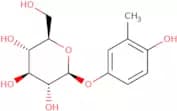
Homoarbutin
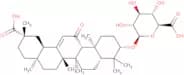
CAS :<p>Homoarbutin is a skin-brightening agent, which is sourced from certain plant species known for their medicinal properties. It operates through the inhibition of tyrosinase, an enzyme critical in the biosynthetic pathway of melanin production. By effectively reducing melanin synthesis, Homoarbutin helps mitigate hyperpigmentation and provides a more even skin tone.</p>Degré de pureté :Min. 95%Glycyrrhetic acid 3-O-b-D-glucuronide
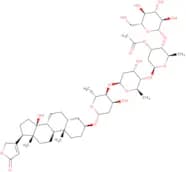
CAS :<p>Glycyrrhetic acid 3-O-b-D-glucuronide is a bioactive compound derived from the root of the licorice plant (Glycyrrhiza glabra). Licorice has been used for centuries in traditional medicine, and this compound is one of its active components. The compound functions by modulating inflammatory pathways, primarily through inhibiting enzymes like cyclooxygenase and phospholipase A2, which play key roles in the inflammatory response. In addition, it exhibits effects on glucocorticoid metabolism, enhancing the activity of endogenous glucocorticoids and subsequently leading to anti-inflammatory and immune-modulating effects.</p>Formule :C36H54O10Degré de pureté :Min. 95%Masse moléculaire :646.81 g/molLanatoside A
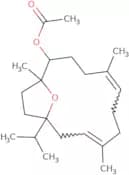
CAS :<p>Lanatoside A is a cardiac glycoside found in the plant "Lantana camara" and other plants of the family Verbenaceae. Lanatoside A is structurally characterized by an oxygenated hydroxyl group at C-3, which is present in the natural compound secoisolariciresinol. It has been shown to have inhibitory effects on enzymes involved in congestive heart failure such as myosin light chain kinase and serine/threonine protein kinase. Lanatoside A also has been shown to have immunomodulatory properties and may be beneficial for autoimmune diseases such as rheumatoid arthritis. The enzyme activities are inhibited by lanatosides at low pH values (pH 5-6) but not at high pH values (pH 7-8).</p>Degré de pureté :Min. 95%Incensole acetate
CAS :<p>Incensole acetate is a bioactive diterpene compound, which is a significant constituent of the Boswellia genus, commonly known as frankincense. This compound is primarily derived from the resin of Boswellia species, notably Boswellia sacra. Incensole acetate functions as a psychoactive agent, exhibiting its effects primarily through interactions with ion channels and receptors in the brain, modulating neuroinflammation and possibly influencing synaptic transmission.</p>Formule :C22H36O3Degré de pureté :Min. 95%Masse moléculaire :348.52 g/molNerolidol (cis/trans)
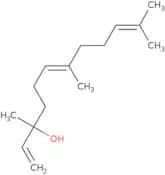
CAS :<p>Nerolidol (cis/trans) is a naturally occurring sesquiterpene alcohol, which is typically sourced from essential oils of several aromatic plants, including lavender, jasmine, and tea tree. Its chemical structure includes two isomers: cis and trans, which differ in the spatial arrangement of their atoms, influencing their olfactory and biological activities.</p>Formule :C15H26ODegré de pureté :Min. 95%Couleur et forme :Clear LiquidMasse moléculaire :222.37 g/molXylopic acid
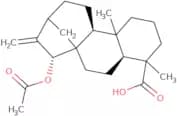
CAS :<p>Xylopic acid is a bioactive compound, which is a diterpenoid isolated from the plant species Xylopia aethiopica. This compound is derived primarily from the fruits of the plant, often referred to as the African pepper or grains of Selim. Xylopic acid exhibits its mode of action by interacting with various biological pathways, including anti-inflammatory and antimicrobial processes, as well as modulating specific cellular receptors and enzymatic activities.</p>Formule :C22H32O4Degré de pureté :Min. 95%Masse moléculaire :360.49 g/molIlludin M
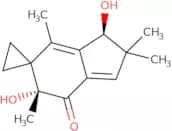
CAS :<p>Illudin M is a natural compound, categorized as a sesquiterpene. It is derived from certain species of mushrooms, notably those in the Omphalotus genus, such as the jack-o'-lantern mushroom (Omphalotus illudens). The mode of action of Illudin M involves targeting and damaging DNA within cells. Due to its cytotoxic nature, it interferes with DNA synthesis, leading to cell death, particularly in rapidly dividing cells.</p>Formule :C15H20O3Degré de pureté :Min. 95%Masse moléculaire :248.14124Notoginsenoside Fa
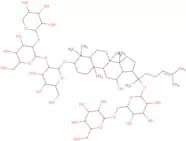
CAS :<p>Notoginsenoside Fa is a bioactive compound, specifically a type of saponin. It is derived from the roots of Panax notoginseng, a plant renowned in traditional Chinese medicine. The mode of action of Notoginsenoside Fa involves modulation of signaling pathways, including antioxidant, anti-inflammatory, and anti-apoptotic activities, as well as influencing cellular pathways related to energy metabolism and cell proliferation.</p>Degré de pureté :Min. 95%Neosartoricin
CAS :<p>Please enquire for more information about Neosartoricin including the price, delivery time and more detailed product information at the technical inquiry form on this page</p>Formule :C26H28O9Degré de pureté :Min. 95%Masse moléculaire :484.5 g/molRotundone - 90%
CAS :<p>Peppery aroma constituent of essential oil of Cyperus rotundus (nutgrass)</p>Formule :C15H22ODegré de pureté :Min. 95%Masse moléculaire :218.33 g/mol8(17)14-Labdadiene-13-ol-6-acetyl - Larix decidua (European larch)
CAS :<p>8(17)14-Labdadiene-13-ol-6-acetyl is a sesquiterpenoid compound, which is a type of naturally occurring terpenoid. It is derived from the resin of the Larix decidua, commonly known as the European larch. This compound is formed through the complex biosynthetic pathways in the larch tree, specifically involving the cyclization of geranylgeranyl diphosphate (GGPP) and subsequent modifications to yield its unique structure.</p>Formule :C22H36O3Degré de pureté :Min. 95%Masse moléculaire :348.52 g/molGypenoside L
CAS :<p>Gypenoside L is a saponin compound, which is a secondary metabolite derived from the plant Gynostemma pentaphyllum. This herbaceous plant, commonly known as Jiaogulan, is native to South China and other parts of Asia, where it has been traditionally used in herbal medicine. The mode of action of Gypenoside L involves modulating various biochemical pathways, potentially influencing cellular signaling and metabolic processes. It is known for its role in activating AMP-activated protein kinase (AMPK) pathways, enhancing cellular energy homeostasis, and exhibiting antioxidant properties.</p>Formule :C42H72O14Degré de pureté :Min. 95%Masse moléculaire :801.01 g/molZingibroside R1
CAS :<p>Triterpenoid saponin with anti-tumour and antiangiogenic activity</p>Formule :C42H66O14Degré de pureté :Min. 95%Masse moléculaire :794.97 g/molDarutoside
CAS :<p>Darutoside is a bioactive compound, which is a sesquiterpene lactone glycoside sourced primarily from the Siegesbeckia orientalis plant. It functions through a mechanism that enhances extracellular matrix components, particularly promoting the synthesis of collagen and elastin fibers. This action helps in reinforcing the skin's structural integrity and improving its reparative processes.</p>Formule :C26H44O8Degré de pureté :Min. 95%Masse moléculaire :484.62 g/molPyrocurzerenone
CAS :<p>Please enquire for more information about Pyrocurzerenone including the price, delivery time and more detailed product information at the technical inquiry form on this page</p>Formule :C15H16ODegré de pureté :Min. 95%Masse moléculaire :212.29 g/molDanshenxinkun A
CAS :<p>Danshenxinkun A is a herbal compound, which is derived from the root of Salvia miltiorrhiza, commonly known as Danshen. This product utilizes the bioactive constituents of the plant, primarily focusing on its polyphenolic compounds. The mode of action involves modulating various biological pathways, including antioxidant activity, vasodilation, and anti-inflammatory responses, which contribute to enhanced cardiovascular function.</p>Formule :C18H16O4Degré de pureté :Min. 95%Couleur et forme :PowderMasse moléculaire :296.32 g/molNotoginsenoside Fe
CAS :<p>Notoginsenoside Fe is a bioactive saponin, which is a natural compound sourced from the roots of the Panax notoginseng plant, commonly used in traditional Chinese medicine. This compound is part of the ginsenoside family and is known for its diverse pharmacological properties. As a saponin, Notoginsenoside Fe operates by modulating various biological pathways, including anti-inflammatory and antioxidant effects, which contribute to its therapeutic potential.</p>Formule :C47H80O17Degré de pureté :Min. 95%Couleur et forme :SolidMasse moléculaire :917.13 g/mol20(R)Ginsenoside Rh1
CAS :<p>20(R)-Ginsenoside Rh1 is a bioactive compound, which is a secondary metabolite extracted from Panax ginseng, a medicinal plant widely utilized in traditional medicine. This ginsenoside functions by modulating various cellular pathways, interacting with nuclear receptors and signal transduction molecules, thus influencing immune responses, anti-inflammatory activities, and neuroprotective mechanisms.</p>Degré de pureté :Min. 95%Fraxinellone
CAS :<p>Fraxinellone is a naturally occurring sesquiterpenoid lactone, which is derived from the plant species Dictamnus dasycarpus, commonly known as the burning bush. It exhibits its mode of action through the disruption of calcium ion channels, leading to neurotoxic effects in target organisms. This interaction with calcium channel pathways is crucial for its bioactivity, influencing both insecticidal and potential therapeutic effects.</p>Degré de pureté :Min. 95%Phyllanthostatin 2 - Phyllanthus acuminatus
CAS :<p>Phyllanthostatin 2 is a bioactive compound, classified as a lignan, which is isolated from the plant Phyllanthus acuminatus. This compound is part of a broader group of naturally occurring phytochemicals known for exhibiting various biological activities. The primary source of Phyllanthostatin 2, Phyllanthus acuminatus, is a plant found in tropical regions and is traditionally used in herbal medicine.</p>Formule :C40H52O18Degré de pureté :Min. 95%Masse moléculaire :820.83 g/mol