Caroténoïdes
58 produits trouvés pour "Caroténoïdes".
- Tri par prix ascendant
- Tri par prix descendant
- Puretés inférieures
- Puretés supérieures
- Livraison estimée la plus rapide
15-cis-Phytoene
CAS :15-cis-Phytoene analytical standard provided with w/w absolute assay, to be used for quantitative titration.Formule :C40H64Degré de pureté :(HPLC) ≥97%Couleur et forme :OilMasse moléculaire :544.95trans-Phytoene (Technical grade)
CAS :Produit contrôléStability Light Sensitive, Temperature Sensitive
Applications Intermediate in the biosynthesis of carotenoids.
References Umeno, D. & Arnold, F.; J. Bacteriol. 186, 1531 (2004).Formule :C40H64Couleur et forme :NeatMasse moléculaire :544.9415-cis-Phytoene (>80%)
CAS :Produit contrôléStability Light Sensitive, Temperature Sensitive
Applications 15-cis-Phytoene is an intermediate in the biosynthesis of carotenoids.
References Davidovich-Rikanati, R., et al.: Plant J., 56, 228 (2008), Puri, A., et al.: Weed Sci., 57, 482 (2009), Serino, S., et al.: J. Agric. Food Chem., 57, 8753 (2009),Formule :C40H64Degré de pureté :>80%Couleur et forme :NeatMasse moléculaire :544.94Zeaxanthin, 65%
CAS :Stability Light Sensitive, Temperature Sensitive
Applications It is one of the two carotenoids contained within the retina.
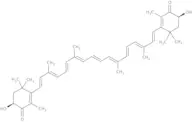
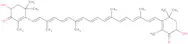
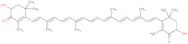
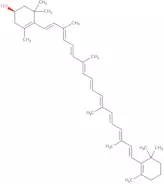
References Karrer, et al.: Helv. Chim. Acta, 13, 268 (1930), Hlubucek, et al.: J. Chem. Soc. Perkin Trans., 1, 848 (1974), Maoka, T., et al.: Comp. Biochem. Physiol., 83B, 121 (1986),Formule :C40H56O2Degré de pureté :65%Couleur et forme :NeatMasse moléculaire :568.87Astaxanthin
CAS :Formule :C40H52O4Degré de pureté :≥ 98.0%Couleur et forme :Light to dark purple powderMasse moléculaire :596.84Zeaxanthin
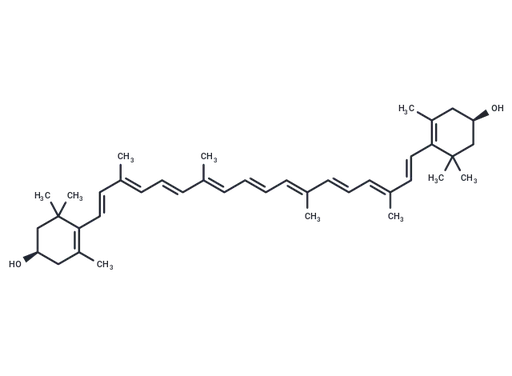
CAS :Zeaxanthin is a dietary carotenoid that accumulates in the retina (particularly the macula) and has antioxidant activity.Cost-effective and quality-assured.Formule :C40H56O2Degré de pureté :98.15% - 99.72%Couleur et forme :SolidMasse moléculaire :568.8714β-Apo-8'-carotenal
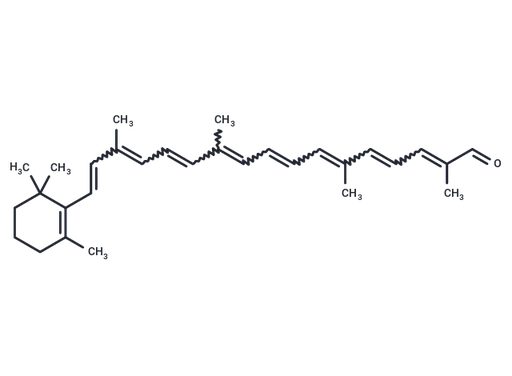
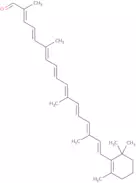
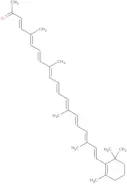
CAS :β-Apo-8'-carotenal (Apocarotenal) is a carotenoid found in spinach and citrus fruits. Apocarotenal is used in fat-based food, dairy products, and sweets.Formule :C30H40ODegré de pureté :96.56% - ≥95%Couleur et forme :Black SolidMasse moléculaire :416.638Fucoxanthine - 10%
CAS :Fucoxanthine - 10% is a carotenoid compound, which is extracted from brown seaweeds such as Undaria pinnatifida and Laminaria japonica. This compound is known for its unique structure and biochemistry, which allows it to influence metabolic processes within the body. Fucoxanthine primarily functions by increasing the expression of uncoupling protein 1 (UCP1) in white adipose tissue, which in turn enhances lipid metabolism and thermogenesis. This action leads to a potential increase in energy expenditure and fat oxidation.Formule :C42H58O6Degré de pureté :Min. 95%Couleur et forme :Yellow PowderMasse moléculaire :658.91 g/molAstaxanthin
CAS :A xanthophyll pigment with characteristic reddish-orange colour. Often added to fish food since it is an essential nutrient for healthy fish growth and reproduction. A strong anti-oxidant with suggested preventative roles in cancer as well as cardiovascular and immunological disease.
Formule :C40H52O4Degré de pureté :Min. 88.0 Area-%Couleur et forme :Purple PowderMasse moléculaire :596.84 g/molApocarotenal
CAS :Apocarotenal is a carotenoid-derived pigment, which is a natural carotenoid with a bright orange-red hue. It is derived from beta-carotene, primarily found in fruits and vegetables. This compound is biosynthesized from plant sources, commonly extracted from carrots and citrus fruits. Apocarotenal functions through its conjugated double-bond system, which absorbs light in the visible range, imparting color to formulations.
Formule :C30H40ODegré de pureté :Min. 96 Area-%Couleur et forme :PowderMasse moléculaire :416.64 g/molViolaxanthin - solution in ethanol
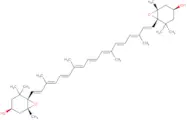
CAS :Violaxanthin - solution in ethanol is a carotenoid compound, typically used in biochemical and physiological research. This product is derived from natural sources, such as plants and algae, where violaxanthin plays a crucial role in the xanthophyll cycle, contributing to thermal energy dissipation and photoprotection in photosynthetic organisms. The mode of action involves the reversible conversion of violaxanthin to other xanthophylls such as antheraxanthin and zeaxanthin, depending on light conditions, to regulate energy flux and protect against photooxidative damage.
Formule :C40H56O4Degré de pureté :Min. 98 Area-%Couleur et forme :Clear LiquidMasse moléculaire :600.87 g/molAstaxanthin - 95%
CAS :A xanthophyll pigment with characteristic reddish-orange colour. Often added to fish food since it is an essential nutrient for healthy fish growth and reproduction. A strong anti-oxidant with suggested preventative roles in cancer as well as cardiovascular and immunological disease.Formule :C40H52O4Degré de pureté :(%) Min. 97%Couleur et forme :PowderMasse moléculaire :596.84 g/molbeta-Cryptoxanthin - 95%
CAS :Beta-Cryptoxanthin - 95% is a high-purity carotenoid product, which is a naturally occurring pigment found in various fruits and vegetables, such as papayas, tangerines, and red peppers. This compound is integral to the human diet and serves as a precursor to vitamin A, contributing to its provitamin A activity.
Formule :C40H56ODegré de pureté :Min. 95 Area-%Couleur et forme :Red PowderMasse moléculaire :552.87 g/molZeaxanthin - 50%
CAS :Zeaxanthin - 50% is a carotenoid compound, which is a type of naturally occurring pigment found in various fruits and vegetables, especially in corn, saffron, and leafy greens. It belongs to a class of phytochemicals known as xanthophylls, which are crucial for light absorption and protection against photooxidative damage in plants. This particular version is typically derived from natural sources like marigold petals or synthesized for high purity and concentration.
Formule :C40H56O2Degré de pureté :Min. 50 Area-%Couleur et forme :PowderMasse moléculaire :568.87 g/molPicrocrocin
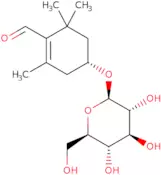
CAS :Picrocrocin is a natural compound, specifically a monoterpene glycoside. It is derived from the Crocus sativus L. plant, commonly known as saffron. Picrocrocin is formed during the dehydration of the zeaxanthin carotenoid and is stored in the saffron stigmas. As a glycosidic precursor to the volatile compound safranal, it contributes significantly to the characteristic bitter taste of saffron.Formule :C16H26O7Degré de pureté :Min. 95 Area-%Couleur et forme :PowderMasse moléculaire :330.37 g/molZeaxanthin
CAS :Zeaxanthin is a naturally occurring carotenoid, which is primarily derived from various plant sources such as leafy green vegetables, corn, and yellow fruits. As a xanthophyll carotenoid, Zeaxanthin plays a significant role in the light-absorption processes of plants, contributing to their photosynthetic efficiency and protection against light-induced oxidative damage.
Formule :C40H56O2Degré de pureté :(%) Min. 80%Couleur et forme :PowderMasse moléculaire :568.87 g/molZeaxanthin dipalmitate
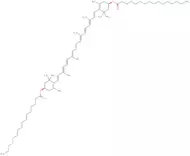
CAS :Zeaxanthin dipalmitate is a carotenoid ester, which is derived primarily from natural sources such as marigold flowers. This compound is an esterified form of the carotenoid zeaxanthin, which enhances its stability and bioavailability. The mode of action involves the deposition of zeaxanthin dipalmitate in the macular region of the retina, where it acts as a protective antioxidant and filters high-energy blue light.Formule :C72H116O4Degré de pureté :(Uv) Min. 95%Couleur et forme :PowderMasse moléculaire :1,045.69 g/moltrans-Crocetin - 70%
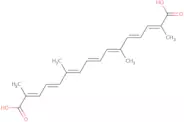
CAS :trans-Crocetin - 70% is a highly purified carotenoid compound, which is derived from saffron (Crocus sativus) stigmas. Its molecular structure allows it to act as a potent antioxidant, disrupting oxidative stress pathways by scavenging free radicals and inhibiting lipid peroxidation. This mode of action is critical because it can potentially protect cellular components from damage and modulate various biochemical pathways.
Formule :C20H24O4Degré de pureté :Min. 95%Couleur et forme :PowderMasse moléculaire :328.4 g/molFucoxanthine
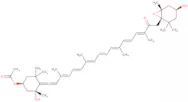
CAS :Fucoxanthine is a marine carotenoid, which is predominantly found in various species of brown seaweed, such as Undaria pinnatifida and Laminaria japonica. Its molecular structure includes an allenic bond, which distinguishes it from other carotenoids and contributes to its unique mode of action. Fucoxanthine exerts its effects primarily through antioxidant activity, where it neutralizes free radicals, thus reducing oxidative stress. Additionally, it modulates metabolic processes by influencing genes involved in lipid metabolism and adipose tissue differentiation.Formule :C42H58O6Degré de pureté :Min. 95%Couleur et forme :Red PowderMasse moléculaire :658.91 g/molCitranaxanthin
CAS :Citranaxanthin is a carotenoid feed additive, which is a naturally occurring pigment found in certain plants and microorganisms. Its primary mode of action is through deposition into the tissues of animals, particularly in the egg yolks of poultry, where it enhances color. This enhancement occurs as citranaxanthin integrates into the lipid structures, contributing to a deeper yellow or orange hue due to its strong pigmenting properties.
Formule :C33H44ODegré de pureté :Min. 98 Area-%Couleur et forme :PowderMasse moléculaire :456.7 g/mol