Xanthones
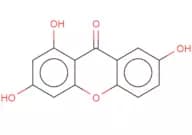
Les xanthones sont un groupe de composés phénoliques connus pour leurs diverses propriétés pharmacologiques, notamment des effets antioxydants, anti-inflammatoires, anticancéreux et antimicrobiens. On les trouve principalement dans certains fruits, en particulier dans le mangoustan. Les xanthones sont largement étudiées pour leurs applications thérapeutiques potentielles dans le traitement de diverses affections, telles que le cancer, les maladies neurodégénératives et les troubles cardiovasculaires. Chez CymitQuimica, vous trouverez une large sélection de xanthones, essentielles pour la recherche en biologie végétale, pharmacologie et le développement de thérapies à base de produits naturels.
118 produits trouvés pour "Xanthones"
Trier par
Degré de pureté (%)
0
100
|
0
|
50
|
90
|
95
|
100
Cowanin
CAS :<p>Notch and gamma-secretase inhibitor</p>Formule :C29H34O6Degré de pureté :Min. 95%Couleur et forme :PowderMasse moléculaire :478.58 g/molIsomangiferin
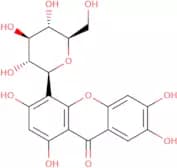
CAS :<p>Isomangiferin is a C-glucosyl xanthone, which is a naturally occurring polyphenolic compound derived primarily from the leaves of the mango tree, Mangifera indica. This compound is one of the many bioactive components found in mangoes, renowned for its contribution to the plant's defense system against environmental stress.</p>Formule :C19H18O11Degré de pureté :Min. 95%Couleur et forme :PowderMasse moléculaire :422.34 g/molMangostin
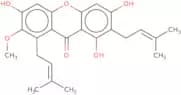
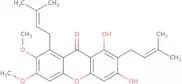
CAS :<p>Mangostin is a bioactive compound, which is a xanthone derivative sourced from the pericarp of the mangosteen fruit (Garcinia mangostana). It exhibits its mode of action through potent antioxidant and anti-inflammatory mechanisms, attributed to its interactions with various cellular pathways. Mangostin intervenes by scavenging free radicals and inhibiting pro-inflammatory mediators, such as cyclooxygenase and lipoxygenase enzymes.</p>Formule :C24H26O6Degré de pureté :Min. 95%Couleur et forme :PowderMasse moléculaire :410.46 g/mol8-Hydroxy-3,4,6-trimethoxyxanthone
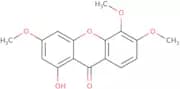
CAS :<p>8-Hydroxy-3,4,6-trimethoxyxanthone is a naturally occurring xanthone derivative, which is isolated primarily from the Garcinia plant species. These plants are known for their diverse range of bioactive compounds, contributing to extensive research into their pharmacological properties. The mode of action of 8-Hydroxy-3,4,6-trimethoxyxanthone involves multiple biochemical pathways, including antioxidant and anti-inflammatory activities. This compound is believed to interact with cellular signaling cascades, potentially modulating oxidative stress and inflammatory responses.</p>Formule :C16H14O6Degré de pureté :Min. 95%Masse moléculaire :302.28 g/molGentisein-3,7-dimethylether
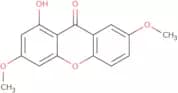
CAS :<p>Gentisein-3,7-dimethylether is a naturally occurring flavonoid, which is derived from specific plant sources. This compound is a methoxylated derivative of genistein, a well-known isoflavone found in various plants, particularly in soy. The mode of action of Gentisein-3,7-dimethylether involves its function as an antioxidant, where it scavenges free radicals and inhibits oxidative stress pathways. This biochemical activity makes it a molecule of interest in the prevention of oxidative damage at the cellular level.</p>Formule :C15H12O5Degré de pureté :Min. 95%Masse moléculaire :272.25 g/mol1,8-Dihydroxy-3-methylxanthone
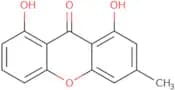
CAS :<p>1,8-Dihydroxy-3-methylxanthone is a naturally occurring xanthone derivative, which is often sourced from plants known for their therapeutic properties. This compound is distinguished by its aromatic and polyphenolic structure, typically extracted from the roots or bark of certain plant species. Its mode of action is largely attributed to its ability to interact with biological membranes and proteins, often resulting in antioxidant, anti-inflammatory, and potential anticancer activities.</p>Formule :C14H10O4Degré de pureté :Min. 95%Masse moléculaire :242.23 g/mol2,3,5,6,7,8-Pentamethoxyxanthone
CAS :<p>2,3,5,6,7,8-Pentamethoxyxanthone is a xanthone derivative, which is a class of polyphenolic compounds typically sourced from various plant species, particularly those in the Guttiferae family. These compounds are naturally occurring and often found in medicinal plants known for their diverse pharmacological properties.</p>Formule :C19H20O8Degré de pureté :Min. 95%Masse moléculaire :376.36 g/molNeomangiferin
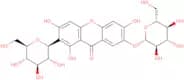
CAS :<p>Neomangiferin is a bioactive compound, which is a xanthone glucoside derived from the leaves, bark, or roots of Mangifera indica, commonly known as the mango tree. Its molecular structure enables it to engage in multiple biochemical interactions, primarily through antioxidant, anti-inflammatory, and immunomodulatory mechanisms. The compound's antioxidant properties result from its ability to scavenge free radicals and reduce oxidative stress, while its anti-inflammatory action is associated with the inhibition of key inflammatory mediators.</p>Formule :C25H28O16Degré de pureté :Min. 95%Couleur et forme :PowderMasse moléculaire :584.48 g/molMaclurin
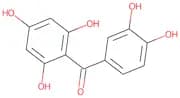
CAS :<p>Maclurin (NSC-83240) is a phenolic component of mulberry twigs, exerts anti-metastatic effects.</p>Formule :C13H10O6Degré de pureté :99.71%Couleur et forme :SolidMasse moléculaire :262.217-O-Methylgarcinone E
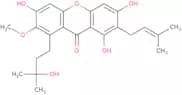
CAS :<p>7-O-Methylgarcinone E is a bioactive compound, specifically a xanthone derivative, which is sourced from various Garcinia species, a genus of tropical trees and shrubs. This compound is structurally characterized by its xanthone core and the presence of a methoxy group at the seventh position, contributing to its biological activity.</p>Formule :C29H34O6Degré de pureté :Min. 95%Masse moléculaire :478.58 g/molMorellic acid
CAS :<p>Morellic acid is a naturally occurring compound that is classified as an organic acid, specifically a depsidone. It is derived primarily from the lichen species of the Parmelia genus. Lichens are symbiotic associations between fungi and photosynthetic organisms, typically algae or cyanobacteria, found in a variety of environmental conditions.</p>Degré de pureté :Min. 95%1-Hydroxy-3,4,5-trimethoxyxanthone
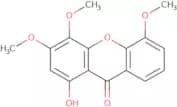
CAS :<p>1-Hydroxy-3,4,5-trimethoxyxanthone is a naturally occurring xanthone compound, which is derived from various plant sources, particularly in the Gentianaceae and Hypericaceae families. The plant-based origin allows it to be isolated through extraction and purification processes from medicinal herbs known for their bioactive properties.</p>Formule :C16H14O6Degré de pureté :Min. 95%Masse moléculaire :302.28 g/mol3,6-Dihydroxyxanthone
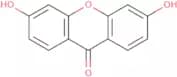
CAS :<p>3,6-Dihydroxyxanthone is a naturally occurring compound classified as a xanthone, which is a type of polyphenolic compound. It is primarily sourced from various plant species, notably those within the Gentianaceae family. This compound exhibits a range of biological activities due to its ability to interact with multiple molecular targets within biological systems. The mode of action of 3,6-Dihydroxyxanthone involves its function as an antioxidant, as well as its potential to inhibit specific enzymes and modulate signaling pathways, contributing to its diverse biological effects.</p>Formule :C13H8O4Degré de pureté :Min. 95%Masse moléculaire :228.2 g/mol1,5,6-Trihydroxyxanthone
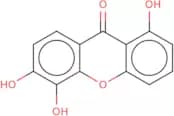
CAS :<p>1,5,6-Trihydroxyxanthone is a natural xanthone derivative, which is commonly isolated from various plant sources, particularly in the family Gentianaceae. This compound is characterized by its polyhydroxylated xanthone structure, contributing to its diverse biological functionalities. Xanthones, including 1,5,6-Trihydroxyxanthone, are known for their ability to modulate oxidative pathways and interact with cellular signaling mechanisms.</p>Formule :C13H8O5Degré de pureté :Min. 95%Masse moléculaire :244.2 g/molGarcinone D
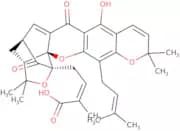
CAS :<p>Garcinone D is a xanthone derivative, which is a naturally occurring compound extracted from the fruit rind of the Garcinia species, notably Garcinia mangostana. This compound is characterized by its bioactive profile, which has been studied for various pharmacological effects.</p>Degré de pureté :Min. 95%Cowaxanthone B
CAS :<p>Cowaxanthone B is a naturally occurring xanthone compound, which is isolated from the fruiting bodies of Garcinia species, a genus known for its diverse range of biologically active phytochemicals. This compound is characterized by its tetracyclic chemical structure, which contributes to its unique biological properties. The mode of action of Cowaxanthone B involves modulation of various cellular pathways, including apoptosis induction, and inhibition of cell proliferation, which is mediated through interaction with specific molecular targets within the cell.</p>Degré de pureté :Min. 95%Gentisein
CAS :<p>Gentisein (NSC-329491), a primary metabolite of Mangiferin, exhibits significant inhibition of serotonin uptake, demonstrating potency with an IC50 value of 4.7</p>Formule :C13H8O5Degré de pureté :96.89%Couleur et forme :SolidMasse moléculaire :244.23,8-Dimethoxyxanthone
CAS :<p>3,8-Dimethoxyxanthone is an organic compound, which is a type of xanthone derivative. It is primarily sourced from natural plant extracts, particularly those found in certain tropical and subtropical regions. This compound is synthesized via the oxidative coupling of phenolic precursors and subsequent methylation, a process leveraged due to its presence in various plant species.</p>Formule :C15H12O4Degré de pureté :Min. 95%Masse moléculaire :256.25 g/mol