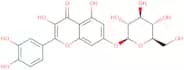
Flavonoïdes
Sous-catégories appartenant à la catégorie "Flavonoïdes"
- Anthocyanidines(46 produits)
- Anthocyanine(46 produits)
- Catéchine(88 produits)
- Chalcones(237 produits)
- Pterocarpans(28 produits)
2410 produits trouvés pour "Flavonoïdes"
Sinocrassoside C1
CAS :Sinocrassoside C1 is a cycloartane triterpenoid, which is a class of chemical compounds. It is derived from the plant genus Sinocrassula, known for its traditional medicinal applications. The mode of action of Sinocrassoside C1 involves interactions with specific cellular targets, potentially influencing signal transduction pathways and modulating enzyme activities. These interactions may account for its reported bioactivities, including anti-inflammatory, anti-tumor, and neuroprotective effects.
Formule :C27H30O16Degré de pureté :Min. 95%Masse moléculaire :610.52 g/molSideritoflavone
CAS :Sideritoflavone is a flavonoid compound, which is a type of secondary metabolite derived from the *Sideritis* plant species. These plants, commonly found in the Mediterranean region, are traditionally used in herbal remedies. The compound is known for its potential biological and pharmacological activities, which stem from its interaction with various biochemical pathways.
Formule :C18H16O8Degré de pureté :Min. 95%Masse moléculaire :360.31 g/molRhamnetin-3-rutinoside
CAS :Rhamnetin-3-rutinoside is a specialized bioflavonoid, a type of plant-derived polyphenolic compound. It is typically sourced from various plant species, where it naturally occurs as part of the plant’s secondary metabolites. This compound functions primarily as an antioxidant, where its mode of action involves scavenging free radicals and stabilizing reactive oxygen species, thereby protecting cells from oxidative stress.
Formule :C28H32O16Degré de pureté :Min. 95%Masse moléculaire :624.54 g/mol4'-o-Methyllicoflavanone
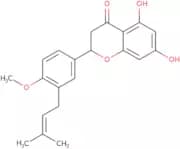
CAS :4'-O-Methyllicoflavanone is a flavonoid compound, which is a naturally occurring chemical typically found in various plants. It belongs to a class of secondary metabolites known for their wide array of biological activities. The source of 4'-O-Methyllicoflavanone is primarily from plant species, where it serves as a part of the plant’s defense mechanism against environmental stressors and pathogens.
Formule :C21H22O5Degré de pureté :Min. 95%Masse moléculaire :354.4 g/molBilobetin
CAS :Bilobetin is a flavonoid compound, which is sourced from the leaves of the Ginkgo biloba tree. This compound primarily functions through its antioxidative properties, influencing a variety of neural pathways. Its mode of action involves the scavenging of reactive oxygen species and modulation of cellular signaling pathways that impact synaptic transmission and neuroplasticity.
Degré de pureté :Min. 95%Isomucronulatol
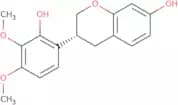
CAS :Isomucronulatol is a naturally occurring flavonoid compound, which is a secondary metabolite sourced primarily from various plant species. It exhibits significant antioxidant activity by scavenging free radicals and reducing oxidative stress, which can damage cellular components such as lipids, proteins, and DNA. Additionally, Isomucronulatol demonstrates anti-inflammatory effects by modulating signaling pathways involved in the inflammatory response, thereby reducing the production of pro-inflammatory cytokines.
Formule :C17H18O5Degré de pureté :Min. 95%Couleur et forme :PowderMasse moléculaire :302.32 g/molDihydrokaempferol-3-glucoside
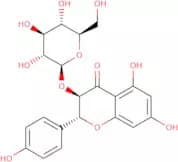
CAS :Dihydrokaempferol-3-glucoside is a flavonoid glucoside, which is primarily derived from various plant sources including fruits, vegetables, and certain medicinal herbs. Its molecular structure consists of a kaempferol core attached to a glucose moiety, enhancing its solubility and stability in biological systems. This compound exhibits antioxidant activity, acting to scavenge free radicals and reduce oxidative stress within cells. By neutralizing reactive oxygen species, dihydrokaempferol-3-glucoside helps to protect cellular components such as DNA, proteins, and lipids from oxidative damage.
Formule :C21H22O11Degré de pureté :Min. 95%Couleur et forme :White PowderMasse moléculaire :450.39 g/molQuercetin-7-O-β-D-glucopyranoside
CAS :Quercetin-7-O-β-D-glucopyranoside is a flavonoid glycoside, which is a specialized type of bioactive compound found predominantly in various plants. Structurally, it constitutes quercetin—a well-known flavonoid—conjugated with a glucose molecule, specifically at the 7th position of the quercetin structure. This compound is primarily sourced from fruits, vegetables, and various herbs.
Formule :C21H20O12Degré de pureté :Min. 95%Couleur et forme :Yellow PowderMasse moléculaire :464.38 g/molRef: 3D-MQ74569
Produit arrêtéCajanol
CAS :Cajanol is a naturally occurring compound, which is a flavonoid isolated from the plant *Cajanus cajan* (commonly known as pigeon pea). This compound is primarily extracted from the leaves and seeds of the plant through various chromatographic techniques, ensuring high purity and bioactive consistency. Cajanol functions by interacting with cellular pathways, exhibiting antioxidant and anti-inflammatory properties. It achieves this through the scavenging of free radicals and modulation of signaling pathways involved in cellular stress responses.
Formule :C17H16O6Degré de pureté :Min. 95%Couleur et forme :PowderMasse moléculaire :316.31 g/molSumatrol
CAS :Sumatrol is a selective herbicide, which is a compound derived from synthetic sources designed to inhibit the growth of unwanted vegetation. It functions primarily by disrupting specific physiological processes in plants, specifically targeting the enzymatic pathways critical for the growth of broadleaf weeds and grasses. Its action mechanism involves the inhibition of key enzymes that lead to the cessation of cellular division and growth within the targeted plant species.
Formule :C23H22O7Degré de pureté :(%) Min. 95%Couleur et forme :White PowderMasse moléculaire :410.42 g/mol