Flavonoïdes
Les flavonoïdes sont un groupe de métabolites végétaux dotés de propriétés antioxydantes qui contribuent à la couleur des fruits et des fleurs. Ils jouent un rôle important dans la protection des plantes contre les rayons UV et les pathogènes. Les flavonoïdes sont étudiés pour leurs potentiels bienfaits pour la santé, notamment des propriétés anti-inflammatoires, antivirales et anticancéreuses. Ils font l'objet de nombreuses recherches dans les domaines de la pharmacologie, de la nutrition et de la biologie moléculaire.
Sous-catégories appartenant à la catégorie "Flavonoïdes"
- Anthocyanidines(46 produits)
- Anthocyanine(46 produits)
- Catéchine(88 produits)
- Chalcones(237 produits)
- Pterocarpans(28 produits)
2408 produits trouvés pour "Flavonoïdes"
Trier par
Degré de pureté (%)
0
100
|
0
|
50
|
90
|
95
|
100
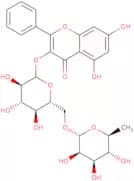
Galangin-3-rutinoside
CAS :<p>Galangin-3-rutinoside is a flavonoid glycoside, which is derived from natural plant sources such as members of the Zingiberaceae family, often found in various medicinal herbs. The mode of action of Galangin-3-rutinoside involves its ability to scavenge free radicals and inhibit oxidative stress, while also modulating inflammatory pathways by downregulating pro-inflammatory cytokines and enzymes.</p>Formule :C27H30O14Degré de pureté :Min. 95%Couleur et forme :PowderMasse moléculaire :578.52 g/molDaidzin
CAS :<p>Daidzin is an isoflavone compound, which is a naturally occurring chemical extracted from the root of the plant Pueraria lobata, commonly known as kudzu. Its primary mode of action involves the inhibition of the enzyme aldehyde dehydrogenase (ALDH). This enzyme plays a significant role in the metabolism of alcohol, as it converts acetaldehyde, a toxic intermediate, into acetic acid, which is less harmful to the body.</p>Formule :C21H20O9Degré de pureté :Min. 95%Couleur et forme :White Off-White PowderMasse moléculaire :416.38 g/mol3-Hydroxy-7,8,2'-trimethoxyflavone
CAS :3-Hydroxy-7,8,2'-trimethoxyflavone is a specialized flavone compound, which is a naturally occurring polyphenolic product found in certain plants. It is derived from various botanical sources, where it functions as a secondary metabolite, contributing to the plant's defense mechanisms against pathogens and environmental stress.Formule :C18H16O6Degré de pureté :Min. 95%Masse moléculaire :328.32 g/mol7,8-Dibenzyloxy-4'-methoxyisoflavone
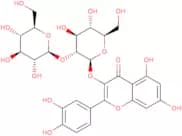
CAS :<p>7,8-Dibenzyloxy-4'-methoxyisoflavone is a synthetic isoflavone derivative, which is a type of organic compound often studied for its potential pharmacological properties. Isoflavones are primarily sourced from certain leguminous plants, where they are naturally occurring phytoestrogens and have been associated with various biological activities.</p>Formule :C30H24O5Degré de pureté :Min. 95%Masse moléculaire :464.51 g/molQuercetin-3-O-sophoroside
CAS :<p>Quercetin-3-O-sophoroside is a flavonoid glycoside, which is a naturally occurring compound found in various plant sources, such as fruits, vegetables, and herbs. This compound is formed by the binding of the flavonoid quercetin with the disaccharide sophorose. The molecular structure of this compound enables it to exert potent antioxidant effects, scavenging free radicals and reducing oxidative stress at a cellular level.</p>Formule :C27H30O17Degré de pureté :Min. 95%Couleur et forme :PowderMasse moléculaire :626.52 g/molLuteolin-7-O-D-glucopyranoside
CAS :Luteolin-7-O-D-glucopyranoside is a flavonoid glycoside, which is a type of naturally occurring compound found predominantly in plants. It serves as a significant bioactive compound and is usually sourced from various plant species, including leaves, flowers, and fruits. The mode of action of Luteolin-7-O-D-glucopyranoside primarily involves its ability to scavenge free radicals, thereby exhibiting strong antioxidant properties. This glycoside form enhances the solubility and stability of luteolin, facilitating its biological activities.Formule :C21H20O11Degré de pureté :Min. 98 Area-%Couleur et forme :Yellow PowderMasse moléculaire :448.38 g/mol3'-Methoxy-5,7,4'-trihydroxyflavanone
CAS :<p>3'-Methoxy-5,7,4'-trihydroxyflavanone is a flavanone compound, which is a type of flavonoid commonly found in various plants. Flavanones are known for their diverse biological activities and are part of the polyphenol family. This particular compound is often sourced from natural plant extracts, such as those of fruits and herbs, which are rich in flavonoids.</p>Formule :C16H14O6Degré de pureté :Min. 97 Area-%Couleur et forme :PowderMasse moléculaire :302.28 g/molKaempferol-3-glucoside(6”-O-acetate)-7-glucoside
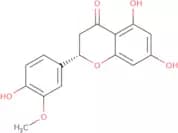
CAS :<p>Kaempferol-3-glucoside(6”-O-acetate)-7-glucoside is a flavonoid glycoside, which is a naturally occurring compound found in various plants and foods. This compound originates from plant sources, notably in fruits, vegetables, and certain traditional medicines, where it is biosynthesized as a secondary metabolite.</p>Formule :C29H32O17Degré de pureté :Min. 95%Masse moléculaire :652.55 g/mol4'-Hydroxy-3'-methoxyflavanone
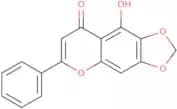
CAS :<p>4'-Hydroxy-3'-Methoxyflavanone is a flavanone, which is a type of polyphenolic compound. It is extracted from various plant sources, particularly those belonging to the citrus family. The compound displays a characteristic structural arrangement that includes an aromatic ring with hydroxy and methoxy substituents, imparting unique bioactive properties.</p>Formule :C16H14O4Degré de pureté :Min. 95%Masse moléculaire :270.28 g/molCochliophilin A
CAS :Cochliophilin A is a specialized secondary metabolite, which is isolated from certain fungal species, notably of the genus *Cochliobolus*. This compound is known for its role as a self-germination and tropic factor, meaning it can influence both the germination and directional growth of fungal spores. The mechanism of action involves its binding to specific receptors on the spore surface, triggering intracellular pathways that promote germination under suitable environmental conditions. Furthermore, it can induce directed growth responses, facilitating interactions between fungi and host organisms in nature.Formule :C16H10O5Degré de pureté :Min. 95%Couleur et forme :PowderMasse moléculaire :282.25 g/molBiochanin A-7-methyl ether
CAS :<p>Biochanin A-7-methyl ether is a naturally occurring isoflavone, which is derived from plant sources such as the Fabaceae family. It is a methylated derivative of the isoflavone biochanin A. The compound is predominantly obtained through extraction and purification processes from specific plant materials known to contain isoflavones.</p>Formule :C17H14O5Degré de pureté :Min. 98 Area-%Couleur et forme :PowderMasse moléculaire :298.29 g/mol3,7,8,2',4'-Pentahydroxyflavone
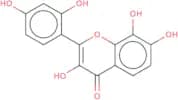
3,7,8,2',4'-Pentahydroxyflavone is a flavonoid compound, which is a type of polyphenolic secondary metabolite found in various plants. This compound is typically isolated from natural sources, including vegetables, fruits, and certain herbs. Its chemical structure, characterized by multiple hydroxyl groups, contributes to its potent antioxidant activity, allowing it to scavenge free radicals effectively.Formule :C15H10O7Degré de pureté :90%Couleur et forme :PowderMasse moléculaire :302.24 g/mol5,6,7,2'-Tetramethoxyflavone
CAS :<p>5,6,7,2'-Tetramethoxyflavone is a naturally occurring flavonoid, which is a type of polyphenolic compound. It is predominantly sourced from various plant species known for their medicinal properties. Flavonoids are typically derived from the intricate biochemical pathways in plants, where they contribute to the plant's defense mechanisms against environmental stressors.</p>Formule :C19H18O6Degré de pureté :Min. 95%Masse moléculaire :342.34 g/mol5-Methyl-7-hydroxyisoflavone ethylcarbonate ester
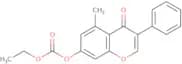
CAS :<p>5-Methyl-7-hydroxyisoflavone ethylcarbonate ester is a synthetic isoflavone derivative, which is structurally derived from naturally occurring flavonoids commonly found in plants such as soy and red clover. This compound is designed to retain the biological activity of its parent isoflavones while enhancing certain pharmacokinetic properties, particularly stability and bioavailability.</p>Formule :C19H16O5Degré de pureté :Min. 95%Couleur et forme :PowderMasse moléculaire :324.33 g/mol5-Hydroxy-3,6,2'-trimethoxyflavone
CAS :<p>5-Hydroxy-3,6,2'-trimethoxyflavone is a naturally occurring flavone, which is a type of polyphenolic compound. It is primarily sourced from various Erythrina species, which are flowering plants in the legume family. This compound interacts with biological systems through its role as an antioxidant, influencing enzyme activity and modulating signaling pathways. It may exert anti-inflammatory, anticancer, and neuroprotective effects, though these mechanisms require further elucidation in vivo. Its applications predominantly lie in biomedical research, where it serves as a tool for studying flavonoid functions and their potential therapeutic benefits. Scientists also examine its role in traditional medicine systems to validate and explore its health-related effects. As research progresses, 5-Hydroxy-3,6,2'-trimethoxyflavone continues to generate interest due to its complex interactions within biological frameworks and potential for diverse therapeutic applications.</p>Formule :C18H16O6Degré de pureté :Min. 95%Masse moléculaire :328.32 g/mol5-Hydroxy-4'-methoxyflavone
CAS :5-Hydroxy-4'-methoxyflavone is a naturally occurring flavone, which is a type of polyphenolic compound found in various plants. It is derived from natural sources such as fruits, vegetables, and certain herbs. This compound is part of the larger class of flavonoids, which are known for their various biological activities and potential health benefits.Formule :C16H12O4Degré de pureté :Min. 95%Masse moléculaire :268.26 g/molCalycosin-7-O-β-D-glucoside
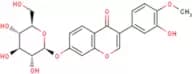
CAS :<p>Calycosin-7-O-β-D-glucoside (calycosin-7-O-beta-D-glucopyranoside) possesses a protective effect on rat hepatocytes, an inhibitory effect on COX-2 activity.</p>Formule :C22H22O10Degré de pureté :98% - 99.981%Couleur et forme :SolidMasse moléculaire :446.45-Hydroxyflavanone
CAS :5-Hydroxyflavanone is a naturally occurring flavonoid compound, which is predominantly sourced from various plant species, including fruits, vegetables, and certain herbs. These plants synthesize flavonoids as part of their secondary metabolism, aiding in defense mechanisms against pathogens and contributing to their pigmentation.Formule :C15H12O3Degré de pureté :Min. 95%Couleur et forme :Off-White PowderMasse moléculaire :240.25 g/molIzalpinin
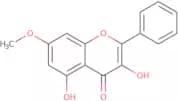
CAS :Izalpinin is a specialized phytochemical compound, specifically a flavonoid, which is derived from various plant sources. It exhibits a range of bioactive properties due to its complex chemical structure. The primary mode of action of Izalpinin involves modulation of cellular signaling pathways and inhibition of specific enzymatic activities, which underpins its diverse pharmacological effects.Formule :C16H12O5Degré de pureté :Min. 95%Masse moléculaire :284.26 g/molDeguelin
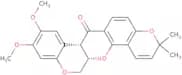
CAS :<p>Deguelin is a rotenoid, which is a naturally occurring compound derived primarily from the roots of plants in the Leguminosae family, such as Mundulea sericea and Derris species. It functions as a potent inhibitor of mitochondrial complex I, interfering with cellular respiration by blocking electron transport within the mitochondrial electron transport chain. This action leads to the inhibition of ATP production, which is essential for cellular energy.</p>Formule :C23H22O6Degré de pureté :Min. 95%Masse moléculaire :394.42 g/mol