Flavonoïdes
Les flavonoïdes sont un groupe de métabolites végétaux dotés de propriétés antioxydantes qui contribuent à la couleur des fruits et des fleurs. Ils jouent un rôle important dans la protection des plantes contre les rayons UV et les pathogènes. Les flavonoïdes sont étudiés pour leurs potentiels bienfaits pour la santé, notamment des propriétés anti-inflammatoires, antivirales et anticancéreuses. Ils font l'objet de nombreuses recherches dans les domaines de la pharmacologie, de la nutrition et de la biologie moléculaire.
Sous-catégories appartenant à la catégorie "Flavonoïdes"
- Anthocyanidines(46 produits)
- Anthocyanine(46 produits)
- Catéchine(88 produits)
- Chalcones(237 produits)
- Pterocarpans(28 produits)
2408 produits trouvés pour "Flavonoïdes"
Trier par
Degré de pureté (%)
0
100
|
0
|
50
|
90
|
95
|
100
Licoflavone C
CAS :Licoflavone C is a bioactive flavonoid compound, which is derived from the roots of Glycyrrhiza species. This particular flavonoid is notable for its complex chemical structure that contributes to its biological activity. The primary mode of action of Licoflavone C involves modulation of various cellular pathways, including antioxidant and anti-inflammatory mechanisms. It also influences cell cycle regulation and apoptosis, which are critical in cancer research. The compound's ability to act as a natural antioxidant makes it a valuable candidate in the formulation of skincare products aimed at protecting against oxidative stress. In scientific studies, Licoflavone C has been investigated for its potential anticancer properties, particularly focusing on its effects in inhibiting the proliferation of cancer cells. Furthermore, its role in skin health is under exploration, where its antioxidant capacity and potential to stimulate collagen production may offer benefits in anti-aging products. Such applications make Licoflavone C an intriguing subject for research in natural product chemistry and therapeutic development.Formule :C20H18O5Degré de pureté :Min. 95%Masse moléculaire :338.35 g/molOsajin
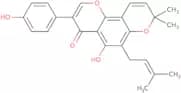
CAS :<p>Osajin is a natural flavonoid compound, which is derived from the fruit of Maclura pomifera, also known as the Osage orange. This compound is characterized by its distinctive isoflavone structure, which is central to its biological activity. The mode of action of Osajin involves modulation of various biochemical pathways, predominantly exhibiting antioxidant properties. It acts by scavenging free radicals and enhancing cellular defense mechanisms against oxidative stress, thereby contributing to its potential therapeutic efficacy.</p>Formule :C25H24O5Degré de pureté :Min. 95%Couleur et forme :PowderMasse moléculaire :404.46 g/molIsowighteone
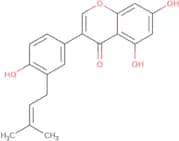
CAS :<p>Isowighteone is a naturally occurring flavonoid, which is derived from various plant sources, particularly in traditional medicinal herbs. Its biological activity stems from its structure, characterized by phenolic hydroxyl groups that enable it to participate in redox reactions, highlighting its antioxidant properties.</p>Formule :C20H18O5Degré de pureté :Min. 95%Masse moléculaire :338.35 g/mol5,7,3'-Trihydroxy-6,4',5'-trimethoxyflavone
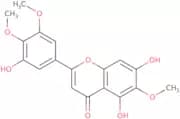
CAS :<p>5,7,3'-Trihydroxy-6,4',5'-trimethoxyflavone is a methoxylated flavonoid, which is a type of polyphenolic compound. This compound is typically sourced from certain plant species known for their high antioxidant content. Flavonoids are widely studied for their diverse biological activities and are often isolated from traditional medicinal plants.</p>Degré de pureté :Min. 95%7,4'-Dibenzyl daidzein
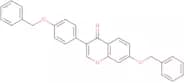
CAS :<p>7,4'-Dibenzyl daidzein is a synthetic isoflavonoid, derived from the modification of natural isoflavones commonly found in soy products. These isoflavones are known for their estrogenic activity and potential therapeutic benefits. The source of inspiration for this compound lies in natural phytoestrogens, which exhibit significant interaction with human estrogen receptors. This synthetic analog is designed to enhance specific bioactivities beyond those of its natural counterparts.</p>Formule :C29H22O4Degré de pureté :Min. 95%Masse moléculaire :434.48 g/molAromadendrin 7-O-methyl ether
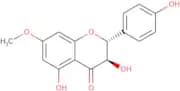
CAS :<p>Aromadendrin 7-O-methyl ether is a flavonoid compound, which is a type of bioactive molecule. It is sourced primarily from plant materials, where it occurs naturally as a secondary metabolite. The mode of action of Aromadendrin 7-O-methyl ether involves interaction with various biological pathways, potentially affecting enzyme activity and cell signaling mechanisms. Such interactions may contribute to its reported antioxidant and anti-inflammatory properties.</p>Formule :C16H14O6Degré de pureté :Min. 95%Couleur et forme :PowderMasse moléculaire :302.28 g/mol2,3-Dihydrohinokiflavone
CAS :2,3-Dihydrohinokiflavone is a natural bioflavonoid compound, which is typically derived from various plant sources, particularly those native to East Asia. This compound belongs to the broader flavonoid family, known for their antioxidant properties. Its mode of action involves modulating various signaling pathways, which can lead to anti-inflammatory and antioxidant effects. It achieves this by inhibiting the production of pro-inflammatory cytokines and scavenging free radicals, thus reducing oxidative stress in biological systems.Formule :C30H20O10Degré de pureté :Min. 95%Masse moléculaire :540.47 g/molCarlinoside
CAS :Carlinoside is a bioactive flavonoid glycoside, which is typically sourced from plants of the Astraceae family, specifically from the genus Carlina. As a natural phytochemical, its mode of action involves the modulation of various biochemical pathways, primarily through its antioxidant properties and potential to interact with cellular oxidative stress mechanisms.Formule :C26H28O16Degré de pureté :Min. 95%Masse moléculaire :596.49 g/molEuchrestaflavanone B
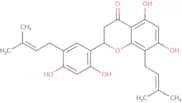
CAS :Euchrestaflavanone B is a naturally occurring flavonoid, which is a type of polyphenolic compound. It is primarily sourced from various plant species, particularly those found in the Leguminosae family. The mode of action of Euchrestaflavanone B involves its interaction with cellular signaling pathways, where it exhibits a broad spectrum of bioactive effects. These include anti-inflammatory, antioxidant, and anticancer properties, potentially through modulation of enzyme activities and gene expression.Formule :C25H28O6Degré de pureté :Min. 95%Masse moléculaire :424.5 g/molLicoflavonol
CAS :Licoflavonol is a bioactive compound that serves as an antioxidant, which is derived from plant sources, particularly flavonoid-rich species. Its mode of action involves scavenging free radicals and modulating pathways involved in oxidative stress and inflammation. By reducing oxidative damage, Licoflavonol can stabilize cellular environments and protect macromolecules such as DNA, proteins, and lipids from degenerative changes.Formule :C20H18O6Degré de pureté :Min. 95%Masse moléculaire :354.35 g/molPenduletin
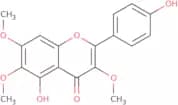
CAS :<p>Penduletin is a flavonoid compound, which is a type of natural phenolic product, primarily sourced from various plant species. This compound occurs naturally as part of the plant's secondary metabolites and plays a crucial role in defense mechanisms. Penduletin exerts its effects primarily through its antioxidant activity, modulating various signaling pathways involved in cellular protection processes. It acts by scavenging free radicals and reducing oxidative stress, which is pivotal in its therapeutic applications.</p>Formule :C18H16O7Degré de pureté :Min. 95%Couleur et forme :White PowderMasse moléculaire :344.32 g/molBavachin
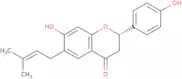
CAS :Phytoestrogen; estrogen receptor agonist; PPARγ ligandFormule :C20H20O4Degré de pureté :Min. 95%Couleur et forme :SolidMasse moléculaire :324.37 g/molMorin dihydrate
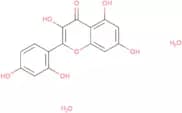
CAS :<p>Morin dihydrate is a flavonoid compound, which is a type of polyphenolic molecule. It is primarily sourced from the Moraceae family of plants, including mulberry leaves and certain fruits. As a flavonoid, Morin exerts its biochemical effects mainly through its capacity to scavenge free radicals, thus exhibiting significant antioxidant activity. This mode of action is attributed to its structure, which allows it to donate electrons and neutralize reactive oxygen species, consequently reducing oxidative stress at the cellular level.</p>Degré de pureté :Min. 95%Sophoraflavanone C
CAS :<p>Sophoraflavanone C is a flavonoid compound, which is derived from the root of the Sophora flavescens plant. This natural product is categorized as a prenylated flavonoid, a group known for diverse biological activities. Sophoraflavanone C exerts its effects through multiple modes of action, including the inhibition of microbial growth and anti-inflammatory pathways. Its antimicrobial properties are attributed to the disruption of bacterial cell walls and inhibition of critical microbial enzymes. Additionally, its anti-inflammatory effects are mediated by the suppression of pro-inflammatory cytokines and inhibition of key signaling pathways such as NF-kB.</p>Formule :C25H28O6Degré de pureté :Min. 95%Masse moléculaire :424.50 g/mol7-Hydroxy-2',5,8-trimethoxyflavanone
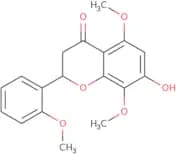
CAS :<p>7-Hydroxy-2',5,8-trimethoxyflavanone is a flavonoid compound, which is a type of naturally occurring phenolic compound. It can be sourced primarily from certain plant species, where it plays a role in the plant's defense mechanism against environmental stressors. Flavonoids like this one often exhibit a variety of biological activities.</p>Formule :C18H18O6Degré de pureté :Min. 95%Masse moléculaire :330.3 g/mol8-Chloroflavanone
CAS :<p>8-Chloroflavanone is a synthetic flavonoid derivative, which is primarily obtained through chemical synthesis involving the chlorination of flavanone substrates. Its mode of action involves the modulation of various biological pathways, including potential inhibition of specific enzymes and interaction with receptor sites, which may influence cellular signaling mechanisms.</p>Formule :C15H11ClO2Degré de pureté :Min. 95%Masse moléculaire :258.7 g/molSophoraflavanone I
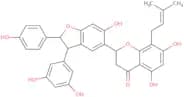
CAS :Sophoraflavanone I is a naturally occurring flavonoid compound, which is derived from the roots of the Sophora species, a genus of flowering plants in the family Fabaceae. This compound is predominantly extracted from the roots of Sophora flavescens, also known as Chinese Sophora.Formule :C39H38O9Degré de pureté :Min. 95%Masse moléculaire :650.7 g/mol3,7,4'-Trihydroxy-5-methoxy-8-prenylflavanone, (2R,3R)-
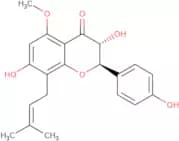
CAS :3,7,4'-Trihydroxy-5-methoxy-8-prenylflavanone, (2R,3R)- is a prenylated flavonoid compound, which is a type of naturally occurring polyphenol. These compounds are known for their complex structures and biological activities, frequently contributing to the therapeutic properties of various plants. The source of this flavanone is often plants belonging to the Fabaceae family, including the roots and other parts of certain legumes, where it accumulates as part of the plant’s secondary metabolism.Degré de pureté :Min. 95%7-Methoxyflavanone
CAS :<p>7-Methoxyflavanone is a bioactive compound, specifically a methoxylated flavanone, which is derived from various plant sources. This compound plays a role in the modulation of several biological pathways due to its structural attributes. As a flavanone, it is known to interact with various cellular mechanisms including enzyme inhibition, receptor binding, and antioxidant activity. These interactions result in diverse pharmacological effects, such as anti-inflammatory and neuroprotective properties.</p>Formule :C16H14O3Degré de pureté :Min. 95%Couleur et forme :PowderMasse moléculaire :254.28 g/molSophoraflavanone H
CAS :Sophoraflavanone H is a prenylated flavonoid, which is a natural compound isolated primarily from plants of the Sophora species. The source of this bioactive compound is predominantly the root extracts of these plants, which have been traditionally utilized in herbal medicine systems for their therapeutic properties.Formule :C34H30O9Degré de pureté :Min. 95%Masse moléculaire :582.6 g/mol