Flavonoïdes
Les flavonoïdes sont un groupe de métabolites végétaux dotés de propriétés antioxydantes qui contribuent à la couleur des fruits et des fleurs. Ils jouent un rôle important dans la protection des plantes contre les rayons UV et les pathogènes. Les flavonoïdes sont étudiés pour leurs potentiels bienfaits pour la santé, notamment des propriétés anti-inflammatoires, antivirales et anticancéreuses. Ils font l'objet de nombreuses recherches dans les domaines de la pharmacologie, de la nutrition et de la biologie moléculaire.
Sous-catégories appartenant à la catégorie "Flavonoïdes"
- Anthocyanidines(46 produits)
- Anthocyanine(46 produits)
- Catéchine(88 produits)
- Chalcones(237 produits)
- Pterocarpans(28 produits)
2408 produits trouvés pour "Flavonoïdes"
Trier par
Degré de pureté (%)
0
100
|
0
|
50
|
90
|
95
|
100
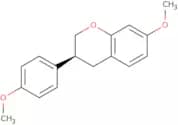
(S)-4',7-Dimethyl equol
CAS :<p>(S)-4',7-Dimethyl equol is an isoflavandiol, which is a metabolite of the soy isoflavone daidzein. It is produced in the human gut by bacterial metabolism, provided the individual has the appropriate intestinal microbiota capable of this transformation. The compound exhibits estrogenic activity, primarily due to its structural similarity to the endogenous hormone 17β-estradiol, allowing it to bind to estrogen receptors.</p>Formule :C17H18O3Degré de pureté :Min. 95%Masse moléculaire :270.32 g/mol5,7-Dimethoxyflavanone
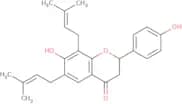
CAS :5,7-Dimethoxyflavanone is a flavonoid derivative, which is a type of polyphenolic compound predominantly found in plants. This compound is often isolated from various botanical sources, where it contributes to the plant's adaptive defense mechanisms against environmental stressors. The mode of action of 5,7-Dimethoxyflavanone involves interaction with cellular signaling pathways, potentially influencing antioxidant, anti-inflammatory, and enzyme inhibition activities through modulation of molecular targets.Formule :C17H16O4Degré de pureté :Min. 95%Masse moléculaire :284.31 g/mol7,4'-Dihydroxy-6,8-diprenylflavanone
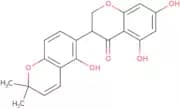
CAS :7,4'-Dihydroxy-6,8-diprenylflavanone is a prenylated flavonoid, which is a type of naturally occurring compound found in various plants. This compound is often derived from specific plant species known for their rich flavonoid content. The prenylation of flavonoids, such as 7,4'-Dihydroxy-6,8-diprenylflavanone, often enhances their biological activity.Formule :C25H28O4Degré de pureté :Min. 95%Masse moléculaire :392.5 g/molLicoisoflavanone
CAS :<p>Licoisoflavanone is a naturally occurring flavonoid compound, which is derived from the roots of plants such as Glycyrrhiza glabra, commonly known as licorice. This phytochemical is primarily obtained through extraction and isolation from licorice roots, where it is present as part of a complex mixture of bioactive compounds. The mode of action of licoisoflavanone involves its ability to interact with various biological pathways, including inhibitory effects on bacterial cell wall synthesis and disruption of microbial cellular functions, as well as scavenging free radicals to exert antioxidant effects.</p>Formule :C20H18O6Degré de pureté :Min. 95%Masse moléculaire :354.4 g/mol5-Methoxyflavanone
CAS :5-Methoxyflavanone is an organic compound, which is a flavonoid derivative obtained primarily through synthetic procedures involving the modification of flavanones. This compound is synthesized through specific chemical reactions that introduce a methoxy group into the flavanone structure, thereby altering its chemical and biological properties.Formule :C16H14O3Degré de pureté :Min. 95%Masse moléculaire :254.28 g/mol6,2',4'-Trimethoxyflavone
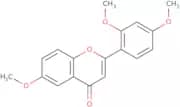
CAS :<p>6,2',4'-Trimethoxyflavone is a flavonoid compound, which is a type of phytochemical found in various plant species. It is derived from natural sources, including certain medicinal herbs and plants known for their bioactive properties. This specific flavone is characterized by its three methoxy groups attached at distinct positions on the flavonoid backbone, which confer unique chemical properties and biological activities.</p>Formule :C18H16O5Degré de pureté :Min. 95%Masse moléculaire :312.32 g/mol3,7,4'-Trihydroxy-5-methoxy-8-prenylflavanone, (2R,3S)-
3,7,4'-Trihydroxy-5-methoxy-8-prenylflavanone, (2R,3S)- is a naturally occurring prenylated flavanone, which is primarily sourced from various plant species. This compound is part of the larger flavonoid family and is often found in certain medicinal plants known for their wide range of therapeutic properties. Its structure comprises a flavanone backbone, modified by hydroxyl, methoxy, and prenyl groups that contribute to its distinctive chemical profile.Degré de pureté :Min. 95%2'-Methoxybiochanin A
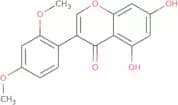
CAS :<p>2'-Methoxybiochanin A is a naturally occurring isoflavone, which is predominantly derived from the plant Trifolium pratense, commonly known as red clover. This compound is characterized by its unique chemical structure that includes a methoxy group, which differentiates it from other isoflavones. The mode of action of 2'-Methoxybiochanin A involves its interaction with estrogen receptors, as well as its ability to modulate various biological pathways linked to inflammation and oxidative stress.</p>Formule :C17H14O6Degré de pureté :Min. 95%Couleur et forme :PowderMasse moléculaire :314.29 g/mol7-Benzyloxy-3',4'-dimethoxyisoflavone
CAS :<p>7-Benzyloxy-3',4'-dimethoxyisoflavone is a synthetic isoflavone derivative, which is a specialized compound designed for research and potential pharmacological applications. Isoflavones are naturally occurring compounds found predominantly in plants like soybeans and are studied for their biological activities. This particular compound is synthetically modified with methoxy groups, enhancing its stability and bioavailability.</p>Formule :C24H20O5Degré de pureté :Min. 95%Masse moléculaire :388.41 g/molIcarisid I
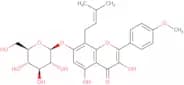
CAS :<p>Icarisid I is a sophisticated protease inhibitor, which is derived from a natural source. This compound exhibits a high affinity for specific proteases, making it an invaluable tool in research and biotechnological applications. The compound's mode of action involves the selective and competitive inhibition of protease enzymes, effectively blocking their activity within biological systems. This can be particularly useful in studies aiming to elucidate the role of proteases in various biochemical pathways and disease processes.</p>Degré de pureté :Min. 95%Quercetin 3-(2''-galloyl-α-L-arabinopyranoside)
CAS :Quercetin 3-(2''-galloyl-alpha-L-arabinopyranoside) is a flavonoid derivative, which is found predominantly in plants. It is derived from the modifications of quercetin, a widely studied polyphenolic compound endemic to many fruits, vegetables, and grains. The compound acts primarily as an antioxidant, engaging in scavenging free radicals and chelating metal ions, which contributes to reducing oxidative stress in biological systems.Formule :C27H22O15Degré de pureté :Min. 95%Masse moléculaire :586.45 g/molQuercetin 3-O-rutinoside-7-O-glucoside
CAS :<p>Quercetin 3-O-rutinoside-7-O-glucoside is a flavonoid derivative, which is a specialized plant metabolite known for its diverse bioactive properties. Extracted primarily from plant sources, this compound is a glycoside derivative of quercetin, a well-known flavonoid found abundantly in fruits and vegetables. The specific glycosylation at the 3-O-rutinoside and 7-O-glucoside positions enhances its solubility and bioavailability compared to its aglycone form.</p>Formule :C33H40O21Degré de pureté :Min. 95%Masse moléculaire :772.66 g/molHydroxygenkwanin
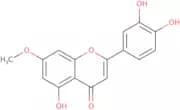
CAS :<p>Hydroxygenkwanin is a type of flavonoid, which is a natural compound extracted from various plant sources, particularly those within the Asteraceae family. It functions predominantly through its ability to modulate multiple signaling pathways, including antioxidant, anti-inflammatory, and apoptosis-inducing activities. Hydroxygenkwanin acts by influencing cellular signaling cascades, enhancing or inhibiting the expression of specific proteins and genes related to cell cycle regulation and immune response.</p>Formule :C16H12O6Degré de pureté :Min. 95%Masse moléculaire :300.26 g/molBilobetin
CAS :<p>Bilobetin is a flavonoid compound, which is sourced from the leaves of the Ginkgo biloba tree. This compound primarily functions through its antioxidative properties, influencing a variety of neural pathways. Its mode of action involves the scavenging of reactive oxygen species and modulation of cellular signaling pathways that impact synaptic transmission and neuroplasticity.</p>Degré de pureté :Min. 95%Licoisoflavone A
CAS :<p>Licoisoflavone A is a naturally occurring isoflavone, which is extracted from plants of the Glycyrrhiza genus, notably known for their medicinal applications. This compound exhibits a unique mode of action, primarily through its anti-inflammatory and antioxidant activities, which involve modulation of various signaling pathways and inhibition of pro-inflammatory cytokines. By influencing these pathways, Licoisoflavone A can mitigate oxidative stress and reduce inflammation, showcasing its potential in therapeutic applications.</p>Degré de pureté :Min. 95%Vincetoxicoside B
CAS :<p>Vincetoxicoside B is a natural compound, specifically a glycoside, which is derived from plant sources, notably within the genus Vincetoxicum. This compound, isolated from certain medicinal plants, represents a significant interest in phytochemistry due to its complex molecular structure and potential biological activities.</p>Degré de pureté :Min. 95%2',5,7-Trihydroxy-8-methoxyflavanone
CAS :<p>2',5,7-Trihydroxy-8-methoxyflavanone is a polyphenolic flavanone compound, which is a type of flavonoid. It is sourced primarily from plant materials, particularly those rich in flavonoid content, such as specific fruits, vegetables, and herbs. This compound exerts its effects primarily through its antioxidant properties, where it functions by scavenging free radicals and inhibiting oxidative stress within biological systems.</p>Formule :C16H14O6Degré de pureté :Min. 95%Masse moléculaire :302.28 g/molWarangalone
CAS :<p>Warangalone is a type of flavonoid compound, which is derived from the roots of the medicinal plant Abrus precatorius. This compound is characterized by its polyphenolic structure, making it an excellent candidate for various biochemical interactions. Warangalone exhibits its mode of action primarily through the disruption of microbial cell walls, leading to effective antimicrobial activity. Its interactions with microbial membranes result in altered permeability, ultimately inhibiting the growth and replication of various bacterial and fungal species.</p>Formule :C25H24O5Degré de pureté :Min. 95%Masse moléculaire :404.46 g/molPodocarpus flavanone
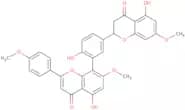
CAS :Podocarpus flavanone is a naturally occurring flavonoid derivative, which is sourced from the Podocarpus genus, a group of coniferous trees native to the Southern Hemisphere. The compound is characterized by its polyphenolic structure, contributing to its ability to engage in a range of biochemical interactions. Its mode of action primarily involves the inhibition of microbial growth through disruption of microbial cell membranes and interference with key enzymatic pathways necessary for cell survival.Formule :C33H26O10Degré de pureté :Min. 95%Masse moléculaire :582.6 g/molVaccarin
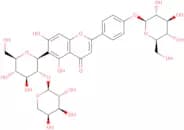
CAS :<p>Vaccarin is a bioactive flavonoid, which is derived from the plant Vaccaria segetalis. It is a naturally occurring compound, primarily sourced from the seeds of this plant. The mode of action of Vaccarin involves its ability to interact with various biological pathways, particularly those related to anti-inflammatory and antioxidant processes. It acts by modulating enzyme activity and gene expression associated with these pathways, potentially influencing cellular behavior and physiological responses.</p>Formule :C32H38O19Degré de pureté :Min. 95%Masse moléculaire :726.63 g/mol