Flavonoïdes
Les flavonoïdes sont un groupe de métabolites végétaux dotés de propriétés antioxydantes qui contribuent à la couleur des fruits et des fleurs. Ils jouent un rôle important dans la protection des plantes contre les rayons UV et les pathogènes. Les flavonoïdes sont étudiés pour leurs potentiels bienfaits pour la santé, notamment des propriétés anti-inflammatoires, antivirales et anticancéreuses. Ils font l'objet de nombreuses recherches dans les domaines de la pharmacologie, de la nutrition et de la biologie moléculaire.
Sous-catégories appartenant à la catégorie "Flavonoïdes"
- Anthocyanidines(46 produits)
- Anthocyanine(46 produits)
- Catéchine(88 produits)
- Chalcones(237 produits)
- Pterocarpans(28 produits)
2408 produits trouvés pour "Flavonoïdes"
Trier par
Degré de pureté (%)
0
100
|
0
|
50
|
90
|
95
|
100
5,3'-Dihydroxyflavone
CAS :<p>5,3'-Dihydroxyflavone is a flavonoid compound, which is a class of polyphenolic molecules. It is derived from various plants, where it occurs naturally as part of the complex biochemical repertoire involved in defense mechanisms and signaling processes. This compound acts as an antioxidant, neutralizing free radicals and reducing oxidative stress. It also exhibits potential neuroprotective effects by modulating specific signaling pathways and interacting with enzymes linked to inflammation and cellular health.</p>Formule :C15H10O4Degré de pureté :Min. 95%Masse moléculaire :254.24 g/molKumatakenin
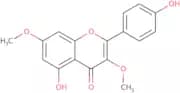
CAS :<p>Kumatakenin is a naturally occurring flavonoid compound, which is derived from various plant sources, particularly in the Meliaceae family. It functions as an antioxidant by scavenging free radicals and reducing oxidative stress at the molecular level. The compound interacts with reactive oxygen species (ROS) using its phenolic hydroxyl groups, effectively neutralizing them and preventing cellular damage.</p>Formule :C17H14O6Degré de pureté :(%) Min. 95%Couleur et forme :PowderMasse moléculaire :314.29 g/mol3'-Methoxydaidzein
CAS :<p>3'-Methoxydaidzein is an isoflavone compound, which is typically isolated from soybean sources. This compound belongs to a class of phytoestrogens, naturally occurring plant-derived compounds with estrogenic activity. 3'-Methoxydaidzein exhibits various biological activities due to its structural similarity to human estrogens, allowing it to bind to estrogen receptors. Its mode of action primarily involves modulating estrogen receptor activity, potentially influencing gene expression in estrogen-responsive tissues.</p>Degré de pureté :Min. 95%Scutellarin methylester
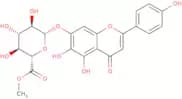
CAS :<p>Scutellarin methylester is a flavonoid derivative, which is a modified form of the naturally occurring compound scutellarin. It originates from plant sources, notably from species within the *Scutellaria* genus. The modification to a methyl ester potentially increases its bioavailability and modifies its pharmacokinetic properties.</p>Degré de pureté :Min. 95%Isosinensetin
CAS :<p>Isosinensetin is a polymethoxyflavone, which is a type of flavonoid compound. It is primarily sourced from citrus fruits, particularly those belonging to the genus Citrus, such as oranges and tangerines. The compound's mode of action is largely attributed to its various biochemical interactions, such as modulation of signaling pathways, antioxidant activity, and potential anti-inflammatory effects. These actions may influence cellular processes, contributing to its health-promoting properties.</p>Formule :C20H20O7Degré de pureté :Min. 95%Couleur et forme :PowderMasse moléculaire :372.37 g/molPodospicatin
CAS :<p>Podospicatin is a type of natural compound, which is derived from fungal sources. This unique compound is isolated from specific fungal species known for their ability to produce bioactive secondary metabolites. Podospicatin is characterized by its distinctive molecular structure, which contributes to its potential bioactivity.</p>Formule :C17H14O7Degré de pureté :Min. 95%Couleur et forme :PowderMasse moléculaire :330.29 g/molFurano(2,3:7,6)-4'-hydroxyflavanone
CAS :Furano(2,3:7,6)-4'-hydroxyflavanone is a sophisticated flavonoid compound, which is a type of polyphenolic molecule commonly found in various plant species. As a naturally derived substance, it originates from the complex biosynthetic pathways in plants, specifically contributing to their defense mechanisms and pigmentation. The mode of action of Furano(2,3:7,6)-4'-hydroxyflavanone involves its interaction with cellular processes, potentially exhibiting antioxidant properties by scavenging free radicals and modulating enzymatic activity related to oxidative stress pathways.Formule :C17H12O4Degré de pureté :Min. 95%Masse moléculaire :280.27 g/molDatiscin
CAS :<p>Datiscin is a flavonoid glycoside, which is a type of naturally occurring compound found in plants. It is derived from various botanical sources, notably within the Datisca genus. These compounds are characterized by a flavonoid core structure bonded to sugar moieties. The mode of action of Datiscin primarily involves its interaction with free radicals and reactive oxygen species, suggesting potential antioxidative properties. This mechanism can help mitigate oxidative stress within biological systems.</p>Formule :C27H30O15Degré de pureté :Min. 95%Masse moléculaire :594.52 g/mol6-Methoxy-3,5,7,4'-tetrahydroxyflavone
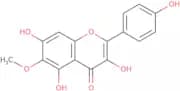
CAS :<p>6-Methoxy-3,5,7,4'-tetrahydroxyflavone is a natural flavonoid derivative, which is primarily sourced from various plants known for their high polyphenolic content. It plays a significant role in the plant's defense mechanism due to its ability to scavenge free radicals and protect against oxidative stress. This compound exerts its mode of action through its potent antioxidant and anti-inflammatory capabilities, primarily by modulating signaling pathways and inhibiting the activity of enzymes involved in inflammation.</p>Formule :C16H12O7Degré de pureté :Min. 95%Masse moléculaire :316.26 g/molKaempferol 3-O-a-L-arabinopyranoside
CAS :Kaempferol 3-O-α-L-arabinopyranoside is a flavonoid glycoside, which is a naturally occurring compound found in a variety of plants, including fruits and vegetables. It is primarily isolated from plant sources such as tea, broccoli, and grapefruit, where it contributes to the plants' defense mechanisms.Formule :C20H18O10Degré de pureté :Min. 95%Couleur et forme :White PowderMasse moléculaire :418.35 g/mol4'-Hydroxywogonin
CAS :<p>4'-Hydroxywogonin is a bioactive flavonoid, which is derived primarily from the roots of the plant *Scutellaria baicalensis*. This compound is a naturally occurring flavone, a subclass of flavonoids, known for its potential therapeutic properties. The mode of action of 4'-Hydroxywogonin involves its ability to modulate various cellular signaling pathways. It is particularly noted for its anti-inflammatory and antioxidant effects, which are mediated through the inhibition of pro-inflammatory cytokines and the scavenging of free radicals, respectively.</p>Formule :C16H12O6Degré de pureté :Min. 95%Couleur et forme :SolidMasse moléculaire :300.26 g/mol7-Hydroxy-5-methoxyflavanone
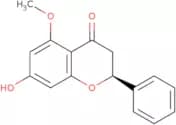
CAS :<p>7-Hydroxy-5-methoxyflavanone is a naturally occurring flavanone compound, which is derived from various plant sources. These sources often include fruits, vegetables, and certain medicinal herbs, known for their rich flavonoid content. The mode of action of 7-Hydroxy-5-methoxyflavanone primarily involves its role as an antioxidant. It helps in scavenging free radicals and reducing oxidative stress, which is a common pathway in cellular protection against damage.</p>Formule :C16H14O4Degré de pureté :Min. 95 Area-%Couleur et forme :PowderMasse moléculaire :270.28 g/mol2-O-beta-L-Galactopyranosylorientin
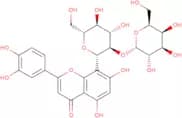
CAS :<p>2-O-beta-L-Galactopyranosylorientin is a flavonoid glycoside, which is a subclass of naturally occurring polyphenolic compounds. This product is typically isolated from plant sources, notably those belonging to the family Poaceae. Its structure consists of an orientin molecule glycosylated with a galactose sugar moiety, enhancing its solubility and biological activity.</p>Degré de pureté :Min. 95%2-(3,4-Dihydroxyphenyl)-3,7-dihydroxy-4H-chromen-4-one hydrate
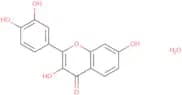
CAS :<p>2-(3,4-Dihydroxyphenyl)-3,7-dihydroxy-4H-chromen-4-one hydrate is a flavonoid compound, which is a polyphenolic molecule derived primarily from plant sources, particularly fruits, vegetables, and certain herbs. This compound functions as a potent antioxidant, neutralizing free radicals and reducing oxidative stress at the cellular level by donating hydrogen atoms, which plays a critical role in protecting biological macromolecules from damage and contributing to cellular homeostasis.</p>Formule :C15H10O6·H2ODegré de pureté :Min. 95%Masse moléculaire :304.25 g/molRhusflavanone
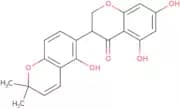
CAS :<p>Rhusflavanone is a flavanone compound, which is a type of polyphenolic molecule found in certain medicinal plants. It is derived primarily from the Rhus genus, known for its rich content of bioactive compounds. The mode of action of Rhusflavanone involves the modulation of inflammatory pathways, as it exhibits inhibition of pro-inflammatory enzymes such as cyclooxygenase (COX) and lipoxygenase (LOX). Additionally, it shows potential in scavenging free radicals, contributing to its antioxidant capabilities.</p>Formule :C30H22O10Degré de pureté :Min. 95%Masse moléculaire :542.5 g/mol5,7-Dimethoxyflavanone
CAS :5,7-Dimethoxyflavanone is a flavonoid derivative, which is a type of polyphenolic compound predominantly found in plants. This compound is often isolated from various botanical sources, where it contributes to the plant's adaptive defense mechanisms against environmental stressors. The mode of action of 5,7-Dimethoxyflavanone involves interaction with cellular signaling pathways, potentially influencing antioxidant, anti-inflammatory, and enzyme inhibition activities through modulation of molecular targets.Formule :C17H16O4Degré de pureté :Min. 95%Masse moléculaire :284.31 g/mol(S)-4',7-Dimethyl equol
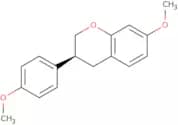
CAS :<p>(S)-4',7-Dimethyl equol is an isoflavandiol, which is a metabolite of the soy isoflavone daidzein. It is produced in the human gut by bacterial metabolism, provided the individual has the appropriate intestinal microbiota capable of this transformation. The compound exhibits estrogenic activity, primarily due to its structural similarity to the endogenous hormone 17β-estradiol, allowing it to bind to estrogen receptors.</p>Formule :C17H18O3Degré de pureté :Min. 95%Masse moléculaire :270.32 g/molLicoisoflavanone
CAS :<p>Licoisoflavanone is a naturally occurring flavonoid compound, which is derived from the roots of plants such as Glycyrrhiza glabra, commonly known as licorice. This phytochemical is primarily obtained through extraction and isolation from licorice roots, where it is present as part of a complex mixture of bioactive compounds. The mode of action of licoisoflavanone involves its ability to interact with various biological pathways, including inhibitory effects on bacterial cell wall synthesis and disruption of microbial cellular functions, as well as scavenging free radicals to exert antioxidant effects.</p>Formule :C20H18O6Degré de pureté :Min. 95%Masse moléculaire :354.4 g/molRetusin tlc
CAS :<p>Retusin TLC is a flavonoid compound, which is derived from natural plant sources. Flavonoids are known for their diverse biological activities, primarily due to their antioxidant properties. The mode of action of Retusin TLC involves its ability to scavenge free radicals, thereby reducing oxidative stress at the cellular level. This activity plays a crucial role in modulating various biochemical pathways, potentially leading to anti-inflammatory and anti-cancer effects.</p>Formule :C16H12O5Degré de pureté :Min. 95%Masse moléculaire :284.26 g/molFarnisin
CAS :<p>Please enquire for more information about Farnisin including the price, delivery time and more detailed product information at the technical inquiry form on this page</p>Formule :C16H12O5Degré de pureté :Min. 95%Masse moléculaire :284.26 g/mol