Flavonoïdes
Sous-catégories appartenant à la catégorie "Flavonoïdes"
- Anthocyanidines(46 produits)
- Anthocyanine(46 produits)
- Catéchine(88 produits)
- Chalcones(237 produits)
- Pterocarpans(28 produits)
2408 produits trouvés pour "Flavonoïdes"
2'-Hydroxydaidzein
CAS :2'-Hydroxydaidzein is a naturally occurring isoflavone, which is a type of phytoestrogen found primarily in soybeans and other legumes. This compound is derived from plant sources, where it functions as a secondary metabolite with potential benefits to human health. Its mode of action is chiefly through its estrogenic activity, where it can bind to estrogen receptors and exert weak estrogen-like effects in the body. Additionally, 2'-Hydroxydaidzein exhibits antioxidative properties by neutralizing free radicals, thereby protecting cells from oxidative stress and potential damage.
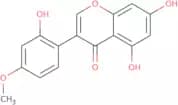
Formule :C15H10O5Degré de pureté :Min. 95%Masse moléculaire :270.24 g/mol2'-Hydroxybiochanin A
CAS :2'-Hydroxybiochanin A is a naturally occurring isoflavone, which is a type of flavonoid typically derived from various plant sources, particularly legumes like red clover and soy. This compound is known for its potential therapeutic properties, functioning primarily through the modulation of various biochemical pathways. It acts as an antioxidant and may influence enzyme activity related to steroid metabolism, potentially impacting estrogenic activity and exhibiting anti-inflammatory effects.Formule :C16H12O6Degré de pureté :Min. 95%Couleur et forme :PowderMasse moléculaire :300.26 g/mol6,8-Diprenyl-5,7,3',4'-tetrahydroxyflavanone
CAS :6,8-Diprenyl-5,7,3',4'-tetrahydroxyflavanone is a prenylated flavanone, which is a type of flavonoid compound. This compound is naturally derived from certain plant sources, where it acts as a secondary metabolite. Its mode of action primarily revolves around its antioxidant properties, where it neutralizes free radicals and reduces oxidative stress. Additionally, its structure allows it to engage in various interactions with cellular pathways, influencing different biological activities.Formule :C25H28O6Degré de pureté :Min. 95%Masse moléculaire :424.49 g/molLuteolin 6,8-di-C-glucoside
CAS :Luteolin 6,8-di-C-glucoside is a bioflavonoid compound, which is naturally derived from various plant sources, including many medicinal herbs and dietary plants. As a type of flavone glycoside, Luteolin 6,8-di-C-glucoside exhibits significant biochemical interest due to its incorporation of two glucose molecules directly attached to the luteolin backbone.
Formule :C27H30O16Degré de pureté :Min. 95%Couleur et forme :PowderMasse moléculaire :610.52 g/molRutin hydrate
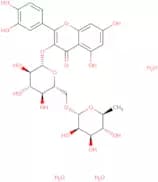
CAS :Capillary protectant; free radical scavenger; antioxidantFormule :C27H30O16·3H2ODegré de pureté :Min. 95 Area-%Couleur et forme :Yellow PowderMasse moléculaire :664.56 g/molApiin
CAS :An anti-inflammatory natural productFormule :C26H28O14Degré de pureté :Min. 95%Couleur et forme :Yellow PowderMasse moléculaire :564.5 g/molQuercetin 3-b-D-glucopyranoside
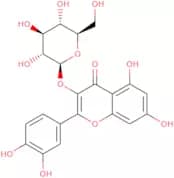
CAS :Quercetin 3-b-D-glucopyranoside is a naturally occurring flavonoid, which is found predominantly in a variety of fruits and vegetables. Its primary source includes apples, onions, and tea, where it is often present as a glycoside conjugate. This compound exerts its effects through its mode of action as an antioxidant, scavenging free radicals, and modulating signaling pathways that influence cellular processes such as apoptosis and inflammation.Formule :C21H20O12Degré de pureté :Min. 98 Area-%Couleur et forme :PowderMasse moléculaire :464.38 g/molLuteolin-7-rutinoside
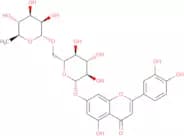
CAS :Luteolin-7-rutinoside is a flavonoid glycoside, which is typically sourced from various plant species, including Japanese honeysuckle and passionflower. This compound is known for its strong antioxidant and anti-inflammatory activities. The mode of action of Luteolin-7-rutinoside involves the modulation of several signaling pathways and inhibition of oxidative stress at the molecular level. This is achieved by scavenging free radicals and reducing the expression of pro-inflammatory cytokines. As a result, it can mitigate cellular damage and inflammation.Formule :C27H30O15Degré de pureté :Min. 95%Couleur et forme :Off-White PowderMasse moléculaire :594.52 g/mol3-Hydroxy-7,8,2',3'-tetramethoxyflavone
CAS :3-Hydroxy-7,8,2',3'-tetramethoxyflavone is a specialized flavonoid compound, which is a type of polyphenolic product derived from natural plant sources. This compound is primarily extracted from various plant species known for their rich polyphenolic content, exhibiting diverse biological activities. As a natural secondary metabolite, 3-Hydroxy-7,8,2',3'-tetramethoxyflavone interacts with cellular signaling pathways, particularly those involved in oxidative stress, inflammation, and cell cycle regulation. Its mode of action includes modulation of enzymatic activities and alteration of gene expression, leading to significant impacts on cellular physiological processes.Formule :C19H18O7Degré de pureté :Min. 95%Masse moléculaire :358.34 g/mol4'-Hydroxyflavone
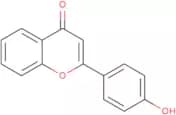
CAS :4'-Hydroxyflavone is a hydroxylated flavone, which is a type of organic compound belonging to the flavonoid family. These compounds are naturally found in a variety of plants, such as fruits, vegetables, and herbs, where they often contribute to pigmentation. This particular flavonoid possesses a hydroxyl group on its fourth carbon, structurally distinguishing it and potentially altering its biological activity compared to other flavones.Formule :C15H10O3Degré de pureté :Min. 95%Couleur et forme :PowderMasse moléculaire :238.24 g/molIsoglabrone
CAS :Isoglabrone is a flavonoid compound, which is derived primarily from certain plant species known for their medicinal properties. As a plant-derived compound, isoglabrone is part of a broader class of natural products that are the focus of extensive research due to their diverse biological activities. The mode of action of isoglabrone involves the modulation of various signaling pathways, which may include antioxidant, anti-inflammatory, and anticancer activities. These actions are mediated through interactions with cellular receptors and enzyme systems, altering gene expression and cellular responses.Formule :C20H16O5Degré de pureté :Min. 95%Masse moléculaire :336.34 g/molSigmoidin B
CAS :Sigmoidin B is a natural compound that is classified as a terpenoid, which is sourced from certain species of terrestrial and marine plants. Its bioactive properties stem from its ability to interact with cellular components, particularly by inducing apoptosis in cancer cells, thereby exhibiting potent cytotoxic effects. The mode of action involves disruption of cellular pathways that are crucial for cancer cell survival and proliferation.Formule :C20H20O6Degré de pureté :Min. 95%Masse moléculaire :356.37 g/mol5,7-Dimethoxyisoflavone
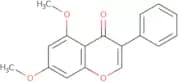
CAS :5,7-Dimethoxyisoflavone is a synthetic isoflavone compound, which is derived from the chemical structure of naturally occurring isoflavones typically found in plants such as soy. It is designed to mimic certain properties of these plant-derived compounds with specific enhancements in its biochemical activity due to the addition of methoxy groups.Formule :C17H14O4Degré de pureté :Min. 95%Couleur et forme :White To Beige SolidMasse moléculaire :282.29 g/mol8-Prenylgenistein
CAS :8-Prenylgenistein is a prenylated isoflavone, which is a type of naturally occurring polyphenolic compound. It is primarily sourced from plants, particularly legumes, and is a derivative of genistein, an isoflavone commonly found in soy products. The addition of a prenyl group distinguishes 8-prenylgenistein from its parent compound, potentially enhancing its bioactivity and pharmacokinetics.
Formule :C20H18O5Degré de pureté :Min. 95%Couleur et forme :PowderMasse moléculaire :338.35 g/molOmbuoside
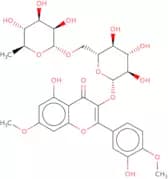
CAS :Please enquire for more information about Ombuoside including the price, delivery time and more detailed product information at the technical inquiry form on this page
Formule :C29H34O16Degré de pureté :Min. 95%Couleur et forme :Off-White To Yellow SolidMasse moléculaire :638.57 g/molKaempferol-3,4'-dimethyl ether
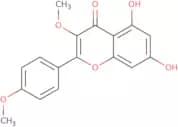
CAS :Kaempferol-3,4'-dimethyl ether is a naturally occurring flavonoid compound which is primarily found in various plants. This compound is known for its structural classification as a methylated flavonol, distinguished by the presence of ether groups at the 3 and 4' positions of kaempferol. Derived mainly from botanical sources such as herbs and traditional medicinal plants, it plays a critical role in plant defense mechanisms.
Formule :C17H14O6Degré de pureté :Min. 95%Couleur et forme :PowderMasse moléculaire :314.29 g/mol3',4'-Dimethoxyflavone
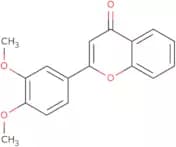
CAS :3',4'-Dimethoxyflavone is a synthetic flavone derivative, which is a type of polyphenolic compound structurally characterized by two methoxy groups attached to the flavone core. This compound is typically sourced through chemical synthesis, as flavones are widespread in nature but often require modification for specific scientific uses. The mode of action of 3',4'-Dimethoxyflavone involves modulation of various biochemical pathways, including potential interactions with cellular enzymes and receptors. This modulation can influence antioxidant and inflammatory responses, among other effects.
Formule :C17H14O4Degré de pureté :Min. 95%Couleur et forme :PowderMasse moléculaire :282.29 g/mol3,2',4',5'-Tetra methoxyflavone
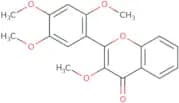
CAS :3,2',4',5'-Tetra methoxyflavone is a specialized flavonoid compound, which is derived primarily from various plant sources, such as those belonging to the genus Kaempferia, a member of the ginger family. This compound is characterized by its four methoxy groups attached to its flavonoid backbone, which significantly influences its biological activity and solubility.Formule :C19H18O6Degré de pureté :Min. 95%Masse moléculaire :342.34 g/mol3,7,2'-Trihydroxyflavone
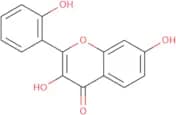
CAS :3,7,2'-Trihydroxyflavone is a naturally occurring flavonoid, which is derived from various plant sources, including fruits, vegetables, and certain herbs. This compound exhibits a significant bioactive profile attributed to its structural characteristics, which include multiple hydroxyl groups. The mode of action of 3,7,2'-Trihydroxyflavone primarily involves its ability to act as a potent antioxidant. This activity is due to its capacity to neutralize free radicals, thereby reducing oxidative stress and contributing to cellular protection.Formule :C15H10O5Degré de pureté :Min. 95%Couleur et forme :PowderMasse moléculaire :270.24 g/molEriocitrin
CAS :Eriocitrin is a flavonoid compound, which is derived from citrus fruits, particularly lemons and limes. It is isolated from the peels and juice of these fruits, where it serves as one of the key constituents contributing to their nutritional and functional properties. The mode of action of eriocitrin involves its potent antioxidant activity. It acts by scavenging free radicals and reducing oxidative stress at the cellular level, thereby imparting protective effects on cells and tissues.Formule :C27H32O15Degré de pureté :Min. 98 Area-%Couleur et forme :Off-White PowderMasse moléculaire :596.53 g/mol