Flavonoïdes
Les flavonoïdes sont un groupe de métabolites végétaux dotés de propriétés antioxydantes qui contribuent à la couleur des fruits et des fleurs. Ils jouent un rôle important dans la protection des plantes contre les rayons UV et les pathogènes. Les flavonoïdes sont étudiés pour leurs potentiels bienfaits pour la santé, notamment des propriétés anti-inflammatoires, antivirales et anticancéreuses. Ils font l'objet de nombreuses recherches dans les domaines de la pharmacologie, de la nutrition et de la biologie moléculaire.
Sous-catégories appartenant à la catégorie "Flavonoïdes"
- Anthocyanidines(46 produits)
- Anthocyanine(46 produits)
- Catéchine(88 produits)
- Chalcones(237 produits)
- Pterocarpans(28 produits)
2408 produits trouvés pour "Flavonoïdes"
Trier par
Degré de pureté (%)
0
100
|
0
|
50
|
90
|
95
|
100
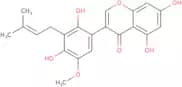
Piscerythrone
CAS :<p>Piscerythrone is a specialized chemical compound derived from certain marine organisms, which is primarily sourced from vibrant crustaceans. It acts through biochemical interactions that modulate pigmentation processes at the cellular level. The compound's mode of action involves binding to specific receptors involved in the enzymatic pathways of pigment production, influencing the synthesis and deposition of pigments such as astaxanthin.</p>Formule :C21H20O7Degré de pureté :Min. 95%Masse moléculaire :384.38 g/molNevadensin
CAS :<p>Nevadensin is a naturally occurring flavonoid compound, which is isolated from the plant *Rosmarinus officinalis*, commonly known as rosemary. Rosemary is a member of the Lamiaceae family and is widely recognized for its antioxidant and aromatic properties. The active ingredient, nevadensin, exerts its effects primarily through the inhibition of the cyclooxygenase (COX) enzymes, particularly COX-2, which are key players in the inflammatory process. This inhibition reduces the production of pro-inflammatory mediators, contributing to its anti-inflammatory activity.</p>Formule :C18H16O7Degré de pureté :Min. 98 Area-%Couleur et forme :Yellow PowderMasse moléculaire :344.32 g/mol7,8,3'-Trihydroxyflavone
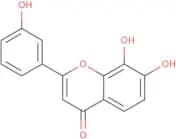
CAS :<p>7,8,3'-Trihydroxyflavone is a type of flavonoid, which is a class of polyphenolic compounds. It is primarily derived from various plant sources, including certain fruits, vegetables, and herbs known for their antioxidant properties. Its mode of action involves selective agonism of the tropomyosin receptor kinase B (TrkB), a receptor associated with the brain-derived neurotrophic factor (BDNF).</p>Formule :C15H10O5Degré de pureté :Min. 95%Couleur et forme :PowderMasse moléculaire :270.24 g/mol2',7,8-Trimethoxyflavone
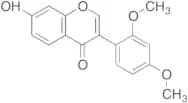
CAS :<p>2',7,8-Trimethoxyflavone is a specialized flavonoid compound, which is naturally derived from certain medicinal plants. This compound belongs to the broader class of polyphenolic molecules known as flavones, often found in various fruits and vegetables. It is primarily isolated from plants such as Kaempferia parviflora, renowned for its traditional use in herbal medicine.</p>Formule :C18H16O5Degré de pureté :Min. 95%Masse moléculaire :312.32 g/molMonoxerutin
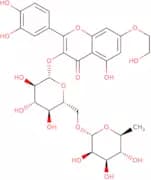
CAS :<p>Monoxerutin is a bioflavonoid derivative, which is sourced from plant-based compounds known for their beneficial effects on vascular function. Bioflavonoids are naturally occurring compounds present in various fruits, vegetables, and plants, playing a crucial role in plant defense mechanisms and offering significant health benefits when used in medicinal applications. The mode of action of Monoxerutin involves enhancing endothelial function and stabilizing capillary walls, thus improving vascular health. It achieves this by reducing capillary permeability and fragility, which in turn aids in enhancing circulation and providing anti-inflammatory benefits.</p>Degré de pureté :Min. 95%Dihydrokaempferol-3-O-arabinoside
CAS :<p>Dihydrokaempferol-3-O-arabinoside is a flavonoid compound, which is a type of phenolic product found in plants. These compounds are prevalent in various plant species where they contribute to the pigmentation and play a crucial role in plant defense mechanisms. The compound is derived from natural sources, primarily isolated from plant materials rich in flavonoids, such as certain fruits and medicinal herbs.</p>Formule :C20H20O10Degré de pureté :Min. 95%Masse moléculaire :420.37 g/molCarlinoside
CAS :<p>Carlinoside is a bioactive flavonoid glycoside, which is typically sourced from plants of the Astraceae family, specifically from the genus Carlina. As a natural phytochemical, its mode of action involves the modulation of various biochemical pathways, primarily through its antioxidant properties and potential to interact with cellular oxidative stress mechanisms.</p>Formule :C26H28O16Degré de pureté :Min. 95%Masse moléculaire :596.49 g/mol