Flavonoïdes
Les flavonoïdes sont un groupe de métabolites végétaux dotés de propriétés antioxydantes qui contribuent à la couleur des fruits et des fleurs. Ils jouent un rôle important dans la protection des plantes contre les rayons UV et les pathogènes. Les flavonoïdes sont étudiés pour leurs potentiels bienfaits pour la santé, notamment des propriétés anti-inflammatoires, antivirales et anticancéreuses. Ils font l'objet de nombreuses recherches dans les domaines de la pharmacologie, de la nutrition et de la biologie moléculaire.
Sous-catégories appartenant à la catégorie "Flavonoïdes"
- Anthocyanidines(46 produits)
- Anthocyanine(46 produits)
- Catéchine(88 produits)
- Chalcones(237 produits)
- Pterocarpans(28 produits)
2404 produits trouvés pour "Flavonoïdes"
Trier par
Degré de pureté (%)
0
100
|
0
|
50
|
90
|
95
|
100
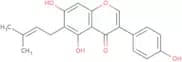
Licoisoflavone A
CAS :<p>Licoisoflavone A is a naturally occurring isoflavone, which is extracted from plants of the Glycyrrhiza genus, notably known for their medicinal applications. This compound exhibits a unique mode of action, primarily through its anti-inflammatory and antioxidant activities, which involve modulation of various signaling pathways and inhibition of pro-inflammatory cytokines. By influencing these pathways, Licoisoflavone A can mitigate oxidative stress and reduce inflammation, showcasing its potential in therapeutic applications.</p>Degré de pureté :Min. 95%Ombuin
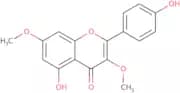
CAS :<p>Ombuin is a flavonoid compound, which is a naturally occurring substance found in a variety of plants. It functions primarily as an antioxidant by scavenging free radicals and inhibiting oxidative stress within biological systems. This mode of action is pivotal in mitigating cellular damage, thereby contributing to anti-inflammatory processes.</p>Formule :C17H14O7Degré de pureté :Min. 95%Couleur et forme :SolidMasse moléculaire :330.29 g/mol5,6,2'-Trimethoxyflavone
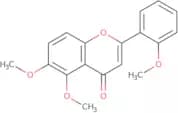
CAS :<p>5,6,2'-Trimethoxyflavone is a naturally occurring flavone compound, which is a type of polyphenolic compound found in various botanical species. It is derived primarily from plants belonging to the genus Kaempferia, as well as other related species that are known for their diverse secondary metabolites.</p>Formule :C18H16O5Degré de pureté :Min. 95%Masse moléculaire :312.32 g/molKaempferol-3,7-dirhamnoside
CAS :<p>Kaempferol-3,7-dirhamnoside is a flavonoid glycoside, which is commonly found in various plant species, particularly those in the Fabaceae family. This compound is structurally composed of the flavonoid kaempferol, linked to two rhamnopyranoside sugar moieties. It is primarily sourced from plants such as Tephrosia purpurea, where it plays a role in the plant's defense mechanisms.</p>Formule :C27H30O14Degré de pureté :Min. 95%Masse moléculaire :578.52 g/mol3'-Methoxypuerarin
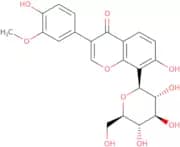
CAS :<p>3'-Methoxypuerarin is a specialized isoflavone derivative, which is a type of phytochemical compound. This compound is primarily sourced from the roots of *Pueraria* species, which are well-known for their rich content of isoflavones. As an organic chemical, 3'-Methoxypuerarin exhibits potential pharmacological activity by interacting with various cellular pathways, often involving signal transduction mechanisms.</p>Formule :C22H22O10Degré de pureté :Min. 95%Couleur et forme :White PowderMasse moléculaire :446.4 g/molTricetin 7-O-glucoside
CAS :<p>Tricetin 7-O-glucoside is a flavonoid glycoside compound, which is a derivative of the naturally occurring flavonoid tricetin. This compound is sourced primarily from certain plant species, including various herbs and foods, where it is present as a minor constituent. The mode of action of Tricetin 7-O-glucoside involves its ability to scavenge free radicals and modulate inflammatory pathways, showcasing both antioxidant and anti-inflammatory properties.</p>Formule :C21H20O12Degré de pureté :Min. 95%Masse moléculaire :464.38 g/molVincetoxicoside B
CAS :<p>Vincetoxicoside B is a natural compound, specifically a glycoside, which is derived from plant sources, notably within the genus Vincetoxicum. This compound, isolated from certain medicinal plants, represents a significant interest in phytochemistry due to its complex molecular structure and potential biological activities.</p>Degré de pureté :Min. 95%Isomucronulatol 7-O-glucoside
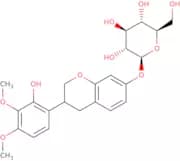
CAS :<p>Isomucronulatol 7-O-glucoside is a flavonoid glucoside compound, which is isolated predominantly from various plant species. This compound is known for its comprehensive role as a secondary metabolite that participates in the plant's defense mechanism. The primary mode of action involves its ability to interact with biological targets at the molecular level, potentially exhibiting antioxidant, anti-inflammatory, or other bioactive properties. Isomucronulatol 7-O-glucoside may influence signaling pathways, which can alter physiological responses within organisms.</p>Degré de pureté :Min. 95%Kumatakenin
CAS :<p>Kumatakenin is a naturally occurring flavonoid compound, which is derived from various plant sources, particularly in the Meliaceae family. It functions as an antioxidant by scavenging free radicals and reducing oxidative stress at the molecular level. The compound interacts with reactive oxygen species (ROS) using its phenolic hydroxyl groups, effectively neutralizing them and preventing cellular damage.</p>Formule :C17H14O6Degré de pureté :(%) Min. 95%Couleur et forme :PowderMasse moléculaire :314.29 g/molAlpinumisoflavone-4'-methyl ether
CAS :<p>Alpinumisoflavone-4'-methyl ether is a methoxyisoflavone, which is a type of naturally occurring phenolic compound. It is derived from specific plant sources, including certain species within the Fabaceae family, known for their rich isoflavonoid content. These compounds are synthesized in plants as part of their defense mechanisms against environmental stresses and pathogens.</p>Formule :C21H18O5Degré de pureté :Min. 95%Couleur et forme :PowderMasse moléculaire :350.36 g/mol6,3'-Diprenylgenistein
CAS :<p>6,3'-Diprenylgenistein is a prenylated isoflavonoid compound, which is derived from certain plants, notably those within the legume family. This phytochemical is characterized as an isoflavone, a class of naturally occurring organic compounds related to flavonoids, distinguished by the inclusion of prenyl groups that potentially enhance its biological activity and bioavailability.</p>Formule :C25H26O5Degré de pureté :Min. 95%Masse moléculaire :406.47 g/molLicoflavonol
CAS :<p>Licoflavonol is a bioactive compound that serves as an antioxidant, which is derived from plant sources, particularly flavonoid-rich species. Its mode of action involves scavenging free radicals and modulating pathways involved in oxidative stress and inflammation. By reducing oxidative damage, Licoflavonol can stabilize cellular environments and protect macromolecules such as DNA, proteins, and lipids from degenerative changes.</p>Formule :C20H18O6Degré de pureté :Min. 95%Masse moléculaire :354.35 g/mol2'-Methoxybiochanin A
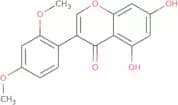
CAS :<p>2'-Methoxybiochanin A is a naturally occurring isoflavone, which is predominantly derived from the plant Trifolium pratense, commonly known as red clover. This compound is characterized by its unique chemical structure that includes a methoxy group, which differentiates it from other isoflavones. The mode of action of 2'-Methoxybiochanin A involves its interaction with estrogen receptors, as well as its ability to modulate various biological pathways linked to inflammation and oxidative stress.</p>Formule :C17H14O6Degré de pureté :Min. 95%Couleur et forme :PowderMasse moléculaire :314.29 g/molIsomedicarpin
CAS :<p>Isomedicarpin is a flavonoid compound, which is naturally derived from plant sources. It is isolated predominantly from certain species within the Leguminosae family, where these compounds often play a role in the plant's defense mechanisms. The mode of action of isomedicarpin involves disrupting microbial cell membranes and interfering with essential biochemical pathways, which contributes to its antimicrobial efficacy.</p>Formule :C16H14O4Degré de pureté :Min. 95%Masse moléculaire :270.28 g/molGossypetin-8-glucuronide
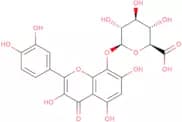
CAS :<p>Gossypetin-8-glucuronide is a flavonoid glucuronide, which is a type of plant secondary metabolite. It is derived from flowering plants, particularly those within the Hibiscus genus, where it serves as a glycosylated form of the flavonoid gossypetin. The glucuronidation process enhances the solubility and potential bioavailability of the compound. The mode of action of Gossypetin-8-glucuronide involves its role as a potent antioxidant, neutralizing free radicals and reducing oxidative stress at the cellular level. This activity is crucial in preventing damage to cellular structures such as lipids, proteins, and nucleic acids.</p>Formule :C21H18O14Degré de pureté :Min. 95%Masse moléculaire :494.36 g/mol6,7,4'-Trihydroxyflavanone
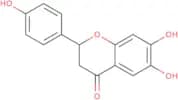
CAS :<p>6,7,4'-Trihydroxyflavanone is a naturally occurring flavonoid, which is found in various plant sources, particularly in citrus fruits and certain medicinal herbs. This compound is characterized by its presence of hydroxyl groups, enhancing its reactivity and interaction with biological systems. The mode of action of 6,7,4'-Trihydroxyflavanone primarily involves its antioxidant activity. It can scavenge free radicals and chelate metal ions, thereby reducing oxidative stress within cellular environments. This property is critical in maintaining cellular integrity and preventing damage caused by reactive oxygen species.</p>Formule :C15H12O5Degré de pureté :Min. 95%Masse moléculaire :272.25 g/molKaempferol 3-O-a-L-arabinopyranoside
CAS :<p>Kaempferol 3-O-α-L-arabinopyranoside is a flavonoid glycoside, which is a naturally occurring compound found in a variety of plants, including fruits and vegetables. It is primarily isolated from plant sources such as tea, broccoli, and grapefruit, where it contributes to the plants' defense mechanisms.</p>Formule :C20H18O10Degré de pureté :Min. 95%Couleur et forme :White PowderMasse moléculaire :418.35 g/mol5,7,3'-Trihydroxy-4'-methoxy-8-prenylflavanone
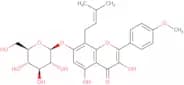
CAS :<p>5,7,3'-Trihydroxy-4'-methoxy-8-prenylflavanone is a prenylated flavanone, which is often isolated from various plant sources, particularly those in the Fabaceae family. The compound belongs to a class of naturally occurring polyphenolic compounds that have drawn interest for their diverse biological activities. It is characterized by the presence of a prenyl group and multiple hydroxy and methoxy functional groups, contributing to its unique chemical properties.</p>Formule :C21H22O6Degré de pureté :Min. 95%Masse moléculaire :370.4 g/molIcarisid I
CAS :<p>Icarisid I is a sophisticated protease inhibitor, which is derived from a natural source. This compound exhibits a high affinity for specific proteases, making it an invaluable tool in research and biotechnological applications. The compound's mode of action involves the selective and competitive inhibition of protease enzymes, effectively blocking their activity within biological systems. This can be particularly useful in studies aiming to elucidate the role of proteases in various biochemical pathways and disease processes.</p>Degré de pureté :Min. 95%Pratensein 7-O-glucoside
CAS :<p>Pratensein 7-O-glucoside is a naturally occurring flavonoid glucoside, which is extracted from various plant sources such as red clover, Trifolium pratense. This compound is formed when the flavonoid pratensein is glycosylated at the 7th position with glucose. As a member of the isoflavone group, Pratensein 7-O-glucoside may exert its effects primarily through antioxidant mechanisms, neutralizing reactive oxygen species and reducing oxidative stress.</p>Formule :C22H22O11Degré de pureté :Min. 95%Masse moléculaire :462.4 g/molHydroxygenkwanin
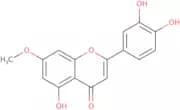
CAS :<p>Hydroxygenkwanin is a type of flavonoid, which is a natural compound extracted from various plant sources, particularly those within the Asteraceae family. It functions predominantly through its ability to modulate multiple signaling pathways, including antioxidant, anti-inflammatory, and apoptosis-inducing activities. Hydroxygenkwanin acts by influencing cellular signaling cascades, enhancing or inhibiting the expression of specific proteins and genes related to cell cycle regulation and immune response.</p>Formule :C16H12O6Degré de pureté :Min. 95%Masse moléculaire :300.26 g/mol7,4'-Dihydroxyflavanone
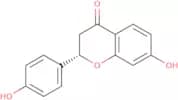
CAS :<p>7,4'-Dihydroxyflavanone is a naturally occurring flavonoid, which is primarily sourced from various plant species. This compound is a type of polyphenolic molecule that often manifests in fruits, vegetables, and certain herbs. Its biosynthesis in plants is part of their secondary metabolism, where it plays roles in plant defense against pathogens and UV radiation.</p>Formule :C15H12O4Degré de pureté :Min. 95%Masse moléculaire :256.25 g/mol5-Methoxyflavanone
CAS :<p>5-Methoxyflavanone is an organic compound, which is a flavonoid derivative obtained primarily through synthetic procedures involving the modification of flavanones. This compound is synthesized through specific chemical reactions that introduce a methoxy group into the flavanone structure, thereby altering its chemical and biological properties.</p>Formule :C16H14O3Degré de pureté :Min. 95%Masse moléculaire :254.28 g/mol7,4'-Dihydroxy-6,8-diprenylflavanone
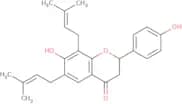
CAS :<p>7,4'-Dihydroxy-6,8-diprenylflavanone is a prenylated flavonoid, which is a type of naturally occurring compound found in various plants. This compound is often derived from specific plant species known for their rich flavonoid content. The prenylation of flavonoids, such as 7,4'-Dihydroxy-6,8-diprenylflavanone, often enhances their biological activity.</p>Formule :C25H28O4Degré de pureté :Min. 95%Masse moléculaire :392.5 g/molNeoastilbin
CAS :<p>Neoastilbin is a natural flavonoid compound, which is derived from the plant species *Smilax glabra*. It acts by modulating immune responses and inhibiting specific enzymatic pathways associated with inflammation, making it an effective agent in reducing inflammatory processes.</p>Formule :C21H22O11Degré de pureté :Min. 95%Couleur et forme :PowderMasse moléculaire :450.39 g/mol2',5,7-Trihydroxy-8-methoxyflavanone
CAS :<p>2',5,7-Trihydroxy-8-methoxyflavanone is a polyphenolic flavanone compound, which is a type of flavonoid. It is sourced primarily from plant materials, particularly those rich in flavonoid content, such as specific fruits, vegetables, and herbs. This compound exerts its effects primarily through its antioxidant properties, where it functions by scavenging free radicals and inhibiting oxidative stress within biological systems.</p>Formule :C16H14O6Degré de pureté :Min. 95%Masse moléculaire :302.28 g/molPicoxystrobin
CAS :<p>Picoxystrobin is a synthetic fungicide, belonging to the strobilurin chemical class, which is derived from naturally occurring compounds found in certain fungi. It functions by inhibiting mitochondrial respiration in fungal cells, specifically targeting the cytochrome bc1 complex in the electron transport chain. This mode of action disrupts energy production, effectively halting the growth and reproductive capabilities of pathogenic fungi.</p>Formule :C18H16F3NO4Degré de pureté :Min. 98 Area-%Masse moléculaire :367.32 g/molRef: 3D-J-003622
1kgÀ demander50gÀ demander100gÀ demander250gÀ demander500gÀ demander-Unit-ggÀ demanderLicoflavone C
CAS :<p>Licoflavone C is a bioactive flavonoid compound, which is derived from the roots of Glycyrrhiza species. This particular flavonoid is notable for its complex chemical structure that contributes to its biological activity. The primary mode of action of Licoflavone C involves modulation of various cellular pathways, including antioxidant and anti-inflammatory mechanisms. It also influences cell cycle regulation and apoptosis, which are critical in cancer research. The compound's ability to act as a natural antioxidant makes it a valuable candidate in the formulation of skincare products aimed at protecting against oxidative stress. In scientific studies, Licoflavone C has been investigated for its potential anticancer properties, particularly focusing on its effects in inhibiting the proliferation of cancer cells. Furthermore, its role in skin health is under exploration, where its antioxidant capacity and potential to stimulate collagen production may offer benefits in anti-aging products. Such applications make Licoflavone C an intriguing subject for research in natural product chemistry and therapeutic development.</p>Formule :C20H18O5Degré de pureté :Min. 95%Masse moléculaire :338.35 g/molKazinol B
CAS :<p>Kazinol B is an isoprenylated flavonoid, which is a secondary metabolite derived from plants, predominantly found in members of the Moraceae family. It is synthesized through the plant's natural biochemical pathways, involving the modification of basic flavonoid structures via prenylation, resulting in increased lipophilicity and potential bioactivity.</p>Formule :C25H28O4Degré de pureté :Min. 95%Masse moléculaire :392.49 g/molScutellarin methylester
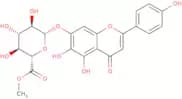
CAS :<p>Scutellarin methylester is a flavonoid derivative, which is a modified form of the naturally occurring compound scutellarin. It originates from plant sources, notably from species within the *Scutellaria* genus. The modification to a methyl ester potentially increases its bioavailability and modifies its pharmacokinetic properties.</p>Degré de pureté :Min. 95%Wighteone
CAS :<p>Please enquire for more information about Wighteone including the price, delivery time and more detailed product information at the technical inquiry form on this page</p>Formule :C20H18O5Degré de pureté :Min. 95%Masse moléculaire :338.35 g/molIso-Osajin
CAS :<p>Iso-Osajin is a naturally occurring compound that falls under the category of prenylated flavonoids. It is isolated from the seeds of Psoralea corylifolia, a plant traditionally used in various medicinal systems. The compound exhibits its mode of action primarily through antimicrobial activities, potentially disrupting microbial cell membranes or inhibiting essential enzymes. Iso-Osajin has been of considerable interest due to its promising pharmacological effects, including antibacterial, antifungal, and possibly antiviral properties.</p>Formule :C25H24O5Degré de pureté :Min. 95%Couleur et forme :PowderMasse moléculaire :404.46 g/mol5,7,2',4'-Tetrahydroxy-8,3'-di(γ,γ-dimethylallyl)-isoflavanone
CAS :<p>5,7,2',4'-Tetrahydroxy-8,3'-di(gamma,gamma-dimethylallyl)-isoflavanone is a prenylated isoflavanone, which is a type of flavonoid compound extensively studied in natural product chemistry. It is primarily sourced from specific plant species known for their rich secondary metabolite profiles, often within the Fabaceae family. The mode of action of this compound involves its interaction at the molecular level with various biological targets, potentially leading to antioxidant, anti-inflammatory, or antimicrobial effects. These actions are mediated through the compound’s ability to modulate enzyme activities, interact with cellular membranes, and influence signaling pathways.</p>Formule :C25H28O6Degré de pureté :Min. 95%Masse moléculaire :424.50 g/molWarangalone
CAS :<p>Warangalone is a type of flavonoid compound, which is derived from the roots of the medicinal plant Abrus precatorius. This compound is characterized by its polyphenolic structure, making it an excellent candidate for various biochemical interactions. Warangalone exhibits its mode of action primarily through the disruption of microbial cell walls, leading to effective antimicrobial activity. Its interactions with microbial membranes result in altered permeability, ultimately inhibiting the growth and replication of various bacterial and fungal species.</p>Formule :C25H24O5Degré de pureté :Min. 95%Masse moléculaire :404.46 g/molGardenin B
CAS :<p>Gardenin B is a microbial biocontrol agent that originates from Streptomyces bacteria. It functions as a secondary metabolite deriving from its microbial source. The mode of action involves inhibiting the growth of plant-pathogenic fungi by disrupting their cellular processes and interfering with spore germination or hyphal proliferation. Gardenin B is primarily utilized in agricultural settings to control fungal diseases in crops, reducing reliance on synthetic chemical fungicides. Its application is integrated into plant protection programs to enhance agricultural sustainability and improve crop yields while minimizing the environmental impact. Scientists are investigating its mechanisms and potential for broader applications.</p>Formule :C19H18O7Degré de pureté :Min. 95%Masse moléculaire :358.34 g/mol7-Benzyloxy-3',4'-dimethoxyisoflavone
CAS :<p>7-Benzyloxy-3',4'-dimethoxyisoflavone is a synthetic isoflavone derivative, which is a specialized compound designed for research and potential pharmacological applications. Isoflavones are naturally occurring compounds found predominantly in plants like soybeans and are studied for their biological activities. This particular compound is synthetically modified with methoxy groups, enhancing its stability and bioavailability.</p>Formule :C24H20O5Degré de pureté :Min. 95%Masse moléculaire :388.41 g/molFurano(2,3:7,6)-4'-hydroxyflavanone
CAS :<p>Furano(2,3:7,6)-4'-hydroxyflavanone is a sophisticated flavonoid compound, which is a type of polyphenolic molecule commonly found in various plant species. As a naturally derived substance, it originates from the complex biosynthetic pathways in plants, specifically contributing to their defense mechanisms and pigmentation. The mode of action of Furano(2,3:7,6)-4'-hydroxyflavanone involves its interaction with cellular processes, potentially exhibiting antioxidant properties by scavenging free radicals and modulating enzymatic activity related to oxidative stress pathways.</p>Formule :C17H12O4Degré de pureté :Min. 95%Masse moléculaire :280.27 g/molKaempferol -3,7-di-O-glucoside
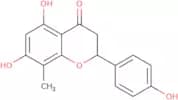
CAS :<p>Kaempferol-3,7-di-O-glucoside is a naturally occurring flavonoid, which is commonly derived from various plant sources, including fruits, vegetables, and medicinal herbs. As a flavonoid, it appears predominantly in the form of glycosides, where kaempferol is conjugated with sugar moieties, enhancing its solubility and bioavailability.</p>Formule :C27H30O16Degré de pureté :Min. 95%Masse moléculaire :610.52 g/mol5,7,4’-Trihydroxy-8-methylflavanone
CAS :<p>5,7,4’-Trihydroxy-8-methylflavanone is a flavanone, which is a type of flavonoid compound. Flavonoids are secondary metabolites commonly found in plants and are responsible for a variety of biological activities. This particular compound can be sourced from various plant species known for their rich content of natural phenolic substances.</p>Formule :C16H14O5Degré de pureté :Min. 95%Masse moléculaire :286.28 g/molErythrinin A
CAS :<p>Erythrinin A is an alkaloid compound, which is an isolated bioactive substance derived from the Erythrina plant species. This compound is primarily sourced from the beans and bark of Erythrina plants, which are native to tropical and subtropical regions. Erythrinin A exhibits its mode of action by interacting with neurotransmitter systems within the central nervous system, possessing properties that may influence receptors such as GABA and others related to neuromodulation.</p>Formule :C20H16O4Degré de pureté :Min. 95%Masse moléculaire :320.34 g/molCirsimarin
CAS :<p>Cirsimarin is a natural flavonoid compound, which is extracted from certain plant species, primarily in the Asteraceae family. It functions by modulating various biochemical pathways through its potent anti-inflammatory, antioxidant, and hepatoprotective activities. Cirsimarin exerts its effects by scavenging free radicals, inhibiting inflammatory mediators, and supporting liver function through upregulation of detoxifying enzymes.</p>Formule :C23H24O11Degré de pureté :Min. 95%Couleur et forme :PowderMasse moléculaire :476.43 g/mol(E)-Deschlorophenyl fluoxastrobin
CAS :<p>(E)-Deschlorophenyl fluoxastrobin is a synthetic fungicide, which is derived from the strobilurin class of compounds, originally sourced from natural fungal metabolites. It functions by inhibiting mitochondrial respiration in fungal cells through disruption of the cytochrome bc1 complex, specifically at the Qo site. This mode of action effectively curtails the energy supply of the pathogen, leading to its death, and is integral in managing resistance issues known to occur with other fungicide groups.</p>Formule :C15H13FN4O5Degré de pureté :Min. 95%Masse moléculaire :348.29 g/molGrosvenorine
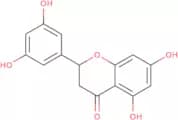
CAS :<p>Grosvenorine is a biochemical compound, which is a natural glycoside extracted from the fruit of Siraitia grosvenorii, commonly known as monk fruit. This compound is primarily sourced from the cucurbitaceae family of plants, renowned for their sweet-tasting fruits. The mode of action of grosvenorine involves its interaction with various metabolic pathways, exhibiting antioxidant and anti-inflammatory properties.</p>Degré de pureté :Min. 95%3',5,5',7-Tetrahydroxyflavanone
CAS :<p>3',5,5',7-Tetrahydroxyflavanone is a flavonoid compound, which is a type of naturally occurring polyphenolic. It is primarily derived from certain plants, often found in those with known medicinal properties. Flavonoids are secondary metabolites in plants and play crucial roles in various biological activities.</p>Formule :C15H12O6Degré de pureté :Min. 95%Masse moléculaire :288.25 g/mol6-Chloroflavone
CAS :<p>6-Chloroflavone is a synthetic flavonoid derivative, which is a modified chemical compound originating from naturally occurring flavonoids found in various plants. Structurally, it is characterized by the substitution of a chlorine atom at the 6th position on the flavone backbone. This chemical modification is designed to alter its physicochemical properties and enhance its biological activity.</p>Formule :C15H9ClO2Degré de pureté :Min. 95%Masse moléculaire :256.68 g/molCudraflavanone B
CAS :<p>Cudraflavanone B is a bioactive flavonoid, which is a type of polyphenolic compound. It is derived from natural sources, prominently found in the roots of Cudrania tricuspidata, a plant known for its traditional use in herbal medicine. The mode of action of Cudraflavanone B involves various biochemical pathways, including the modulation of enzyme activity and signaling pathways. It exhibits antioxidant, anti-inflammatory, and antimicrobial properties by interacting with cellular mechanisms that regulate oxidative stress and inflammatory responses.</p>Formule :C20H20O6Degré de pureté :Min. 95%Masse moléculaire :356.40 g/molHomoferreirin
CAS :<p>Homoferreirin is a biochemical siderophore, which is a low-molecular-weight iron-chelating compound derived from plant sources. Its mechanism of action involves binding ferric iron (Fe^3+) ions with high affinity, forming a stable complex. This complex aids in the solubilization and transport of iron across cellular membranes, which is crucial in environments where iron availability is limited, such as in soil and certain biological niches.</p>Formule :C17H16O6Degré de pureté :Min. 95%Masse moléculaire :316.31 g/molPenduletin
CAS :<p>Penduletin is a flavonoid compound, which is a type of natural phenolic product, primarily sourced from various plant species. This compound occurs naturally as part of the plant's secondary metabolites and plays a crucial role in defense mechanisms. Penduletin exerts its effects primarily through its antioxidant activity, modulating various signaling pathways involved in cellular protection processes. It acts by scavenging free radicals and reducing oxidative stress, which is pivotal in its therapeutic applications.</p>Formule :C18H16O7Degré de pureté :Min. 95%Couleur et forme :White PowderMasse moléculaire :344.32 g/molDihydrokaempferol-3-glucoside
CAS :<p>Dihydrokaempferol-3-glucoside is a flavonoid glucoside, which is primarily derived from various plant sources including fruits, vegetables, and certain medicinal herbs. Its molecular structure consists of a kaempferol core attached to a glucose moiety, enhancing its solubility and stability in biological systems. This compound exhibits antioxidant activity, acting to scavenge free radicals and reduce oxidative stress within cells. By neutralizing reactive oxygen species, dihydrokaempferol-3-glucoside helps to protect cellular components such as DNA, proteins, and lipids from oxidative damage.</p>Formule :C21H22O11Degré de pureté :Min. 95%Couleur et forme :White PowderMasse moléculaire :450.39 g/molIsoetin
CAS :<p>Rare natural product belonging to the flavone sub-group of flavonoids</p>Formule :C15H10O7Degré de pureté :Min. 95%Masse moléculaire :302.24 g/mol