Anticorps primaires
Les anticorps primaires sont des immunoglobulines qui se lient spécifiquement à un antigène d'intérêt, permettant la détection et la quantification de protéines, peptides ou autres biomolécules. Ces anticorps sont des outils essentiels dans de nombreuses applications, notamment le Western blot, l'immunohistochimie et l'ELISA. Chez CymitQuimica, nous proposons une vaste sélection d'anticorps primaires de haute qualité, offrant spécificité et sensibilité pour divers besoins de recherche, notamment en cancérologie, immunologie et biologie cellulaire.
Sous-catégories appartenant à la catégorie "Anticorps primaires"
- Anticorps pour la recherche sur le cancer(3.620 produits)
- Anticorps cardio-vasculaires(2 produits)
- Biologie du développement(751 produits)
- Anticorps relatifs à l’épigénétique(162 produits)
- Anticorps d'immunologie(2.551 produits)
- Anticorps du métabolisme(279 produits)
- Anticorps de microbiologie(739 produits)
- Transduction du signal(2.717 produits)
- Tags & Marqueurs cellulaires(33 produits)
Affichez 1 plus de sous-catégories
75447 produits trouvés pour "Anticorps primaires"
Trier par
Degré de pureté (%)
0
100
|
0
|
50
|
90
|
95
|
100
P2RX1 rabbit pAb
The protein encoded by this gene belongs to the P2X family of G-protein-coupled receptors. These proteins can form homo-and heterotimers and function as ATP-gated ion channels and mediate rapid and selective permeability to cations. This protein is primarily localized to smooth muscle where binds ATP and mediates synaptic transmission between neurons and from neurons to smooth muscle and may being responsible for sympathetic vasoconstriction in small arteries, arterioles and vas deferens. Mouse studies suggest that this receptor is essential for normal male reproductive function. This protein may also be involved in promoting apoptosis. [provided by RefSeq, Jun 2013],Carbonyl Reductase 3 rabbit pAb
Carbonyl reductase 3 catalyzes the reduction of a large number of biologically and pharmacologically active carbonyl compounds to their corresponding alcohols. The enzyme is classified as a monomeric NADPH-dependent oxidoreductase. CBR3 contains three exons spanning 11.2 kilobases and is closely linked to another carbonyl reductase gene - CBR1. [provided by RefSeq, Jul 2008],Rad54 rabbit pAb
The protein encoded by this gene belongs to the DEAD-like helicase superfamily, and shares similarity with Saccharomyces cerevisiae Rad54, a protein known to be involved in the homologous recombination and repair of DNA. This protein has been shown to play a role in homologous recombination related repair of DNA double-strand breaks. The binding of this protein to double-strand DNA induces a DNA topological change, which is thought to facilitate homologous DNA paring, and stimulate DNA recombination. Alternative splicing results in multiple transcript variants encoding the same protein.[provided by RefSeq, Dec 2008],Epac rabbit pAb
caution:It is uncertain whether Met-1 or Met-43 is the initiator.,domain:The DEP domain is involved in membrane localization independent from regulation by cAMP.,function:Guanine nucleotide exchange factor (GEF) for RAP1A and RAP2A small GTPases that is activated by binding cAMP.,similarity:Contains 1 cyclic nucleotide-binding domain.,similarity:Contains 1 DEP domain.,similarity:Contains 1 N-terminal Ras-GEF domain.,similarity:Contains 1 Ras-GEF domain.,tissue specificity:Widely expressed with highest levels in adult kidney, heart, thyroid and brain, and fetal kidney.,LAP2B rabbit pAb
alternative products:Additional isoforms seem to exist,domain:Has two structurally independent, non-interacting domains: LEM-like (also called LAP2-N or LEM-D) and LEM (also called LAP2-C or LEM-B). LEM-like binds DNA while LEM interacts with BANF1.,function:May be involved in the structural organization of the nucleus and in the post-mitotic nuclear assembly. Play an important role, together with LMNA, in the nuclear anchorage of RB1.,function:May help direct the assembly of the nuclear lamina and thereby help maintain the structural organization of the nuclear envelope. Possible receptor for attachment of lamin filaments to the inner nuclear membrane. May be involved in the control of initiation of DNA replication through its interaction with NAKAP95.,function:TP and TP5 may play a role in T-cell development and function. TP5 is an immunomodulating pentapeptide.,pharmaceutical:TP5 is available under the names Timunox (Cilag), Sintomodulina (Italofarmaco) and Mepentil (Recordati). Used in primary and secondary immune deficiencies, autoimmunity, infections and cancer.,PTM:Mitosis-specific phosphorylation specifically abolishes its binding to lamin B and chromosomes.,PTM:Phosphorylated in a mitose-specific manner.,similarity:Belongs to the LEM family.,similarity:Contains 1 LEM domain.,similarity:Contains 1 LEM-like domain.,subcellular location:Expressed diffusely throughout the nucleus.,subcellular location:Tightly associated with the nuclear lamina.,subunit:Interacts with LMNA, BANF1 and RB1 and with chromosomes. Associates directly or indirectly with lamins at specific cell-cycle stages.,subunit:Interacts with LMNB1, LMNB2, BANF1, NAKAP95, GMCL and chromosomes.,tissue specificity:Expressed in many tissues. Most abundant in adult thymus and fetal liver.,CBPA6 rabbit pAb
The gene encodes a member of the peptidase M14 family of metallocarboxypeptidases. The encoded preproprotein is proteolytically processed to generate the mature enzyme, which catalyzes the release of large hydrophobic C-terminal amino acids. This enzyme has functions ranging from digestion of food to selective biosynthesis of neuroendocrine peptides. Mutations in this gene may be linked to epilepsy and febrile seizures, and a translocation t(6;8)(q26;q13) involving this gene has been associated with Duane retraction syndrome. [provided by RefSeq, May 2016],SPG7 rabbit pAb
This gene encodes a mitochondrial metalloprotease protein that is a member of the AAA family. Members of this protein family share an ATPase domain and have roles in diverse cellular processes including membrane trafficking, intracellular motility, organelle biogenesis, protein folding, and proteolysis. Mutations in this gene cause autosomal recessive spastic paraplegia 7. Two transcript variants encoding distinct isoforms have been identified. [provided by RefSeq, Mar 2014],IGSF4B rabbit pAb
cell adhesion molecule 3(CADM3) Homo sapiens IGSF4B is a brain-specific protein related to the calcium-independent cell-cell adhesion molecules known as nectins (see PVRL3; MIM 607147) (Kakunaga et al., 2005 [PubMed 15741237]).[supplied by OMIM, Mar 2008],AQP1 rabbit pAb
This gene encodes a small integral membrane protein with six bilayer spanning domains that functions as a water channel protein. This protein permits passive transport of water along an osmotic gradient. This gene is a possible candidate for disorders involving imbalance in ocular fluid movement. [provided by RefSeq, Aug 2016],NUDC (phospho Ser326) rabbit pAb
This gene encodes a nuclear distribution protein that plays an essential role in mitosis and cytokinesis. The encoded protein is involved in spindle formation during mitosis and in microtubule organization during cytokinesis. Pseudogenes of this gene are found on chromosome 2. [provided by RefSeq, Feb 2012],COMT rabbit pAb
Catechol-O-methyltransferase catalyzes the transfer of a methyl group from S-adenosylmethionine to catecholamines, including the neurotransmitters dopamine, epinephrine, and norepinephrine. This O-methylation results in one of the major degradative pathways of the catecholamine transmitters. In addition to its role in the metabolism of endogenous substances, COMT is important in the metabolism of catechol drugs used in the treatment of hypertension, asthma, and Parkinson disease. COMT is found in two forms in tissues, a soluble form (S-COMT) and a membrane-bound form (MB-COMT). The differences between S-COMT and MB-COMT reside within the N-termini. Several transcript variants are formed through the use of alternative translation initiation sites and promoters. [provided by RefSeq, Sep 2008],INPP5J rabbit pAb
catalytic activity:1D-myo-inositol 1,3,4,5-tetrakisphosphate + H(2)O = 1D-myo-inositol 1,3,4-trisphosphate + phosphate.,catalytic activity:D-myo-inositol 1,4,5-trisphosphate + H(2)O = myo-inositol 1,4-bisphosphate + phosphate.,domain:The 5 Arg-Ser-Xaa-Ser-Xaa-Xaa (RSXSXX) motifs may constitute binding sites for the 14-3-3 protein.,function:Inositol 5-phosphatase, which converts inositol 1,4,5-trisphosphate to inositol 1,4-bisphosphate. Also converts phosphatidylinositol 4,5-bisphosphate to phosphatidylinositol 4-phosphate and inositol 1,3,4,5-tetrakisphosphate to inositol 1,3,4-trisphosphate in vitro. May be involved in modulation of the function of inositol and phosphatidylinositol polyphosphate-binding proteins that are present at membranes ruffles.,PTM:Phosphorylated at Ser/Thr residues.,similarity:Belongs to the inositol-1,4,5-trisphosphate 5-phosphatase type II family.,subcellular location:Predominantly localized to membrane ruffles.,IF2B1 rabbit pAb
This gene encodes a member of the insulin-like growth factor 2 mRNA-binding protein family. The protein encoded by this gene contains four K homology domains and two RNA recognition motifs. It functions by binding to the mRNAs of certain genes, including insulin-like growth factor 2, beta-actin and beta-transducin repeat-containing protein, and regulating their translation. Two transcript variants encoding different isoforms have been found for this gene. [provided by RefSeq, May 2009],ITGA2B (light chain form 1, Cleaved-Gln891) rabbit pAb
This gene encodes a member of the integrin alpha chain family of proteins. The encoded preproprotein is proteolytically processed to generate light and heavy chains that associate through disulfide linkages to form a subunit of the alpha-IIb/beta-3 integrin cell adhesion receptor. This receptor plays a crucial role in the blood coagulation system, by mediating platelet aggregation. Mutations in this gene are associated with platelet-type bleeding disorders, which are characterized by a failure of platelet aggregation, including Glanzmann thrombasthenia. [provided by RefSeq, Jan 2016],MyD88 rabbit pAb
This gene encodes a cytosolic adapter protein that plays a central role in the innate and adaptive immune response. This protein functions as an essential signal transducer in the interleukin-1 and Toll-like receptor signaling pathways. These pathways regulate that activation of numerous proinflammatory genes. The encoded protein consists of an N-terminal death domain and a C-terminal Toll-interleukin1 receptor domain. Patients with defects in this gene have an increased susceptibility to pyogenic bacterial infections. Alternate splicing results in multiple transcript variants. [provided by RefSeq, Feb 2010],CENPL rabbit pAb
CENPL is a subunit of a CENPH (MIM 605607)-CENPI (MIM 300065)-associated centromeric complex that targets CENPA (MIM 117139) to centromeres and is required for proper kinetochore function and mitotic progression (Okada et al., 2006) [PubMed 16622420].[supplied by OMIM, Mar 2008],BID (Cleaved-Arg71) rabbit pAb
domain:Intact BH3 motif is required by BIK, BID, BAK, BAD and BAX for their pro-apoptotic activity and for their interaction with anti-apoptotic members of the Bcl-2 family.,function:The major proteolytic product p15 BID allows the release of cytochrome c (By similarity). Isoform 1, isoform 2 and isoform 4 induce ICE-like proteases and apoptosis. Isoform 3 does not induce apoptosis. Counters the protective effect of Bcl-2.,PTM:Phosphorylated upon DNA damage, probably by ATM or ATR.,PTM:TNF-alpha induces a caspase-mediated cleavage of p22 BID into a major p15 and minor p13 and p11 products.,subcellular location:A significant proportion of isoform 2 localizes to mitochondria, it may be cleaved constitutively.,subcellular location:Associated with the mitochondrial membrane.,subcellular location:Translocates to mitochondria as an integral membrane protein.,subcellular location:When uncleaved, it is predominantly cytoplasmic.,subunit:Forms heterodimers either with the pro-apoptotic protein BAX or the anti-apoptotic protein Bcl-2.,tissue specificity:Isoforms 2 and 3 are expressed in spleen, bone marrow, cerebral and cerebellar cortex. Isoform 2 is expressed in spleen, pancreas and placenta (at protein level). Isoform 3 is expressed in lung, pancreas and spleen (at protein level). Isoform 4 is expressed in lung and pancreas (at protein level).,RPF1 rabbit pAb
function:May be required for ribosome biogenesis.,similarity:Contains 1 Brix domain.,Ets-1 (phospho Thr38) rabbit pAb
This gene encodes a member of the ETS family of transcription factors, which are defined by the presence of a conserved ETS DNA-binding domain that recognizes the core consensus DNA sequence GGAA/T in target genes. These proteins function either as transcriptional activators or repressors of numerous genes, and are involved in stem cell development, cell senescence and death, and tumorigenesis. Alternatively spliced transcript variants encoding different isoforms have been described for this gene.[provided by RefSeq, Jul 2011],FAM3C rabbit pAb
This gene is a member of the family with sequence similarity 3 (FAM3) family and encodes a secreted protein with a GG domain. A change in expression of this protein has been noted in pancreatic cancer-derived cells. [provided by RefSeq, Mar 2010],Jun B (phospho Ser79) rabbit pAb
function:Transcription factor involved in regulating gene activity following the primary growth factor response. Binds to the DNA sequence 5'-TGA[CG]TCA-3'.,induction:By growth factors.,similarity:Belongs to the bZIP family.,similarity:Belongs to the bZIP family. Jun subfamily.,similarity:Contains 1 bZIP domain.,subunit:Binds DNA as an homodimer or as an heterodimer with another member of the jun/fos family.,KI2LA rabbit pAb
killer cell immunoglobulin like receptor, two Ig domains and long cytoplasmic tail 5A(KIR2DL5A) Homo sapiens Killer cell immunoglobulin-like receptors (KIRs) are transmembrane glycoproteins expressed by natural killer cells and subsets of T cells. The KIR genes are polymorphic and highly homologous and they are found in a cluster on chromosome 19q13.4 within the 1 Mb leukocyte receptor complex (LRC). The gene content of the KIR gene cluster varies among haplotypes, although several "framework" genes are found in all haplotypes (KIR3DL3, KIR3DP1, KIR3DL4, KIR3DL2). The KIR proteins are classified by the number of extracellular immunoglobulin domains (2D or 3D) and by whether they have a long (L) or short (S) cytoplasmic domain. KIR proteins with the long cytoplasmic domain transduce inhibitory signals upon ligand binding via an immune tyrosine-based inhibitory motif (ITIM), while KIR proteins with the short cytoplasmic domain lack theNRK rabbit pAb
Nik related kinase(NRK) Homo sapiens The mouse ortholog of this gene encodes a protein kinase required for JNK activation. The encoded protein may be involved in the induction of actin polymerization in late embryogenesis.[provided by RefSeq, Jun 2010],TLR6 rabbit pAb
The protein encoded by this gene is a member of the Toll-like receptor (TLR) family which plays a fundamental role in pathogen recognition and activation of innate immunity. TLRs are highly conserved from Drosophila to humans and share structural and functional similarities. They recognize pathogen-associated molecular patterns (PAMPs) that are expressed on infectious agents, and mediate the production of cytokines necessary for the development of effective immunity. The various TLRs exhibit different patterns of expression. This receptor functionally interacts with toll-like receptor 2 to mediate cellular response to bacterial lipoproteins. A Ser249Pro polymorphism in the extracellular domain of the encoded protein may be associated with an increased of asthma is some populations.[provided by RefSeq, Jan 2011],O52M1 rabbit pAb
Olfactory receptors interact with odorant molecules in the nose, to initiate a neuronal response that triggers the perception of a smell. The olfactory receptor proteins are members of a large family of G-protein-coupled receptors (GPCR) arising from single coding-exon genes. Olfactory receptors share a 7-transmembrane domain structure with many neurotransmitter and hormone receptors and are responsible for the recognition and G protein-mediated transduction of odorant signals. The olfactory receptor gene family is the largest in the genome. The nomenclature assigned to the olfactory receptor genes and proteins for this organism is independent of other organisms. [provided by RefSeq, Jul 2008],eIF2β rabbit pAb
eukaryotic translation initiation factor 2 subunit beta(EIF2S2) Homo sapiens Eukaryotic translation initiation factor 2 (EIF-2) functions in the early steps of protein synthesis by forming a ternary complex with GTP and initiator tRNA and binding to a 40S ribosomal subunit. EIF-2 is composed of three subunits, alpha, beta, and gamma, with the protein encoded by this gene representing the beta subunit. The beta subunit catalyzes the exchange of GDP for GTP, which recycles the EIF-2 complex for another round of initiation. Multiple transcript variants encoding different isoforms have been found for this gene. [provided by RefSeq, Oct 2015],ILK (phospho Ser246) rabbit pAb
This gene encodes a protein with a kinase-like domain and four ankyrin-like repeats. The encoded protein associates at the cell membrane with the cytoplasmic domain of beta integrins, where it regulates integrin-mediated signal transduction. Activity of this protein is important in the epithelial to mesenchymal transition, and over-expression of this gene is implicated in tumor growth and metastasis. Alternative splicing results in multiple transcript variants. [provided by RefSeq, Jun 2013],RRAS rabbit pAb
The protein encoded by this gene is a small GTPase involved in diverse processes including angiogenesis, vascular homeostasis and regeneration, cell adhesion, and neuronal axon guidance. Mutations in this gene are found in many invasive cancers. [provided by RefSeq, Jul 2015],MAGD4 rabbit pAb
MAGE family member D4B(MAGED4B) Homo sapiens This gene is a member of the MAGED gene family. It is expressed only in brain and ovary, and some transcript variants of this gene are specifically expressed in glioma cells. This gene is clustered with other MAGED genes on chromosome Xp11. Alternatively spliced transcript variants encoding different isoforms have been described for this gene. [provided by RefSeq, May 2011],TYY2 rabbit pAb
The protein encoded by this gene is a transcription factor that includes several Kruppel-like zinc fingers in its C-terminal region. It possesses both activation and repression domains, and it can therefore have both positive and negative effects on the transcription of target genes. This gene has an intronless coding region, and it appears to have arisen by retrotransposition of the related YY1 transcription factor gene, which is located on chromosome 14. [provided by RefSeq, May 2010],Synuclein-α (phospho Tyr125) rabbit pAb
Alpha-synuclein is a member of the synuclein family, which also includes beta- and gamma-synuclein. Synucleins are abundantly expressed in the brain and alpha- and beta-synuclein inhibit phospholipase D2 selectively. SNCA may serve to integrate presynaptic signaling and membrane trafficking. Defects in SNCA have been implicated in the pathogenesis of Parkinson disease. SNCA peptides are a major component of amyloid plaques in the brains of patients with Alzheimer's disease. Alternatively spliced transcripts encoding different isoforms have been identified for this gene. [provided by RefSeq, Feb 2016],Cystatin 11 rabbit pAb
The cystatin superfamily encompasses proteins that contain multiple cystatin-like sequences. Some of the members are active cysteine protease inhibitors, while others have lost or perhaps never acquired this inhibitory activity. There are three inhibitory families in the superfamily, including the type 1 cystatins (stefins), type 2 cystatins and the kininogens. The type 2 cystatin proteins are a class of cysteine proteinase inhibitors found in a variety of human fluids and secretions. The cystatin locus on chromosome 20 contains the majority of the type 2 cystatin genes and pseudogenes. This gene is located in the cystatin locus and encodes an epididymal-specific protein shown to have antimicrobial activity against E. coli. Alternative splicing yields two variants encoding distinct isoforms. [provided by RefSeq, Sep 2014],ID1 rabbit pAb
The protein encoded by this gene is a helix-loop-helix (HLH) protein that can form heterodimers with members of the basic HLH family of transcription factors. The encoded protein has no DNA binding activity and therefore can inhibit the DNA binding and transcriptional activation ability of basic HLH proteins with which it interacts. This protein may play a role in cell growth, senescence, and differentiation. Two transcript variants encoding different isoforms have been found for this gene. [provided by RefSeq, Jul 2008],IL-7R (phospho Tyr449) rabbit pAb
The protein encoded by this gene is a receptor for interleukin 7 (IL7). The function of this receptor requires the interleukin 2 receptor, gamma chain (IL2RG), which is a common gamma chain shared by the receptors of various cytokines, including interleukins 2, 4, 7, 9, and 15. This protein has been shown to play a critical role in V(D)J recombination during lymphocyte development. Defects in this gene may be associated with severe combined immunodeficiency (SCID). Alternatively spliced transcript variants have been found. [provided by RefSeq, Dec 2015],GRPR rabbit pAb
Gastrin-releasing peptide (GRP) regulates numerous functions of the gastrointestinal and central nervous systems, including release of gastrointestinal hormones, smooth muscle cell contraction, and epithelial cell proliferation and is a potent mitogen for neoplastic tissues. The effects of GRP are mediated through the gastrin-releasing peptide receptor. This receptor is a glycosylated, 7-transmembrane G-protein coupled receptor that activates the phospholipase C signaling pathway. The receptor is aberrantly expressed in numerous cancers such as those of the lung, colon, and prostate. An individual with autism and multiple exostoses was found to have a balanced translocation between chromosome 8 and a chromosome X breakpoint located within the gastrin-releasing peptide receptor gene. [provided by RefSeq, Jul 2008],ARMCX3 rabbit pAb
armadillo repeat containing, X-linked 3(ARMCX3) Homo sapiens This gene encodes a member of the ALEX family of proteins which may play a role in tumor suppression. The encoded protein contains a potential N-terminal transmembrane domain and a single Armadillo (arm) repeat. Other proteins containing the arm repeat are involved in development, maintenance of tissue integrity, and tumorigenesis. This gene is closely localized with other family members on the X chromosome. Three transcript variants encoding the same protein have been identified for this gene. [provided by RefSeq, Jul 2008],S35B2 rabbit pAb
Sulfotransferases (e.g., SULT4A1; MIM 608359) use an activated form of sulfate, 3-prime-phosphoadenosine 5-prime-phosphosulfate (PAPS), as a common sulfate donor for sulfation of glycoproteins, proteoglycans, and glycolipids in the endoplasmic reticulum and Golgi apparatus. SLC35B2 is located in the microsomal membrane and transports PAPS from the cytosol, where it is synthesized, into the Golgi lumen (Kamiyama et al., 2003 [PubMed 12716889]).[supplied by OMIM, Mar 2008],LPP3 rabbit pAb
The protein encoded by this gene is a member of the phosphatidic acid phosphatase (PAP) family. PAPs convert phosphatidic acid to diacylglycerol, and function in de novo synthesis of glycerolipids as well as in receptor-activated signal transduction mediated by phospholipase D. This protein is a membrane glycoprotein localized at the cell plasma membrane. It has been shown to actively hydrolyze extracellular lysophosphatidic acid and short-chain phosphatidic acid. The expression of this gene is found to be enhanced by epidermal growth factor in Hela cells. [provided by RefSeq, Mar 2010],STAM2 rabbit pAb
The protein encoded by this gene is closely related to STAM, an adaptor protein involved in the downstream signaling of cytokine receptors, both of which contain a SH3 domain and the immunoreceptor tyrosine-based activation motif (ITAM). Similar to STAM, this protein acts downstream of JAK kinases, and is phosphorylated in response to cytokine stimulation. This protein and STAM thus are thought to exhibit compensatory effects on the signaling pathway downstream of JAK kinases upon cytokine stimulation. [provided by RefSeq, Jul 2008],MELK rabbit pAb
catalytic activity:ATP + a protein = ADP + a phosphoprotein.,function:Phosphorylates ZNF622 and may contribute to its redirection to the nucleus. May be involved in the inhibition of spliceosome assembly during mitosis.,PTM:Autophosphorylated. Thr-478 phosphorylation during mitosis promotes interaction with PPP1R8.,similarity:Belongs to the protein kinase superfamily.,similarity:Belongs to the protein kinase superfamily. CAMK Ser/Thr protein kinase family. SNF1 subfamily.,similarity:Contains 1 KA1 (kinase-associated) domain.,similarity:Contains 1 protein kinase domain.,subunit:Interacts with ZNF622 and PPP1R8.,tissue specificity:Expressed in placenta, kidney, thymus, testis, ovary and intestine.,HSPB3 rabbit pAb
This gene encodes a muscle-specific small heat shock protein. A mutation in this gene is the cause of autosomal dominant distal hereditary motor neuropathy type 2C.[provided by RefSeq, Sep 2010],PA1 rabbit pAb
C16ORF53 (PA1) is a component of a Set1-like multiprotein histone methyltransferase complex (Cho et al., 2007 [PubMed 17500065]).[supplied by OMIM, May 2008],RBP rabbit pAb
retinol binding protein 4(RBP4) Homo sapiens This protein belongs to the lipocalin family and is the specific carrier for retinol (vitamin A alcohol) in the blood. It delivers retinol from the liver stores to the peripheral tissues. In plasma, the RBP-retinol complex interacts with transthyretin which prevents its loss by filtration through the kidney glomeruli. A deficiency of vitamin A blocks secretion of the binding protein posttranslationally and results in defective delivery and supply to the epidermal cells. [provided by RefSeq, Jul 2008],BFSP1 rabbit pAb
This gene encodes a lens-specific intermediate filament-like protein named filensin. The encoded protein is expressed in lens fiber cells after differentiation has begun. This protein functions as a component of the beaded filament which is a cytoskeletal structure found in lens fiber cells. Mutations in this gene are the cause of autosomal recessive cortical juvenile-onset cataract. Alternate splicing results in multiple transcript variants. [provided by RefSeq, Jul 2013],HRT2 rabbit pAb
This gene encodes a member of the hairy and enhancer of split-related (HESR) family of basic helix-loop-helix (bHLH)-type transcription factors. The encoded protein forms homo- or hetero-dimers that localize to the nucleus and interact with a histone deacetylase complex to repress transcription. Expression of this gene is induced by the Notch signal transduction pathway. Two similar and redundant genes in mouse are required for embryonic cardiovascular development, and are also implicated in neurogenesis and somitogenesis. Alternatively spliced transcript variants have been found, but their biological validity has not been determined. [provided by RefSeq, Jul 2008],MMP-13 rabbit pAb
This gene encodes a member of the peptidase M10 family of matrix metalloproteinases (MMPs). Proteins in this family are involved in the breakdown of extracellular matrix in normal physiological processes, such as embryonic development, reproduction, and tissue remodeling, as well as in disease processes, such as arthritis and metastasis. The encoded preproprotein is proteolytically processed to generate the mature protease. This protease cleaves type II collagen more efficiently than types I and III. It may be involved in articular cartilage turnover and cartilage pathophysiology associated with osteoarthritis. Mutations in this gene are associated with metaphyseal anadysplasia. This gene is part of a cluster of MMP genes on chromosome 11. [provided by RefSeq, Jan 2016],CCNI rabbit pAb
The protein encoded by this gene belongs to the highly conserved cyclin family, whose members are characterized by a dramatic periodicity in protein abundance through the cell cycle. Cyclins function as regulators of CDK kinases. Different cyclins exhibit distinct expression and degradation patterns which contribute to the temporal coordination of each mitotic event. This cyclin shows the highest similarity with cyclin G. The transcript of this gene was found to be expressed constantly during cell cycle progression. The function of this cyclin has not yet been determined. [provided by RefSeq, Jul 2008],NKp44 rabbit pAb
function:Cytotoxicity-activating receptor that may contribute to the increased efficiency of activated natural killer (NK) cells to mediate tumor cell lysis.,similarity:Belongs to the natural cytotoxicity receptor (NCR) family.,similarity:Contains 1 Ig-like (immunoglobulin-like) domain.,subunit:Interacts with TYROBP/DAP12.,tissue specificity:Selectively expressed by activated NK cells and by in vitro cultured (i.e. activated) TCRg/d lymphoid cells.,PTPRK rabbit pAb
The protein encoded by this gene is a member of the protein tyrosine phosphatase (PTP) family. PTPs are known to be signaling molecules that regulate a variety of cellular processes including cell growth, differentiation, mitotic cycle, and oncogenic transformation. This PTP possesses an extracellular region, a single transmembrane region, and two tandem catalytic domains, and thus represents a receptor-type PTP. The extracellular region contains a meprin-A5 antigen-PTP mu (MAM) domain, an Ig-like domain and four fibronectin type III-like repeats. This PTP was shown to mediate homophilic intercellular interaction, possibly through the interaction with beta- and gamma-catenin at adherens junctions. Expression of this gene was found to be stimulated by TGF-beta 1, which may be important for the inhibition of keratinocyte proliferation. [provided by RefSeq, Jul 2008],NDP rabbit pAb
This gene encodes a secreted protein with a cystein-knot motif that activates the Wnt/beta-catenin pathway. The protein forms disulfide-linked oligomers in the extracellular matrix. Mutations in this gene result in Norrie disease and X-linked exudative vitreoretinopathy. [provided by RefSeq, Feb 2009],β-actin Mouse mAb
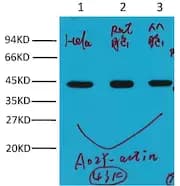
β-actin is one of six different actin isoforms that have been identified. The actin molecules found in cells of various species and tissues tend to be very similar in their immunological and physical properties. Therefore, antibodies against β-actin are useful as loading controls for Western Blotting. However it should be noted that levels of β-actin may not be stable in certain cells. For example, expression of β-actin in adipose tissue is very low and therefore β-actin should not be used as loading control for these tissues.ASIC1 Rabbit pAb
Amiloride-sensitive cation channel 2, neuronal is a protein that in humans is encoded by the ACCN2 gene.NDUFC2 rabbit pAb
function:Accessory subunit of the mitochondrial membrane respiratory chain NADH dehydrogenase (Complex I), that is believed to be not involved in catalysis. Complex I functions in the transfer of electrons from NADH to the respiratory chain. The immediate electron acceptor for the enzyme is believed to be ubiquinone.,similarity:Belongs to the complex I NDUFC2 subunit family.,subunit:Complex I is composed of 45 different subunits.,Histone H1(Phospho Thr17) Rabbit pAb
Histone H1 is one of the five main histone protein families which are components of chromatin in eukaryotic cells. May play a key role in the control of gene expression during oogenesis and early embryogenesis, presumably through the perturbation of chromatin structure.Caveolin-1 (phospho Tyr14) rabbit pAb
The scaffolding protein encoded by this gene is the main component of the caveolae plasma membranes found in most cell types. The protein links integrin subunits to the tyrosine kinase FYN, an initiating step in coupling integrins to the Ras-ERK pathway and promoting cell cycle progression. The gene is a tumor suppressor gene candidate and a negative regulator of the Ras-p42/44 mitogen-activated kinase cascade. Caveolin 1 and caveolin 2 are located next to each other on chromosome 7 and express colocalizing proteins that form a stable hetero-oligomeric complex. Mutations in this gene have been associated with Berardinelli-Seip congenital lipodystrophy. Alternatively spliced transcripts encode alpha and beta isoforms of caveolin 1.[provided by RefSeq, Mar 2010],PGFRL rabbit pAb
This gene encodes a protein with significant sequence similarity to the ligand binding domain of platelet-derived growth factor receptor beta. Mutations in this gene, or deletion of a chromosomal segment containing this gene, are associated with sporadic hepatocellular carcinomas, colorectal cancers, and non-small cell lung cancers. This suggests this gene product may function as a tumor suppressor. [provided by RefSeq, Jul 2008],β-defensin 1 Polyclona Antibody
Defensins form a family of microbicidal and cytotoxic peptides made by neutrophils. Members of the defensin family are highly similar in protein sequence. This gene encodes defensin, beta 1, an antimicrobial peptide implicated in the resistance of epithelial surfaces to microbial colonization. This gene maps in close proximity to defensin family member, defensin, alpha 1 and has been implicated in the pathogenesis of cystic fibrosis. [provided by RefSeq, Jul 2008],DISC1 rabbit pAb
This gene encodes a protein with multiple coiled coil motifs which is located in the nucleus, cytoplasm and mitochondria. The protein is involved in neurite outgrowth and cortical development through its interaction with other proteins. This gene is disrupted in a t(1;11)(q42.1;q14.3) translocation which segregates with schizophrenia and related psychiatric disorders in a large Scottish family. Alternate transcriptional splice variants, encoding different isoforms, have been characterized. [provided by RefSeq, Jul 2008],MIS rabbit pAb
This gene encodes a secreted ligand of the TGF-beta (transforming growth factor-beta) superfamily of proteins. Ligands of this family bind various TGF-beta receptors leading to recruitment and activation of SMAD family transcription factors that regulate gene expression. The encoded preproprotein is proteolytically processed to generate N- and C-terminal cleavage products that homodimerize and associate to form a biologically active noncovalent complex. This complex binds to the anti-Mullerian hormone receptor type 2 and causes the regression of Mullerian ducts in the male embryo that would otherwise differentiate into the uterus and fallopian tubes. This protein also plays a role in Leydig cell differentiation and function and follicular development in adult females. Mutations in this gene result in persistent Mullerian duct syndrome. [provided by RefSeq, Jul 2016],Actin-pan rabbit pAb
The protein encoded by this gene belongs to the actin family of proteins, which are highly conserved proteins that play a role in cell motility, structure and integrity. Alpha, beta and gamma actin isoforms have been identified, with alpha actins being a major constituent of the contractile apparatus, while beta and gamma actins are involved in the regulation of cell motility. This actin is an alpha actin that is found in skeletal muscle. Defects in this gene cause aortic aneurysm familial thoracic type 6. Multiple alternatively spliced variants, encoding the same protein, have been identified. [provided by RefSeq, Nov 2008],Collagen I (4B5) Mouse mAb
Type 1 collagen is a trimeric complex comprised of two molecules of COL1A1 (alpha-1 type 1 collagen) and one molecule of COL1A2 (alpha-2 type 1 collagen). The expression levels of COL1A1 are regulated by multiple mechanisms, including mRNA stability, translation, and posttranslational modification.GPVI rabbit pAb
This gene encodes a platelet membrane glycoprotein of the immunoglobulin superfamily. The encoded protein is a receptor for collagen and plays a critical role in collagen-induced platelet aggregation and thrombus formation. The encoded protein forms a complex with the Fc receptor gamma-chain that initiates the platelet activation signaling cascade upon collagen binding. Mutations in this gene are a cause of platelet-type bleeding disorder-11 (BDPLT11). Alternatively spliced transcript variants encoding multiple isoforms have been observed for this gene. [provided by RefSeq, Dec 2011],MTHFR rabbit pAb
The protein encoded by this gene catalyzes the conversion of 5,10-methylenetetrahydrofolate to 5-methyltetrahydrofolate, a co-substrate for homocysteine remethylation to methionine. Genetic variation in this gene influences susceptibility to occlusive vascular disease, neural tube defects, colon cancer and acute leukemia, and mutations in this gene are associated with methylenetetrahydrofolate reductase deficiency.[provided by RefSeq, Oct 2009],CDY2 rabbit pAb
This intronless gene encodes a protein containing a chromodomain and a histone acetyltransferase catalytic domain. Chromodomain proteins are components of heterochromatin-like complexes and can act as gene repressors. This protein is localized to the nucleus of late spermatids where histone hyperacetylation takes place. Histone hyperacetylation is thought to facilitate the transition in which protamines replace histones as the major DNA-packaging protein. Two nearly identical copies of this gene are found in a palindromic region on chromosome Y; this record represents the telomeric copy. Chromosome Y also contains a pair of closely related genes in another more telomeric palindrome as well as several related pseudogenes. [provided by RefSeq, Jul 2008],Topo I rabbit pAb
This gene encodes a DNA topoisomerase, an enzyme that controls and alters the topologic states of DNA during transcription. This enzyme catalyzes the transient breaking and rejoining of a single strand of DNA which allows the strands to pass through one another, thus altering the topology of DNA. This gene is localized to chromosome 20 and has pseudogenes which reside on chromosomes 1 and 22. [provided by RefSeq, Jul 2008],Endo G-L1 rabbit pAb
This gene encodes an endo/exonuclease with 5'-3' exonuclease activity. The encoded enzyme catalyzes the hydrolysis of ester linkages at the 5' end of a nucleic acid chain. This enzyme is localized to the mitochondria and may play a role in programmed cell death. Alternatively spliced transcript variants have been described. A pseudogene exists on chromosome 18. [provided by RefSeq, Feb 2009],PAR4 rabbit pAb
The tumor suppressor WT1 represses and activates transcription. The protein encoded by this gene is a WT1-interacting protein that itself functions as a transcriptional repressor. It contains a putative leucine zipper domain which interacts with the zinc finger DNA binding domain of WT1. This protein is specifically upregulated during apoptosis of prostate cells. [provided by RefSeq, Jul 2008],NPT2b rabbit pAb
The protein encoded by this gene is a pH-sensitive sodium-dependent phosphate transporter. Phosphate uptake is increased at lower pH. Defects in this gene are a cause of pulmonary alveolar microlithiasis. Three transcript variants encoding two different isoforms have been found for this gene. [provided by RefSeq, May 2010],JIP-3 rabbit pAb
The protein encoded by this gene shares similarity with the product of Drosophila syd gene, required for the functional interaction of kinesin I with axonal cargo. Studies of the similar gene in mouse suggested that this protein may interact with, and regulate the activity of numerous protein kinases of the JNK signaling pathway, and thus function as a scaffold protein in neuronal cells. The C. elegans counterpart of this gene is found to regulate synaptic vesicle transport possibly by integrating JNK signaling and kinesin-1 transport. Several alternatively spliced transcript variants of this gene have been described, but the full-length nature of some of these variants has not been determined. [provided by RefSeq, Jul 2008],Troponin I-C (phospho Ser43) rabbit pAb
Troponin I (TnI), along with troponin T (TnT) and troponin C (TnC), is one of 3 subunits that form the troponin complex of the thin filaments of striated muscle. TnI is the inhibitory subunit; blocking actin-myosin interactions and thereby mediating striated muscle relaxation. The TnI subfamily contains three genes: TnI-skeletal-fast-twitch, TnI-skeletal-slow-twitch, and TnI-cardiac. This gene encodes the TnI-cardiac protein and is exclusively expressed in cardiac muscle tissues. Mutations in this gene cause familial hypertrophic cardiomyopathy type 7 (CMH7) and familial restrictive cardiomyopathy (RCM). [provided by RefSeq, Jul 2008],IFT27 rabbit pAb
This gene encodes a GTP-binding protein that is a core component of the intraflagellar transport complex B. Characterization of the similar Chlamydomonas protein indicates a function in cell cycle control. Alternative splicing of this gene results in multiple transcript variants. [provided by RefSeq, Jan 2012],eIF5A2 rabbit pAb
function:The precise role of eIF-5A in protein biosynthesis is not known but it functions by promoting the formation of the first peptide bond.,PTM:eIF-5A seems to be the only eukaryotic protein to have an hypusine residue which is a post-translational modification of a lysine by the addition of a butylamino group (from spermidine).,similarity:Belongs to the eIF-5A family.,tissue specificity:Expressed in ovarian and colorectal cancer cell lines (at protein level). Highly expressed in testis. Overexpressed in some cancer cells.,WWC3 rabbit pAb
This gene encodes a member of the WWC family of proteins, which also includes the WWC1 (KIBRA) gene product and the WWC2 gene product. The protein encoded by this gene includes a C2 domain, which is known to mediate homodimerization in the related WWC1 gene product. [provided by RefSeq, Sep 2011],PKC δ (phospho Ser645) rabbit pAb
Protein kinase C (PKC) is a family of serine- and threonine-specific protein kinases that can be activated by calcium and the second messenger diacylglycerol. PKC family members phosphorylate a wide variety of protein targets and are known to be involved in diverse cellular signaling pathways. PKC family members also serve as major receptors for phorbol esters, a class of tumor promoters. Each member of the PKC family has a specific expression profile and is believed to play distinct roles in cells. The protein encoded by this gene is one of the PKC family members. Studies both in human and mice demonstrate that this kinase is involved in B cell signaling and in the regulation of growth, apoptosis, and differentiation of a variety of cell types. Alternatively spliced transcript variants encoding the same protein have been observed. [provided by RefSeq, Jul 2008],BRSK1 rabbit pAb
catalytic activity:ATP + a protein = ADP + a phosphoprotein.,cofactor:Magnesium.,enzyme regulation:Activated by phosphorylation on Thr-205 by STK11 in complex with STE20-related adapter-alpha (STRAD alpha) pseudo kinase and CAB39.,function:Required for the polarization of forebrain neurons which endows axons and dendrites with distinct properties, possibly by locally regulating phosphorylation of microtubule-associated proteins (By similarity). May be involved in the regulation of G2/M arrest in response to UV- or methyl methane sulfonate (MMS)-induced, but not IR-induced, DNA damage. Phosphorylates WEE1 and CDC25B in vitro and CDC25C in vitro and in vivo.,similarity:Belongs to the protein kinase superfamily. CAMK Ser/Thr protein kinase family. AMPK subfamily.,similarity:Contains 1 protein kinase domain.,similarity:Contains 1 UBA domain.,subcellular location:Nuclear in the absence of DNA damage. Translocated to the nucleus in response to UV- or MMS-induced DNA damage.,tissue specificity:Widely expressed, with highest levels in brain and testis. Protein levels remain constant throughout the cell cycle.,GP183 rabbit pAb
This gene was identified by the up-regulation of its expression upon Epstein-Barr virus infection of primary B lymphocytes. This gene is predicted to encode a G protein-coupled receptor that is most closely related to the thrombin receptor. Expression of this gene was detected in B-lymphocyte cell lines and lymphoid tissues but not in T-lymphocyte cell lines or peripheral blood T lymphocytes. The function of this gene is unknown. [provided by RefSeq, Jul 2008],CALL3 rabbit pAb
function:May be similar to that of authentic calmodulin and may actually compete with calmodulin by binding, with different affinities, to cellular substrates.,induction:By human beta type transforming growth factor.,miscellaneous:Binds four calcium ions.,similarity:Belongs to the calmodulin family.,similarity:Contains 4 EF-hand domains.,tissue specificity:Expressed in normal mammary, prostate, cervical, and epidermal tissues. It is greatly reduced or undetectable in transformed cells.,NFκB-p65 (Acetyl Lys218) rabbit pAb
NF-kappa-B is a ubiquitous transcription factor involved in several biological processes. It is held in the cytoplasm in an inactive state by specific inhibitors. Upon degradation of the inhibitor, NF-kappa-B moves to the nucleus and activates transcription of specific genes. NF-kappa-B is composed of NFKB1 or NFKB2 bound to either REL, RELA, or RELB. The most abundant form of NF-kappa-B is NFKB1 complexed with the product of this gene, RELA. Four transcript variants encoding different isoforms have been found for this gene. [provided by RefSeq, Sep 2011],GLP2R rabbit pAb
glucagon like peptide 2 receptor(GLP2R) Homo sapiens This gene encodes a G protein-coupled receptor that is closely related to the glucagon receptor and binds to glucagon-like peptide-2 (GLP2). Signalling through GLP2 stimulates intestinal growth and increases villus height in the small intestine, concomitant with increased crypt cell proliferation and decreased enterocyte apoptosis. [provided by RefSeq, Dec 2014],TOP1M rabbit pAb
This gene encodes a mitochondrial DNA topoisomerase that plays a role in the modification of DNA topology. The encoded protein is a type IB topoisomerase and catalyzes the transient breaking and rejoining of DNA to relieve tension and DNA supercoiling generated in the mitochondrial genome during replication and transcription. Alternatively spliced transcript variants encoding multiple isoforms have been observed for this gene. [provided by RefSeq, May 2012],Cerebellin 3 rabbit pAb
Members of the precerebellin family, such as CBLN3, contain a cerebellin motif (see CBLN1; MIM 600432) and a C-terminal C1q signature domain (see MIM 120550) that mediates trimeric assembly of atypical collagen complexes. However, precerebellins do not contain a collagen motif, suggesting that they are not conventional components of the extracellular matrix (Pang et al., 2000 [PubMed 10964938]).[supplied by OMIM, Aug 2009],Trx-Tag Mouse mAb
Thioredoxin is a class of small redox proteins known to be present in all organisms. It plays a role in many important biological processes, including redox signaling. Thioredoxins are proteins that act as antioxidants by facilitating the reduction of other proteins by cysteine thiol-disulfide exchange. Thioredoxins are found in nearly all known organisms and are essential for life in mammals.Villin rabbit pAb
This gene encodes a member of a family of calcium-regulated actin-binding proteins. This protein represents a dominant part of the brush border cytoskeleton which functions in the capping, severing, and bundling of actin filaments. Two mRNAs of 2.7 kb and 3.5 kb have been observed; they result from utilization of alternate poly-adenylation signals present in the terminal exon. [provided by RefSeq, Jul 2008],AP2S1 rabbit pAb
One of two major clathrin-associated adaptor complexes, AP-2, is a heterotetramer which is associated with the plasma membrane. This complex is composed of two large chains, a medium chain, and a small chain. This gene encodes the small chain of this complex. Alternative splicing results in multiple transcript variants. [provided by RefSeq, Jul 2014],CYP1A2 rabbit pAb
This gene encodes a member of the cytochrome P450 superfamily of enzymes. The cytochrome P450 proteins are monooxygenases which catalyze many reactions involved in drug metabolism and synthesis of cholesterol, steroids and other lipids. The protein encoded by this gene localizes to the endoplasmic reticulum and its expression is induced by some polycyclic aromatic hydrocarbons (PAHs), some of which are found in cigarette smoke. The enzyme's endogenous substrate is unknown; however, it is able to metabolize some PAHs to carcinogenic intermediates. Other xenobiotic substrates for this enzyme include caffeine, aflatoxin B1, and acetaminophen. The transcript from this gene contains four Alu sequences flanked by direct repeats in the 3' untranslated region. [provided by RefSeq, Jul 2008],