Anticorps primaires
Les anticorps primaires sont des immunoglobulines qui se lient spécifiquement à un antigène d'intérêt, permettant la détection et la quantification de protéines, peptides ou autres biomolécules. Ces anticorps sont des outils essentiels dans de nombreuses applications, notamment le Western blot, l'immunohistochimie et l'ELISA. Chez CymitQuimica, nous proposons une vaste sélection d'anticorps primaires de haute qualité, offrant spécificité et sensibilité pour divers besoins de recherche, notamment en cancérologie, immunologie et biologie cellulaire.
Sous-catégories appartenant à la catégorie "Anticorps primaires"
- Anticorps pour la recherche sur le cancer(3.721 produits)
- Anticorps cardio-vasculaires(2 produits)
- Biologie du développement(764 produits)
- Anticorps relatifs à l’épigénétique(162 produits)
- Anticorps d'immunologie(2.585 produits)
- Anticorps du métabolisme(286 produits)
- Anticorps de microbiologie(741 produits)
- Transduction du signal(2.765 produits)
- Tags & Marqueurs cellulaires(34 produits)
Affichez 1 plus de sous-catégories
75594 produits trouvés pour "Anticorps primaires"
Trier par
Degré de pureté (%)
0
100
|
0
|
50
|
90
|
95
|
100
T184B rabbit pAb
function:May activate the MAP kinase signaling pathway.,similarity:Belongs to the UPF0206 family.,MYL7 rabbit pAb
miscellaneous:This chain binds calcium.,similarity:Contains 3 EF-hand domains.,subunit:Myosin is an hexamer of 2 heavy chains and 4 light chains.,tissue specificity:Predominantly expressed in adult atrial muscle.,NLRC4 rabbit pAb
This gene encodes a member of the caspase recruitment domain-containing NLR family. Family members play essential roles in innate immune response to a wide range of pathogenic organisms, tissue damage and other cellular stresses. Mutations in this gene result in autoinflammation with infantile enterocolitis. Alternative splicing results in multiple transcript variants. [provided by RefSeq, Oct 2014],ITGA2B (heavy chain, Cleaved-Leu32) rabbit pAb
This gene encodes a member of the integrin alpha chain family of proteins. The encoded preproprotein is proteolytically processed to generate light and heavy chains that associate through disulfide linkages to form a subunit of the alpha-IIb/beta-3 integrin cell adhesion receptor. This receptor plays a crucial role in the blood coagulation system, by mediating platelet aggregation. Mutations in this gene are associated with platelet-type bleeding disorders, which are characterized by a failure of platelet aggregation, including Glanzmann thrombasthenia. [provided by RefSeq, Jan 2016],Histone H1 (Tri Methyl Lys25) rabbit pAb
Histones are basic nuclear proteins responsible for nucleosome structure of the chromosomal fiber in eukaryotes. Two molecules of each of the four core histones (H2A, H2B, H3, and H4) form an octamer, around which approximately 146 bp of DNA is wrapped in repeating units, called nucleosomes. The linker histone, H1, interacts with linker DNA between nucleosomes and functions in the compaction of chromatin into higher order structures. This gene is intronless and encodes a replication-dependent histone that is a member of the histone H1 family. Transcripts from this gene lack polyA tails but instead contain a palindromic termination element. This gene is found in the large histone gene cluster on chromosome 6. [provided by RefSeq, Aug 2015],TSSC4 rabbit pAb
This gene is one of several tumor-suppressing subtransferable fragments located in the imprinted gene domain of 11p15.5, an important tumor-suppressor gene region. Alterations in this region have been associated with the Beckwith-Wiedemann syndrome, Wilms tumor, rhabdomyosarcoma, adrenocortical carcinoma, and lung, ovarian, and breast cancer. This gene is located among several imprinted genes; however, this gene, as well as the pan-hematopoietic expression gene (PHEMX), escapes imprinting. This gene may play a role in malignancies and disease that involve this region. Several transcript variants encoding two different isoforms have been found for this gene. [provided by RefSeq, Jul 2014],NPFF2 rabbit pAb
This gene encodes a member of a subfamily of G-protein-coupled neuropeptide receptors. This protein is activated by the neuropeptides A-18-amide (NPAF) and F-8-amide (NPFF) and may function in pain modulation and regulation of the opioid system. Alternative splicing results in multiple transcript variants. [provided by RefSeq, Jan 2009],2-Naphthacenecarboxamide,4-(dimethylamino)-1,4,4a,5,5a,6,11,12a-octahydro-3,5,10,12,12a-pentahydroxy-6-methyl-1,11-dioxo-, monohydrochloride,(4S,4aR,5S,5aR,6R,12aS)-
CAS :Formule :C22H25ClN2O8Degré de pureté :95%Couleur et forme :SolidMasse moléculaire :480.8955Aladin rabbit pAb
The protein encoded by this gene is a member of the WD-repeat family of regulatory proteins and may be involved in normal development of the peripheral and central nervous system. The encoded protein is part of the nuclear pore complex and is anchored there by NDC1. Defects in this gene are a cause of achalasia-addisonianism-alacrima syndrome (AAAS), also called triple-A syndrome or Allgrove syndrome. Two transcript variants encoding different isoforms have been found for this gene. [provided by RefSeq, Mar 2010],hnRNP Q rabbit pAb
This gene encodes a member of the cellular heterogeneous nuclear ribonucleoprotein (hnRNP) family. hnRNPs are RNA binding proteins that complex with heterogeneous nuclear RNA (hnRNA) and regulate alternative splicing, polyadenylation, and other aspects of mRNA metabolism and transport. The encoded protein plays a role in multiple aspects of mRNA maturation and is associated with several multiprotein complexes including the apoB RNA editing-complex and survival of motor neurons (SMN) complex. Alternatively spliced transcript variants encoding multiple isoforms have been observed for this gene, and a pseudogene of this gene is located on the short arm of chromosome 20. [provided by RefSeq, Dec 2011],LINES rabbit pAb
The Drosophila segment polarity gene lin encodes a protein, lines, which plays important roles in development of the epidermis and hindgut. This gene encodes a protein containing a lines-like domain. This gene is located on chromosome 15 and clustered with the gene encoding ankyrin repeat and SOCS box-containing protein 7. [provided by RefSeq, Sep 2010],Macroglobulin α-2 rabbit pAb
Alpha-2-macroglobulin is a protease inhibitor and cytokine transporter. It inhibits many proteases, including trypsin, thrombin and collagenase. A2M is implicated in Alzheimer disease (AD) due to its ability to mediate the clearance and degradation of A-beta, the major component of beta-amyloid deposits. [provided by RefSeq, Jul 2008],HtrA2 (phospho Ser142) rabbit pAb
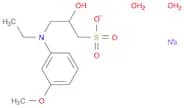
This gene encodes a serine protease. The protein has been localized in the endoplasmic reticulum and interacts with an alternatively spliced form of mitogen-activated protein kinase 14. The protein has also been localized to the mitochondria with release to the cytosol following apoptotic stimulus. The protein is thought to induce apoptosis by binding the apoptosis inhibitory protein baculoviral IAP repeat-containing 4. Nuclear localization of this protein has also been observed. Alternate splicing of this gene results in multiple transcript variants encoding different isoforms. [provided by RefSeq, Mar 2016],3-(N-Ethyl-3-methoxyanilino)-2-hydroxy-1-propanesulfonic acid sodium salt
CAS :Formule :C12H18NNaO5SDegré de pureté :98%Couleur et forme :SolidMasse moléculaire :311.3298Cleaved-Caspase-5 p20 (D121) rabbit pAb
This gene encodes a member of the cysteine-aspartic acid protease (caspase) family. Sequential activation of caspases plays a central role in the execution-phase of cell apoptosis. Caspases exist as inactive proenzymes which undergo proteolytic processing at conserved aspartic residues to produce two subunits, large and small, that dimerize to form the active enzyme. Overexpression of the active form of this enzyme induces apoptosis in fibroblasts. Max, a central component of the Myc/Max/Mad transcription regulation network important for cell growth, differentiation, and apoptosis, is cleaved by this protein; this process requires Fas-mediated dephosphorylation of Max. The expression of this gene is regulated by interferon-gamma and lipopolysaccharide. Alternatively spliced transcript variants have been identified for this gene. [provided by RefSeq, Aug 2010],FANCM rabbit pAb
The Fanconi anemia complementation group (FANC) currently includes FANCA, FANCB, FANCC, FANCD1 (also called BRCA2), FANCD2, FANCE, FANCF, FANCG, FANCI, FANCJ (also called BRIP1), FANCL, FANCM and FANCN (also called PALB2). The previously defined group FANCH is the same as FANCA. Fanconi anemia is a genetically heterogeneous recessive disorder characterized by cytogenetic instability, hypersensitivity to DNA crosslinking agents, increased chromosomal breakage, and defective DNA repair. The members of the Fanconi anemia complementation group do not share sequence similarity; they are related by their assembly into a common nuclear protein complex. This gene encodes the protein for complementation group M. Alternative splicing results in multiple transcript variants. [provided by RefSeq, Apr 2015],LUCA15 rabbit pAb
This gene is a candidate tumor suppressor gene which encodes a nuclear RNA binding protein that is a component of the spliceosome A complex. The encoded protein plays a role in the induction of cell cycle arrest and apoptosis through pre-mRNA splicing of multiple target genes including the tumor suppressor protein p53. This gene is located within the tumor suppressor region 3p21.3, and may play a role in the inhibition of tumor transformation and progression of several malignancies including lung cancer. [provided by RefSeq, Oct 2011],ZEB1 rabbit pAb
This gene encodes a zinc finger transcription factor. The encoded protein likely plays a role in transcriptional repression of interleukin 2. Mutations in this gene have been associated with posterior polymorphous corneal dystrophy-3 and late-onset Fuchs endothelial corneal dystrophy. Alternatively spliced transcript variants encoding different isoforms have been described.[provided by RefSeq, Mar 2010],PRAF2 rabbit pAb
function:May be involved in ER/Golgi transport and vesicular traffic. Plays a proapoptic role in cerulenin-induced neuroblastoma apoptosis.,similarity:Belongs to the PRA1 family.,subunit:Interacts with CCR5 and GDE1.,tissue specificity:Strong expression in the brain, small intestine, lung, spleen, and pancreas as well as in tumor tissues of the breast, colon, lung and ovary, with a weaker expression in normal tissues of the same patient. High expression in neuroblastic tumors. Strongly expressed in Purkinje cells and more moderately in cells of the molecular and the granular layers in the cerebellum. Detected in neuronal cells, but not in non-neuronal cells in the cerebral cortex, hippocampus, and lateral ventricles.,GABBR2 (Phospho Ser893) rabbit pAb
The multi-pass membrane protein encoded by this gene belongs to the G-protein coupled receptor 3 family and GABA-B receptor subfamily. The GABA-B receptors inhibit neuronal activity through G protein-coupled second-messenger systems, which regulate the release of neurotransmitters, and the activity of ion channels and adenylyl cyclase. This receptor subunit forms an active heterodimeric complex with GABA-B receptor subunit 1, neither of which is effective on its own. Allelic variants of this gene have been associated with nicotine dependence.[provided by RefSeq, Jan 2010],