Anticorps primaires
Les anticorps primaires sont des immunoglobulines qui se lient spécifiquement à un antigène d'intérêt, permettant la détection et la quantification de protéines, peptides ou autres biomolécules. Ces anticorps sont des outils essentiels dans de nombreuses applications, notamment le Western blot, l'immunohistochimie et l'ELISA. Chez CymitQuimica, nous proposons une vaste sélection d'anticorps primaires de haute qualité, offrant spécificité et sensibilité pour divers besoins de recherche, notamment en cancérologie, immunologie et biologie cellulaire.
Sous-catégories appartenant à la catégorie "Anticorps primaires"
- Anticorps pour la recherche sur le cancer(3.721 produits)
- Anticorps cardio-vasculaires(2 produits)
- Biologie du développement(764 produits)
- Anticorps relatifs à l’épigénétique(162 produits)
- Anticorps d'immunologie(2.585 produits)
- Anticorps du métabolisme(286 produits)
- Anticorps de microbiologie(741 produits)
- Transduction du signal(2.765 produits)
- Tags & Marqueurs cellulaires(34 produits)
Affichez 1 plus de sous-catégories
75562 produits trouvés pour "Anticorps primaires"
Trier par
Degré de pureté (%)
0
100
|
0
|
50
|
90
|
95
|
100
p47-phox (phospho Ser304) rabbit pAb
The protein encoded by this gene is a 47 kDa cytosolic subunit of neutrophil NADPH oxidase. This oxidase is a multicomponent enzyme that is activated to produce superoxide anion. Mutations in this gene have been associated with chronic granulomatous disease. [provided by RefSeq, Jul 2008],Dlx-3 rabbit pAb
Many vertebrate homeo box-containing genes have been identified on the basis of their sequence similarity with Drosophila developmental genes. Members of the Dlx gene family contain a homeobox that is related to that of Distal-less (Dll), a gene expressed in the head and limbs of the developing fruit fly. The Distal-less (Dlx) family of genes comprises at least 6 different members, DLX1-DLX6. Trichodentoosseous syndrome (TDO), an autosomal dominant condition, has been correlated with DLX3 gene mutation. This gene is located in a tail-to-tail configuration with another member of the gene family on the long arm of chromosome 17. Mutations in this gene have been associated with the autosomal dominant conditions trichodentoosseous syndrome and amelogenesis imperfecta with taurodontism. [provided by RefSeq, Jul 2008],Ptx3 rabbit pAb
This gene encodes a member of the pentraxin protein family. The expression of this protein is induced by inflammatory cytokines in response to inflammatory stimuli in several mesenchymal and epithelial cell types, particularly endothelial cells and mononuclear phagocytes. The protein promotes fibrocyte differentiation and is involved in regulating inflammation and complement activation. It also plays a role in angiogenesis and tissue remodeling. The protein serves as a biomarker for several inflammatory conditions. [provided by RefSeq, Jun 2016],IL23R rabbit pAb
The protein encoded by this gene is a subunit of the receptor for IL23A/IL23. This protein pairs with the receptor molecule IL12RB1/IL12Rbeta1, and both are required for IL23A signaling. This protein associates constitutively with Janus kinase 2 (JAK2), and also binds to transcription activator STAT3 in a ligand-dependent manner. [provided by RefSeq, Jul 2008],SYGP1 rabbit pAb
The protein encoded by this gene is a major component of the postsynaptic density (PSD), a group of proteins found associated with NMDA receptors at synapses. The encoded protein is phosphorylated by calmodulin-dependent protein kinase II and dephosphorylated by NMDA receptor activation. Defects in this gene are a cause of mental retardation autosomal dominant type 5 (MRD5). [provided by RefSeq, Dec 2009],AFP rabbit pAb
This gene encodes alpha-fetoprotein, a major plasma protein produced by the yolk sac and the liver during fetal life. Alpha-fetoprotein expression in adults is often associated with hepatoma or teratoma. However, hereditary persistance of alpha-fetoprotein may also be found in individuals with no obvious pathology. The protein is thought to be the fetal counterpart of serum albumin, and the alpha-fetoprotein and albumin genes are present in tandem in the same transcriptional orientation on chromosome 4. Alpha-fetoprotein is found in monomeric as well as dimeric and trimeric forms, and binds copper, nickel, fatty acids and bilirubin. The level of alpha-fetoprotein in amniotic fluid is used to measure renal loss of protein to screen for spina bifida and anencephaly. [provided by RefSeq, Jul 2008],Cystatin SA rabbit pAb
The cystatin superfamily encompasses proteins that contain multiple cystatin-like sequences. Some of the members are active cysteine protease inhibitors, while others have lost or perhaps never acquired this inhibitory activity. There are three inhibitory families in the superfamily, including the type 1 cystatins (stefins), type 2 cystatins and the kininogens. The type 2 cystatin proteins are a class of cysteine proteinase inhibitors found in a variety of human fluids and secretions, where they appear to provide protective functions. The cystatin locus on chromosome 20 contains the majority of the type 2 cystatin genes and pseudogenes. This gene is located in the cystatin locus and encodes a secreted thiol protease inhibitor found at high levels in saliva, tears and seminal plasma. [provided by RefSeq, Jul 2008],AQP6 rabbit pAb
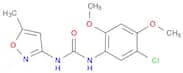
The protein encoded by this gene is an aquaporin protein, which functions as a water channel in cells. Aquaporins are a family of small integral membrane proteins related to the major intrinsic protein (MIP or AQP0). This protein is specific for the kidney. This gene and related family members AQP0, AQP2, and AQP5 reside in a cluster on chromosome 12q13. [provided by RefSeq, Jul 2008],N-(5-CHLORO-2,4-DIMETHOXYPHENYL)-N'-(5-METHYL-3-ISOXAZOLYL)-UREA
CAS :Formule :C13H14ClN3O4Degré de pureté :98%Couleur et forme :SolidMasse moléculaire :311.7210HDAC1 (Acetyl Lys432) rabbit pAb
catalytic activity:Hydrolysis of an N(6)-acetyl-lysine residue of a histone to yield a deacetylated histone.,function:Responsible for the deacetylation of lysine residues on the N-terminal part of the core histones (H2A, H2B, H3 and H4). Histone deacetylation gives a tag for epigenetic repression and plays an important role in transcriptional regulation, cell cycle progression and developmental events. Histone deacetylases act via the formation of large multiprotein complexes.,PTM:Phosphorylation on Ser-421 and Ser-423 promotes enzymatic activity and interactions with NuRD and SIN3 complexes.,PTM:Sumoylated on Lys-444 and Lys-476; which promotes enzymatic activity. Desumoylated by SENP1.,similarity:Belongs to the histone deacetylase family. Type 1 subfamily.,subunit:Part of the core histone deacetylase (HDAC) complex composed of HDAC1, HDAC2, RBBP4 and RBBP7. The core complex associates with MTA2, MBD2, MBD3, MTA1L1, CHD3 and CHD4 to form the nucleosome remodeling and histone deacetylation (NuRD) complex, or with SIN3, SAP18 and SAP30 to form the SIN3 HDAC complex. Component of a BHC histone deacetylase complex that contains HDAC1, HDAC2, HMG20B/BRAF35, AOF2/LSD1, RCOR1/CoREST and PHF21A/BHC80. The BHC complex may also contain ZMYM2, ZNF217, ZMYM3, GSE1 and GTF2I. Associates with the 9-1-1 complex; interacts with HUS1. Found in a complex with DNMT3A and HDAC7. Interacts with BCOR, BRMS1L, DAXX, DNMT1, EP300, HCFC1, NFE4, PCAF, PHB2, MIER1, KDM4A, MINT, NRIP1, PRDM6, RERE, SETDB1, SUV39H1, TGIF, TGIF2, UHRF1, UHRF2 and ZNF541. Interacts with the non-histone region of H2AFY. Interacts with HDAC9. Component of a mSin3A corepressor complex that contains SIN3A, SAP130, SUDS3/SAP45, ARID4B/SAP180, HDAC1 and HDAC2. Interacts with BANP, CBFA2T3 and KDM5B. Interacts with SAP30L. Interacts with E4F1. Interacts with KFL1 (By similarity). Interacts with SV40 large T antigen.,tissue specificity:Ubiquitous, with higher levels in heart, pancreas and testis, and lower levels in kidney and brain.,SR-5A rabbit pAb
The neurotransmitter serotonin (5-hydroxytryptamine, 5-HT) has been implicated in a wide range of psychiatric conditions and also has vasoconstrictive and vasodilatory effects. The gene described in this record is a member of 5-hydroxytryptamine (serotonin) receptor family and encodes a multi-pass membrane protein that functions as a receptor for 5-hydroxytryptamine and couples to G-proteins. This protein has been shown to function in part through the regulation of intracellular Ca2+ mobilization. [provided by RefSeq, Jul 2008],CTSR1 rabbit pAb
Calcium ions play a primary role in the regulation of sperm motility. This gene belongs to a family of putative cation channels that are specific to spermatozoa and localize to the flagellum. The protein family features a single repeat with six membrane-spanning segments and a predicted calcium-selective pore region. [provided by RefSeq, Jul 2008],MYH1 rabbit pAb
Myosin is a major contractile protein which converts chemical energy into mechanical energy through the hydrolysis of ATP. Myosin is a hexameric protein composed of a pair of myosin heavy chains (MYH) and two pairs of nonidentical light chains. Myosin heavy chains are encoded by a multigene family. In mammals at least 10 different myosin heavy chain (MYH) isoforms have been described from striated, smooth, and nonmuscle cells. These isoforms show expression that is spatially and temporally regulated during development. [provided by RefSeq, Jul 2008],Cdc25A (phospho Ser75) rabbit pAb
cell division cycle 25A(CDC25A) Homo sapiens CDC25A is a member of the CDC25 family of phosphatases. CDC25A is required for progression from G1 to the S phase of the cell cycle. It activates the cyclin-dependent kinase CDC2 by removing two phosphate groups. CDC25A is specifically degraded in response to DNA damage, which prevents cells with chromosomal abnormalities from progressing through cell division. CDC25A is an oncogene, although its exact role in oncogenesis has not been demonstrated. Two transcript variants encoding different isoforms have been found for this gene. [provided by RefSeq, Jul 2008],OXTR rabbit pAb
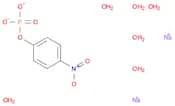
oxytocin receptor(OXTR) Homo sapiens The protein encoded by this gene belongs to the G-protein coupled receptor family and acts as a receptor for oxytocin. Its activity is mediated by G proteins which activate a phosphatidylinositol-calcium second messenger system. The oxytocin-oxytocin receptor system plays an important role in the uterus during parturition. [provided by RefSeq, Jul 2008],Phosphoric acid, mono(4-nitrophenyl) ester, sodium salt, hydrate(1:2:6)OTHER CA INDEX NAMES:Phosphoric acid, mono(4-nitrophenyl) ester, disodium salt, hexahydrate
CAS :Formule :C6H16NNa2O12PDegré de pureté :97%Couleur et forme :SolidMasse moléculaire :371.1440