Anticorps primaires
Les anticorps primaires sont des immunoglobulines qui se lient spécifiquement à un antigène d'intérêt, permettant la détection et la quantification de protéines, peptides ou autres biomolécules. Ces anticorps sont des outils essentiels dans de nombreuses applications, notamment le Western blot, l'immunohistochimie et l'ELISA. Chez CymitQuimica, nous proposons une vaste sélection d'anticorps primaires de haute qualité, offrant spécificité et sensibilité pour divers besoins de recherche, notamment en cancérologie, immunologie et biologie cellulaire.
Sous-catégories appartenant à la catégorie "Anticorps primaires"
- Anticorps pour la recherche sur le cancer(3.620 produits)
- Anticorps cardio-vasculaires(2 produits)
- Biologie du développement(751 produits)
- Anticorps relatifs à l’épigénétique(162 produits)
- Anticorps d'immunologie(2.551 produits)
- Anticorps du métabolisme(279 produits)
- Anticorps de microbiologie(739 produits)
- Transduction du signal(2.717 produits)
- Tags & Marqueurs cellulaires(33 produits)
Affichez 1 plus de sous-catégories
75447 produits trouvés pour "Anticorps primaires"
Trier par
Degré de pureté (%)
0
100
|
0
|
50
|
90
|
95
|
100
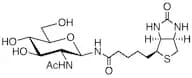
N-GlcNAc-Biotin
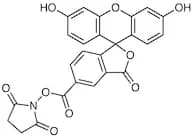
CAS :Formule :C18H30N4O7SDegré de pureté :>90.0%(qNMR)Couleur et forme :White to Almost white powder to crystalMasse moléculaire :446.525-Carboxyfluorescein N-Succinimidyl Ester
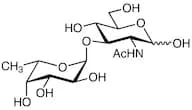
CAS :Formule :C25H15NO9Degré de pureté :>90.0%(HPLC)Couleur et forme :Light yellow to Yellow to Orange powder to crystalMasse moléculaire :473.39Fucα(1-3)GlcNAc
CAS :Formule :C14H25NO10Degré de pureté :min. 95.0 area%(HPLC)Couleur et forme :SolidMasse moléculaire :367.353-Methyl-2-benzothiazolinonehydrazone Hydrochloride [for Biochemical Research]
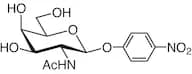
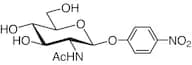
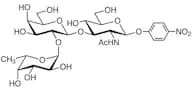
CAS :Formule :C8H9N3S·HClDegré de pureté :>98.0%(T)(HPLC)Couleur et forme :White to Light yellow to Light orange powder to crystalMasse moléculaire :215.704-Nitrophenyl 2-Acetamido-2-deoxy-β-D-glucopyranoside
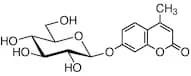
CAS :Formule :C14H18N2O8Degré de pureté :>98.0%(HPLC)(N)Couleur et forme :White to Almost white powder to crystalMasse moléculaire :342.304-Methylumbelliferyl β-D-Glucopyranoside
CAS :Formule :C16H18O8Degré de pureté :>98.0%(HPLC)Couleur et forme :White to Almost white powder to crystalMasse moléculaire :338.31Anti-Chondroitin Sulfate A Monoclonal Antibody (LY111)
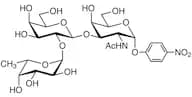
Couleur et forme :Colorless to Almost colorless clear liquidFucα(1-2)Galβ(1-3)GlcNAc-β-pNP (=H type 1 β-pNP Glycoside)
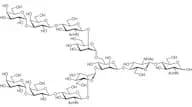
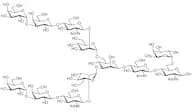
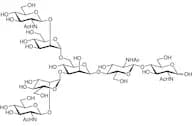
CAS :Formule :C26H38N2O17Couleur et forme :SolidMasse moléculaire :650.59Galα(1-3) N-Glycan
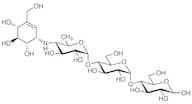
CAS :Formule :C74H124N4O56Degré de pureté :min. 95.0 area%(HPLC)Couleur et forme :SolidMasse moléculaire :1,965.78Acarbose
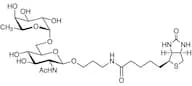
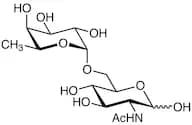
CAS :Formule :C25H43NO18Degré de pureté :>98.0%(HPLC)(N)Couleur et forme :White to Almost white powder to crystalMasse moléculaire :645.61Fucα(1-6)GlcNAc-β-propylamido-biotin
CAS :Formule :C27H46N4O12SCouleur et forme :SolidMasse moléculaire :650.74N,N-Dimethyl-1,4-phenylenediamine Dihydrochloride [for Biochemical Research]
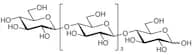
CAS :Formule :C8H12N2·2HClDegré de pureté :>99.0%(T)(HPLC)Couleur et forme :White to Light yellow to Dark green powder to crystalMasse moléculaire :209.11Cellopentaose
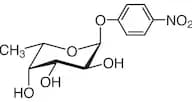
CAS :Formule :C30H52O26Degré de pureté :>95.0%(HPLC)Couleur et forme :White to Almost white powder to crystalMasse moléculaire :828.724-Nitrophenyl α-L-Fucopyranoside
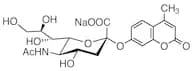
CAS :Formule :C12H15NO7Degré de pureté :>98.0%(HPLC)Couleur et forme :White to Light yellow powder to crystalineMasse moléculaire :285.254-Methylumbelliferyl-N-acetyl-α-D-neuraminic Acid Sodium Salt
CAS :Formule :C21H24NNaO11Degré de pureté :>93.0%(HPLC)Couleur et forme :White to Light yellow powder to crystalMasse moléculaire :489.411-Naphthol [for Biochemical Research]
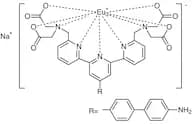
CAS :Formule :C10H8ODegré de pureté :>98.0%(GC)Couleur et forme :White to Gray to Red powder to crystalMasse moléculaire :144.17ATBTA-Eu3+
CAS :Formule :C37H30EuN6NaO8Degré de pureté :>90.0%(T)(HPLC)Couleur et forme :Light yellow to Brown to Dark green powder to crystalineMasse moléculaire :861.63Anti-Influenza A Virus Hemagglutinin H3 Monoclonal Antibody (Preservative : 0.05% NaN3, Stabilizer : 1% BSA)
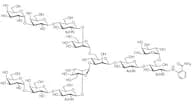
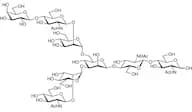
Couleur et forme :Colorless to Almost colorless clear liquidGalα(1-3) core 6-Fucosylated N-Glycan 2AB (500pmol/vial)
Formule :C87H142N6O60Degré de pureté :>98.0%(HPLC)Couleur et forme :White to Almost white powder to crystalMasse moléculaire :2,232.08Disialyloctasaccharide
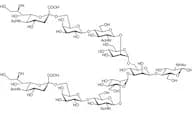
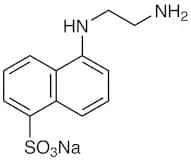
CAS :Formule :C76H125N5O57Degré de pureté :>98.0%(HPLC)Couleur et forme :White powder to crystalMasse moléculaire :2,020.81Sodium 5-(2-Aminoethylamino)-1-naphthalenesulfonate
CAS :Formule :C12H13N2NaO3SDegré de pureté :>98.0%(HPLC)Couleur et forme :Light orange to Yellow to Green powder to crystalMasse moléculaire :288.30α-Amylase diluted with Starch, from Bacillus amyloliquefaciens
CAS :Couleur et forme :White to Almost white powder to crystal4-Chloro-1-naphthol [for Biochemical Research]
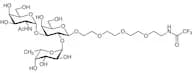
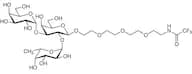
CAS :Formule :C10H7ClODegré de pureté :>98.0%(T)Couleur et forme :White to Gray to Brown powder to crystalMasse moléculaire :178.62A Antigen PEG-trifluoroacetamide
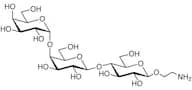
Formule :C30H51F3N2O19Couleur et forme :SolidMasse moléculaire :800.73Sialyl Lewis X-Lactose Ethylamine
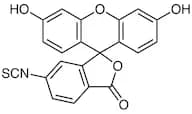
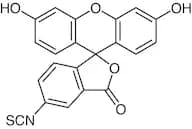
Formule :C45H77N3O33Degré de pureté :min. 95.0 area%(HPLC)Couleur et forme :SolidMasse moléculaire :1,188.10Fluorescein 6-Isothiocyanate (isomer II)
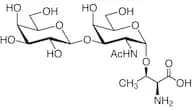
CAS :Formule :C21H11NO5SDegré de pureté :>97.0%(T)(HPLC)Couleur et forme :Yellow to Amber powder to crystalMasse moléculaire :389.38Galβ(1-3)GalNAc-α-Thr
CAS :Formule :C18H32N2O13Degré de pureté :>97.0%(HPLC)Couleur et forme :White to Almost white powder to crystalMasse moléculaire :484.46Glucose Oxidase from Aspergillus niger
CAS :Couleur et forme :Light yellow to Yellow to Orange powder to crystalLectin, Fucose specific (= AOL) from Aspergillus oryzae (5mg/mL, PBS pH6.5)
Couleur et forme :Colorless to Light yellow to Light orange clear liquidRecombinant Polyporus squamosus lectin (= rPSL1a) expressed in Escherichia coli
Couleur et forme :Colorless to Light yellow to Light orange clear liquidB Antigen PEG-trifluoroacetamide
Formule :C28H48F3NO19Couleur et forme :SolidMasse moléculaire :759.687-(Diethylamino)coumarin-3-carboxylic Acid
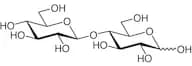
CAS :Formule :C14H15NO4Degré de pureté :>98.0%(GC)(T)Couleur et forme :Light yellow to Brown powder to crystalMasse moléculaire :261.28D-(+)-Cellobiose
CAS :Formule :C12H22O11Degré de pureté :>98.0%(HPLC)Couleur et forme :White to Almost white powder to crystalMasse moléculaire :342.301,2-Phenylenediamine [for Biochemical Research]
CAS :Formule :C6H8N2Degré de pureté :>98.0%(GC)(T)Couleur et forme :White to Almost white powder to crystalMasse moléculaire :108.146-Chloro-3-indolyl β-D-Galactopyranoside [for Biochemical Research]
CAS :Formule :C14H16ClNO6Degré de pureté :>98.0%(HPLC)Couleur et forme :White to Light yellow powder to crystalMasse moléculaire :329.735-Bromo-4-chloro-3-indolyl β-D-Galactopyranoside [for Biochemical Research]
CAS :Formule :C14H15BrClNO6Degré de pureté :>98.0%(HPLC)(N)Couleur et forme :White to Light gray powder to crystalMasse moléculaire :408.63AzBTS [=2,2'-Azinobis(3-ethylbenzothiazoline-6-sulfonic Acid Ammonium Salt)] [for Biochemical Research]
CAS :Formule :C18H24N6O6S4Degré de pureté :>98.0%(T)Couleur et forme :White to Dark green powder to crystalMasse moléculaire :548.674-Nitrophenyl β-D-Galactopyranoside [Substrate for β-Galactosidase]
CAS :Formule :C12H15NO8Degré de pureté :>98.0%(HPLC)Couleur et forme :White to Almost white powder to crystalMasse moléculaire :301.254-Nitrophenyl α-D-Glucopyranoside [Substrate for α-D-Glucosidase]
CAS :Formule :C12H15NO8Degré de pureté :>98.0%(HPLC)Couleur et forme :Very Pale Yellow - Pale Yellow SolidMasse moléculaire :301.256-Carboxyfluorescein
CAS :Formule :C21H12O7Degré de pureté :>97.0%(HPLC)Couleur et forme :Light yellow to Brown powder to crystalMasse moléculaire :376.32N-Succinimidyl 4-[4-(Dimethylamino)phenylazo]benzoate
CAS :Formule :C19H18N4O4Degré de pureté :>98.0%(T)(HPLC)Couleur et forme :Light yellow to Brown to Dark red powder to crystalMasse moléculaire :366.38Isomaltose
CAS :Formule :C12H22O11Degré de pureté :>97.0%(HPLC)Couleur et forme :White to Almost white powder to crystalMasse moléculaire :342.30Recombinant Griffithsia sp. lectin (= rGRFT) expressed in Escherichia coli
Couleur et forme :Colorless to Light yellow to Light orange clear liquidM3-biotin
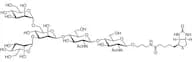
CAS :Formule :C47H79N5O28SDegré de pureté :min. 95.0 area%(HPLC)Couleur et forme :SolidMasse moléculaire :1,194.223-Amino-9-ethylcarbazole [for Biochemical Research]
CAS :Formule :C14H14N2Degré de pureté :>90.0%(T)(HPLC)Couleur et forme :Light yellow to Brown to Dark green powder to crystalMasse moléculaire :210.28M3(Fuc6)-biotin
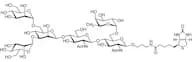
CAS :Formule :C53H89N5O32SDegré de pureté :min. 95.0 area%(HPLC)Couleur et forme :SolidMasse moléculaire :1,340.367-Hydroxycoumarin-3-carboxylic Acid
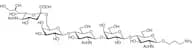
CAS :Formule :C10H6O5Degré de pureté :>98.0%(HPLC)Couleur et forme :White to Light yellow powder to crystalMasse moléculaire :206.15Neu5Acα(2-6)Galβ(1-4)GlcNAcβ(1-3)Galβ(1-4)GlcNAc-β-propylamine
CAS :Formule :C42H72N4O29Degré de pureté :min. 95.0 area%(HPLC)Couleur et forme :SolidMasse moléculaire :1,097.044-Chloro-1-naphthol (Ready-to-use solution) [for Western blotting]
CAS :Couleur et forme :Colorless to Almost colorless clear liquidGalβ(1-3)GlcNAc[6S]β(1-3)Galβ(1-4)GlcNAc[6S]-β-PEG3-biotin
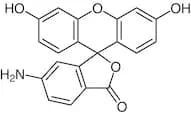
Formule :C49H82N6Na2O33S3Degré de pureté :min. 95.0 area%(HPLC)Couleur et forme :SolidMasse moléculaire :1,425.365-Aminofluorescein (isomer I)
CAS :Formule :C20H13NO5Degré de pureté :>95.0%(T)(HPLC)Couleur et forme :Orange to Brown to Dark red powder to crystalMasse moléculaire :347.336-G1 Glycan
CAS :Formule :C56H94N4O41Degré de pureté :min. 95.0 area%(HPLC)Couleur et forme :SolidMasse moléculaire :1,479.36Fucα(1-2)Galβ(1-3)GalNAc-α-pNP (=H type 3 α-pNP Glycoside)
CAS :Formule :C26H38N2O17Couleur et forme :SolidMasse moléculaire :650.59Sodium 3-(N-Ethylanilino)propanesulfonate [for Biochemical Research]
CAS :Formule :C11H16NNaO3SDegré de pureté :>98.0%(HPLC)Couleur et forme :White to Almost white powder to crystalMasse moléculaire :265.304-Nitrophenyl α-D-Mannopyranoside [Substrate for α-Mannosidase]
CAS :Formule :C12H15NO8Degré de pureté :>98.0%(HPLC)Couleur et forme :White to Orange to Green powder to crystalMasse moléculaire :301.254-Nitrophenyl β-D-Glucopyranoside Monohydrate [Substrate for β-D-Glucosidase]
CAS :Formule :C12H15NO8·H2ODegré de pureté :>98.0%(HPLC)Couleur et forme :White to Light yellow powder to crystalMasse moléculaire :319.274-Nitrophenyl α-D-Galactopyranoside [Substrate for α-D-Galactosidase]
CAS :Formule :C12H15NO8Degré de pureté :>98.0%(HPLC)Couleur et forme :White to Orange to Green powder to crystalMasse moléculaire :301.25Neu5Gcα(2-6) N-Glycan
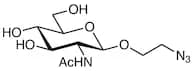
CAS :Formule :C84H138N6O64Degré de pureté :min. 95.0 area%(HPLC)Couleur et forme :SolidMasse moléculaire :2,256.012-Azidoethyl 2-Acetamido-2-deoxy-β-D-glucopyranoside
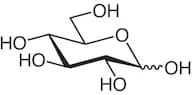
CAS :Formule :C10H18N4O6Degré de pureté :>98.0%(HPLC)Couleur et forme :White to Almost white powder to crystalMasse moléculaire :290.28D-(+)-Glucose
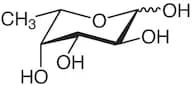
CAS :Formule :C6H12O6Degré de pureté :>98.0%(GC)Couleur et forme :White powder to crystalMasse moléculaire :180.16L-(-)-Fucose
CAS :Formule :C6H12O5Degré de pureté :>97.0%(HPLC)Couleur et forme :White to Almost white powder to crystalMasse moléculaire :164.16Sodium 3-[Ethyl(m-tolyl)amino]-2-hydroxy-1-propanesulfonate
CAS :Formule :C12H18NNaO4SDegré de pureté :>98.0%(HPLC)Couleur et forme :White to Almost white powder to crystalMasse moléculaire :295.33G2 Glycan
CAS :Formule :C62H104N4O46Degré de pureté :>95.0%(HPLC)Couleur et forme :White to Almost white powder to crystalMasse moléculaire :1,641.502-(4-Iodophenyl)-3-(4-nitrophenyl)-5-phenyltetrazolium Chloride [for Biochemical Research]
CAS :Formule :C19H13ClIN5O2Degré de pureté :>98.0%(HPLC)Couleur et forme :White to Yellow to Orange powder to crystalMasse moléculaire :505.704-Nitrophenyl Phosphate (Ready-to-use solution) [for ELISA]
Couleur et forme :Colorless to Light orange to Yellow clear liquidN-(2-Hydroxy-3-sulfopropyl)-3,5-dimethoxyaniline Sodium Salt [for Biochemical Research]
CAS :Formule :C11H16NNaO6SDegré de pureté :>98.0%(HPLC)Couleur et forme :White to Light yellow to Light orange powder to crystalMasse moléculaire :313.304-Nitrophenyl β-D-Glucuronide [Substrate for β-Glucuronidase]
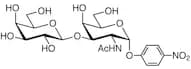
CAS :Formule :C12H13NO9Degré de pureté :>98.0%(HPLC)Couleur et forme :White to Yellow to Orange powder to crystalMasse moléculaire :315.23Galβ(1-3)GalNAc-α-pNP
CAS :Formule :C20H28N2O13Degré de pureté :>97.0%(HPLC)Couleur et forme :White to Almost white powder to crystalMasse moléculaire :504.45Sodium 3-(N-Ethyl-3-methoxyanilino)-2-hydroxy-1-propanesulfonate [for Biochemical Research]
CAS :Formule :C12H18NNaO5SDegré de pureté :>98.0%(T)(HPLC)Couleur et forme :White to Almost white powder to crystalMasse moléculaire :311.335-Bromo-4-chloro-3-indolyl Phosphate p-Toluidine Salt [for Biochemical Research]
CAS :Formule :C8H6BrClNO4P·C7H9NDegré de pureté :>98.0%(T)Couleur et forme :White to Orange to Green powder to crystalMasse moléculaire :433.624-Nitrophenyl Phosphate Di(tris) Salt [Substrate for Phosphatase]
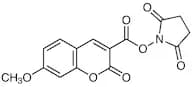
CAS :Formule :C6H6NO6P·(C4H11NO3)2Degré de pureté :>90.0%(T)Couleur et forme :White to Orange to Green powder to crystalineMasse moléculaire :461.36N-Succinimidyl 7-Methoxycoumarin-3-carboxylate
CAS :Formule :C15H11NO7Degré de pureté :>98.0%(HPLC)(N)Couleur et forme :White to Almost white powder to crystalMasse moléculaire :317.25Disodium 4-Nitrophenyl Phosphate Hexahydrate [for Biochemical Research]
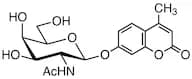
CAS :Formule :C6H4NNa2O6P·6H2ODegré de pureté :>98.0%(T)(HPLC)Couleur et forme :White to Light yellow powder to crystalMasse moléculaire :371.144-Methylumbelliferyl 2-Acetamido-2-deoxy-β-D-galactopyranoside
CAS :Formule :C18H21NO8Degré de pureté :>98.0%(HPLC)Couleur et forme :White to Light yellow powder to crystalMasse moléculaire :379.37Glucoamylase from Rhizopus (contains 50% Diatomaceous earth)
CAS :Couleur et forme :White to Gray to Red powder to crystalFluorescein 5-Isothiocyanate (isomer I)
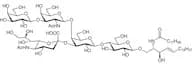
CAS :Formule :C21H11NO5SDegré de pureté :>97.0%(T)(HPLC)Couleur et forme :White to Yellow to Orange powder to crystalMasse moléculaire :389.38Sialyl Neolactotetraosylceramide (=Sialyl nLc4Cer)
CAS :Formule :C73H131N3O31Couleur et forme :SolidMasse moléculaire :1,546.845-Bromo-3-indolyl β-D-Galactopyranoside [for Biochemical Research]
CAS :Formule :C14H16BrNO6Degré de pureté :>98.0%(HPLC)Couleur et forme :White to Almost white powder to crystalMasse moléculaire :374.196-Aminofluorescein (isomer II)
CAS :Formule :C20H13NO5Degré de pureté :>95.0%(T)Couleur et forme :Light yellow to Brown powder to crystalMasse moléculaire :347.33SialylGb5 Ceramide
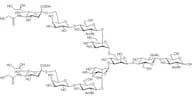
Formule :C77H136N3NaO36Degré de pureté :>95.0%(HPLC)Couleur et forme :White to Light yellow powder to crystalMasse moléculaire :1,702.91Disialylnonasaccharide-β-pNP
CAS :Formule :C90H141N7O64Degré de pureté :>98.0%(HPLC)Couleur et forme :White to Light yellow powder to crystalMasse moléculaire :2,345.10Sialyl Lewis X-Lactose Ethylazide
Formule :C45H75N5O33Degré de pureté :min. 95.0 area%(HPLC)Couleur et forme :SolidMasse moléculaire :1,214.10GlcNAcβ(1-4)[Fucα(1-6)]GlcNAc
CAS :Formule :C22H38N2O15Degré de pureté :>98.0%(HPLC)Couleur et forme :White to Almost white powder to crystalMasse moléculaire :570.55Fucα(1-2)Galβ(1-3)GalNAc-β-pNP (=H type 3 β-pNP Glycoside)
Formule :C26H38N2O17Couleur et forme :SolidMasse moléculaire :650.59Ganglioside GM3(Neu5Gc) (phyto-type)
CAS :Formule :C59H110N2O23Degré de pureté :min. 95.0 area%(HPLC)Couleur et forme :SolidMasse moléculaire :1,215.52Neu5Acα(2-6)Galβ(1-4)GlcNAcβ(1-3)Galβ(1-4)GlcNAcβ(1-3)Galβ(1-4)GlcNAc-β-propylamine
CAS :Formule :C56H95N5O39Degré de pureté :min. 95.0 area%(HPLC)Couleur et forme :SolidMasse moléculaire :1,462.375-Carboxyfluorescein
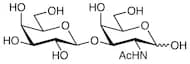
CAS :Formule :C21H12O7Degré de pureté :>97.0%(T)(HPLC)Couleur et forme :Light yellow to Brown powder to crystalMasse moléculaire :376.32Galacto-N-biose
CAS :Formule :C14H25NO11Degré de pureté :min. 95.0 area%(HPLC)Couleur et forme :White to Almost white powder to crystalMasse moléculaire :383.35Gb3-β-MP
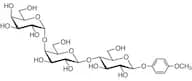
CAS :Formule :C25H38O17Degré de pureté :>95.0%(HPLC)Couleur et forme :White to Almost white powder to crystalMasse moléculaire :610.56Nω-(2-Acetamido-2-deoxy-β-D-glucopyranosyl)-Nα-(tert-butoxycarbonyl)-L-asparagine
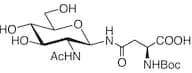
CAS :Formule :C17H29N3O10Degré de pureté :>96.0%(HPLC)Couleur et forme :White to Almost white powder to crystalMasse moléculaire :435.43N,N-Diethyl-m-toluidine [for Biochemical Research]
CAS :Formule :C11H17NDegré de pureté :>99.0%(GC)Couleur et forme :Light orange to Yellow to Green clear liquidMasse moléculaire :163.264-Aminoantipyrine Hydrochloride [for Biochemical Research]
CAS :Formule :C11H13N3O·HClDegré de pureté :>98.0%(T)(HPLC)Couleur et forme :White to Light yellow to Light orange powder to crystalMasse moléculaire :239.704-Aminoantipyrine [for Biochemical Research]
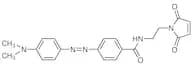
CAS :Formule :C11H13N3ODegré de pureté :>98.0%(T)Couleur et forme :White to Light yellow to Light orange powder to crystalMasse moléculaire :203.25DABCYL C2 maleimide
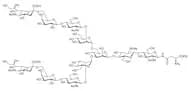
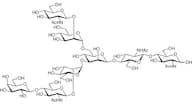
CAS :Formule :C21H21N5O3Degré de pureté :>95.0%(T)(HPLC)Couleur et forme :White to Yellow to Orange powder to crystalMasse moléculaire :391.43SGN
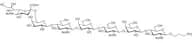
CAS :Formule :C88H144N8O64Degré de pureté :>90.0%(HPLC)Couleur et forme :White to Light yellow powder to crystalMasse moléculaire :2,338.11o-Dianisidine [for Biochemical Research]
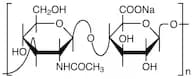
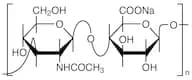
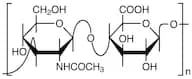
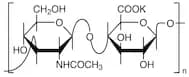
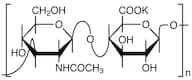
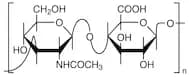
CAS :Formule :C14H16N2O2Degré de pureté :>90.0%(T)Couleur et forme :Yellow to Amber to Dark purple powder to crystalMasse moléculaire :244.29Hyaluronic Acid from Bacteria
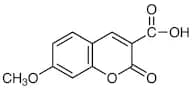
CAS :Degré de pureté :>90.0%(E)Couleur et forme :White powder to crystal7-Methoxycoumarin-3-carboxylic Acid
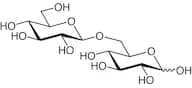
CAS :Formule :C11H8O5Degré de pureté :>98.0%(GC)(T)Couleur et forme :White to Almost white powder to crystalMasse moléculaire :220.18Gentiobiose
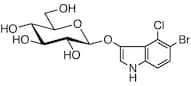
CAS :Formule :C12H22O11Degré de pureté :>96.0%(HPLC)Couleur et forme :White to Almost white powder to crystalMasse moléculaire :342.305-Bromo-4-chloro-3-indolyl β-D-Glucopyranoside
CAS :Formule :C14H15BrClNO6Degré de pureté :>98.0%(HPLC)Couleur et forme :White to Light yellow powder to crystalMasse moléculaire :408.633-G1 Glycan
CAS :Formule :C56H94N4O41Degré de pureté :min. 95.0 area%(HPLC)Couleur et forme :SolidMasse moléculaire :1,479.363,3'-Diaminobenzidine Tetrahydrochloride Hydrate [for Biochemical Research]
CAS :Formule :C12H14N4·4HCl·xH2ODegré de pureté :>98.0%(HPLC)(N)Couleur et forme :White to Amber to Dark purple powder to crystalMasse moléculaire :360.10 (as Anhydrous)2-Nitrophenyl β-D-Galactopyranoside [Substrate for β-D-Galactosidase]
CAS :Formule :C12H15NO8Degré de pureté :>98.0%(HPLC)Couleur et forme :White to Light yellow powder to crystalineMasse moléculaire :301.25Anti-DTBTA-Eu3+ Rabbit Polyclonal Antibody [2.5mg/mL in PBS(-)] (Preservative : 0.1% NaN3)
Couleur et forme :White or Colorless to Almost white or Almost colorless powder to lump to clear liquidKeratanase II from Bacillus circulans, Recombinant
Couleur et forme :Colorless to Almost colorlessclear liquidNitro Blue Tetrazolium [for Biochemical Research]
CAS :Formule :C40H30Cl2N10O6Degré de pureté :>98.0%(T)(HPLC)Couleur et forme :Light yellow to Brown powder to crystalMasse moléculaire :817.644-Nitrophenyl 2-Acetamido-2-deoxy-β-D-galactopyranoside
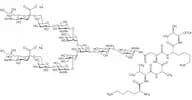
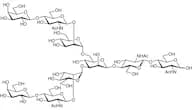
CAS :Formule :C14H18N2O8Degré de pureté :min. 98.0 area%(HPLC)Couleur et forme :White to Almost white powder to crystalineMasse moléculaire :342.30Sialylglycopeptide
CAS :Formule :C112H187N15Na2O70Degré de pureté :>95.0%(HPLC)Couleur et forme :White to Almost white powder to crystalMasse moléculaire :2,909.74Streptavidin from Streptomyces avidinii
CAS :Couleur et forme :White to Brown to Dark green powder to crystalPDHK1 rabbit pAb
catalytic activity:ATP + a protein = ADP + a phosphoprotein.,function:Phosphorylates and activates not only PKB/AKT, but also PKA, PKC-zeta, RPS6KA1 and RPS6KB1. May play a general role in signaling processes and in development (By similarity). Isoform 3 is catalytically inactive.,PTM:Phosphorylated on tyrosine and serine/threonine. Phosphorylation on Ser-241 in the activation loop is required for full activity. PDK1 itself can autophosphorylate Ser-241, leading to its own activation.,similarity:Belongs to the protein kinase superfamily.,similarity:Belongs to the protein kinase superfamily. AGC Ser/Thr protein kinase family. PDK1 subfamily.,similarity:Contains 1 PH domain.,similarity:Contains 1 protein kinase domain.,subcellular location:Membrane-associated after cell stimulation leading to its translocation. Tyrosine phosphorylation seems to occur only at the plasma membrane.,subunit:Interacts with TUSC4.,tissue specificity:Appears to be expressed ubiquitously.,MAP2 Mouse mAb
MAP2 is the major microtubule associated protein of brain tissue. There are three forms of MAP2; two are similarily sized with apparent molecular weights of 280 kDa (MAP2a and MAP2b) and the third with a lower molecular weight of 70 kDa (MAP2c). In the newborn rat brain, MAP2b and MAP2c are present, while MAP2a is absent. Between postnatal days 10 and 20, MAP2a appears. At the same time, the level of MAP2c drops by 10-fold. This change happens during the period when dendrite growth is completed and when neurons have reached their mature morphology. MAP2 is degraded by a Cathepsin D-like protease in the brain of aged rats. There is some indication that MAP2 is expressed at higher levels in some types of neurons than in other types. MAP2 is known to promote microtubule assembly and to form side-arms on microtubules. It also interacts with neurofilaments, actin, and other elements of the cytoskeleton.Endophilin B2 rabbit pAb
similarity:Belongs to the endophilin family.,similarity:Contains 1 BAR domain.,similarity:Contains 1 SH3 domain.,subunit:Homodimer, and heterodimer with SH3GLB1.,tissue specificity:Detected in skeletal muscle, adipocyte, brain, lung, colon and mammary gland.,Cyclin E1 (phospho Thr77) rabbit pAb
The protein encoded by this gene belongs to the highly conserved cyclin family, whose members are characterized by a dramatic periodicity in protein abundance through the cell cycle. Cyclins function as regulators of CDK kinases. Different cyclins exhibit distinct expression and degradation patterns which contribute to the temporal coordination of each mitotic event. This cyclin forms a complex with and functions as a regulatory subunit of CDK2, whose activity is required for cell cycle G1/S transition. This protein accumulates at the G1-S phase boundary and is degraded as cells progress through S phase. Overexpression of this gene has been observed in many tumors, which results in chromosome instability, and thus may contribute to tumorigenesis. This protein was found to associate with, and be involved in, the phosphorylation of NPAT protein (nuclear protein mapped to the ATM locus), which participates inNRN1 rabbit pAb
This gene encodes a member of the neuritin family, and is expressed in postmitotic-differentiating neurons of the developmental nervous system and neuronal structures associated with plasticity in the adult. The expression of this gene can be induced by neural activity and neurotrophins. The encoded protein contains a consensus cleavage signal found in glycosylphoshatidylinositol (GPI)-anchored proteins. The encoded protein promotes neurite outgrowth and arborization, suggesting its role in promoting neuritogenesis. Overexpression of the encoded protein may be associated with astrocytoma progression. Alternative splicing results in multiple transcript variants. [provided by RefSeq, Jul 2013],GRK 4 rabbit pAb
This gene encodes a member of the guanine nucleotide-binding protein (G protein)-coupled receptor kinase subfamily of the Ser/Thr protein kinase family. The protein phosphorylates the activated forms of G protein-coupled receptors thus initiating its deactivation. This gene has been linked to both genetic and acquired hypertension. Several transcript variants encoding different isoforms have been found for this gene. [provided by RefSeq, Nov 2013],PPBN rabbit pAb
There are at least four distinct but related alkaline phosphatases: intestinal, placental, placental-like, and liver/bone/kidney (tissue non-specific). The product of this gene is a membrane bound glycosylated enzyme, localized to testis, thymus and certain germ cell tumors, that is closely related to both the placental and intestinal forms of alkaline phosphatase. [provided by RefSeq, Jul 2008],BAGE2 rabbit pAb
function:Unknown. Candidate gene encoding tumor antigens.,miscellaneous:The ancestral BAGE gene was generated by juxtacentromeric reshuffling of the MLL3 gene. The BAGE family was expanded by juxtacentromeric movement and/or acrocentric exchanges. BAGE family is composed of expressed genes that map to the juxtacentromeric regions of chromosomes 13 and 21 and of unexpressed gene fragments that scattered in the juxtacentromeric regions of several chromosomes, including chromosomes 9, 13, 18 and 21.,similarity:Belongs to the BAGE family.,tissue specificity:Not expressed in normal tissues except in testis. Expressed in 22% of melanomas, in bladder and lung carcinomas.,tissue specificity:Not expressed in normal tissues except in testis. Expressed in melanoma, bladder and lung carcinomas.,PHAX rabbit pAb
function:A phosphoprotein adapter involved in the XPO1-mediated U snRNA export from the nucleus. Bridge components required for U snRNA export, the cap binding complex (CBC)-bound snRNA on the one hand and the GTPase Ran in its active GTP-bound form together with the export receptor XPO1 on the other. Its phosphorylation in the nucleus is required for U snRNA export complex assembly and export, while its dephosphorylation in the cytoplasm causes export complex disassembly. It is recycled back to the nucleus via the importin alpha/beta heterodimeric import receptor. The directionality of nuclear export is thought to be conferred by an asymmetric distribution of the GTP- and GDP-bound forms of Ran between the cytoplasm and nucleus. Its compartmentalized phosphorylation cycle may also contribute to the directionality of export. Binds strongly to m7G-capped U1 and U5 small nuclear RNAs (snRNAs) in a sequence-unspecific manner and phosphorylation-independent manner (By similarity). Plays also a role in the biogenesis of U3 small nucleolar RNA (snoRNA). Involved in the U3 snoRNA transport from nucleoplasm to Cajal bodies. Binds strongly to m7G-capped U3, U8 and U13 precursor snoRNAs and weakly to trimethylated (TMG)-capped U3, U8 and U13 snoRNAs. Binds also to telomerase RNA.,PTM:Phosphorylated in the nucleus. Dephosphorylated in the cytoplasm (By similarity). Phosphorylated upon DNA damage, probably by ATM or ATR.,PTM:Phosphorylated upon DNA damage, probably by ATM or ATR.,similarity:Belongs to the PHAX family.,subcellular location:Located in the nucleoplasm and Cajal bodies. Shuttles between the nucleus and the cytoplasm. Shuttles between the nucleoplasm and Cajal bodies.,subunit:Found in a U snRNA export complex with PHAX/RNUXA, NCBP1, NCBP2, RAN, XPO1 and m7G-capped RNA. Part of a precomplex with PHAX/RNUXA, NCBP1, NCBP2 and m7G-capped RNA. Interacts with NCBP1 (By similarity). Found in a complex with snoRNA.,Tau (phospho Ser214) rabbit pAb
This gene encodes the microtubule-associated protein tau (MAPT) whose transcript undergoes complex, regulated alternative splicing, giving rise to several mRNA species. MAPT transcripts are differentially expressed in the nervous system, depending on stage of neuronal maturation and neuron type. MAPT gene mutations have been associated with several neurodegenerative disorders such as Alzheimer's disease, Pick's disease, frontotemporal dementia, cortico-basal degeneration and progressive supranuclear palsy. [provided by RefSeq, Jul 2008],Olfactory receptor 5M9 rabbit pAb
olfactory receptor family 5 subfamily M member 9(OR5M9) Homo sapiens Olfactory receptors interact with odorant molecules in the nose, to initiate a neuronal response that triggers the perception of a smell. The olfactory receptor proteins are members of a large family of G-protein-coupled receptors (GPCR) arising from single coding-exon genes. Olfactory receptors share a 7-transmembrane domain structure with many neurotransmitter and hormone receptors and are responsible for the recognition and G protein-mediated transduction of odorant signals. The olfactory receptor gene family is the largest in the genome. The nomenclature assigned to the olfactory receptor genes and proteins for this organism is independent of other organisms. [provided by RefSeq, Jul 2008],CD66c/d rabbit pAb
This gene encodes a member of the family of carcinoembryonic antigen-related cell adhesion molecules (CEACAMs), which are used by several bacterial pathogens to bind and invade host cells. The encoded transmembrane protein directs phagocytosis of several bacterial species that is dependent on the small GTPase Rac. It is thought to serve an important role in controlling human-specific pathogens by the innate immune system. Alternatively spliced transcript variants have been described. [provided by RefSeq, Mar 2013],Hint1 rabbit pAb
This gene encodes a protein that hydrolyzes purine nucleotide phosphoramidates substrates, including AMP-morpholidate, AMP-N-alanine methyl ester, AMP-alpha-acetyl lysine methyl ester, and AMP-NH2. The encoded protein interacts with these substrates via a histidine triad motif. This gene is considered a tumor suppressor gene. In addition, mutations in this gene can cause autosomal recessive neuromyotonia and axonal neuropathy. There are several related pseudogenes on chromosome 7. Several transcript variants have been observed. [provided by RefSeq, Dec 2015],Neurexophilin-3 rabbit pAb
function:May be signaling molecules that resemble neuropeptides. Ligand for alpha-neurexins.,PTM:May be proteolytically processed at the boundary between the N-terminal non-conserved and the central conserved domain in neuron-like cells.,similarity:Belongs to the neurexophilin family.,tissue specificity:Highest level in brain.,Atg13 (phospho-Ser355) rabbit pAb
The protein encoded by this gene is an autophagy factor and a target of the TOR kinase signaling pathway. The encoded protein is essential for autophagosome formation and mitophagy. [provided by RefSeq, Oct 2016],TMC7 rabbit pAb
function:May function as ion channels, transporters, or modulators of such.,similarity:Belongs to the TMC family.,FRS2 (phospho Tyr436) rabbit pAb
function:Adapter protein that links FGR and NGF receptors to downstream signaling pathways. Involved in the activation of MAP kinases. Modulates signaling via SHC1 by competing for a common binding site on NTRK1.,PTM:Phosphorylated on tyrosine residues upon stimulation by NGF.,PTM:Ubiquitinated when tyrosine phosphorylated and in a complex with GRB2. The unphosphorylated form is not subject to ubiquitination.,sequence caution:Translated as stop.,similarity:Contains 1 IRS-type PTB domain.,subcellular location:Cytoplasmic, membrane-bound.,subunit:Part of a complex containing FRS2, GRB2 and SOS1. Part of a complex containing GRB2 and CBL. Binds RET (By similarity). Binds FGFR1, SUC1, NTRK1, NTRK2, NTRK3 and SRC. The tyrosine-phosphorylated protein binds the SH2 domains of GRB2 and PTPN11.,tissue specificity:Highly expressed in heart, brain, spleen, lung, liver, skeletal muscle, kidney and testis.,CDH17 rabbit pAb
This gene is a member of the cadherin superfamily, genes encoding calcium-dependent, membrane-associated glycoproteins. The encoded protein is cadherin-like, consisting of an extracellular region, containing 7 cadherin domains, and a transmembrane region but lacking the conserved cytoplasmic domain. The protein is a component of the gastrointestinal tract and pancreatic ducts, acting as an intestinal proton-dependent peptide transporter in the first step in oral absorption of many medically important peptide-based drugs. The protein may also play a role in the morphological organization of liver and intestine. Alternative splicing results in multiple transcript variants. [provided by RefSeq, Jan 2009],TOPRS rabbit pAb
This gene encodes a nuclear protein which is serine and arginine rich, and contains a RING-type zinc finger domain. It is highly expressed in the testis, and functions as an ubiquitin-protein E3 ligase. Mutations in this gene are associated with retinitis pigmentosa type 31. Alternatively spliced transcript variants, encoding different isoforms, have been observed for this locus. [provided by RefSeq, Sep 2010],C/EBP α (phospho Thr230) rabbit pAb
This intronless gene encodes a transcription factor that contains a basic leucine zipper (bZIP) domain and recognizes the CCAAT motif in the promoters of target genes. The encoded protein functions in homodimers and also heterodimers with CCAAT/enhancer-binding proteins beta and gamma. Activity of this protein can modulate the expression of genes involved in cell cycle regulation as well as in body weight homeostasis. Mutation of this gene is associated with acute myeloid leukemia. The use of alternative in-frame non-AUG (GUG) and AUG start codons results in protein isoforms with different lengths. Differential translation initiation is mediated by an out-of-frame, upstream open reading frame which is located between the GUG and the first AUG start codons. [provided by RefSeq, Dec 2013],CITE1 rabbit pAb
This gene encodes a member of the CREB-binding protein/p300-interacting transactivator with Asp/Glu-rich C-terminal domain (CITED) family of proteins. The encoded protein, also known as melanocyte-specific gene 1, may function as a transcriptional coactivator and may play a role in pigmentation of melanocytes. Alternatively spliced transcript variants have been described. [provided by RefSeq, Jan 2009],GGT1 rabbit pAb
The enzyme encoded by this gene is a type I gamma-glutamyltransferase that catalyzes the transfer of the glutamyl moiety of glutathione to a variety of amino acids and dipeptide acceptors. The enzyme is composed of a heavy chain and a light chain, which are derived from a single precursor protein. It is expressed in tissues involved in absorption and secretion and may contribute to the etiology of diabetes and other metabolic disorders. Multiple alternatively spliced variants have been identified. There are a number of related genes present on chromosomes 20 and 22, and putative pseudogenes for this gene on chromosomes 2, 13, and 22. [provided by RefSeq, Jan 2014],GROα rabbit pAb
This antimicrobial gene encodes a member of the CXC subfamily of chemokines. The encoded protein is a secreted growth factor that signals through the G-protein coupled receptor, CXC receptor 2. This protein plays a role in inflammation and as a chemoattractant for neutrophils. Aberrant expression of this protein is associated with the growth and progression of certain tumors. A naturally occurring processed form of this protein has increased chemotactic activity. Alternate splicing results in coding and non-coding variants of this gene. A pseudogene of this gene is found on chromosome 4. [provided by RefSeq, Sep 2014],Connexin 43 rabbit pAb
This gene is a member of the connexin gene family. The encoded protein is a component of gap junctions, which are composed of arrays of intercellular channels that provide a route for the diffusion of low molecular weight materials from cell to cell. The encoded protein is the major protein of gap junctions in the heart that are thought to have a crucial role in the synchronized contraction of the heart and in embryonic development. A related intronless pseudogene has been mapped to chromosome 5. Mutations in this gene have been associated with oculodentodigital dysplasia, autosomal recessive craniometaphyseal dysplasia and heart malformations. [provided by RefSeq, May 2014],ERα (phospho Ser102) rabbit pAb
This gene encodes an estrogen receptor, a ligand-activated transcription factor composed of several domains important for hormone binding, DNA binding, and activation of transcription. The protein localizes to the nucleus where it may form a homodimer or a heterodimer with estrogen receptor 2. Estrogen and its receptors are essential for sexual development and reproductive function, but also play a role in other tissues such as bone. Estrogen receptors are also involved in pathological processes including breast cancer, endometrial cancer, and osteoporosis. Alternative promoter usage and alternative splicing result in dozens of transcript variants, but the full-length nature of many of these variants has not been determined. [provided by RefSeq, Mar 2014],CYP8B1 rabbit pAb
This gene encodes a member of the cytochrome P450 superfamily of enzymes. The cytochrome P450 proteins are monooxygenases which catalyze many reactions involved in drug metabolism and synthesis of cholesterol, steroids and other lipids. This endoplasmic reticulum membrane protein catalyzes the conversion of 7 alpha-hydroxy-4-cholesten-3-one into 7-alpha,12-alpha-dihydroxy-4-cholesten-3-one. The balance between these two steroids determines the relative amounts of cholic acid and chenodeoxycholic acid both of which are secreted in the bile and affect the solubility of cholesterol. This gene is unique among the cytochrome P450 genes in that it is intronless. [provided by RefSeq, Jul 2008],Olfactory receptor 52W1 rabbit pAb
Olfactory receptors interact with odorant molecules in the nose, to initiate a neuronal response that triggers the perception of a smell. The olfactory receptor proteins are members of a large family of G-protein-coupled receptors (GPCR) arising from single coding-exon genes. Olfactory receptors share a 7-transmembrane domain structure with many neurotransmitter and hormone receptors and are responsible for the recognition and G protein-mediated transduction of odorant signals. The olfactory receptor gene family is the largest in the genome. The nomenclature assigned to the olfactory receptor genes and proteins for this organism is independent of other organisms. [provided by RefSeq, Jul 2008],MEK-6 (phospho Ser207) rabbit pAb
This gene encodes a member of the dual specificity protein kinase family, which functions as a mitogen-activated protein (MAP) kinase kinase. MAP kinases, also known as extracellular signal-regulated kinases (ERKs), act as an integration point for multiple biochemical signals. This protein phosphorylates and activates p38 MAP kinase in response to inflammatory cytokines or environmental stress. As an essential component of p38 MAP kinase mediated signal transduction pathway, this gene is involved in many cellular processes such as stress induced cell cycle arrest, transcription activation and apoptosis. [provided by RefSeq, Jul 2008],TRAF7 rabbit pAb
TNF receptor associated factor 7(TRAF7) Homo sapiens Tumor necrosis factor (TNF; see MIM 191160) receptor-associated factors, such as TRAF7, are signal transducers for members of the TNF receptor superfamily (see MIM 191190). TRAFs are composed of an N-terminal cysteine/histidine-rich region containing zinc RING and/or zinc finger motifs; a coiled-coil (leucine zipper) motif; and a homologous region that defines the TRAF family, the TRAF domain, which is involved in self-association and receptor binding.[supplied by OMIM, Apr 2004],SIP1 rabbit pAb
The protein encoded by this gene is a member of the Zfh1 family of 2-handed zinc finger/homeodomain proteins. It is located in the nucleus and functions as a DNA-binding transcriptional repressor that interacts with activated SMADs. Mutations in this gene are associated with Hirschsprung disease/Mowat-Wilson syndrome. Alternatively spliced transcript variants have been found for this gene.[provided by RefSeq, Jan 2010],cGKII rabbit pAb
This gene encodes a protein that belongs to the serine/threonine protein kinase family of proteins. The encoded protein plays a role in the regulation of fluid balance in the intestine. A similar protein in mouse is thought to regulate differentiation and proliferation of cells in the colon. Alternate splicing results in multiple transcript variants. [provided by RefSeq, Sep 2013],CIB3 rabbit pAb
This gene product shares a high degree of sequence similarity with DNA-dependent protein kinase catalytic subunit-interacting protein 2 in human and mouse, and like them may bind the catalytic subunit of DNA-dependent protein kinases. The exact function of this gene is not known. Alternative splicing results in multiple transcript variants. [provided by RefSeq, Jul 2014],eEF2K (phospho Ser366) rabbit pAb
This gene encodes a highly conserved protein kinase in the calmodulin-mediated signaling pathway that links activation of cell surface receptors to cell division. This kinase is involved in the regulation of protein synthesis. It phosphorylates eukaryotic elongation factor 2 (EEF2) and thus inhibits the EEF2 function. The activity of this kinase is increased in many cancers and may be a valid target for anti-cancer treatment. [provided by RefSeq, Jul 2008],Vitronectin rabbit pAb
The protein encoded by this gene is a member of the pexin family. It is found in serum and tissues and promotes cell adhesion and spreading, inhibits the membrane-damaging effect of the terminal cytolytic complement pathway, and binds to several serpin serine protease inhibitors. It is a secreted protein and exists in either a single chain form or a clipped, two chain form held together by a disulfide bond. [provided by RefSeq, Jul 2008],IκB-ε (phospho Ser22) rabbit pAb
The protein encoded by this gene binds to components of NF-kappa-B, trapping the complex in the cytoplasm and preventing it from activating genes in the nucleus. Phosphorylation of the encoded protein targets it for destruction by the ubiquitin pathway, which activates NF-kappa-B by making it available to translocate to the nucleus. [provided by RefSeq, Sep 2011],ACADL rabbit pAb
The protein encoded by this gene belongs to the acyl-CoA dehydrogenase family, which is a family of mitochondrial flavoenzymes involved in fatty acid and branched chain amino-acid metabolism. This protein is one of the four enzymes that catalyze the initial step of mitochondrial beta-oxidation of straight-chain fatty acid. Defects in this gene are the cause of long-chain acyl-CoA dehydrogenase (LCAD) deficiency, leading to nonketotic hypoglycemia. [provided by RefSeq, Jul 2008],AMRP rabbit pAb
This gene encodes a protein that interacts with the low density lipoprotein (LDL) receptor-related protein and facilitates its proper folding and localization by preventing the binding of ligands. Mutations in this gene have been identified in individuals with myopia 23. Alternative splicing results in multiple transcript variants. [provided by RefSeq, Dec 2013],SIGIR rabbit pAb
function:Acts as a negative regulator of the Toll-like and IL-1R receptor signaling pathways. Attenuates the recruitment of receptor-proximal signaling components to the TLR4 receptor, probably through an TIR-TIR domain interaction with TLR4. Through its extracellular domain interferes with the heterodimerization of Il1R1 and IL1RAP.,similarity:Belongs to the interleukin-1 receptor family.,similarity:Contains 1 Ig-like C2-type (immunoglobulin-like) domain.,similarity:Contains 1 TIR domain.,subunit:Interacts with IL1R1, IRAK1, TLR4, TLR5, TLR9 and TRAF6. Upon IL-1 stimulation found in a complex at least composed of IL1R1, SIGIRR, MYD88, IRAK1 and TRAF6. Upon stimulation with LPC found in a complex at least composed of TLR4, SIG1IR, MYD88, IRAK1 and TRAF6.,tissue specificity:Mainly expressed in epithelial tissues such as kidney, lung and gut.,Tuberin/TSC2 (phospho-Ser1387) rabbit pAb
Mutations in this gene lead to tuberous sclerosis complex. Its gene product is believed to be a tumor suppressor and is able to stimulate specific GTPases. The protein associates with hamartin in a cytosolic complex, possibly acting as a chaperone for hamartin. Alternative splicing results in multiple transcript variants encoding different isoforms. [provided by RefSeq, Jul 2008],ANXA5 rabbit pAb
The protein encoded by this gene belongs to the annexin family of calcium-dependent phospholipid binding proteins some of which have been implicated in membrane-related events along exocytotic and endocytotic pathways. Annexin 5 is a phospholipase A2 and protein kinase C inhibitory protein with calcium channel activity and a potential role in cellular signal transduction, inflammation, growth and differentiation. Annexin 5 has also been described as placental anticoagulant protein I, vascular anticoagulant-alpha, endonexin II, lipocortin V, placental protein 4 and anchorin CII. The gene spans 29 kb containing 13 exons, and encodes a single transcript of approximately 1.6 kb and a protein product with a molecular weight of about 35 kDa. [provided by RefSeq, Jul 2008],TIS11B (phospho Ser92) rabbit pAb
This gene is a member of the TIS11 family of early response genes, which are induced by various agonists such as the phorbol ester TPA and the polypeptide mitogen EGF. This gene is well conserved across species and has a promoter that contains motifs seen in other early-response genes. The encoded protein contains a distinguishing putative zinc finger domain with a repeating cys-his motif. This putative nuclear transcription factor most likely functions in regulating the response to growth factors. Alternatively spliced transcript variants encoding different isoforms have been found for this gene. [provided by RefSeq, Sep 2011],KERA rabbit pAb
The protein encoded by this gene is a keratan sulfate proteoglycan that is involved in corneal transparency. Defects in this gene are a cause of autosomal recessive cornea plana 2 (CNA2).[provided by RefSeq, May 2010],MFN1 rabbit pAb
The protein encoded by this gene is a mediator of mitochondrial fusion. This protein and mitofusin 2 are homologs of the Drosophila protein fuzzy onion (Fzo). They are mitochondrial membrane proteins that interact with each other to facilitate mitochondrial targeting. [provided by RefSeq, Jul 2008],HLX1 rabbit pAb
function:Transcription factor required for TBX21/T-bet-dependent maturation of Th1 cells as well as maintenance of Th1-specific gene expression. Involved in embryogenesis and hematopoiesis.,sequence caution:Translation N-terminally extended.,similarity:Belongs to the H2.0 homeobox family.,similarity:Contains 1 homeobox DNA-binding domain.,tissue specificity:Low level in normal B and T-cells, high level in activated lymphocytes and monocytes. Also found in thymus, tonsil, bone marrow, developing vessels, and fetal brain.,GRK 1 rabbit pAb
This gene encodes a member of the guanine nucleotide-binding protein (G protein)-coupled receptor kinase subfamily of the Ser/Thr protein kinase family. The protein phosphorylates rhodopsin and initiates its deactivation. Defects in GRK1 are known to cause Oguchi disease 2 (also known as stationary night blindness Oguchi type-2). [provided by RefSeq, Jul 2008],SSF1 rabbit pAb
The protein encoded by this gene is an evolutionarily conserved protein similar to yeast SSF1 as well as to the gene product of the Drosophila gene peter pan (ppan). SSF1 is known to be involved in the second step of mRNA splicing. Both SSF1 and ppan are essential for cell growth and proliferation. Exogenous expression of this gene was reported to reduce the anchorage-independent growth of some tumor cells. Read-through transcription of this gene with P2RY11/P2Y(11), an adjacent downstream gene that encodes an ATP receptor, has been found. These read-through transcripts are ubiquitously present and up-regulated during granulocyte differentiation. [provided by RefSeq, Nov 2010],

![3-Methyl-2-benzothiazolinonehydrazone Hydrochloride [for Biochemical Research]](/_next/image/?url=https%3A%2Fstatic.cymitquimica.com%2Fproducts%2F3B%2Fthumb-webp%2FM2155.webp&w=3840&q=75)

![N,N-Dimethyl-1,4-phenylenediamine Dihydrochloride [for Biochemical Research]](/_next/image/?url=https%3A%2Fstatic.cymitquimica.com%2Fproducts%2F3B%2Fthumb-webp%2FD3931.webp&w=3840&q=75)

![1-Naphthol [for Biochemical Research]](/_next/image/?url=https%3A%2Fstatic.cymitquimica.com%2Fproducts%2F3B%2Fthumb-webp%2FN0864.webp&w=3840&q=75)



![4-Chloro-1-naphthol [for Biochemical Research]](/_next/image/?url=https%3A%2Fstatic.cymitquimica.com%2Fproducts%2F3B%2Fthumb-webp%2FC2291.webp&w=3840&q=75)







![1,2-Phenylenediamine [for Biochemical Research]](/_next/image/?url=https%3A%2Fstatic.cymitquimica.com%2Fproducts%2F3B%2Fthumb-webp%2FP1805.webp&w=3840&q=75)

![6-Chloro-3-indolyl β-D-Galactopyranoside [for Biochemical Research]](/_next/image/?url=https%3A%2Fstatic.cymitquimica.com%2Fproducts%2F3B%2Fthumb-webp%2FC2371.webp&w=3840&q=75)
![5-Bromo-4-chloro-3-indolyl β-D-Galactopyranoside [for Biochemical Research]](/_next/image/?url=https%3A%2Fstatic.cymitquimica.com%2Fproducts%2F3B%2Fthumb-webp%2FB3201.webp&w=3840&q=75)
![AzBTS [=2,2'-Azinobis(3-ethylbenzothiazoline-6-sulfonic Acid Ammonium Salt)] [for Biochemical Rese…](/_next/image/?url=https%3A%2Fstatic.cymitquimica.com%2Fproducts%2F3B%2Fthumb-webp%2FA2166.webp&w=3840&q=75)

![4-Nitrophenyl β-D-Galactopyranoside [Substrate for β-Galactosidase]](/_next/image/?url=https%3A%2Fstatic.cymitquimica.com%2Fproducts%2F3B%2Fthumb-webp%2FN0616.webp&w=3840&q=75)
![4-Nitrophenyl α-D-Glucopyranoside [Substrate for α-D-Glucosidase]](/_next/image/?url=https%3A%2Fstatic.cymitquimica.com%2Fproducts%2F3B%2Fthumb-webp%2FN0493.webp&w=3840&q=75)


![N-Succinimidyl 4-[4-(Dimethylamino)phenylazo]benzoate](/_next/image/?url=https%3A%2Fstatic.cymitquimica.com%2Fproducts%2F3B%2Fthumb-webp%2FS0857.webp&w=3840&q=75)


![3-Amino-9-ethylcarbazole [for Biochemical Research]](/_next/image/?url=https%3A%2Fstatic.cymitquimica.com%2Fproducts%2F3B%2Fthumb-webp%2FA2167.webp&w=3840&q=75)

![4-Chloro-1-naphthol (Ready-to-use solution) [for Western blotting]](/_next/image/?url=https%3A%2Fstatic.cymitquimica.com%2Fproducts%2F3B%2Fthumb-webp%2FC3384.webp&w=3840&q=75)
![Galβ(1-3)GlcNAc[6S]β(1-3)Galβ(1-4)GlcNAc[6S]-β-PEG3-biotin](/_next/image/?url=https%3A%2Fstatic.cymitquimica.com%2Fproducts%2F3B%2Fthumb-webp%2FG0514.webp&w=3840&q=75)

![Sodium 3-(N-Ethylanilino)propanesulfonate [for Biochemical Research]](/_next/image/?url=https%3A%2Fstatic.cymitquimica.com%2Fproducts%2F3B%2Fthumb-webp%2FS0817.webp&w=3840&q=75)
![4-Nitrophenyl α-D-Mannopyranoside [Substrate for α-Mannosidase]](/_next/image/?url=https%3A%2Fstatic.cymitquimica.com%2Fproducts%2F3B%2Fthumb-webp%2FN0619.webp&w=3840&q=75)
![4-Nitrophenyl β-D-Glucopyranoside Monohydrate [Substrate for β-D-Glucosidase]](/_next/image/?url=https%3A%2Fstatic.cymitquimica.com%2Fproducts%2F3B%2Fthumb-webp%2FN0235.webp&w=3840&q=75)
![4-Nitrophenyl α-D-Galactopyranoside [Substrate for α-D-Galactosidase]](/_next/image/?url=https%3A%2Fstatic.cymitquimica.com%2Fproducts%2F3B%2Fthumb-webp%2FN0492.webp&w=3840&q=75)


![Sodium 3-[Ethyl(m-tolyl)amino]-2-hydroxy-1-propanesulfonate](/_next/image/?url=https%3A%2Fstatic.cymitquimica.com%2Fproducts%2F3B%2Fthumb-webp%2FS0805.webp&w=3840&q=75)
![rGRFT-Biotin [for Manα(1-2)Man]](/_next/image/?url=https%3A%2Fstatic.cymitquimica.com%2Fproducts%2F3B%2Fthumb-webp%2FR0234.webp&w=3840&q=75)
![2-(4-Iodophenyl)-3-(4-nitrophenyl)-5-phenyltetrazolium Chloride [for Biochemical Research]](/_next/image/?url=https%3A%2Fstatic.cymitquimica.com%2Fproducts%2F3B%2Fthumb-webp%2FI0781.webp&w=3840&q=75)
![4-Nitrophenyl Phosphate (Ready-to-use solution) [for ELISA]](/_next/image/?url=https%3A%2Fstatic.cymitquimica.com%2Fproducts%2F3B%2Fthumb-webp%2FN1109.webp&w=3840&q=75)
![N-(2-Hydroxy-3-sulfopropyl)-3,5-dimethoxyaniline Sodium Salt [for Biochemical Research]](/_next/image/?url=https%3A%2Fstatic.cymitquimica.com%2Fproducts%2F3B%2Fthumb-webp%2FS0827.webp&w=3840&q=75)

![4-Nitrophenyl β-D-Glucuronide [Substrate for β-Glucuronidase]](/_next/image/?url=https%3A%2Fstatic.cymitquimica.com%2Fproducts%2F3B%2Fthumb-webp%2FN0618.webp&w=3840&q=75)
![Sodium 3-(N-Ethyl-3-methoxyanilino)-2-hydroxy-1-propanesulfonate [for Biochemical Research]](/_next/image/?url=https%3A%2Fstatic.cymitquimica.com%2Fproducts%2F3B%2Fthumb-webp%2FS0826.webp&w=3840&q=75)
![5-Bromo-4-chloro-3-indolyl Phosphate p-Toluidine Salt [for Biochemical Research]](/_next/image/?url=https%3A%2Fstatic.cymitquimica.com%2Fproducts%2F3B%2Fthumb-webp%2FB1239.webp&w=3840&q=75)
![4-Nitrophenyl Phosphate Di(tris) Salt [Substrate for Phosphatase]](/_next/image/?url=https%3A%2Fstatic.cymitquimica.com%2Fproducts%2F3B%2Fthumb-webp%2FN0422.webp&w=3840&q=75)
![Disodium 4-Nitrophenyl Phosphate Hexahydrate [for Biochemical Research]](/_next/image/?url=https%3A%2Fstatic.cymitquimica.com%2Fproducts%2F3B%2Fthumb-webp%2FD4005.webp&w=3840&q=75)



![5-Bromo-3-indolyl β-D-Galactopyranoside [for Biochemical Research]](/_next/image/?url=https%3A%2Fstatic.cymitquimica.com%2Fproducts%2F3B%2Fthumb-webp%2FB3470.webp&w=3840&q=75)

![GlcNAcβ(1-4)[Fucα(1-6)]GlcNAc](/_next/image/?url=https%3A%2Fstatic.cymitquimica.com%2Fproducts%2F3B%2Fthumb-webp%2FG0423.webp&w=3840&q=75)



![AzBTS (Ready-to-use solution) [for ELISA]](/_next/image/?url=https%3A%2Fstatic.cymitquimica.com%2Fproducts%2F3B%2Fthumb-webp%2FA3176.webp&w=3840&q=75)
![TMB [for ELISA] (Ready-to-use solution)](/_next/image/?url=https%3A%2Fstatic.cymitquimica.com%2Fproducts%2F3B%2Fthumb-webp%2FT3854.webp&w=3840&q=75)
![N,N-Diethyl-m-toluidine [for Biochemical Research]](/_next/image/?url=https%3A%2Fstatic.cymitquimica.com%2Fproducts%2F3B%2Fthumb-webp%2FD3868.webp&w=3840&q=75)
![4-Aminoantipyrine Hydrochloride [for Biochemical Research]](/_next/image/?url=https%3A%2Fstatic.cymitquimica.com%2Fproducts%2F3B%2Fthumb-webp%2FA0257.webp&w=3840&q=75)
![4-Aminoantipyrine [for Biochemical Research]](/_next/image/?url=https%3A%2Fstatic.cymitquimica.com%2Fproducts%2F3B%2Fthumb-webp%2FA2254.webp&w=3840&q=75)
![o-Dianisidine [for Biochemical Research]](/_next/image/?url=https%3A%2Fstatic.cymitquimica.com%2Fproducts%2F3B%2Fthumb-webp%2FD3864.webp&w=3840&q=75)
![3,3'-Diaminobenzidine Tetrahydrochloride Hydrate [for Biochemical Research]](/_next/image/?url=https%3A%2Fstatic.cymitquimica.com%2Fproducts%2F3B%2Fthumb-webp%2FD3757.webp&w=3840&q=75)
![2-Nitrophenyl β-D-Galactopyranoside [Substrate for β-D-Galactosidase]](/_next/image/?url=https%3A%2Fstatic.cymitquimica.com%2Fproducts%2F3B%2Fthumb-webp%2FN0418.webp&w=3840&q=75)
![Anti-DTBTA-Eu3+ Rabbit Polyclonal Antibody [2.5mg/mL in PBS(-)] (Preservative : 0.1% NaN3)](/_next/image/?url=https%3A%2Fstatic.cymitquimica.com%2Fproducts%2F3B%2Fthumb-webp%2FA2239.webp&w=3840&q=75)


![Nitro Blue Tetrazolium [for Biochemical Research]](/_next/image/?url=https%3A%2Fstatic.cymitquimica.com%2Fproducts%2F3B%2Fthumb-webp%2FD0844.webp&w=3840&q=75)