Anticorps primaires
Les anticorps primaires sont des immunoglobulines qui se lient spécifiquement à un antigène d'intérêt, permettant la détection et la quantification de protéines, peptides ou autres biomolécules. Ces anticorps sont des outils essentiels dans de nombreuses applications, notamment le Western blot, l'immunohistochimie et l'ELISA. Chez CymitQuimica, nous proposons une vaste sélection d'anticorps primaires de haute qualité, offrant spécificité et sensibilité pour divers besoins de recherche, notamment en cancérologie, immunologie et biologie cellulaire.
Sous-catégories appartenant à la catégorie "Anticorps primaires"
- Anticorps pour la recherche sur le cancer(3.620 produits)
- Anticorps cardio-vasculaires(2 produits)
- Biologie du développement(751 produits)
- Anticorps relatifs à l’épigénétique(162 produits)
- Anticorps d'immunologie(2.551 produits)
- Anticorps du métabolisme(279 produits)
- Anticorps de microbiologie(740 produits)
- Transduction du signal(2.717 produits)
- Tags & Marqueurs cellulaires(33 produits)
Affichez 1 plus de sous-catégories
75448 produits trouvés pour "Anticorps primaires"
Trier par
Degré de pureté (%)
0
100
|
0
|
50
|
90
|
95
|
100
S39A5 rabbit pAb
The protein encoded by this gene belongs to the ZIP family of zinc transporters that transport zinc into cells from outside, and play a crucial role in controlling intracellular zinc levels. Zinc is an essential cofactor for many enzymes and proteins involved in gene transcription, growth, development and differentiation. Mutations in this gene have been associated with autosomal dominant high myopia (MYP24). Alternatively spliced transcript variants have been found for this gene. [provided by RefSeq, Sep 2014],Neuromedin-U rabbit pAb
This gene encodes a member of the neuromedin family of neuropeptides. The encoded protein is a precursor that is proteolytically processed to generate a biologically active neuropeptide that plays a role in pain, stress, immune-mediated inflammatory diseases and feeding regulation. Increased expression of this gene was observed in renal, pancreatic and lung cancers. Alternative splicing results in multiple transcript variants encoding different isoforms. Some of these isoforms may undergo similar processing to generate the mature peptide. [provided by RefSeq, Jul 2015],POGZ rabbit pAb
pogo transposable element with ZNF domain(POGZ) Homo sapiens The protein encoded by this gene appears to be a zinc finger protein containing a transposase domain at the C-terminus. This protein was found to interact with the transcription factor SP1 in a yeast two-hybrid system. Alternatively spliced transcript variants encoding distinct isoforms have been observed. [provided by RefSeq, Aug 2010],CHSTF rabbit pAb
Chondroitin sulfate (CS) is a glycosaminoglycan which is an important structural component of the extracellular matrix and which links to proteins to form proteoglycans. Chondroitin sulfate E (CS-E) is an isomer of chondroitin sulfate in which the C-4 and C-6 hydroxyl groups are sulfated. This gene encodes a type II transmembrane glycoprotein that acts as a sulfotransferase to transfer sulfate to the C-6 hydroxal group of chondroitin sulfate. This gene has also been identified as being co-expressed with RAG1 in B-cells and as potentially acting as a B-cell surface signaling receptor. Alternative splicing results in multiple transcript variants encoding distinct isoforms. [provided by RefSeq, Jul 2012],Cdc42EP2 rabbit pAb
CDC42, a small Rho GTPase, regulates the formation of F-actin-containing structures through its interaction with the downstream effector proteins. The protein encoded by this gene is a member of the Borg family of CDC42 effector proteins. Borg family proteins contain a CRIB (Cdc42/Rac interactive-binding) domain. They bind to, and negatively regulate the function of CDC42. Coexpression of this protein with CDC42 suggested a role of this protein in actin filament assembly and cell shape control. [provided by RefSeq, Aug 2011],Platycoside E
CAS :Platycoside E (Platycodin E) is a platycodigenin-type saponin isolated from the root of Platycodon grandiflorum with haemolytic activity and adjuvant potential.
Formule :C69H112O38Degré de pureté :99.27% - 99.82%Couleur et forme :SolidMasse moléculaire :1549.6USP11 rabbit pAb
Protein ubiquitination controls many intracellular processes, including cell cycle progression, transcriptional activation, and signal transduction. This dynamic process, involving ubiquitin conjugating enzymes and deubiquitinating enzymes, adds and removes ubiquitin. Deubiquitinating enzymes are cysteine proteases that specifically cleave ubiquitin from ubiquitin-conjugated protein substrates. This gene encodes a deubiquitinating enzyme which lies in a gene cluster on chromosome Xp11.23 [provided by RefSeq, Jul 2008],MYO3B rabbit pAb
This gene encodes one of the class III myosins. Myosins are ATPases, activated by actin, that move along actin filaments in the cell. This class of myosins are characterized by an amino-terminal kinase domain and shown to be present in photoreceptors. Alternative splicing results in multiple transcript variants encoding different isoforms. [provided by RefSeq, Mar 2014],HGFL rabbit pAb
The protein encoded by this gene contains four kringle domains and a serine protease domain, similar to that found in hepatic growth factor. Despite the presence of the serine protease domain, the encoded protein may not have any proteolytic activity. The receptor for this protein is RON tyrosine kinase, which upon activation stimulates ciliary motility of ciliated epithelial lung cells. This protein is secreted and cleaved to form an alpha chain and a beta chain bridged by disulfide bonds. [provided by RefSeq, Jan 2010],EGFR (phospho Tyr1172) rabbit pAb
The protein encoded by this gene is a transmembrane glycoprotein that is a member of the protein kinase superfamily. This protein is a receptor for members of the epidermal growth factor family. EGFR is a cell surface protein that binds to epidermal growth factor. Binding of the protein to a ligand induces receptor dimerization and tyrosine autophosphorylation and leads to cell proliferation. Mutations in this gene are associated with lung cancer. [provided by RefSeq, Jun 2016],SgK288 rabbit pAb
The protein encoded by this gene belongs to the Ser/Thr protein kinase family, and protein kinase superfamily involved in signal transduction pathways. This gene is closely linked to DRD2 gene (GeneID:1813) on chr 11, and a well studied restriction fragment length polymorphism (RFLP) designated TaqIA, was originally associated with the DRD2 gene, however, later was determined to be located in exon 8 of ANKK1 gene (PMIDs: 18621654, 15146457), where it causes a nonconservative amino acid substitution. It is not clear if this gene plays any role in neuropsychiatric disorders previously associated with Taq1A RFLP. [provided by RefSeq, Sep 2009],Nek9 rabbit pAb
This gene encodes a member of the NimA (never in mitosis A) family of serine/threonine protein kinases. The encoded protein is activated in mitosis and, in turn, activates other family members during mitosis. This protein also mediates cellular processes that are essential for interphase progression. [provided by RefSeq, Jul 2016],PRAK (phospho Thr182) rabbit pAb
The protein encoded by this gene is a tumor suppressor and member of the serine/threonine kinase family. In response to cellular stress and proinflammatory cytokines, this kinase is activated through its phosphorylation by MAP kinases including MAPK1/ERK, MAPK14/p38-alpha, and MAPK11/p38-beta. The encoded protein is found in the nucleus but translocates to the cytoplasm upon phosphorylation and activation. This kinase phosphorylates heat shock protein HSP27 at its physiologically relevant sites. Two alternately spliced transcript variants of this gene encoding distinct isoforms have been reported. [provided by RefSeq, Nov 2012],Ox40L rabbit pAb
This gene encodes a cytokine of the tumor necrosis factor (TNF) ligand family. The encoded protein functions in T cell antigen-presenting cell (APC) interactions and mediates adhesion of activated T cells to endothelial cells. Polymorphisms in this gene have been associated with Sjogren's syndrome and systemic lupus erythematosus. Alternative splicing results in multiple transcript variants. [provided by RefSeq, Jul 2014],Cyclin A1 rabbit pAb
The protein encoded by this gene belongs to the highly conserved cyclin family, whose members are characterized by a dramatic periodicity in protein abundance through the cell cycle. Cyclins function as regulators of CDK kinases. Different cyclins exhibit distinct expression and degradation patterns which contribute to the temporal coordination of each mitotic event. The cyclin encoded by this gene was shown to be expressed in testis and brain, as well as in several leukemic cell lines, and is thought to primarily function in the control of the germline meiotic cell cycle. This cyclin binds both CDK2 and CDC2 kinases, which give two distinct kinase activities, one appearing in S phase, the other in G2, and thus regulate separate functions in cell cycle. This cyclin was found to bind to important cell cycle regulators, such as Rb family proteins, transcription factor E2F-1, and the p21 family proteins. MultiTIG3 rabbit pAb
Retinoids exert biologic effects such as potent growth inhibitory and cell differentiation activities and are used in the treatment of hyperproliferative dermatological diseases. These effects are mediated by specific nuclear receptor proteins that are members of the steroid and thyroid hormone receptor superfamily of transcriptional regulators. RARRES1, RARRES2, and RARRES3 are genes whose expression is upregulated by the synthetic retinoid tazarotene. RARRES3 is thought act as a tumor suppressor or growth regulator. [provided by RefSeq, Jul 2008],Arginase I rabbit pAb
Arginase catalyzes the hydrolysis of arginine to ornithine and urea. At least two isoforms of mammalian arginase exist (types I and II) which differ in their tissue distribution, subcellular localization, immunologic crossreactivity and physiologic function. The type I isoform encoded by this gene, is a cytosolic enzyme and expressed predominantly in the liver as a component of the urea cycle. Inherited deficiency of this enzyme results in argininemia, an autosomal recessive disorder characterized by hyperammonemia. Two transcript variants encoding different isoforms have been found for this gene. [provided by RefSeq, Sep 2011],PPM1E rabbit pAb
This gene encodes a member of the PPM family of serine/threonine-protein phosphatases. The encoded protein is localized to the nucleus and dephosphorylates and inactivates multiple substrates including serine/threonine-protein kinase PAK 1, 5'-AMP-activated protein kinase (AMPK) and the multifunctional calcium/calmodulin-dependent protein kinases. Alternatively spliced transcript variants have been observed for this gene. [provided by RefSeq, May 2012],KCNH6 rabbit pAb
Voltage-gated potassium (Kv) channels represent the most complex class of voltage-gated ion channels from both functional and structural standpoints. Their diverse functions include regulating neurotransmitter release, heart rate, insulin secretion, neuronal excitability, epithelial electrolyte transport, smooth muscle contraction, and cell volume. This gene encodes a member of the potassium channel, voltage-gated, subfamily H. This member is a pore-forming (alpha) subunit. Alternative splicing results in multiple transcript variants that encode different isoforms. [provided by RefSeq, Jul 2013],VGLL2 rabbit pAb
This gene encodes a protein with a transcriptional enhancer factor 1 (TEF-1) interaction domain. The encoded protein may act as a co-factor of TEF-1 regulated gene expression during skeletal muscle development. Alternatively spliced transcript variants encoding multiple isoforms have been observed. [provided by RefSeq, Jul 2012],OR9A4 rabbit pAb
olfactory receptor family 9 subfamily A member 4(OR9A4) Homo sapiens Olfactory receptors interact with odorant molecules in the nose, to initiate a neuronal response that triggers the perception of a smell. The olfactory receptor proteins are members of a large family of G-protein-coupled receptors (GPCR) arising from single coding-exon genes. Olfactory receptors share a 7-transmembrane domain structure with many neurotransmitter and hormone receptors and are responsible for the recognition and G protein-mediated transduction of odorant signals. The olfactory receptor gene family is the largest in the genome. The nomenclature assigned to the olfactory receptor genes and proteins for this organism is independent of other organisms. [provided by RefSeq, Jul 2008],CX059 rabbit pAb
While this gene is well-supported by transcript data, no functional information on its protein product is currently available. [provided by RefSeq, Dec 2009],Cystatin 8 rabbit pAb
The cystatin superfamily encompasses proteins that contain multiple cystatin-like sequences. Some of the members are active cysteine protease inhibitors, while others have lost or perhaps never acquired this inhibitory activity. There are three inhibitory families in the superfamily, including the type 1 cystatins (stefins), type 2 cystatins and the kininogens. The type 2 cystatin proteins are a class of cysteine proteinase inhibitors found in a variety of human fluids and secretions. The cystatin locus on chromosome 20 contains the majority of the type 2 cystatin genes and pseudogenes. This gene is located in the cystatin locus and encodes a protein similar to type 2 cystatins. The encoded protein exhibits highly tissue-specific expression in the reproductive tract, suggesting implicit roles in reproduction. Alternative splicing results in multiple transcript variants. [provided by RefSeq, Aug 2013],BEST2 rabbit pAb
This gene is a member of the bestrophin gene family of anion channels. Bestrophin genes share a similar gene structure with highly conserved exon-intron boundaries, but with distinct 3' ends. Bestrophins are transmembrane proteins that contain a homologous region rich in aromatic residues, including an invariant arg-phe-pro motif. Mutation in one of the family members (bestrophin 1) is associated with vitelliform macular dystrophy. The bestrophin 2 gene is mainly expressed in the retinal pigment epithelium and colon. [provided by RefSeq, Jul 2008],α-Skeletal Muscle Actin Rabbit pAb
Actin, alpha skeletal muscle is a protein that in humans is encoded by the ACTA1 gene. Actin alpha 1 which is expressed in skeletal muscle is one of six different actin isoforms which have been identified. Actins are highly conserved proteins that are involved in cell motility, structure and integrity. Alpha actins are a major constituent of the contractile apparatus.IRAK-1 (phospho Thr100) rabbit pAb
This gene encodes the interleukin-1 receptor-associated kinase 1, one of two putative serine/threonine kinases that become associated with the interleukin-1 receptor (IL1R) upon stimulation. This gene is partially responsible for IL1-induced upregulation of the transcription factor NF-kappa B. Alternatively spliced transcript variants encoding different isoforms have been found for this gene. [provided by RefSeq, Jul 2008],RSLBA rabbit pAb
RASL11A is a member of the small GTPase protein family with a high degree of similarity to RAS (see HRAS, MIM 190020) proteins.[supplied by OMIM, Nov 2008],MeCP2 rabbit pAb
DNA methylation is the major modification of eukaryotic genomes and plays an essential role in mammalian development. Human proteins MECP2, MBD1, MBD2, MBD3, and MBD4 comprise a family of nuclear proteins related by the presence in each of a methyl-CpG binding domain (MBD). Each of these proteins, with the exception of MBD3, is capable of binding specifically to methylated DNA. MECP2, MBD1 and MBD2 can also repress transcription from methylated gene promoters. In contrast to other MBD family members, MECP2 is X-linked and subject to X inactivation. MECP2 is dispensible in stem cells, but is essential for embryonic development. MECP2 gene mutations are the cause of most cases of Rett syndrome, a progressive neurologic developmental disorder and one of the most common causes of mental retardation in females. Alternative splicing results in multiple transcript variants encoding different isoforCNTF Rabbit pAb
CNTF is a survival factor for various neuronal cell types. Seems to prevent the degeneration of motor axons after axotomy.GluR-1 (phospho Ser863) rabbit pAb
Glutamate receptors are the predominant excitatory neurotransmitter receptors in the mammalian brain and are activated in a variety of normal neurophysiologic processes. These receptors are heteromeric protein complexes with multiple subunits, each possessing transmembrane regions, and all arranged to form a ligand-gated ion channel. The classification of glutamate receptors is based on their activation by different pharmacologic agonists. This gene belongs to a family of alpha-amino-3-hydroxy-5-methyl-4-isoxazole propionate (AMPA) receptors. Alternatively spliced transcript variants encoding different isoforms have been found for this gene. [provided by RefSeq, Jul 2008],Olfactory receptor 6B2 rabbit pAb
olfactory receptor family 6 subfamily B member 2(OR6B2) Homo sapiens Olfactory receptors interact with odorant molecules in the nose, to initiate a neuronal response that triggers the perception of a smell. The olfactory receptor proteins are members of a large family of G-protein-coupled receptors (GPCR) arising from single coding-exon genes. Olfactory receptors share a 7-transmembrane domain structure with many neurotransmitter and hormone receptors and are responsible for the recognition and G protein-mediated transduction of odorant signals. The olfactory receptor gene family is the largest in the genome. The nomenclature assigned to the olfactory receptor genes and proteins for this organism is independent of other organisms. [provided by RefSeq, Jul 2008],BTBD1 rabbit pAb
The C-terminus of the protein encoded by this gene binds topoisomerase I. The N-terminus contains a proline-rich region and a BTB/POZ domain (broad-complex, Tramtrack and bric a brac/Pox virus and Zinc finger), both of which are typically involved in protein-protein interactions. Subcellularly, the protein localizes to cytoplasmic bodies. Alternative splicing results in multiple transcript variants encoding different isoforms. [provided by RefSeq, Jul 2008],Cleaved-MMP-12 (G106) rabbit pAb
This gene encodes a member of the peptidase M10 family of matrix metalloproteinases (MMPs). Proteins in this family are involved in the breakdown of extracellular matrix in normal physiological processes, such as embryonic development, reproduction, and tissue remodeling, as well as in disease processes, such as arthritis and metastasis. The encoded preproprotein is proteolytically processed to generate the mature protease. This protease degrades soluble and insoluble elastin. This gene may play a role in aneurysm formation and mutations in this gene are associated with lung function and chronic obstructive pulmonary disease (COPD). This gene is part of a cluster of MMP genes on chromosome 11. [provided by RefSeq, Jan 2016],Syntenin-2 rabbit pAb
syndecan binding protein(SDCBP) Homo sapiens The protein encoded by this gene was initially identified as a molecule linking syndecan-mediated signaling to the cytoskeleton. The syntenin protein contains tandemly repeated PDZ domains that bind the cytoplasmic, C-terminal domains of a variety of transmembrane proteins. This protein may also affect cytoskeletal-membrane organization, cell adhesion, protein trafficking, and the activation of transcription factors. The protein is primarily localized to membrane-associated adherens junctions and focal adhesions but is also found at the endoplasmic reticulum and nucleus. Alternative splicing results in multiple transcript variants encoding different isoforms. [provided by RefSeq, Jul 2008],SMC1B rabbit pAb
structural maintenance of chromosomes 1B(SMC1B) Homo sapiens SMC1L2 belongs to a family of proteins required for chromatid cohesion and DNA recombination during meiosis and mitosis (3:Revenkova et al., 2001 [PubMed 11564881]).[supplied by OMIM, Mar 2008],FLRT1 rabbit pAb
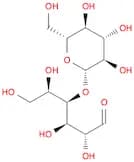
fibronectin leucine rich transmembrane protein 1(FLRT1) Homo sapiens This gene encodes a member of the fibronectin leucine rich transmembrane protein (FLRT) family. The family members may function in cell adhesion and/or receptor signalling. Their protein structures resemble small leucine-rich proteoglycans found in the extracellular matrix. The encoded protein shares sequence similarity with two other family members, FLRT2 and FLRT3. This gene is expressed in kidney and brain. [provided by RefSeq, Jul 2008],β-maltose
CAS :Formule :C12H22O11Degré de pureté :98%Couleur et forme :SolidMasse moléculaire :342.2965MBNL3 rabbit pAb
This gene encodes a member of the muscleblind-like family of proteins. The encoded protein may function in regulation of alternative splicing and may play a role in the pathophysiology of myotonic dystrophy. Alternatively spliced transcript variants have been described. [provided by RefSeq, Dec 2009],EBP2 rabbit pAb
function:Required for the processing of the 27S pre-rRNA.,similarity:Belongs to the EBP2 family.,subunit:Specifically interacts with EBV EBNA1. The EBNA1-EBP2 interaction is important for the stable segregation of EBV episomes during cell division.,tissue specificity:Ubiquitous.,USP53 rabbit pAb
caution:Although the active site residues are conserved, lacks the conserved His residue which is normally found 9 residues before the catalytic His.,function:Has no peptidase activity.,similarity:Belongs to the peptidase C19 family.,tissue specificity:Expressed predominantly in skeletal muscle and heart.,