Anticorps primaires
Les anticorps primaires sont des immunoglobulines qui se lient spécifiquement à un antigène d'intérêt, permettant la détection et la quantification de protéines, peptides ou autres biomolécules. Ces anticorps sont des outils essentiels dans de nombreuses applications, notamment le Western blot, l'immunohistochimie et l'ELISA. Chez CymitQuimica, nous proposons une vaste sélection d'anticorps primaires de haute qualité, offrant spécificité et sensibilité pour divers besoins de recherche, notamment en cancérologie, immunologie et biologie cellulaire.
Sous-catégories appartenant à la catégorie "Anticorps primaires"
- Anticorps pour la recherche sur le cancer(3.721 produits)
- Anticorps cardio-vasculaires(2 produits)
- Biologie du développement(764 produits)
- Anticorps relatifs à l’épigénétique(162 produits)
- Anticorps d'immunologie(2.585 produits)
- Anticorps du métabolisme(286 produits)
- Anticorps de microbiologie(741 produits)
- Transduction du signal(2.765 produits)
- Tags & Marqueurs cellulaires(34 produits)
Affichez 1 plus de sous-catégories
75562 produits trouvés pour "Anticorps primaires"
Trier par
Degré de pureté (%)
0
100
|
0
|
50
|
90
|
95
|
100
DMP4 rabbit pAb
This gene encodes a member of the family of secreted protein kinases. The encoded protein binds calcium and phosphorylates proteins involved in bone mineralization. Mutations in this gene are associated with the autosomal recessive disorder Raine syndrome. [provided by RefSeq, Apr 2014],ZHX2 rabbit pAb
The members of the zinc fingers and homeoboxes gene family are nuclear homodimeric transcriptional repressors that interact with the A subunit of nuclear factor-Y (NF-YA) and contain two C2H2-type zinc fingers and five homeobox DNA-binding domains. This gene encodes member 2 of this gene family. In addition to forming homodimers, this protein heterodimerizes with member 1 of the zinc fingers and homeoboxes family. [provided by RefSeq, Jul 2008],GAPDH Rabbit pAb
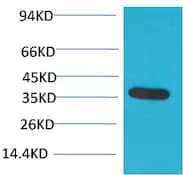
Glyceraldehyde 3 phosphate dehydrogenase (GAPDH) is well known as one of the key enzymes involved in glycolysis. GAPDH is constitutively expressed in almost all tissues at high levels, therefore antibodies against GAPDH are useful as loading controls for Western Blotting. Some physiological factors, such as hypoxia and diabetes, increase GAPDH expression in certain cell types.Rb (phospho Thr821) rabbit pAb
The protein encoded by this gene is a negative regulator of the cell cycle and was the first tumor suppressor gene found. The encoded protein also stabilizes constitutive heterochromatin to maintain the overall chromatin structure. The active, hypophosphorylated form of the protein binds transcription factor E2F1. Defects in this gene are a cause of childhood cancer retinoblastoma (RB), bladder cancer, and osteogenic sarcoma. [provided by RefSeq, Jul 2008],RCC1 rabbit pAb
disease:Patients with Raynaud disease produce antibodies that bind to RCC1.,function:Promotes the exchange of Ran-bound GDP by GTP. Involved in the regulation of onset of chromosome condensation in the S phase. Binds to the chromatin. RCC1/Ran complex (together with other proteins) acts as a component of a signal transmission pathway that detects unreplicated DNA.,similarity:Contains 7 RCC1 repeats.,subcellular location:Becomes dispersed throughout the cytoplasm during mitosis.,ErbB-3 rabbit pAb
This gene encodes a member of the epidermal growth factor receptor (EGFR) family of receptor tyrosine kinases. This membrane-bound protein has a neuregulin binding domain but not an active kinase domain. It therefore can bind this ligand but not convey the signal into the cell through protein phosphorylation. However, it does form heterodimers with other EGF receptor family members which do have kinase activity. Heterodimerization leads to the activation of pathways which lead to cell proliferation or differentiation. Amplification of this gene and/or overexpression of its protein have been reported in numerous cancers, including prostate, bladder, and breast tumors. Alternate transcriptional splice variants encoding different isoforms have been characterized. One isoform lacks the intermembrane region and is secreted outside the cell. This form acts to modulate the activity of the mCasein Kinase IIβ rabbit pAb
This gene encodes the beta subunit of casein kinase II, a ubiquitous protein kinase which regulates metabolic pathways, signal transduction, transcription, translation, and replication. The enzyme is composed of three subunits, alpha, alpha prime and beta, which form a tetrameric holoenzyme. The alpha and alpha prime subunits are catalytic, while the beta subunit serves regulatory functions. The enzyme localizes to the endoplasmic reticulum and the Golgi apparatus. Two transcript variants encoding different isoforms have been found for this gene. [provided by RefSeq, Sep 2013],O5AC2 rabbit pAb
Olfactory receptors interact with odorant molecules in the nose, to initiate a neuronal response that triggers the perception of a smell. The olfactory receptor proteins are members of a large family of G-protein-coupled receptors (GPCR) arising from single coding-exon genes. Olfactory receptors share a 7-transmembrane domain structure with many neurotransmitter and hormone receptors and are responsible for the recognition and G protein-mediated transduction of odorant signals. The olfactory receptor gene family is the largest in the genome. The nomenclature assigned to the olfactory receptor genes and proteins for this organism is independent of other organisms. [provided by RefSeq, Jul 2008],NOM1 rabbit pAb
Proteins that contain MIF4G (middle of eIF4G (MIM 600495)) and/or MA3 domains, such as NOM1, function in protein translation. These domains include binding sites for members of the EIF4A family of ATP-dependent DEAD box RNA helicases (see EIF4A1; MIM 602641) (Simmons et al., 2005 [PubMed 15715967]).[supplied by OMIM, Mar 2008],SG1D1 rabbit pAb
The protein encoded by this gene is a member of the lipophilin subfamily, part of the uteroglobin superfamily, and is an ortholog of prostatein, the major secretory glycoprotein of the rat ventral prostate gland. This gene product represents one component of a heterodimeric molecule present in human tears whose elution profile is consistent with prostatein, a tetrameric molecule composed of three peptide components in heterodimers. Assuming that human lipophilins are the functional counterparts of prostatein, they may be transcriptionally regulated by steroid hormones, with the ability to bind androgens, other steroids and possibly bind and concentrate estramustine, a chemotherapeutic agent widely used for prostate cancer. Although the gene has been reported to be on chromosome 15, this sequence appears to be from a cluster of genes on chromosome 11 that includes mammaglobin 2. [provided by RefSeq, Jul 2008],NBPF6 rabbit pAb
neuroblastoma breakpoint family member 6(NBPF6) Homo sapiens This gene is a member of the neuroblastoma breakpoint family (NBPF) which consists of dozens of recently duplicated genes primarily located in segmental duplications on human chromosome 1. This gene family has experienced its greatest expansion within the human lineage and has expanded, to a lesser extent, among primates in general. Members of this gene family are characterized by tandemly repeated copies of DUF1220 protein domains. Gene copy number variations in the human chromosomal region 1q21.1, where most DUF1220 domains are located, have been implicated in a number of developmental and neurogenetic diseases such as microcephaly, macrocephaly, autism, schizophrenia, mental retardation, congenital heart disease, neuroblastoma, and congenital kidney and urinary tract anomalies. Altered expression of some gene family members is associated with several types of cancer. This gene famTBP Rabbit pAb
The TATA-binding protein (TBP) is a general transcription factor that binds specifically to a DNA sequence called the TATA box. This DNA sequence is found about 30 base pairs upstream of the transcription start site in some eukaryotic gene promoters.EF1D rabbit pAb
eukaryotic translation elongation factor 1 delta(EEF1D) Homo sapiens This gene encodes a subunit of the elongation factor-1 complex, which is responsible for the enzymatic delivery of aminoacyl tRNAs to the ribosome. This subunit, delta, functions as guanine nucleotide exchange factor. It is reported that following HIV-1 infection, this subunit interacts with HIV-1 Tat. This interaction results in repression of translation of host cell proteins and enhanced translation of viral proteins. Several alternatively spliced transcript variants encoding multiple isoforms have been found for this gene. Related pseudogenes have been defined on chromosomes 1, 6, 7, 9, 11, 13, 17, 19.[provided by RefSeq, Aug 2010],ITA11 rabbit pAb
This gene encodes an alpha integrin. Integrins are heterodimeric integral membrane proteins composed of an alpha chain and a beta chain. This protein contains an I domain, is expressed in muscle tissue, dimerizes with beta 1 integrin in vitro, and appears to bind collagen in this form. Therefore, the protein may be involved in attaching muscle tissue to the extracellular matrix. Alternative transcriptional splice variants have been found for this gene, but their biological validity is not determined. [provided by RefSeq, Jul 2008],COPT1 rabbit pAb
The protein encoded by this gene is a high-affinity copper transporter found in the cell membrane. The encoded protein functions as a homotrimer to effect the uptake of dietary copper. [provided by RefSeq, Aug 2011],EphB6 rabbit pAb
This gene encodes a member of a family of transmembrane proteins that function as receptors for ephrin-B family proteins. Unlike other members of this family, the encoded protein does not contain a functional kinase domain. Activity of this protein can influence cell adhesion and migration. Expression of this gene is downregulated during tumor progression, suggesting that the protein may suppress tumor invasion and metastasis. Alternative splicing results in multiple transcript variants. [provided by RefSeq, Jul 2013],PAK6 rabbit pAb
This gene encodes a member of a family of p21-stimulated serine/threonine protein kinases, which contain an amino-terminal Cdc42/Rac interactive binding (CRIB) domain and a carboxyl-terminal kinase domain. These kinases function in a number of cellular processes, including cytoskeleton rearrangement, apoptosis, and the mitogen-activated protein (MAP) kinase signaling pathway. The protein encoded by this gene interacts with androgen receptor (AR) and translocates to the nucleus, where it is involved in transcriptional regulation. Changes in expression of this gene have been linked to prostate cancer. Alternative splicing results in multiple transcript variants. [provided by RefSeq, Dec 2015],Atm (phospho Ser1981) rabbit pAb
The protein encoded by this gene belongs to the PI3/PI4-kinase family. This protein is an important cell cycle checkpoint kinase that phosphorylates; thus, it functions as a regulator of a wide variety of downstream proteins, including tumor suppressor proteins p53 and BRCA1, checkpoint kinase CHK2, checkpoint proteins RAD17 and RAD9, and DNA repair protein NBS1. This protein and the closely related kinase ATR are thought to be master controllers of cell cycle checkpoint signaling pathways that are required for cell response to DNA damage and for genome stability. Mutations in this gene are associated with ataxia telangiectasia, an autosomal recessive disorder. [provided by RefSeq, Aug 2010],IFI-16 rabbit pAb
This gene encodes a member of the HIN-200 (hematopoietic interferon-inducible nuclear antigens with 200 amino acid repeats) family of cytokines. The encoded protein contains domains involved in DNA binding, transcriptional regulation, and protein-protein interactions. The protein localizes to the nucleoplasm and nucleoli, and interacts with p53 and retinoblastoma-1. It modulates p53 function, and inhibits cell growth in the Ras/Raf signaling pathway. Alternatively spliced transcript variants encoding different isoforms have been found for this gene. [provided by RefSeq, Apr 2011],Tuberin rabbit pAb
Mutations in this gene lead to tuberous sclerosis complex. Its gene product is believed to be a tumor suppressor and is able to stimulate specific GTPases. The protein associates with hamartin in a cytosolic complex, possibly acting as a chaperone for hamartin. Alternative splicing results in multiple transcript variants encoding different isoforms. [provided by RefSeq, Jul 2008],Septin 1 rabbit pAb
septin 1(SEPT1) Homo sapiens This gene is a member of the septin family of GTPases. Members of this family are required for cytokinesis and the maintenance of cellular morphology. This gene encodes a protein that can form homo- and heterooligomeric filaments, and may contribute to the formation of neurofibrillary tangles in Alzheimer's disease. Alternatively spliced transcript variants have been found but the full-length nature of these variants has not been determined. [provided by RefSeq, Dec 2012],mCherry-Tag Mouse mAb
mCherry is a fluorophore (a fluorescent molecule) used in biotechnology as a tracer to follow the flow of fluids, as a marker when tagged to molecules and cells components. mCherry is a monomeric fluorescent construct with peak absorption/emission at 587 nm and 610 nm, respectively. It is resistant to photobleaching and is stable. mCherry is sometimes preferred to other fluorophores due to its colour, as well as its photostability compared to other monomeric fluorophores.CD25 Mouse mAb
CD25 is the alpha chain of the IL-2 receptor. It is a type I transmembrane protein present on activated T cells, activated B cells.Mi2-β rabbit pAb
The product of this gene belongs to the SNF2/RAD54 helicase family. It represents the main component of the nucleosome remodeling and deacetylase complex and plays an important role in epigenetic transcriptional repression. Patients with dermatomyositis develop antibodies against this protein. Somatic mutations in this gene are associated with serous endometrial tumors. Alternative splicing results in multiple transcript variants encoding different isoforms. [provided by RefSeq, Jul 2014],RL7A rabbit pAb
Cytoplasmic ribosomes, organelles that catalyze protein synthesis, consist of a small 40S subunit and a large 60S subunit. Together these subunits are composed of 4 RNA species and approximately 80 structurally distinct proteins. This gene encodes a ribosomal protein that is a component of the 60S subunit. The protein belongs to the L7AE family of ribosomal proteins. It can interact with a subclass of nuclear hormone receptors, including thyroid hormone receptor, and inhibit their ability to transactivate by preventing their binding to their DNA response elements. This gene is included in the surfeit gene cluster, a group of very tightly linked genes that do not share sequence similarity. It is co-transcribed with the U24, U36a, U36b, and U36c small nucleolar RNA genes, which are located in its second, fifth, fourth, and sixth introns, respectively. This gene rearranges with the trk proto-oncogene tMaxiKα rabbit pAb
potassium calcium-activated channel subfamily M alpha 1(KCNMA1) Homo sapiens MaxiK channels are large conductance, voltage and calcium-sensitive potassium channels which are fundamental to the control of smooth muscle tone and neuronal excitability. MaxiK channels can be formed by 2 subunits: the pore-forming alpha subunit, which is the product of this gene, and the modulatory beta subunit. Intracellular calcium regulates the physical association between the alpha and beta subunits. Alternatively spliced transcript variants encoding different isoforms have been identified. [provided by RefSeq, Jul 2008],RSH4A rabbit pAb
This gene encodes a protein that appears to be a component the radial spoke head, as determined by homology to similar proteins in the biflagellate alga Chlamydomonas reinhardtii and other ciliates. Radial spokes, which are regularly spaced along cilia, sperm, and flagella axonemes, consist of a thin 'stalk' and a bulbous 'head' that form a signal transduction scaffold between the central pair of microtubules and dynein. Mutations in this gene cause primary ciliary dyskinesia 1, a disease arising from dysmotility of motile cilia and sperm. Alternative splicing results in multiple transcript variants. [provided by RefSeq, Sep 2009],ATP7A rabbit pAb
ATPase copper transporting alpha(ATP7A) Homo sapiens This gene encodes a transmembrane protein that functions in copper transport across membranes. This protein is localized to the trans Golgi network, where it is predicted to supply copper to copper-dependent enzymes in the secretory pathway. It relocalizes to the plasma membrane under conditions of elevated extracellular copper, and functions in the efflux of copper from cells. Mutations in this gene are associated with Menkes disease, X-linked distal spinal muscular atrophy, and occipital horn syndrome. Alternatively-spliced transcript variants have been observed. [provided by RefSeq, Aug 2013],Histone H4 (Tri Methyl Lys20) rabbit pAb
Histones are basic nuclear proteins that are responsible for the nucleosome structure of the chromosomal fiber in eukaryotes. Two molecules of each of the four core histones (H2A, H2B, H3, and H4) form an octamer, around which approximately 146 bp of DNA is wrapped in repeating units, called nucleosomes. The linker histone, H1, interacts with linker DNA between nucleosomes and functions in the compaction of chromatin into higher order structures. This gene is intronless and encodes a replication-dependent histone that is a member of the histone H4 family. Transcripts from this gene lack polyA tails but instead contain a palindromic termination element. This gene is found in the histone microcluster on chromosome 6p21.33. [provided by RefSeq, Aug 2015],ABCB8 rabbit pAb
This nuclear gene encodes a multi-pass membrane protein that is targeted to the mitochondrial inner membrane. The encoded protein is an ATP-dependent transporter that may mediate the passage of organic and inorganic molecules out of the mitochondria. Loss of function of the related gene in mouse results in a disruption of iron homeostasis between the mitochondria and cytosol. Alternative splicing results in multiple transcript variants. [provided by RefSeq, Aug 2013],PLC γ1 (phospho Tyr771) rabbit pAb
The protein encoded by this gene catalyzes the formation of inositol 1,4,5-trisphosphate and diacylglycerol from phosphatidylinositol 4,5-bisphosphate. This reaction uses calcium as a cofactor and plays an important role in the intracellular transduction of receptor-mediated tyrosine kinase activators. For example, when activated by SRC, the encoded protein causes the Ras guanine nucleotide exchange factor RasGRP1 to translocate to the Golgi, where it activates Ras. Also, this protein has been shown to be a major substrate for heparin-binding growth factor 1 (acidic fibroblast growth factor)-activated tyrosine kinase. Two transcript variants encoding different isoforms have been found for this gene. [provided by RefSeq, Jul 2008],PIPOX rabbit pAb
catalytic activity:L-pipecolate + O(2) = 2,3,4,5-tetrahydropyridine-2-carboxylate + H(2)O(2).,catalytic activity:Sarcosine + H(2)O + O(2) = glycine + formaldehyde + H(2)O(2).,cofactor:Binds 1 FAD per subunit.,function:Metabolizes sarcosine, L-pipecolic acid and L-proline.,similarity:Belongs to the MSOX/MTOX family.,subunit:Monomer.,PRDX4 rabbit pAb
The protein encoded by this gene is an antioxidant enzyme and belongs to the peroxiredoxin family. The protein is localized to the cytoplasm. Peroxidases of the peroxiredoxin family reduce hydrogen peroxide and alkyl hydroperoxides to water and alcohol with the use of reducing equivalents derived from thiol-containing donor molecules. This protein has been found to play a regulatory role in the activation of the transcription factor NF-kappaB. [provided by RefSeq, Jul 2008],AZI1 rabbit pAb
caution:The sequence shown here is derived from an Ensembl automatic analysis pipeline and should be considered as preliminary data.,function:May play a role in spermatogenesis.,PTM:Phosphorylated upon DNA damage, probably by ATM or ATR.,similarity:Contains 1 IQ domain.,S35D2 rabbit pAb
Nucleotide sugars, which are synthesized in the cytosol or the nucleus, are high-energy donor substrates for glycosyltransferases located in the lumen of the endoplasmic reticulum and Golgi apparatus. Translocation of nucleotide sugars from the cytosol into the lumen compartment is mediated by specific nucleotide sugar transporters, such as SLC35D2 (Suda et al., 2004 [PubMed 15082721]).[supplied by OMIM, Mar 2008],FoxO3a (phospho-Ser7) rabbit pAb
This gene belongs to the forkhead family of transcription factors which are characterized by a distinct forkhead domain. This gene likely functions as a trigger for apoptosis through expression of genes necessary for cell death. Translocation of this gene with the MLL gene is associated with secondary acute leukemia. Alternatively spliced transcript variants encoding the same protein have been observed. [provided by RefSeq, Jul 2008],TYSD1 rabbit pAb
This gene encodes a protease that removes the N-terminal peroxisomal targeting signal (PTS2) from proteins produced in the cytosol, thereby facilitating their import into the peroxisome. The encoded protein is also capable of removing the C-terminal peroxisomal targeting signal (PTS1) from proteins in the peroxisomal matrix. The full-length protein undergoes self-cleavage to produce shorter, potentially inactive, peptides. Alternative splicing results in multiple transcript variants for this gene. [provided by RefSeq, Jan 2013],Crystallin-αB (phospho Ser19) rabbit pAb
Mammalian lens crystallins are divided into alpha, beta, and gamma families. Alpha crystallins are composed of two gene products: alpha-A and alpha-B, for acidic and basic, respectively. Alpha crystallins can be induced by heat shock and are members of the small heat shock protein (HSP20) family. They act as molecular chaperones although they do not renature proteins and release them in the fashion of a true chaperone; instead they hold them in large soluble aggregates. Post-translational modifications decrease the ability to chaperone. These heterogeneous aggregates consist of 30-40 subunits; the alpha-A and alpha-B subunits have a 3:1 ratio, respectively. Two additional functions of alpha crystallins are an autokinase activity and participation in the intracellular architecture. The encoded protein has been identified as a moonlighting protein based on its ability to perform mechanistically distinOlfactory receptor 4F6 rabbit pAb
olfactory receptor family 4 subfamily F member 6(OR4F6) Homo sapiens Olfactory receptors interact with odorant molecules in the nose, to initiate a neuronal response that triggers the perception of a smell. The olfactory receptor proteins are members of a large family of G-protein-coupled receptors (GPCR) arising from single coding-exon genes. Olfactory receptors share a 7-transmembrane domain structure with many neurotransmitter and hormone receptors and are responsible for the recognition and G protein-mediated transduction of odorant signals. The olfactory receptor gene family is the largest in the genome. The nomenclature assigned to the olfactory receptor genes and proteins for this organism is independent of other organisms. [provided by RefSeq, Jul 2008],