Anticorps primaires
Les anticorps primaires sont des immunoglobulines qui se lient spécifiquement à un antigène d'intérêt, permettant la détection et la quantification de protéines, peptides ou autres biomolécules. Ces anticorps sont des outils essentiels dans de nombreuses applications, notamment le Western blot, l'immunohistochimie et l'ELISA. Chez CymitQuimica, nous proposons une vaste sélection d'anticorps primaires de haute qualité, offrant spécificité et sensibilité pour divers besoins de recherche, notamment en cancérologie, immunologie et biologie cellulaire.
Sous-catégories appartenant à la catégorie "Anticorps primaires"
- Anticorps pour la recherche sur le cancer(3.620 produits)
- Anticorps cardio-vasculaires(2 produits)
- Biologie du développement(751 produits)
- Anticorps relatifs à l’épigénétique(162 produits)
- Anticorps d'immunologie(2.624 produits)
- Anticorps du métabolisme(279 produits)
- Anticorps de microbiologie(736 produits)
- Transduction du signal(2.717 produits)
- Tags & Marqueurs cellulaires(33 produits)
Affichez 1 plus de sous-catégories
75324 produits trouvés pour "Anticorps primaires"
Trier par
Degré de pureté (%)
0
100
|
0
|
50
|
90
|
95
|
100
LAP1B rabbit pAb
This gene encodes a type 2 integral membrane protein that binds A- and B-type lamins. The encoded protein localizes to the inner nuclear membrane and may be involved in maintaining the attachment of the nuclear membrane to the nuclear lamina during cell division. Alternate splicing results in multiple transcript variants. [provided by RefSeq, Apr 2016],ANO2 rabbit pAb
ANO2 belongs to a family of calcium-activated chloride channels (CaCCs) (reviewed by Hartzell et al., 2009 [PubMed 19015192]).[supplied by OMIM, Jan 2011],PACAP rabbit pAb
function:May be involved in regulation of apoptosis.,induction:Down-regulated in primary B-cells early after ligand-stimulated activation.,subcellular location:In (PubMed:11350957) diffuse granular localization in the cytoplasm surrounding the nucleus.,subunit:Isoform 2 interacts with CASP2 and CASP9.,tissue specificity:Widely expressed with highest levels in adult brain. Expression is frequently lower in intestinal-type gastric cancer.,UBR5 rabbit pAb
This gene encodes a progestin-induced protein, which belongs to the HECT (homology to E6-AP carboxyl terminus) family. The HECT family proteins function as E3 ubiquitin-protein ligases, targeting specific proteins for ubiquitin-mediated proteolysis. This gene is localized to chromosome 8q22 which is disrupted in a variety of cancers. This gene potentially has a role in regulation of cell proliferation or differentiation. [provided by RefSeq, Jul 2008],CREB-1 (phospho Thr100) rabbit pAb
This gene encodes a transcription factor that is a member of the leucine zipper family of DNA binding proteins. This protein binds as a homodimer to the cAMP-responsive element, an octameric palindrome. The protein is phosphorylated by several protein kinases, and induces transcription of genes in response to hormonal stimulation of the cAMP pathway. Alternate splicing of this gene results in several transcript variants encoding different isoforms. [provided by RefSeq, Mar 2016],TNF-IP 8L2 rabbit pAb
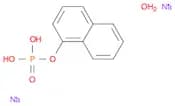
domain:The central region was initially thought to constitute a DED (death effector) domain. However, 3D-structure data reveal a previously uncharacterized fold that is different from the predicted fold of a DED (death effector) domain. It consists of a large, hydrophobic central cavity that is poised for cofactor binding.,function:Acts as a negative regulator of innate and adaptive immunity by maintaining immune homeostasis. Negative regulator of Toll-like receptor and T-cell receptor function. Prevents hyperresponsiveness of the immune system and maintains immune homeostasis. Inhibits jun/ap1 and NF-kappa-B activation. Promotes Fas-induced apoptosis.,similarity:Belongs to the TNFAIP8 family. TNFAIP8L2 subfamily.,subunit:May interact with CASP8; however, such result is unclear since PubMed:19079267 could not reproduce the interaction with CASP8.,Sodium naphthalen-1-yl phosphate hydrate
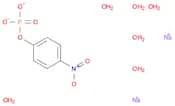
CAS :Formule :C10H9Na2O5PDegré de pureté :95%Couleur et forme :SolidMasse moléculaire :286.1288Phosphoric acid, mono(4-nitrophenyl) ester, sodium salt, hydrate(1:2:6)OTHER CA INDEX NAMES:Phosphoric acid, mono(4-nitrophenyl) ester, disodium salt, hexahydrate
CAS :Formule :C6H16NNa2O12PDegré de pureté :97%Couleur et forme :SolidMasse moléculaire :371.1440Atg16L2 rabbit pAb
function:May play a role in autophagy.,similarity:Belongs to the WD repeat ATG16 family.,similarity:Contains 7 WD repeats.,PGLS rabbit pAb
catalytic activity:6-phospho-D-glucono-1,5-lactone + H(2)O = 6-phospho-D-gluconate.,function:Hydrolysis of 6-phosphogluconolactone to 6-phosphogluconate.,pathway:Carbohydrate degradation; pentose phosphate pathway; D-ribulose 5-phosphate from D-glucose 6-phosphate (oxidative stage): step 2/3.,similarity:Belongs to the glucosamine/galactosamine-6-phosphate isomerase family. 6-phosphogluconolactonase subfamily.,ARL16 rabbit pAb
The protein encoded by this gene belongs to the ARL (ADP-ribosylation factor-like) family of proteins, which are structurally related to ADP-ribosylation factors (ARFs). This protein has been shown to have an inhibitory role in the cellular antiviral response. This gene product interacts with the C-terminal domain of the DEXD/H-box helicase 58 (DDX58) gene product. This interaction was found to suppress the association between the DDX58 gene product and RNA, thereby negatively regulating the activity of the DDX58 gene product. [provided by RefSeq, Jul 2016],ALR rabbit pAb
The hepatotrophic factor designated augmenter of liver regeneration (ALR) is thought to be one of the factors responsible for the extraordinary regenerative capacity of mammalian liver. It has also been called hepatic regenerative stimulation substance (HSS). The gene resides on chromosome 16 in the interval containing the locus for polycystic kidney disease (PKD1). The putative gene product is 42% similar to the scERV1 protein of yeast. The yeast scERV1 gene had been found to be essential for oxidative phosphorylation, the maintenance of mitochondrial genomes, and the cell division cycle. The human gene is both the structural and functional homolog of the yeast scERV1 gene. [provided by RefSeq, Jul 2008],RNF5 rabbit pAb
The protein encoded by this gene contains a RING finger, which is a motif known to be involved in protein-protein interactions. This protein is a membrane-bound ubiquitin ligase. It can regulate cell motility by targeting paxillin ubiquitination and altering the distribution and localization of paxillin in cytoplasm and cell focal adhesions. [provided by RefSeq, Jul 2008],HXB3 rabbit pAb
This gene is a member of the Antp homeobox family and encodes a nuclear protein with a homeobox DNA-binding domain. It is included in a cluster of homeobox B genes located on chromosome 17. The encoded protein functions as a sequence-specific transcription factor that is involved in development. Increased expression of this gene is associated with a distinct biologic subset of acute myeloid leukemia (AML). [provided by RefSeq, Jul 2008],ABCD4 rabbit pAb
The protein encoded by this gene is a member of the superfamily of ATP-binding cassette (ABC) transporters. ABC proteins transport various molecules across extra- and intra-cellular membranes. ABC genes are divided into seven distinct subfamilies (ABC1, MDR/TAP, MRP, ALD, OABP, GCN20, White). This protein is a member of the ALD subfamily, which is involved in peroxisomal import of fatty acids and/or fatty acyl-CoAs in the organelle. All known peroxisomal ABC transporters are half transporters which require a partner half transporter molecule to form a functional homodimeric or heterodimeric transporter. The function of this peroxisomal membrane protein is unknown. However, it is speculated that it may function as a heterodimer for another peroxisomal ABC transporter and, therefore, may modify the adrenoleukodystrophy phenotype. It may also play a role in the process of peroxiGRK 6 rabbit pAb
This gene encodes a member of the guanine nucleotide-binding protein (G protein)-coupled receptor kinase subfamily of the Ser/Thr protein kinase family. The protein phosphorylates the activated forms of G protein-coupled receptors thus initiating their deactivation. Several transcript variants encoding different isoforms have been described for this gene. [provided by RefSeq, Jul 2008],L(+)-Lactic Acid
CAS :Formule :C3H6O3Degré de pureté :75%Couleur et forme :LiquidMasse moléculaire :90.0779