Sucres du squelette et nucléobases
Les sucres de la colonne vertébrale et les nucléobases sont des composants essentiels des acides nucléiques tels que l'ADN et l'ARN. La colonne vertébrale est composée de groupes de sucre et de phosphate, tandis que les nucléobases forment le code génétique par appariement des bases. Ces composés sont cruciaux dans l'étude de la génétique et de la biologie moléculaire. Chez CymitQuimica, vous pouvez trouver une variété de sucres de la colonne vertébrale et de nucléobases pour la recherche et l'utilisation en laboratoire.
1001 produits trouvés pour "Sucres du squelette et nucléobases"
Trier par
Degré de pureté (%)
0
100
|
0
|
50
|
90
|
95
|
100
5-Hydroxymethyluridine
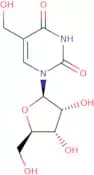
CAS :<p>5-Hydroxymethyluridine is a nucleoside that is synthesized from uridine. It has shown to be effective in the treatment of inflammatory diseases, such as rheumatoid arthritis, and also has antiviral activity against herpes simplex virus. 5-Hydroxymethyluridine has been shown to have a high affinity for hydrophilic interaction chromatography (HIC) and can be used to purify glycosylases. This compound can also inhibit the formation of cancer cells by inhibiting the transcriptional activity of RNA polymerase II. 5-Hydroxymethyluridine has been found to demethylate DNA while maintaining its ability to bind with DNA-dependent RNA polymerase II. This process is catalyzed by glycosylases and hydroxylases that are found in the body.</p>Formule :C10H14N2O7Degré de pureté :Min. 95%Couleur et forme :PowderMasse moléculaire :274.23 g/mol3’-Deoxy-3’-fluoro-6-azauridine
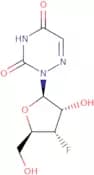
CAS :<p>Please enquire for more information about 3’-Deoxy-3’-fluoro-6-azauridine including the price, delivery time and more detailed product information at the technical inquiry form on this page</p>Degré de pureté :Min. 95%5-Methylcytosine
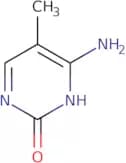
CAS :<p>5-Methylcytosine is a nucleic acid that is found in the DNA and RNA of the cell. It is an important component of methylation, which is the process by which a methyl group is added to a molecule. This process can lead to cellular transformation, a process that can cause cancer. 5-Methylcytosine has also been shown as a molecular pathogenesis factor in infectious diseases such as HIV and herpes simplex virus type 1. The presence of 5-methylcytosine in nuclear DNA has been detected by analytical techniques such as gas chromatography/mass spectrometry (GC/MS). There are many analytical methods, including GC/MS, that can be used to detect 5-methylcytosine in cellular nuclei.</p>Formule :C5H7N3ODegré de pureté :Min. 95%Couleur et forme :PowderMasse moléculaire :125.13 g/molAdenine hydrochloride
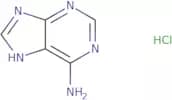
CAS :<p>Purine nucleobase; component of nucleic acids and coenzymes</p>Formule :C5H6ClN5Degré de pureté :Min. 98 Area-%Couleur et forme :Off-White PowderMasse moléculaire :171.59 g/molXanthine sodium salt monohydrate
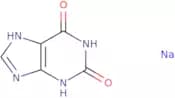
CAS :<p>Xanthine sodium salt monohydrate is a dietary supplement that is used to treat metabolic disorders such as hyperuricemia and gout. It also has antiviral effects against herpes simplex virus-1 (HSV-1) and type-2 (HSV-2). Xanthine sodium salt monohydrate inhibits the production of viral DNA polymerase, which causes cell death by inhibiting the synthesis of proteins vital for cell division. Xanthine sodium salt monohydrate can be used to inhibit the growth of cancer cells in vitro. The mechanism of action is not yet fully understood, but it is thought that xanthine may inhibit phosphodiesterase activity or have a direct effect on the cell membrane.</p>Formule :C5H3N4NaO2•H2ODegré de pureté :Min. 95 Area-%Couleur et forme :PowderMasse moléculaire :192.11 g/molN6-Ethenoadenine
CAS :<p>N6-Ethenoadenine is a nucleoside that is generated during DNA repair. It is formed by the enzymatic activity of the enzyme N6-adenosyltransferase in the presence of ATP and S-adenosylmethionine. It has been shown to be a potent inducer of DNA damage and mutagenesis, as well as an inhibitor of polymerase chain reaction (PCR) and DNA replication. N6-Ethenoadenine is also an agonist for P2Y receptors, which are important in chemical biology. This nucleoside may serve as a potential biomarker for genotoxic events, such as chemotherapy treatments or exposure to ionizing radiation.</p>Formule :C7H5N5Degré de pureté :Min. 95%Couleur et forme :White PowderMasse moléculaire :159.15 g/mol4-[2'-(7''-Deazaguanine)ethyl]benzoic acid N-hydroxysuccinimide ester
CAS :<p>4-[2'-(7''-Deazaguanine)ethyl]benzoic acid N-hydroxysuccinimide ester is a useful intermediate in the synthesis of 7''-deazaguanine, which is a key building block in the synthesis of DNA. 4-[2'-(7''-Deazaguanine)ethyl]benzoic acid N-hydroxysuccinimide ester is a versatile building block that can be used in the synthesis of complex compounds. It has been shown to react with amines, sulfonyl chlorides, and epoxides to form amides, sulfonamides, and epoxy amines respectively. The CAS number for this compound is 204257-65-8.</p>Formule :C19H17N5O5Degré de pureté :Min. 95%Masse moléculaire :395.37 g/mol3-Methyluracil
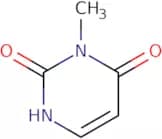
CAS :<p>3-Methyluracil is a molecule with the molecular formula CH3CHO. It has a protonated form, which is NH2CH2COOH, and an unprotonated form, which is NHCH2COOH. The protonation of 3-methyluracil can be seen in the hydrogen bonding between the two molecules. 3-Methyluracil is found in clinical studies as an effective treatment for obesity. It also has been shown to have nucleobase sequence specificity and can be used to detect adenosine in RNA sequences. 3-Methyluracil is a nucleophilic base that can bond with hydroxide ions from water or other protic solvents. This reaction results in the molecule becoming more acidic, which can be seen by the decrease in pH level when it comes into contact with hydrochloric acid.</p>Formule :C5H6N2O2Degré de pureté :Min. 95 Area-%Couleur et forme :White Off-White PowderMasse moléculaire :126.11 g/molN2-Isobutyrylguanine
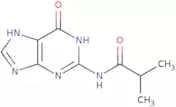
CAS :<p>N2-Isobutyrylguanine is a nucleobase that is synthesized by the activation of formyl group. It has been shown to be an effective inhibitor of RNA synthesis in vitro and in vivo, with a potency similar to that of guanine. The solid-phase synthesis method for N2-Isobutyrylguanine was developed by the use of chloride as a reactive agent. This nucleobase has also been used as monomers to prepare polymers and sulfoxides, which are insoluble polymers with enhanced solubility. N2-Isobutyrylguanine can be obtained by reacting phosphite with tautomers or by using molecular modeling methods.</p>Formule :C9H11N5O2Degré de pureté :Min. 95%Couleur et forme :PowderMasse moléculaire :221.22 g/mol3’-β-Azido-2’,3’-dideoxy-5-fluorouridine
CAS :<p>Please enquire for more information about 3’-beta-Azido-2’,3’-dideoxy-5-fluorouridine including the price, delivery time and more detailed product information at the technical inquiry form on this page</p>Degré de pureté :Min. 95%Adenine phosphate
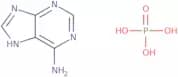
CAS :Produit contrôlé<p>Adenine phosphate is a molecule that acts as a regulator of endogenous adenosine. It has been shown to inhibit the growth of skin cells in tissue culture and to be effective against influenza virus and other viruses when used in combination with pyridoxine hydrochloride. The molecular weight of adenine phosphate is 314.2 g/mol, corresponding to two nitrogen atoms and four phosphorus atoms. Adenine phosphate is an oxidized form of adenosine triphosphate (ATP) with one phosphate group removed from the molecule. This irreversible oxidation occurs when ATP is exposed to the environment, for example, during tissue culture or viral infection. The effective dose for treating cancer has not yet been determined; however, doses of up to 5 mg/kg are not toxic to mice.</p>Formule :C5H5N5•H3PO4Degré de pureté :Min. 95%Couleur et forme :SolidMasse moléculaire :233.12 g/mol6-Amino-1,3-dimethyluracil
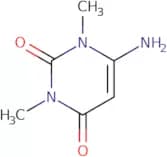
CAS :<p>6-Amino-1,3-dimethyluracil is a synthetic compound that has been shown to have antiinflammatory activity. This drug was synthesized from recycled methylene biphenyls and quinoline derivatives. 6-Amino-1,3-dimethyluracil inhibits the synthesis of proteins in cells by inhibiting the production of amino acids such as methionine through an attack on the amino group of methionine. 6-Amino-1,3-dimethyluracil also has apoptotic activity, which may be due to its ability to inhibit protein synthesis and increase the levels of active methylene.</p>Formule :C6H9N3O2Degré de pureté :Min. 95%Couleur et forme :PowderMasse moléculaire :155.15 g/molN2-Boc-guanine-9-acetic acid
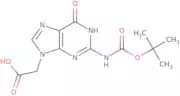
CAS :<p>N2-Boc-guanine-9-acetic acid is a versatile building block that is used as a reagent, speciality chemical and intermediate in the synthesis of complex compounds. It has shown high quality, high purity and usefulness as an intermediate in the synthesis of organic molecules. This compound can be used to generate large quantities of guanine derivatives which are important building blocks for many types of research chemicals. N2-Boc-guanine-9-acetic acid is also useful as a reaction component or scaffold in organic syntheses.</p>Formule :C12H15N5O5Degré de pureté :Min. 95 Area-%Couleur et forme :White Off-White PowderMasse moléculaire :309.28 g/mol7-Cyano-7-deaza-2’-deoxyguanosine
CAS :<p>7-Cyano-7-deaza-2’-deoxyguanosine is a pyrrole nucleoside analog that has been shown to inhibit the replication of herpes simplex virus type 1 and 2 in human cell lines. 7-Cyano-7-deaza-2’-deoxyguanosine is a synthetic nucleoside analog that is structurally similar to deoxyadenosine, but with a cyanide group instead of an oxygen atom. This compound has been shown to have the same biochemical properties as deoxyadenosine, including inhibiting the incorporation of uridine into RNA and DNA. In addition, 7-Cyano-7-deaza-2’-deoxyguanosine inhibits the synthesis of proteins from amino acids by competitive inhibition of ribonucleotide reductase, which catalyzes the conversion of ribonucleotides to deoxyribonucleotides. The enzyme's function</p>Formule :C12H13N5O4Degré de pureté :Min. 95%Couleur et forme :PowderMasse moléculaire :291.26 g/mol3-Benzyladenine
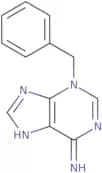
CAS :<p>3-Benzyladenine is an alkylating agent that has been shown to inhibit the growth of certain bacteria. It has been used as a marker for epidemiological studies and in the production of monoclonal antibodies. 3-Benzyladenine binds to DNA by methylating the N7 position of guanine, which blocks DNA replication and transcription. 3-Benzyladenine also inhibits chloride transport in cells with a diet high in protein and prevents the growth of bacteria through hydrophobic interactions with cell membranes. The bactericidal activity of 3-benzyladenine can be increased by deuteration or base excision, which selectively destroys bacterial DNA.</p>Formule :C12H11N5Degré de pureté :Min. 95%Couleur et forme :PowderMasse moléculaire :225.25 g/mol3’-β-Amino-2’,3’-dideoxy-5-fluorouridine
CAS :Please enquire for more information about 3’-beta-Amino-2’,3’-dideoxy-5-fluorouridine including the price, delivery time and more detailed product information at the technical inquiry form on this pageDegré de pureté :Min. 95%Guanine
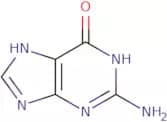
CAS :<p>Guanine is a purine base that is found in the DNA and RNA of all living cells. It plays an important role as a component of the nucleic acid molecule, where it is paired with cytosine. Guanine is involved in many chemical reactions and biological processes, including protein synthesis and cell division. The lack of guanine can lead to deficiency symptoms such as hemolytic anemia or erythrocyte cytoplasmic inclusion bodies. Guanine has been shown to have chemiluminescent properties, which can be used to detect its presence in samples containing DNA or RNA. This reaction occurs when guanine reacts with hydrogen peroxide (H2O2) to form guanidine (HN=C(NH2)NH2). The reaction produces excited states that emit light at a wavelength of 395 nm when they return to their ground state. Guanidine also has electrochemical impedance spectroscopy properties, which can be used for analytical purposes</p>Formule :C5H5N5ODegré de pureté :Min. 98 Area-%Couleur et forme :PowderMasse moléculaire :151.13 g/molN6-(2-Isopentenyl)adenine
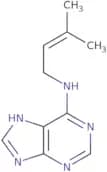
CAS :<p>N6-(2-Isopentenyl)adenine is a component of some nucleic acid molecules and can be synthesized from adenosine. It is used in vitro as a matrix effect to enhance the production of enzymes that are involved in the synthesis of amino acids, peptides, and proteins. N6-(2-Isopentenyl)adenine has been shown to stimulate the activity of enzymes such as urease, glucose oxidase, and horseradish peroxidase. This compound has been found to inhibit the replication of infectious agents by binding to DNA or RNA. The enzyme activities that are stimulated by this substance are important for the synthesis of essential biochemical compounds such as proteins and amino acids. In addition, it has been shown that N6-(2-Isopentenyl)adenine can inhibit autoimmune diseases and cytokinin.</p>Formule :C10H13N5Degré de pureté :Min. 95%Couleur et forme :White PowderMasse moléculaire :203.24 g/mol3’-Azido-3’-deoxy-5-fluorouridine
CAS :<p>Please enquire for more information about 3’-Azido-3’-deoxy-5-fluorouridine including the price, delivery time and more detailed product information at the technical inquiry form on this page</p>Degré de pureté :Min. 95%Nb-N-(benzhydryloxycarbonyl)cytosine)-1-acetic acid
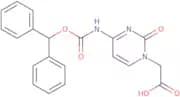
CAS :<p>Nb-N-(benzhydryloxycarbonyl)cytosine)-1-acetic acid is a speciality chemical that is used as a reagent, building block, and scaffold for organic synthesis. This compound can be used in various reactions to produce complex compounds with high purity. Nb-N-(benzhydryloxycarbonyl)cytosine)-1-acetic acid is an excellent starting material for the production of fine chemicals, research chemicals, and versatile building blocks. It is also a useful intermediate for the production of pharmaceuticals and other useful compounds.</p>Formule :C20H17N3O5Degré de pureté :Min. 98 Area-%Couleur et forme :White PowderMasse moléculaire :379.37 g/mol


![4-[2'-(7''-Deazaguanine)ethyl]benzoic acid N-hydroxysuccinimide ester](/_next/image/?url=https%3A%2Fstatic.cymitquimica.com%2Fproducts%2F3D%2Fthumb-webp%2FFD20837.webp&w=3840&q=75)