Sucres du squelette et nucléobases
Les sucres de la colonne vertébrale et les nucléobases sont des composants essentiels des acides nucléiques tels que l'ADN et l'ARN. La colonne vertébrale est composée de groupes de sucre et de phosphate, tandis que les nucléobases forment le code génétique par appariement des bases. Ces composés sont cruciaux dans l'étude de la génétique et de la biologie moléculaire. Chez CymitQuimica, vous pouvez trouver une variété de sucres de la colonne vertébrale et de nucléobases pour la recherche et l'utilisation en laboratoire.
1001 produits trouvés pour "Sucres du squelette et nucléobases"
Trier par
Degré de pureté (%)
0
100
|
0
|
50
|
90
|
95
|
100
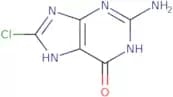
8-Chloroguanine
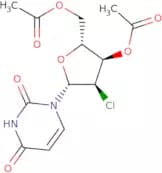
CAS :<p>8-Chloroguanine is a carcinogen that has been shown to cause cancer in laboratory animals. It is a reactive compound with a hydroxyl group and a hydrogen bond that can react with DNA, leading to the formation of 8-chloroadenine (8-CAD) and 8-chloroguanine (8-CG). These compounds are then converted into hypochlorous acid, which has been shown to be an inflammatory agent. The analytical method for quantifying 8-chloroguanine can be done by electrochemical impedance spectroscopy. This method has been used in model studies of inflammatory diseases.</p>Formule :C5H4ClN5ODegré de pureté :Min. 95 Area-%Couleur et forme :White PowderMasse moléculaire :185.57 g/mol3’,5’-Di-O-acetyl-2’-chloro-2’-deoxyuridine
CAS :<p>Please enquire for more information about 3’,5’-Di-O-acetyl-2’-chloro-2’-deoxyuridine including the price, delivery time and more detailed product information at the technical inquiry form on this page</p>Degré de pureté :Min. 95%6-Benzylamino-7-deazapurine
CAS :<p>6-Benzylamino-7-deazapurine is a drug that has been shown to be effective in the treatment of pancreatic cancer. It is a monomer that reacts with nucleophiles such as 6-mercaptopurine, which are present in the human lung. The reaction generates an exergonic molecule that can be used to generate ATP and regenerate NAD+ during irradiation. This process has been observed using kinetic studies on human colon adenocarcinoma cells. 6-Benzylamino-7-deazapurine can also react with triazole compounds to form a linker and increase the rate of polymerization. The optimization of this reaction time could lead to more efficient cancer treatments.</p>Formule :C13H12N4Degré de pureté :Min. 95%Couleur et forme :PowderMasse moléculaire :224.26 g/mol5-Acetamido-6-amino-3-methyluracil hydrate
CAS :<p>5-Acetamido-6-amino-3-methyluracil hydrate (AAU) is a drug that is used as an analytical reagent in the determination of caffeine, 5-hydroxytryptophan, and other compounds. It can be used to assess interactions between drugs and enzyme activities. AAU has been shown to be a suitable substrate for many enzymes, including alcohol dehydrogenase, acetylcholinesterase, catalase, and glucose oxidase. The sample preparation procedure is performed by dissolving the compound in water or ethanol. The sample is then filtered before it is analyzed using high performance liquid chromatography (HPLC). The chemical properties of AAU are such that it can be easily transported from one place to another without undergoing significant changes in physical properties. AAU has been shown to have no effect on biological samples when exposed to radiation.</p>Formule :C7H10N4O3·H2ODegré de pureté :Min. 95%Couleur et forme :Slightly Yellow PowderMasse moléculaire :216.2 g/molAdenine
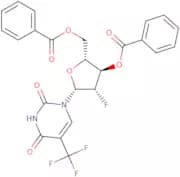
CAS :<p>Purine nucleobase; component of nucleic acids and coenzymes</p>Formule :C5H5N5Degré de pureté :Min. 98 Area-%Couleur et forme :White PowderMasse moléculaire :135.13 g/mol3’,5’-Di-O-benzoyl-2’-deoxy-2’-fluoro-5-trifluoromethyl-arabinouridine
CAS :<p>Please enquire for more information about 3’,5’-Di-O-benzoyl-2’-deoxy-2’-fluoro-5-trifluoromethyl-arabinouridine including the price, delivery time and more detailed product information at the technical inquiry form on this page</p>Degré de pureté :Min. 95%8-Aza-2,6-diaminopurine sulfate (1:x)
CAS :<p>8-Aza-2,6-diaminopurine sulfate (1:x) is a sulfate salt that is soluble in water. The molecular mass of the compound is 581.10 g/mol and it has a molecular formula of C5H7N3O4S. The crystal structure of the compound consists of an asymmetric unit containing one molecule. The 8-aza-2,6-diaminopurine monohydrate salt has a solubility of 1 g/100 mL in water at 25°C. It also has a melting point of 190°C and a boiling point of 340°C.</p>Formule :C4H5N7·xH2SO4Degré de pureté :Min. 95%Couleur et forme :Slightly Yellow PowderMasse moléculaire :151.13 g/mol7-Deazaguanine
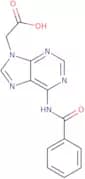
CAS :<p>7-Deazaguanine is a nucleoside with potential as an antiviral agent. 7-Deazaguanine inhibits the activity of the enzyme RNA polymerase II, which is required for viral replication. The drug binds to the DNA template, inhibiting polymerase chain reaction (PCR), and prevents transcription of viral RNA by hydrogen bonding to its complementary strands. In addition, it has been shown to reduce the production of epidermal growth factor in cells.</p>Formule :C6H6N4ODegré de pureté :Min. 95%Couleur et forme :Brown PowderMasse moléculaire :150.14 g/mol6-Benzoylamino-9H-purine-9-acetic acid
CAS :<p>6-Benzoylamino-9H-purine-9-acetic acid (BAPAA) is a high quality reagent that is used in the synthesis of complex compounds. It is also a useful intermediate in the preparation of fine chemicals, speciality chemicals, and research chemicals. 6-Benzoylamino-9H-purine-9-acetic acid is a versatile building block for the synthesis of novel compounds with desired biological activity. This compound is an excellent reaction component because it can be used to synthesize various chemical structures.</p>Formule :C14H11N5O3Degré de pureté :Min. 95%Couleur et forme :PowderMasse moléculaire :297.27 g/mol5-Hydroxymethylcytosine
CAS :<p>5-Hydroxymethylcytosine is a metabolite of the nucleic acid cytosine. It is an epigenetic modification that alters gene expression without changing the DNA sequence. 5-Hydroxymethylcytosine has been shown to be a potential biomarker of cellular transformation and is involved in axonal growth, transcriptional regulation, and leukemia inhibitory factor. 5-Hydroxymethylcytosine binds to nuclear dna, which inhibits replication by binding to the duplexes of dna (the double helix) and halting transcriptional elongation. 5-Hydroxymethylcytosine also binds cell factor, which is necessary for cell proliferation and differentiation.</p>Formule :C5H7N3O2Degré de pureté :Min. 95 Area-%Couleur et forme :Off-White PowderMasse moléculaire :141.13 g/mol2-Thiouracil
CAS :<p>2-Thiouracil is a photochemical that reacts with DNA by intermolecular hydrogen bonding, leading to DNA strand breakage. The reaction mechanism of 2-thiouracil has been elucidated through in vitro assays, which showed that the drug binds to the major groove of DNA duplexes and causes cleavage in the region containing two nitrogen atoms.</p>Formule :C4H4N2OSDegré de pureté :Min. 98 Area-%Couleur et forme :PowderMasse moléculaire :128.15 g/mol3’-Deoxy-5-fluorouridine
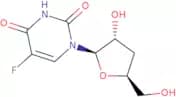
CAS :<p>3’-Deoxy-5-fluorouridine is a synthetic compound that is used as an anticancer drug. It has been shown to induce apoptosis in cancer cells through the modulation of polymerase, synthetase and other enzymes involved in DNA synthesis. 3’-Deoxy-5-fluorouridine also inhibits the activity of viral thymidylate synthase, which prevents the conversion of deoxyuridine triphosphate (dUTP) to thymidylate monophosphate (dTMP), preventing DNA replication and cell division. This chemical can be synthesized by reacting uracil with trifluoroacetic acid followed by saponification.</p>Degré de pureté :Min. 95%7-Deazaxanthine
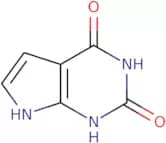
CAS :<p>7-Deazaxanthine is a purine derivative that has been shown to have antiangiogenic properties. It inhibits the growth of cancer cells by inhibiting the synthesis of vascular endothelial growth factor (VEGF), which is a potent angiogenic factor. 7-Deazaxanthine also binds to the VEGF receptor, preventing it from binding to VEGF. The x-ray crystal structures and kinetic data for 7-deazaadenosine suggest that this compound may be an inhibitor of hydrogen bonding interactions between amino acids in protein molecules, leading to its antiangiogenic activity. 7-Deazaxanthine does not prevent the activation of tyrosine kinases or phosphatases. In addition, this compound has been shown to inhibit the proliferation of breast cancer cells in culture and in vivo studies using mouse models. This drug also has glycosidic bond, which can result in a variety of chemical structures due to different types of glycos</p>Formule :C6H5N3O2Degré de pureté :Min. 98 Area-%Couleur et forme :PowderMasse moléculaire :151.12 g/molO6-Diphenylcarbamoyl-N2-isobutyrylguanine
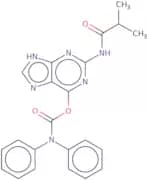
CAS :<p>Synthetic building block for nucleic acid research</p>Formule :C22H20N6O3Degré de pureté :Min. 95%Couleur et forme :PowderMasse moléculaire :416.43 g/mol5-Acetylamino-6-formylamino-3-methyluracil
CAS :<p>5-Acetylamino-6-formylamino-3-methyluracil is an analysis method that can be used to determine the effectiveness of certain contraceptives. This drug has shown a potential to interact with other drugs, such as caffeine and amphetamines. It is also used to measure the enzyme activities of polymorphic human erythrocytes. 5-Acetylamino-6-formylamino-3-methyluracil is used in the preparation of blood samples for DNA sequencing and polymerase chain reaction (PCR) amplification. The concentration of intracellular calcium ions in humans has been shown to increase when this drug is administered, which leads to hyperproliferative diseases like cancer or HIV infection.</p>Formule :C8H10N4O4Degré de pureté :(%) Min. 95%Couleur et forme :Slightly Yellow PowderMasse moléculaire :226.19 g/mol3’,5’-Di-O-acetyl-2’-azido-2’-deoxyuridine
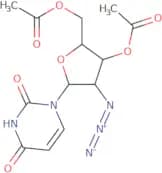
CAS :<p>Please enquire for more information about 3’,5’-Di-O-acetyl-2’-azido-2’-deoxyuridine including the price, delivery time and more detailed product information at the technical inquiry form on this page</p>Degré de pureté :Min. 95%5-Azacytosine
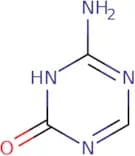
CAS :<p>Intermediate in the synthesis of Decitabine</p>Formule :C3H4N4ODegré de pureté :Min. 95%Couleur et forme :PowderMasse moléculaire :112.09 g/molN2-Acetylguanine
CAS :<p>N2-Acetylguanine is a reactive compound that inhibits the growth of cancer cells in leukemia. It is an antimicrobial agent that has significant cytotoxicity against leukemia cells and other bacterial cells. N2-Acetylguanine reacts with dihydrozeatin to form acyclic nucleoside phosphonate, which inhibits the synthesis of DNA, RNA, and protein. This reaction yields a high yield of this product in a short period of time. The modification process also creates a more efficient method for synthesizing this compound. N2-Acetylguanine can be used to treat dyslipidemia by decreasing cholesterol levels in the blood and can also be used as an active substance in the treatment of diabetes mellitus type II and insulin resistance.</p>Formule :C7H7N5O2Degré de pureté :Min. 95%Couleur et forme :PowderMasse moléculaire :193.17 g/mol5-Bromouracil
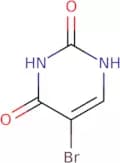
CAS :<p>5-Bromouracil is a cytotoxic agent that inhibits the synthesis of DNA by inhibiting the enzyme thymine-5-bromo-2'-deoxyribonucleotide synthetase. It also has genotoxic effects on the organism, which can be observed in transfection experiments with human lymphocytes and polymerase chain reaction (PCR) experiments. 5-Bromouracil binds to the hydroxyl group of thymine and interacts with the nucleic acid bases, blocking the process of DNA synthesis. This drug is used to treat cancer in humans, but it is also toxic to eosinophils, which are white blood cells that produce chemicals such as peroxidases that help fight infections. The mechanism of action for 5-Bromouracil is not yet fully understood.</p>Formule :C4H3BrN2O2Degré de pureté :Min. 95%Couleur et forme :Yellow PowderMasse moléculaire :190.98 g/mol5-Methylcytosine hydrochloride salt
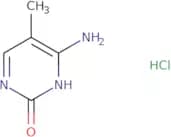
CAS :<p>5-Methylcytosine hydrochloride salt is a metabolite of cytosine that occurs naturally in the body. It is used as an inhibitor of DNA methylation to study the effect of this process on gene expression. 5-Methylcytosine hydrochloride salt has been shown to inhibit the production of growth factors, such as insulin-like growth factor 1, and radiation energy. It also causes oxidative damage to DNA and inhibits the oxidation of urea nitrogen in lettuce. The matrix effect may interfere with the analysis of 5-methylcytosine hydrochloride salt by spectrometry.</p>Formule :C5H7N3O·HClDegré de pureté :Min. 95%Couleur et forme :PowderMasse moléculaire :161.59 g/mol