Sucres du squelette et nucléobases
Les sucres de la colonne vertébrale et les nucléobases sont des composants essentiels des acides nucléiques tels que l'ADN et l'ARN. La colonne vertébrale est composée de groupes de sucre et de phosphate, tandis que les nucléobases forment le code génétique par appariement des bases. Ces composés sont cruciaux dans l'étude de la génétique et de la biologie moléculaire. Chez CymitQuimica, vous pouvez trouver une variété de sucres de la colonne vertébrale et de nucléobases pour la recherche et l'utilisation en laboratoire.
1001 produits trouvés pour "Sucres du squelette et nucléobases"
Trier par
Degré de pureté (%)
0
100
|
0
|
50
|
90
|
95
|
100
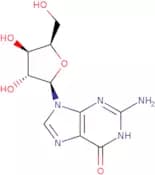
9-(β-D-Xylofuranosyl)guanine
CAS :<p>9-(β-D-xylofuranosyl)guanine (9XG) is a trifluoride. It is an antiviral agent that inhibits the growth of herpes virus, in particular by methylating guanosine to 9-methylguanosine in the viral DNA. 9XG binds to the viral DNA and prevents its replication through the inhibition of RNA synthesis. The drug is active against many different types of viruses and has been shown to be effective against tissue cultures infected with herpes virus. 9XG is synthesized from guanosine and boron trifluoride etherate, which are reacted at -78 degrees Celsius for three days. This yields a mixture of compounds with various peracylation groups, which are then separated by chromatography.</p>Degré de pureté :Min. 95%Adenine sulfate dihydrate
CAS :<p>Adenine sulfate dihydrate is an important component of the energy-producing process in mitochondria. Adenine sulfate dihydrate is a necessary cofactor for many metabolic reactions, including those that produce ATP and NADH. It has been shown to promote growth factor activity and stimulate cell proliferation. Adenine sulfate dihydrate can be used as a nutrient solution in recombinant protein production, where it is required for the expression of recombinant proteins in E. coli or mammalian cells. This compound also plays an important role in the glycosylation of proteins during their synthesis on ribosomes and may have implications for protein folding and stability.</p>Formule :(C5H5N5)2•(H2O)2•H2SO4Degré de pureté :Min. 95%Couleur et forme :PowderMasse moléculaire :404.36 g/molIsocytosine
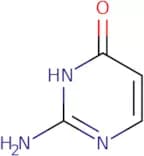
CAS :<p>Isocytosine is a prodrug that has been synthesized with the intramolecular hydrogen on the nitrogen atoms, which makes it more chemically stable. Isocytosine is a reactive molecule, and can react with tautomers to form isocytosine derivatives. Isocytosine contains three hydrogen atoms that are transferable through reactions to other molecules. The chemical stability of isocytosine allows for its use in wastewater treatment. It also has metabolic effects, such as the inhibition of colorectal adenocarcinoma and metabolic disorders. Isocytosine can be used as a model system for studying transfer reactions and reaction mechanisms.</p>Formule :C4H5N3ODegré de pureté :Min. 95%Couleur et forme :PowderMasse moléculaire :111.1 g/mol4-Thiouracil
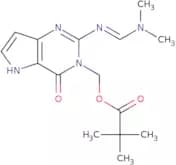
CAS :<p>4-Thiouracil is a uridine analog and has been shown to inhibit transcriptional regulation by hydrogen bonding with the dna template. 4-Thiouracil is a prodrug that is converted to its active form, thiouracil, which inhibits DNA synthesis and cell proliferation by inhibiting the enzyme topoisomerase II. This results in the formation of abnormal DNA molecules that are not replicated properly. Thiouracil also has photochemical properties due to its ability to absorb light at wavelengths below 400 nm. The photochemical properties of 4-thiouracil have been studied extensively as models for human tissue culture and the study of cancer cells.</p>Formule :C4H4N2OSDegré de pureté :Min. 97 Area-%Couleur et forme :Slightly Yellow PowderMasse moléculaire :128.15 g/molN1-(Pivaloyloxy)methyl-N2-(dimethylamino)methylene 9-deazaguanine
CAS :<p>Please enquire for more information about N1-(Pivaloyloxy)methyl-N2-(dimethylamino)methylene 9-deazaguanine including the price, delivery time and more detailed product information at the technical inquiry form on this page</p>Formule :C15H21N5O3Degré de pureté :Min. 95%Masse moléculaire :319.36 g/mol3'-[2- Cyanoethyl N, N- bis(1- methylethyl) phosphoramidite]-5'- O- [bis(4- methoxyphenyl) phenylmethyl] - 2'- O- methyl- N- [2- [4- (1- methylethyl) phenoxy] acetyl] -guanosine
CAS :<p>Please enquire for more information about 3'-[2- Cyanoethyl N, N- bis(1- methylethyl) phosphoramidite]-5'- O- [bis(4- methoxyphenyl) phenylmethyl] - 2'- O- methyl- N- [2- [4- (1- methylethyl) phenoxy] acetyl] -guanosine including the price, delivery time and more detailed product information at the technical inquiry form on this page</p>Formule :C52H62N7O10PDegré de pureté :Min. 95%Masse moléculaire :976.06 g/mol3'-O-Benzyl-2'-Deoxy-5-Trifluoromethyluridine
CAS :<p>3'-O-Benzyl-2'-Deoxy-5-Trifluoromethyluridine (BDBMU) is a pyrimidine derivative that can be used as an antiviral drug. It inhibits the synthesis of DNA and RNA by inhibiting viral polymerase. BDBMU is a prodrug of uracil, which is converted to the active compound in tissues. The benzoylation reaction produces a fluorine atom at C5, which increases its potency. This drug has been shown to have minimal toxicity in tumor cells and has been used for the treatment of leukemia and other cancers.</p>Formule :C17H17F3N2O5Degré de pureté :Min. 95%Masse moléculaire :386.32 g/mol(S)-HPMPA
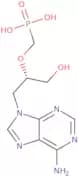
CAS :<p>(S)-HPMPA is a nucleotide analogue, which is a chemically synthesized compound designed to mimic nucleotides. It acts as both an antiviral and an antitumor agent, sourced primarily through synthetic chemistry involving the modification of naturally occurring nucleotide structures. The mode of action of (S)-HPMPA involves mimicking natural substrates of various viral polymerases and cellular enzymes, thereby inhibiting viral DNA synthesis and disrupting the replication cycle of DNA viruses. Additionally, it can interfere with certain cellular pathways contributing to its antitumor effects.</p>Formule :C9H14N5O5PDegré de pureté :Min. 95%Masse moléculaire :303.21 g/molIsobutyryl Chloride
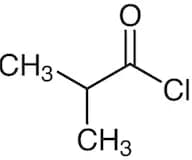
CAS :Formule :C4H7ClODegré de pureté :>98.0%(GC)(T)Couleur et forme :Colorless to Light yellow clear liquidMasse moléculaire :106.554-Amino-6-hydroxypyrazolo[3,4-d]pyrimidine
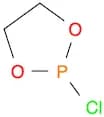
CAS :Formule :C5H5N5ODegré de pureté :>93.0%(HPLC)Couleur et forme :White to Light yellow to Light orange powder to crystallineMasse moléculaire :151.132-Chloro-1,3,2-dioxaphospholane
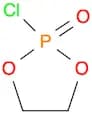
CAS :Formule :C2H4ClO2PDegré de pureté :97%Couleur et forme :LiquidMasse moléculaire :126.47872-Chloro-1,3,2-dioxaphospholane-2-oxide
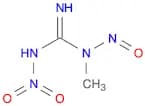
CAS :Formule :C2H4ClO3PDegré de pureté :95%Couleur et forme :LiquidMasse moléculaire :142.47811-Methyl-3-nitro-1-nitrosoguanidine
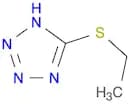
CAS :Formule :C2H5N5O3Degré de pureté :95%Couleur et forme :LiquidMasse moléculaire :147.09285-(Ethylthio)-1H-tetrazole
CAS :Formule :C3H6N4SDegré de pureté :98%Couleur et forme :SolidMasse moléculaire :130.1715SYBR GREEN II
CAS :<p>1) Non-toxicity: belong to flower-stem dye, easy to biodegrade, no carcinogenic toxicity.</p>Formule :C28H28IN3OSDegré de pureté :98%Couleur et forme :SolidMasse moléculaire :581.518-Bromo-3-methylxanthine
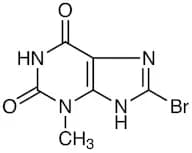
CAS :Formule :C6H5BrN4O2Degré de pureté :>98.0%(T)(HPLC)Couleur et forme :White to Almost white powder to crystalMasse moléculaire :245.04N7-((2-Hydroxyethoxy)methyl)guanine
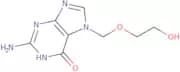
CAS :<p>N7-((2-Hydroxyethoxy)methyl)guanine is a reagent, a complex compound, and a useful intermediate that is used in the manufacture of speciality chemicals. N7-((2-Hydroxyethoxy)methyl)guanine is also a versatile building block that has been shown to be effective in reactions involving the synthesis of N-heterocyclic carbene ligands.</p>Formule :C8H11N5O3Degré de pureté :(%) Min. 95%Couleur et forme :Off-White PowderMasse moléculaire :225.2 g/mol6-Azauracil
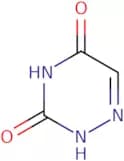
CAS :<p>6-Azauracil is a heterocycle with the chemical formula C8H10N2O3. It is approved by the FDA to treat HIV infections and has been shown to have pharmacokinetic properties in humans. 6-Azauracil is structurally similar to uracil, which is found in RNA, but lacks the hydroxyl group on the para position of the heterocyclic ring. The synthesis of this drug was accomplished through acid complex formation with nucleotides and nitrous acid. The compound inhibits replication of retroviruses by competitive inhibition of primer binding. 6-Azauracil has also been shown to be toxic in rats, leading to congestive heart failure and death when administered at high doses. This drug may also act as an anti-inflammatory agent by inhibiting prostaglandin synthesis or platelet aggregation.</p>Formule :C3H3N3O2Degré de pureté :Min. 95%Couleur et forme :PowderMasse moléculaire :113.07 g/molRef: 3D-FA06313
Produit arrêté



![3'-[2- Cyanoethyl N, N- bis(1- methylethyl) phosphoramidite]-5'- O- [bis(4- methoxyphenyl) phenylm…](/_next/image/?url=https%3A%2Fstatic.cymitquimica.com%2Fproducts%2F3D%2Fthumb-webp%2FFC165570.webp&w=3840&q=75)


![4-Amino-6-hydroxypyrazolo[3,4-d]pyrimidine](/_next/image/?url=https%3A%2Fstatic.cymitquimica.com%2Fproducts%2F3B%2Fthumb-webp%2FA2699.webp&w=3840&q=75)