Lipides
Les lipides sont un groupe diversifié de molécules hydrophobes essentielles pour la structure cellulaire, le stockage d'énergie et la signalisation. Ils incluent les graisses, huiles, phospholipides, stérols et cires, chacun jouant des rôles uniques dans les membranes biologiques et les processus métaboliques. Dans cette catégorie, vous trouverez une variété de lipides adaptés à la recherche en biochimie, biologie cellulaire et nutrition. Chez CymitQuimica, nous fournissons des lipides de haute qualité pour soutenir vos études sur le métabolisme des lipides, la dynamique des membranes et les interactions lipide-protéine, garantissant des résultats fiables et reproductibles dans vos expériences.
Sous-catégories appartenant à la catégorie "Lipides"
- Acides Gras et Dérivés(3.286 produits)
- Glycérolipides(98 produits)
- Phospholipides(382 produits)
- Isoprènes(550 produits)
- Lipides physiologiquement actifs(3.401 produits)
- Polykétides(533 produits)
- Sphingolipides(226 produits)
- Stérols(200 produits)
1431 produits trouvés pour "Lipides"
Trier par
Degré de pureté (%)
0
100
|
0
|
50
|
90
|
95
|
100
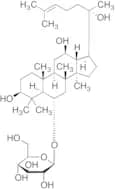
20(S)-Ginsenoside Rh1
CAS :Produit contrôlé<p>Applications 20(S)-Ginsenoside Rh1 is an anti-cancer agent found in the leaves of ginseng.<br>References Zheng, M. et al.: Biomed. Res., 26, 646 (2015);<br></p>Formule :C36H62O9Couleur et forme :NeatMasse moléculaire :638.871,2-Dipalmitoyl-rac-glycero-3-phosphoethanolamine
CAS :Produit contrôlé<p>Applications 1,2-Dipalmitoyl-rac-glycero-3-phosphoethanolamine is a long chain fatty acid, acting as a luminescence marker. Is used in enhancing radiotherapy for cancer treatment<br>References Dotsikas, Y. et al.: Anal. Sci., 28, 753 (2012); Choi, J. et al.: J. Nanomet., 8, 863704, (2012);<br></p>Formule :C37H74NO8PCouleur et forme :NeatMasse moléculaire :691.96γ-Linolenyl Alcohol
CAS :Produit contrôléFormule :C18H32OCouleur et forme :NeatMasse moléculaire :264.45(+)-20-Hydroxyecdysone
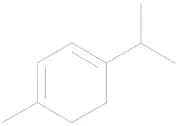
CAS :<p>Applications (+)-20-Hydroxyecdysone regulates gene transcription via a genomic pathway through a transcription complex that is formed.<br>References Liu, W. et al.: Endocrinol., 155, 1738 (2014); Wang, Q. et al.: Plant Physiol. Biochem., 84, 1 (2014);<br></p>Formule :C27H44O7Couleur et forme :White To Off-WhiteMasse moléculaire :480.63a-Terpinene (~90%)
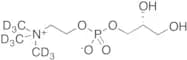
CAS :Produit contrôléFormule :C10H16Degré de pureté :~90%Couleur et forme :ColourlessMasse moléculaire :136.23sn-Glycero-3-phosphocholine-d9
CAS :Produit contrôlé<p>Stability Hygroscopic<br>Applications sn-Glycero-3-phosphocholine-d9 is an isotope labelled analog of sn-Glycero-3-phosphocholine (G598700); a phospholipid and precursor in choline biosynthesis. sn-Glycero-3-phosphocholine is an intermediate in the catabolic pathway of phosphatidylcholine and is used as an nootropic.<br>References Schmidt, G., et al.: J. Biol. Chem., 161, 523 (1945); Frattola, L., et al.: Curr. Ther. Res., 49, 683 (1991); Olson, D., et al.: Science, 270, 1967 (1995)<br></p>Formule :C8H11D9NO6PCouleur et forme :Colourless To Light YellowMasse moléculaire :266.281-Stearoyl-sn-glycerol
CAS :Produit contrôlé<p>Stability Hygroscopic<br>Applications 1-O-Octadecanoyl-sn-glycerol is a monoacylglycerol (MAG) based saturated fatty acid derivative.<br>References Garcia, P. et al.: J. Sep. Sci., 34, 999 (2011); Takagi, T. et al.: LIpids, 25, 398 (1990);<br></p>Formule :C21H42O4Couleur et forme :NeatMasse moléculaire :358.56Glycerol 1,3-Dipalmitate
CAS :<p>Applications A glycidol fatty acid esters in edible oils. An acyl acceptor for the unspecific bifunctional wax ester synthase/acyl-CoA:Diacylglycerol acyltransferase.<br>References Masukawa, Y. et al.: J. Am. Oil. Chem. Soc., 88, 15 (2011); Kalscheuer, R. et al.: Eur. J. Lipid. Sci. Tech., 105, 578 (2003)<br></p>Formule :C35H68O5Couleur et forme :NeatMasse moléculaire :568.91(2S)-2-Hydroxyglutaric Acid Disodium Salt
CAS :Produit contrôlé<p>Applications A potential inhibitor of glutamate carboxypeptidase.<br>References Wolcott, T.G., et al.: Biochem. Biophys. Res. Commun., 57, 709 (1974), Knowles, P.F., et al.: Eur. J. Biochem., 114, 139 (1981),<br></p>Formule :C5H6O5·2NaCouleur et forme :NeatMasse moléculaire :192.08Stearidonic Acid
CAS :Produit contrôléFormule :C18H28O2Couleur et forme :NeatMasse moléculaire :276.411,2-Dipalmitoyl-sn-glycero-3-phosphocholine (Colfosceril Palmitate)
CAS :Produit contrôlé<p>Stability Hygroscopic<br>Applications Colfosceril Palmitate is a major phospholipid constituent and primary surface tension lowering component of natural lung surfactant. Colfosceril Palmitate is used as pulmonary surfactant and diagnostic aid (fetal lung maturity).<br>References Cha, S., et al.: J. Biol. Chem., 273, 2153 (1998), Pantusa, M., et al.: Biophys Chem., 114, 121 (2005), Pantusa, M., et al.: Eur. Biophys. J., 37, 961 (2008), Lautenslager, G., et al.: Metabolism, 60, 1683 (2011),<br></p>Formule :C40H80NO8PCouleur et forme :NeatMasse moléculaire :734.0414,15-Epoxyeicosatrienoic Acid
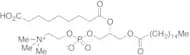
CAS :Produit contrôlé<p>Applications Epoxyeicosatrienoic Acid (EET) has antihypertensive and anti-inflammatory properties and play a role in the maintenance of renal vascular function. N,N'-dicyclohexylurea (DCU) increased release of 14,15-EET when the cells were stimulated with a calcium ionophore.Also, it is derived from Arachidonic Acid >97% (A765000), which is an essential fatty acid and a precursor in the biosynthesis of prostaglandins, thromboxanes, and leukotrienes. Arachidonic Acid occurs in liver, brain, glandular organs, and depot fats of animals, in small amounts in human depot fats, and Arachidonic Acid is also a constituent of animal phosphatides.<br>References Zhao, X., et al.: J. Am. Soc. Nephrol., 15, 1244 (2004); Fang, X., et al.: J. Biol. Chem., 276, 14867 (2001); Kurosawa, T., et al.: J. Cell. Physiol., 219, 606 (2009); Mazalli, M., et al.: J. Agric. Food Chem., 57, 5028 (2009);<br></p>Formule :C20H32O3Couleur et forme :NeatMasse moléculaire :320.466PazePC (>90%)
CAS :Produit contrôléFormule :C33H64NO10PDegré de pureté :>90%Couleur et forme :NeatMasse moléculaire :665.84(R,S)-Equol 4’-Sulfate Sodium Salt (90%)
CAS :Produit contrôlé<p>Stability Moisture and Temperature Sensitive<br>Applications (R,S)-Equol 4’-Sulfate is a sulfated metabolite of isoflavone Daidzein (D103500).<br>References Heinonen, S., et al.: Anal. Biochem., 274, 211 (1999), Setchell, K., et al.: J. Nutr., 132, 3577 (2002), Thigpen, J., et al.: Comp. Med., 53, 607 (2003), Yee, S., et al.: Food Chem. Toxicol., 46, 2713 (2008),<br></p>Formule :C15H13O6S·NaDegré de pureté :90%Couleur et forme :NeatMasse moléculaire :344.31(3Z)-17-Desacetyl Norgestimate
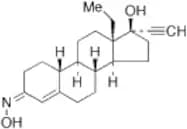
CAS :Produit contrôlé<p>Applications A metabolite of Norgestimate. Note- The oxime isomerizes when: 1) Heated in any solvent or heating the crystalline form 2) Dissolved in MeOH at room temperature very quickly 3) Dissolved in acetone or CHCl3 at room temperature in a couple of hours at room temperature4) In EtOAc or EtOAc/isooctane over a couple of days at RT. It is stable in the crystalline form.<br>References Phillips, A., et al.: Steroids, 55, 373 (1990)<br></p>Formule :C21H29NO2Couleur et forme :White To BeigeMasse moléculaire :327.461-Palmitoyl-rac-glycerol
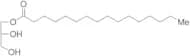
CAS :<p>Applications 1-Palmitoyl-rac-glycerol is a biomarker of metabolic responses to hepatotoxicants and carcinogens.<br>References Broadhurst, D., et al.: Metabolomics, 2, 171 (2006), Shi, J., et al.: Nat. Biotechnol., 25, 930 (2007),<br></p>Formule :C19H38O4Couleur et forme :NeatMasse moléculaire :330.5017β-Estradiol 3-O-Sulfate Sodium
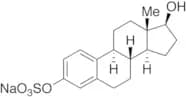
CAS :Produit contrôlé<p>Stability Hygroscopic<br>Applications 17β-Estradiol 3-O-Sulfate is a neuroactive steroid used in the studies of human recombinant p1 γ-aminobutyric acid type C (GABAC) recptors.<br>References Li, W.J., et al.: J. Pharmacol. Exp. Therp., 323, 236 (2007); Schneider, C., et al.: Steroids., 69, 245 (2004);<br></p>Formule :C18H23O5S·NaCouleur et forme :NeatMasse moléculaire :374.43Cholesterol 3-Sulfate Sodium Salt
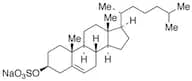
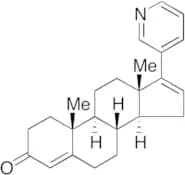
CAS :Produit contrôléFormule :C27H45O4S·NaCouleur et forme :White PowderMasse moléculaire :488.7017-(3-Pyridinyl)-androsta-4,16-dien-3-one
CAS :Produit contrôléFormule :C24H29NOCouleur et forme :NeatMasse moléculaire :347.492-Palmitoyl-rac-glycerol
CAS :<p>Applications A biomarker of metabolic responses to hepatotoxicants and carcinogens.<br>References Broadhurst, D., et al.: Metabolomics, 2, 171 (2006), Shi, J., et al.: Nat. Biotechnol., 25, 930 (2007),<br></p>Formule :C19H38O4Couleur et forme :NeatMasse moléculaire :330.50