Nucléotides
Les nucléotides sont des composés organiques qui servent de building blocks aux acides nucléiques, essentiels à la formation de l'ADN et de l'ARN. Chaque nucléotide est composé d'une base azotée, d'une molécule de sucre et d'un ou plusieurs groupes phosphate. Ces nucléotides s'assemblent pour former de longues chaînes, créant le matériel génétique qui porte et transmet l'information génétique dans tous les organismes vivants. Dans cette section, vous trouverez une large gamme de nucléotides essentiels pour la recherche en génétique, biologie moléculaire et biochimie. Ils sont fondamentaux pour étudier les processus génétiques, synthétiser des acides nucléiques et développer des outils diagnostiques et thérapeutiques. Chez CymitQuimica, nous proposons des nucléotides de haute qualité pour soutenir vos recherches scientifiques et applications, garantissant précision et fiabilité dans vos expériences.
Sous-catégories appartenant à la catégorie "Nucléotides"
2634 produits trouvés pour "Nucléotides"
Trier par
Degré de pureté (%)
0
100
|
0
|
50
|
90
|
95
|
100
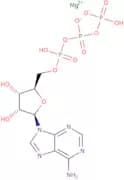
Adenosine 5'-triphosphate magnesium salt
CAS :<p>Adenosine-5'-triphosphate (ATP) is a nucleotide found in all living cells. It is used as a coenzyme for adenosine kinase, adenosine phosphokinase, and adenosine deaminase. ATP also acts as an important signaling molecule and has been shown to be involved in the regulation of cell metabolism, muscle contraction, and other cellular processes. The human body normally produces enough ATP to meet its needs through aerobic metabolism of glucose or fatty acids, but under certain conditions such as intense muscular activity or insufficient oxygen, more ATP must be produced by anaerobic metabolism. In these situations the mitochondria use glycolysis to produce lactic acid which is then converted into pyruvic acid by the enzyme lactate dehydrogenase. Pyruvic acid is then oxidized by the enzyme pyruvate dehydrogenase complex to produce acetyl-CoA which is further oxidized by the enzyme complex called Krebs</p>Formule :C10H18N5O13P3•xMgDegré de pureté :Min. 95 Area-%Couleur et forme :White Off-White PowderMasse moléculaire :509.20 g/mol6-Dimethylamino-9-(b-D-ribofuranosyl)purine
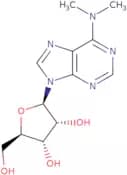
CAS :<p>6-Dimethylamino-9-(b-D-ribofuranosyl)purine (6-DMAP) is an analog of adenine that has been shown to have anticancer activity in human serum and tissue culture. 6-DMAP can inhibit the synthesis of ATP, leading to cell death by significantly inhibiting cellular processes such as glycolysis and DNA replication. 6-DMAP also has a significant cytotoxicity on various types of cancer cells and plant tissues. The mechanism of action for the anticancer activity of 6-DMAP is not yet known, but it may be due to its ability to interfere with purine metabolism or its ability to form covalent bonds with DNA.</p>Formule :C12H17N5O4Degré de pureté :Min. 98 Area-%Couleur et forme :White PowderMasse moléculaire :295.3 g/molUridine
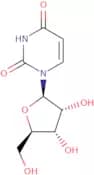
CAS :<p>Glycosylated pyrimidine analog; RNA component</p>Formule :C9H12N2O6Degré de pureté :Min. 98 Area-%Couleur et forme :White PowderMasse moléculaire :244.2 g/mol3'-O-(t-Butyldimethylsilyl)-2'-O-(2-methoxyethyl)-5-methyluridine
CAS :<p>3'-O-(t-Butyldimethylsilyl)-2'-O-(2-methoxyethyl)-5-methyluridine is a novel, modified monophosphate nucleoside that can be activated to the corresponding diphosphate by adenosine kinase. The antiviral activity of 3'-O-(t-Butyldimethylsilyl)-2'-O-(2-methoxyethyl)-5-methyluridine has been demonstrated in vitro and in vivo against various viruses including HIV. In addition, this nucleoside phosphoramidite is used for synthesizing DNA and RNA. This product is CAS No. 1221967-92-5, Phosphoramidites, High purity and has a high quality.</p>Formule :C19H34N2O7SiDegré de pureté :Min. 95%Couleur et forme :PowderMasse moléculaire :430.57 g/molTenofovir disoproxil
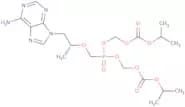
CAS :<p>Anti-viral; reverse transcriptase inhibitor</p>Formule :C19H30N5O10PDegré de pureté :Min. 95%Couleur et forme :White PowderMasse moléculaire :519.44 g/molN6-Benzoyl-2'-deoxy-5'-O-DMT-2'-fluoroadenosine
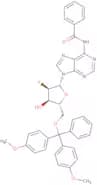
CAS :<p>N6-Benzoyl-2'-deoxy-5'-O-DMT-2'-fluoroadenosine is a sulfur containing compound that is an antibiotic. It has been shown to inhibit the growth of bacteria by binding to their ribosomes, which prevents protein synthesis and cell division. N6-Benzoyl-2'-deoxy-5'-O-DMT-2'-fluoroadenosine also inhibits chemotaxis in roseobacters, which is the movement of cells or organisms in response to certain factors. This antibiotic may be useful for preventing symbiosis between marine bacteria and other organisms, as it inhibits the motility of these bacteria and their cycling. N6-Benzoyl-2'-deoxy-5'-O-DMT-2'-fluoroadenosine also has a genetic determinant that regulates enteric bacteria and clades of ocean bacteria.</p>Formule :C38H34FN5O6Degré de pureté :Min. 95%Couleur et forme :White PowderMasse moléculaire :675.72 g/mol2'-Amino-2'-deoxyinosine
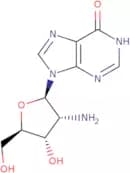
CAS :<p>2'-Amino-2'-deoxyinosine is a modified nucleoside, based on inosine. This compound has a 2'-amino substitution instead of a 2'-hydroxyl group, which has the potential to make the nucleoside more resistant to enzymatic degradation and<br> enhance or alter base-pairing properties.</p>Formule :C10H13N5O4Degré de pureté :Min. 95%Couleur et forme :PowderMasse moléculaire :267.24 g/molN4-Benzoyl-2'-deoxy-5'-O-DMT-a-cytidine
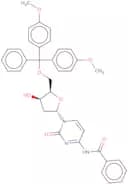
CAS :<p>N4-Benzoyl-2'-deoxy-5'-O-DMT-a-cytidine is a modified nucleoside that is synthesized by the reaction of the 2'-deoxyribonucleoside with 4-benzoylchloroformate and dimethoxytrityl. It has antiviral activity against a variety of DNA viruses, including herpes simplex virus type 1 (HSV), herpes simplex virus type 2 (HSV), varicella zoster virus, human cytomegalovirus, Epstein Barr virus, and human immunodeficiency virus. N4-Benzoyl-2'-deoxy-5'-O-DMT-a-cytidine also has anticancer properties and may be used for the treatment of melanoma. This compound shows good results in animal models and clinical trials.</p>Formule :C37H35N3O7Degré de pureté :Min. 95%Couleur et forme :PowderMasse moléculaire :633.71 g/mol2'-Bromo-2'-deoxyuridine
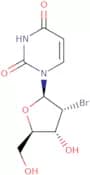
CAS :<p>2'-Bromo-2'-deoxyuridine is a synthetic nucleoside analog of deoxyuridine, in which the 2'-hydroxyl group of the ribose sugar is replaced with a bromine atom (Br) at the 2' position. This modification allows it to be incorporated into DNA during DNA synthesis, where it can replace the normal thymidine. This molecule can potentially be used in molecular biology and cell biology as a thymidine analog to study DNA replication, cell proliferation, and DNA repair.</p>Formule :C9H11BrN2O5Degré de pureté :Min. 95%Couleur et forme :PowderMasse moléculaire :307.1 g/molCytidine 3'(2’)-monophosphate
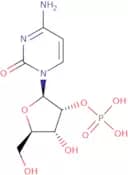
CAS :<p>Cytidine 3’(2’)-monophosphate (CMP) is a biochemical substance that is found in the nucleic acids of cells. It is an equilibrative nucleoside and a precursor to the biosynthesis of uridine and cytidine. CMP is also an intermediate in the synthesis of the coenzyme tetrahydrofolate, which has been shown to inhibit the growth of antibiotic-resistant strains such as Escherichia coli, Pseudomonas aeruginosa, Klebsiella pneumoniae, Staphylococcus aureus, and Enterobacter cloacae. Cytidine 3’(2’)-monophosphate can be converted into cytidine by phosphorylation with ATP or by methylation with S-adenosylmethionine. Cytidine 3’(2’)-monophosphate has been shown to have polymerase chain reaction activity</p>Formule :C9H14N3O8PDegré de pureté :Min. 95%Couleur et forme :White PowderMasse moléculaire :323.2 g/mol2'-C-Methylguanosine
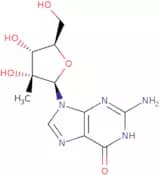
CAS :<p>2'-C-Methylguanosine is a synthetic nucleoside analog of guanosine, modified at the 2'-carbon of the ribose sugar with a methyl group. This modification changes the molecule's biological behavior, making it potential useful in antiviral research and biochemical studies, especially those involving RNA synthesis.</p>Formule :C11H15N5O5Degré de pureté :Min. 95%Couleur et forme :PowderMasse moléculaire :297.27 g/mol5'-O-Benzoyl-2'-deoxy-N2-isobutyrylguanosine
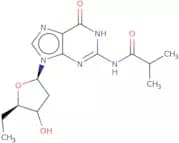
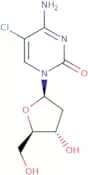
CAS :<p>5'-O-Benzoyl-2'-deoxy-N2-isobutyrylguanosine is a novel nucleoside that is synthesized by the modification of 5'-O-benzoyl-2'-deoxyguanosine with 2',3' -diisobutyrylaminopropylidene. It has shown anticancer, antiviral, and antiretroviral properties in vitro. In addition, this compound has been shown to inhibit the growth of human leukemia cells in vivo in a dose dependent manner. The structure of 5'-O-benzoyl-2'-deoxy-N2-isobutyrylguanosine is similar to that of the natural nucleosides adenosine and guanosine.</p>Formule :C21H23N5O6Degré de pureté :Min. 97 Area-%Couleur et forme :Off-White PowderMasse moléculaire :441.45 g/mol5-Chloro-2'-deoxycytidine
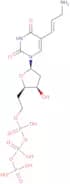
CAS :<p>5-Chloro-2'-deoxycytidine (5-Cl-dC) is a nucleoside analog that inhibits DNA synthesis by blocking the action of thymidylate synthase. It can be used in animal models to study bowel diseases, such as ulcerative colitis and Crohn's disease. 5-Cl-dC has been shown to be effective in treating the effects of radiation and chemical toxicity in HL60 cells, a type of human leukemia cell line. 5-Cl-dC has also been shown to enhance the cytotoxicity of eosinophil peroxidase, which is an enzyme that may be involved in the pathogenesis of asthma. This drug is currently being evaluated for its safety and efficacy in clinical trials involving patients with myelodysplastic syndrome or acute myeloid leukemia who are at risk for developing leukemia.</p>Formule :C9H12CIN3O4Degré de pureté :Min. 95%Couleur et forme :PowderMasse moléculaire :261.67 g/mol5-Aminoallyl 2'-deoxyuridine 5'-triphosphate lithium salt - 100mM aqueous solution
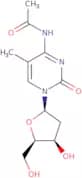
CAS :<p>5-Aminoallyl 2'-deoxyuridine 5'-triphosphate lithium salt - 100mM aqueous solution is a novel nucleoside analog with antiviral and anticancer activity. It has been shown to inhibit the replication of HIV-1 in human peripheral blood mononuclear cells and to inhibit tumor growth in mice. This drug also inhibits DNA synthesis, which may be due to its ability to inhibit ribonucleotide reductase and deoxynucleotide reductase, enzymes that are necessary for DNA synthesis.</p>Formule :C12H20N3O14P3·xLiDegré de pureté :Min. 95%Couleur et forme :Colorless PowderMasse moléculaire :523.22 g/molN4-Acetyl-2'-deoxy-5-methylcytidine
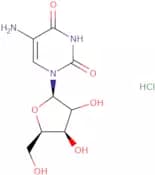
<p>N4-Acetyl-2'-deoxy-5-methylcytidine is a novel nucleoside analog of cytidine. It has been shown to be an activator of the immune system, and has antiviral and anticancer properties. This synthetic nucleoside is phosphorylated by kinases in cells to form N4-acetyl-2'-deoxy-5'-methyluridine monophosphate. The phosphate group can be removed by phosphatases in cells to yield N4-acetyl-2'-deoxycytidine, which is a precursor for DNA synthesis.</p>Formule :C12H17N3O5Degré de pureté :Min. 95%Couleur et forme :PowderMasse moléculaire :283.28 g/mol5-Aminouridine hydrochloride
CAS :<p>5-Aminouridine hydrochloride is a novel nucleoside that is an inhibitor of RNA polymerase. It has been shown to be active against cancer cells, and is also effective in the treatment of viral infections such as HIV and hepatitis B. 5-Aminouridine hydrochloride is synthesized by reacting uracil with ammonia and hydrogen chloride. The product can be used as a building block for monophosphate or diphosphate analogs, which are important components in the synthesis of DNA and RNA. This product is available at high purity with low impurity levels.</p>Formule :C9H14ClN3O6Degré de pureté :(%) Min. 95%Couleur et forme :PowderMasse moléculaire :295.68 g/mol2'-O-tert-Butyldimethylsilyl-5'-O-DMT-1-methylguanosine 3'-CE phosphoramidite
CAS :<p>2'-O-tert-Butyldimethylsilyl-5'-O-DMT-1-methylguanosine 3'-CE phosphoramidite is a synthetic, antiviral monophosphate nucleoside. It is an activator that increases the activity of other nucleosides and can be used in DNA synthesis by incorporation into DNA molecules. 2'-O-tert-Butyldimethylsilyl-5'-O-DMT-1-methylguanosine 3'-CE phosphoramidite has been shown to be effective against Hepatitis C virus, Human Immunodeficiency Virus 1 (HIV), and Herpes Simplex Virus 1.</p>Formule :C47H64N7O8PSiDegré de pureté :Min. 95%Couleur et forme :PowderMasse moléculaire :914.11 g/mol5'-Amino-5'-deoxyguanosine
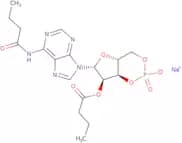
CAS :<p>5'-Amino-5'-deoxyguanosine (5-ADG) is an intermediate in the de novo synthesis of guanine nucleotides. It can be synthesized from 5-aminoimidazole ribonucleotide and guanosine monophosphate (GMP). 5-ADG is a substrate for the enzyme GTP cyclohydrolase, which converts it to GMP. This intermediate can also be formed by the action of phosphoryl chloride on 5-aminoimidazole ribonucleotide. The reaction of 5-ADG with malonic acid leads to the formation of inosinic acid, which has been postulated to be a precursor of purines. This conversion is catalyzed by adenylosuccinate synthetase and the enzyme adenylosuccinase.</p>Formule :C10H14N6O4Degré de pureté :Min. 95 Area-%Couleur et forme :PowderMasse moléculaire :282.26 g/molN6,2'-O-Dibutyryladenosine-3',5'-cyclic monophosphate sodium
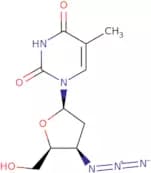
CAS :<p>N6,2'-O-Dibutyryladenosine-3',5'-cyclic monophosphate sodium (DB-cAMP) is a cyclic nucleoside that has been shown to promote dopaminergic neuron differentiation. It is commonly used in research studies involving the differentiation of induced pluripotent stem cell (iPSC)-derived neurons. This compound acts by activating intracellular signaling pathways that are involved in neuronal development and function. Its ability to enhance dopaminergic neuron differentiation makes it a valuable tool for researchers studying neurodegenerative diseases and exploring potential treatments.</p>Formule :C18H23N5O8PNaDegré de pureté :Min. 95 Area-%Couleur et forme :Off-White PowderMasse moléculaire :491.38 g/molZidovudine
CAS :<p>Inhibitor of reverse transcriptase</p>Formule :C10H13N5O4Degré de pureté :Min. 95%Couleur et forme :Off-White PowderMasse moléculaire :267.24 g/mol