Nucléotides
Les nucléotides sont des composés organiques qui servent de building blocks aux acides nucléiques, essentiels à la formation de l'ADN et de l'ARN. Chaque nucléotide est composé d'une base azotée, d'une molécule de sucre et d'un ou plusieurs groupes phosphate. Ces nucléotides s'assemblent pour former de longues chaînes, créant le matériel génétique qui porte et transmet l'information génétique dans tous les organismes vivants. Dans cette section, vous trouverez une large gamme de nucléotides essentiels pour la recherche en génétique, biologie moléculaire et biochimie. Ils sont fondamentaux pour étudier les processus génétiques, synthétiser des acides nucléiques et développer des outils diagnostiques et thérapeutiques. Chez CymitQuimica, nous proposons des nucléotides de haute qualité pour soutenir vos recherches scientifiques et applications, garantissant précision et fiabilité dans vos expériences.
Sous-catégories appartenant à la catégorie "Nucléotides"
2634 produits trouvés pour "Nucléotides"
Trier par
Degré de pureté (%)
0
100
|
0
|
50
|
90
|
95
|
100
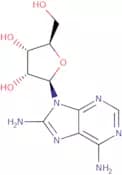
8-Aminoadenosine
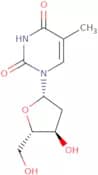
CAS :<p>8-Aminoadenosine can be used to study the mitochondrial membrane potential, a critical cellular function in which ATP levels are maintained by oxidative phosphorylation. 8-Aminoadenosine is one of the few drugs that have been shown to increase ATP levels in cells. It does this by increasing the permeability of mitochondria membranes and the rate of electron transport from complex I to complex II. The reaction mechanism is thought to involve an intramolecular hydrogen transfer from NADH to 8-aminoadenosine, forming an unstable intermediate that undergoes a conformational change that enables it to react with oxygen. 8-Aminoadenosine has been shown as an effective treatment for certain autoimmune diseases and resistant breast cancer. It also has anti-inflammatory effects, as well as receptor activity against HIV infection and Toll-like receptors.</p>Formule :C10H14N6O4Degré de pureté :Min. 95%Couleur et forme :PowderMasse moléculaire :282.26 g/molL-Thymidine
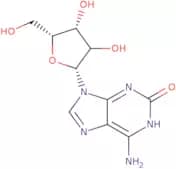
CAS :<p>L-Thymidine is an antiviral drug that is used in the treatment of chronic hepatitis. It has been shown to be active against a range of viruses, including HIV, HSV, and HBV. L-Thymidine can also be used to treat patients with cancer as an anti-cancer agent. L-Thymidine is a prodrug that is converted into thymidine triphosphate (TTP), which inhibits viral DNA polymerase by competitive inhibition. The antiviral activity of L-Thymidine may be due to its ability to inhibit the synthesis of viral proteins required for viral replication by interfering with the protein production process or by inhibiting the formation of dsDNA during reverse transcription.</p>Formule :C10H14N2O5Degré de pureté :Min. 95%Couleur et forme :PowderMasse moléculaire :242.23 g/mol9-(b-D-Arabinofuranosyl)isoguanine
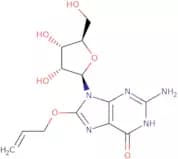
CAS :<p>9-(b-D-Arabinofuranosyl)isoguanine is a modified nucleoside that has antiviral activity. It is synthesized by substituting the 2'-hydroxyl group of deoxyribose with an arabinofuranose, which can be phosphorylated to form 9-(b-D-arabinofuranosyl)isoguanine 5'-monophosphate. This novel antiviral agent inhibits the synthesis of viral DNA and RNA, and is effective against a wide range of viruses in vitro. The drug was shown to have anticancer activities in animal models and has been patented for use as a chemotherapeutic agent against leukemia, lymphoma, and other cancers.</p>Formule :C10H13N5O5Degré de pureté :Min. 95%Couleur et forme :White PowderMasse moléculaire :283.25 g/mol8-(Allyloxy)guanosine
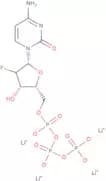
CAS :<p>8-(Allyloxy)guanosine is a nucleoside analog. It is an antiviral and anticancer drug that inhibits DNA synthesis by inhibiting the enzyme DNA polymerase. 8-AOG also inhibits the expression of genes involved in inflammatory responses, such as lipoxygenase, cyclooxygenase 2, and 5-lipoxygenase. This compound has been shown to be effective against herpes simplex virus types 1 and 2, cytomegalovirus, Epstein-Barr virus, adenovirus type 3, and human immunodeficiency virus type 1 (HIV-1). 8-(Allyloxy)guanosine can be used to inhibit the tumor growth of human cancer cells in vitro.<br>8-(Allyloxy)guanosine has been shown to have a low toxicity to healthy cells in vitro and when administered in vivo.</p>Formule :C13H17N5O6Degré de pureté :Min. 95%Couleur et forme :PowderMasse moléculaire :339.3 g/mol2'-Deoxy-2'-fluorocytidine-5'-triphosphate tetralithium
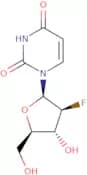
CAS :<p>2'-Deoxy-2'-fluorocytidine-5'-triphosphate tetralithium is a modified nucleoside analog where the base is cytosine, the sugar is deoxyribose with a fluoro modification at the 2' position, and the molecule is phosphorylated at the 5' position with a triphosphate group.</p>Formule :C9H11FLi4N3O13P3Degré de pureté :Min. 95%Couleur et forme :White Off-White PowderMasse moléculaire :508.88 g/mol1-(2'-Deoxy-2'-fluoro-β-D-arabinofuranosyl)uracil
CAS :<p>Antineoplastic prodrug</p>Formule :C9H11FN2O5Degré de pureté :Min. 95%Couleur et forme :PowderMasse moléculaire :246.2 g/mol3'-O-Benzoyl-2'-deoxy-N2-isobutyrylguanosine
CAS :<p>3'-O-Benzoyl-2'-deoxy-N2-isobutyrylguanosine is a new antiviral nucleoside, which has been synthesized by reacting benzoyl chloride with 2'-deoxy-N2-isobutyrylguanosine monophosphate. It is also a novel DNA and RNA phosphoramidite monomer that can be used for the synthesis of oligonucleotides and oligoribonucleotides. 3'-O-Benzoyl-2'-deoxy-N2-isobutyrylguanosine is an activator of HIV reverse transcriptase, which leads to inhibition of viral replication.</p>Formule :C21H23N5O6Degré de pureté :Min. 95%Couleur et forme :White PowderMasse moléculaire :441.44 g/molAdenosine-2'-monophosphate
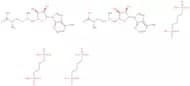
CAS :<p>Adenosine-2'-monophosphate is a nucleotide that contains two adenine bases. It is an important precursor in the synthesis of ATP, which is the main source of energy for cells. Adenosine-2'-monophosphate has been shown to inhibit phosphatase and lysine residues, as well as GSH-Px activities in kidney cells, leading to increased glomerular filtration rate. It also activates microglia cells and induces oxidative injury in rat brain tissue. The kinetic data for this molecule suggests that it binds to the enzyme ternary complex formation with a neutral pH optimum.</p>Formule :C10H14N5O7PDegré de pureté :Min. 95%Couleur et forme :PowderMasse moléculaire :347.22 g/molS-Adenosylmethione-1,4-butanedisulfonate
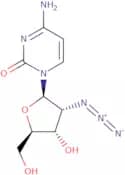
CAS :<p>S-adenosylmethionine is a compound that is naturally produced in the body and has been shown to be involved in many biochemical reactions. It can be found as a supplement at health food stores, but also is available as a prescription for the treatment of certain liver diseases such as hepatitis. S-adenosylmethionine may have some drug transporter function and can affect the metabolism of other drugs.</p>Formule :C42H74N12O28S8Degré de pureté :Min. 95 Area-%Couleur et forme :White PowderMasse moléculaire :1,451.63 g/mol2'-Azido-2'-deoxycytidine
CAS :<p>2'-Azido-2'-deoxycytidine is a nucleoside analog derived from cytidine, in which the 2'-hydroxyl group of the ribose is replaced by an azido group (–N₃), while the cytosine base and remaining sugar structure are preserved. This substitution imparts the molecule with bioorthogonal reactivity, enabling its use in chemical biology applications such as nucleic acid labeling via azide-alkyne "click" chemistry. The azido group also sterically and electronically alters sugar conformation and enzymatic recognition, which can affect its incorporation into DNA or RNA by polymerases. Consequently, 2'-azido-2'-deoxycytidine is a useful research tool.</p>Formule :C9H12N6O4Degré de pureté :Min. 95 Area-%Couleur et forme :Slightly Yellow PowderMasse moléculaire :268.2 g/molGuanosine 5'-triphosphate disodium salt
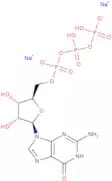
CAS :<p>Guanosine 5'-triphosphate disodium salt is a nucleotide that is involved in energy metabolism and intracellular Ca2+ levels. It also has been shown to be an important regulator of guanine nucleotide-binding, enzyme activities, and receptor activity. This compound is a substrate for the polymerase chain reaction, which can be used to amplify DNA sequences. Guanosine 5'-triphosphate disodium salt has been shown to inhibit the growth of bacterial cells by binding to the antibiotic thiostrepton. The inhibition of bacterial growth is due to the prevention of antibiotic binding to bacterial ribosomes.</p>Formule :C10H14N5O14P3Na2Degré de pureté :Min. 85 Area-%Couleur et forme :White Off-White PowderMasse moléculaire :567.14 g/molAdenosine - Endotoxin level below 100 EU/g
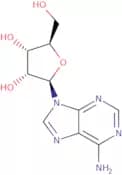
CAS :<p>Adenosine is a nucleoside that interacts with adenosine receptors in the central nervous system. It is found in most body tissues and fluids, including blood, cerebrospinal fluid, and synovial fluid. Adenosine has been shown to inhibit uptake of glucose and other substances in the brain. The uptake of adenosine by neurons is inhibited by solute transport inhibitors such as nevirapine, which prevents the accumulation of toxic levels of adenosine during excitotoxic injury. Adenosine also has thermodynamic properties that promote its removal from solution by binding to water molecules and forming crystals or precipitates. This property may be useful in the treatment of cerebral edema following traumatic brain injury.</p>Formule :C10H13N5O4Degré de pureté :Min. 99.0 Area-%Couleur et forme :White PowderMasse moléculaire :267.24 g/molAcetyl coenzyme A sodium salt
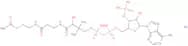
CAS :<p>Acetyl-coenzyme A is an important intermediate in the metabolism of carbohydrates, fats, and proteins. It is a cytosolic molecule that is synthesized from Acetyl-CoA and ATP. The Michaelis–Menten kinetics describe the relationship between the concentration of acetyl-coenzyme A and the rate of its consumption. Acetyl co-enzyme A is found in many different tissues, including plants, animals, and humans. It has an important role in regulating cellular growth and differentiation by activating various enzymes involved in metabolic pathways. Acetyl CoA can be acetylated to form acetyl CoA carboxylic acid (ACC) which then turns into malonyl CoA through a series of reactions. Malonyl CoA then enters the Krebs cycle as a key intermediate for generating energy from fatty acids.</p>Formule :C23H38N7O17P3S·xNaDegré de pureté :Min. 95%Couleur et forme :PowderMasse moléculaire :809.57 g/molN6-Benzoyl-2'-deoxy-2'-fluoroadenosine
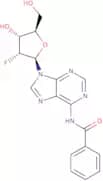
CAS :<p>N6-Benzoyl-2'-deoxy-2'-fluoroadenosine is an oligonucleotide that can be used to modulate the expression of survivin. It inhibits the expression of this protein by binding to its mRNA and preventing translation. N6-Benzoyl-2'-deoxy-2'-fluoroadenosine has shown potential for use in cancer treatment due to its ability to inhibit tumor growth and metastasis. It may also be used in the treatment of autoimmune diseases, such as rheumatoid arthritis, where it can inhibit the production of inflammatory cytokines.</p>Formule :C17H16FN5O4Degré de pureté :Min. 95%Couleur et forme :White PowderMasse moléculaire :373.34 g/mol5-Acetoxymethyl-2'-deoxyuridine
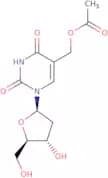
CAS :<p>5-Acetoxymethyl-2'-deoxyuridine (5-AOMUdR) is a nucleoside analog that inhibits the synthesis of DNA. It is phosphorylated to 5-acetoxymethyl uridine monophosphate, which inhibits DNA polymerase by competitive inhibition. This compound has been shown to induce apoptosis in vitro and inhibit HIV replication in cells. 5-AOMUdR has also been shown to be an effective anti-viral agent against influenza A virus.</p>Formule :C12H16N2O7Degré de pureté :Min. 95%Couleur et forme :PowderMasse moléculaire :300.26 g/mol3'-O-Acetyl-2'-deoxyadenosine
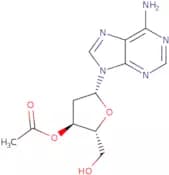
CAS :<p>Please enquire for more information about 3'-O-Acetyl-2'-deoxyadenosine including the price, delivery time and more detailed product information at the technical inquiry form on this page</p>Formule :C12H15N5O4Degré de pureté :Min. 95%Couleur et forme :White PowderMasse moléculaire :293.29 g/molCytidine 2',3'-cyclic monophosphate monosodium
CAS :<p>Cytidine 2',3'-cyclic monophosphate monosodium salt is a nucleotide that is used in the synthesis of DNA and RNA. It has antiviral and anticancer properties. Cytidine 2',3'-cyclic monophosphate monosodium salt is a high purity, high quality nucleotide with strong activator properties. It is also an excellent substrate for DNA polymerases, which may be due to its ability to bind to the phosphate groups on the enzyme's active site. This product can be used as a phosphoramidite during DNA synthesis or as an antiviral agent that inhibits viral replication by inhibiting the formation of viral DNA.</p>Formule :C9H11N3O7P•NaDegré de pureté :Min. 95%Couleur et forme :PowderMasse moléculaire :327.16 g/molN4-Acetyl-2'-deoxy-5'-O-DMT-cytidine
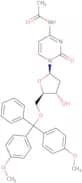
CAS :<p>N4-Acetyl-2'-deoxy-5'-O-DMT-cytidine is a potent and selective inhibitor of the receptor tyrosine kinases Cck-A, which is overexpressed in certain tumour cells. N4-Acetyl-2'-deoxy-5'-O-DMT-cytidine blocks the activation of Cck-A by endothelin, thereby inhibiting the proliferation of tumour cells. This compound also has affinity for other protein kinases including receptor tyrosine kinase (RTK)s, which may be due to its tautomeric equilibrium.</p>Formule :C32H33N3O7Degré de pureté :Min. 95%Couleur et forme :White PowderMasse moléculaire :571.62 g/molN6-Benzoyl-2'-deoxy-5'-O-DMT-adenosine
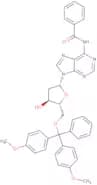
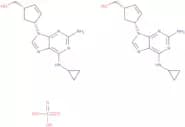
CAS :<p>N6-Benzoyl-2'-deoxy-5'-O-DMT-adenosine is a versatile nucleoside building block.</p>Formule :C38H35N5O6Degré de pureté :Min. 98 Area-%Couleur et forme :White PowderMasse moléculaire :657.72 g/molAbacavir sulfate
CAS :<p>Anti-viral; reverse transcriptase inhibitor</p>Formule :C14H18N6OH2SO4Degré de pureté :Min. 98 Area-%Couleur et forme :PowderMasse moléculaire :670.75 g/mol