Nucléotides
Sous-catégories appartenant à la catégorie "Nucléotides"
2637 produits trouvés pour "Nucléotides"
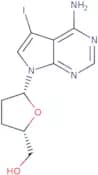
7-Deaza-2',3'-dideoxy-7-iodoadenosine
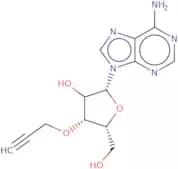
CAS :7-Deaza-2',3'-dideoxy-7-iodoadenosine is a nucleoside analogue that is used as an antiviral, anticancer, and antifungal agent. It is a modified form of adenosine which inhibits viral replication by inhibiting the activity of reverse transcriptase. 7-Deaza-2',3'-dideoxy-7-iodoadenosine has also been shown to inhibit DNA synthesis in cells by blocking the incorporation of dCTP into DNA. This nucleoside analogue has shown potential for use as an activator in phosphoramidite chemistry and as a deoxyribonucleoside in oligonucleotide synthesis.Formule :C11H13IN4O2Degré de pureté :Min. 95%Couleur et forme :PowderMasse moléculaire :360.15 g/mol3'-O-Propargyladenosine
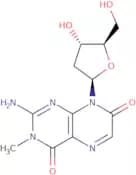
CAS :3'-O-Propargyladenosine is a modified nucleoside that has antiviral and anti-inflammatory properties. It is a synthetic compound that is chemically related to adenosine. 3'-O-Propargyladenosine is an activator of the immune system and it inhibits viral DNA synthesis. The compound also has been shown to reduce inflammation in mice by inhibiting the production of prostaglandin E2 (PGE2). 3'-O-Propargyladenosine has been shown to inhibit the replication of human immunodeficiency virus type 1 (HIV-1) and cytomegalovirus (CMV).Formule :C13H15N5O4Degré de pureté :Min. 95%Couleur et forme :PowderMasse moléculaire :305.29 g/mol3-Methyl-8-(2-deoxy-b-D-ribofuranosyl)isoxanthopterin
CAS :3-Methyl-8-(2-deoxy-b-D-ribofuranosyl)isoxanthopterin is a nucleoside analog that is used as an activator of phosphoramidite. It can be used as a building block in the synthesis of modified phosphoramidites and it has antiviral, anticancer, and antiinflammatory properties. 3-Methyl-8-(2-deoxy-b-D-ribofuranosyl)isoxanthopterin is a novel nucleoside analog that can be used to synthesize DNA or RNA. It is also an inhibitor of deoxyribonucleoside kinase, preventing the conversion of deoxyribonucleosides into diphosphate monophosphates.
Formule :C12H15N5O5Degré de pureté :Min. 95%Couleur et forme :PowderMasse moléculaire :309.28 g/molGuanosine 5'-diphosphate sodium
CAS :Pyruvate kinase substrate
Formule :C10H15N5O11P2•Na2Degré de pureté :Min. 95%Couleur et forme :PowderMasse moléculaire :466.19 g/molGuanosine5'-diphosphate
CAS :Pyruvate kinase substrateFormule :C10H15N5O11P2Degré de pureté :Min. 95%Couleur et forme :PowderMasse moléculaire :443.2 g/molFludarabine phosphate
CAS :Fludarabine phosphate is an antileukemic drug that inhibits DNA polymerase α and β, as well as other enzymes in the nucleotide synthesis pathway. It is used to treat patients with chronic myelogenous leukemia (CML) who have developed resistance to other treatments. Fludarabine phosphate has been shown to induce a cytotoxic effect against tumor cells by binding to ATP-binding cassette transporter proteins on the cell membrane and inhibiting intracellular targets such as DNA, RNA, and protein synthesis. Fludarabine phosphate has also been shown to inhibit the growth of tumor cells through synergistic interactions with other anticancer drugs such as hydroxyurea or busulfan, which may be due to its ability to inhibit enzyme activities such as erythrocyte alkaline phosphatase.
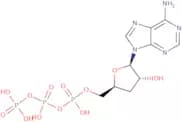
Formule :C10H13FN5O7PDegré de pureté :Min. 98 Area-%Couleur et forme :PowderMasse moléculaire :365.21 g/mol3'-Deoxyadenosine-5'-triphosphate sodium salt - 10mM aqueous solution
CAS :3'-Deoxyadenosine-5'-triphosphate sodium salt is a nucleotide that has been shown to be effective in chemotherapy. It is a substrate for the synthesis of DNA, RNA, and ATP. 3'-Deoxyadenosine-5'-triphosphate sodium salt is also a building block for DNA polymerase, which is an enzyme that synthesizes DNA from a template. It has been shown to have anticancer activity in drug-resistant cells and can be used as an alternative to purine analogs such as 6-mercaptopurine or cladribine. 3'-Deoxyadenosine-5'-triphosphate sodium salt has been shown to inhibit the production of nucleotides by blocking their conversion into triphosphates, which are necessary for DNA replication and repair. This inhibition leads to apoptosis in cells with high levels of nucleotide turnover such as cardiac and myeloid cells. The drug interactions may depend on theFormule :C10H16N5O12P3Degré de pureté :Min. 95%Couleur et forme :Colorless PowderMasse moléculaire :491.18 g/mol3'-Phosphoadenosine-5'-phosphosulfate lithium salt hydrate
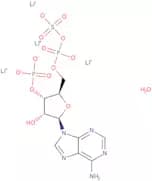
CAS :Universal sulfonate donor for in vivo sulfonation by sulfotransferasesFormule :C10H15N5O13P2S·xLi·yH2ODegré de pureté :Min. 60 Area-%Couleur et forme :White PowderMasse moléculaire :507.27 g/mol2',3',5'-Tri-O-acetyl-8-bromoguanosine
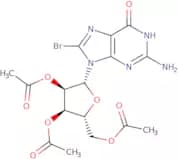
CAS :2',3',5'-Tri-O-acetyl-8-bromoguanosine is a synthetic nucleoside analog that inhibits the growth of tumor cells. It has been shown to inhibit the progression of prostate cancer and cervical cancer by binding to guanosine, preventing its conversion into ATP. This compound also prevents proliferation in hek293 and glioblastoma cells. The mechanism of action may be due to oxidative phosphite formation, which causes DNA damage and subsequent apoptosis.
Formule :C16H18BrN5O8Degré de pureté :Min. 95%Couleur et forme :Off-White To Light (Or Pale) Yellow SolidMasse moléculaire :488.25 g/mol2-Fluoroadenosine
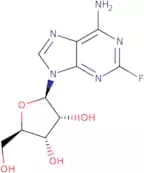
CAS :2-Fluoroadenosine is a nucleoside that has shown high resistance to the enzyme cyclase. This property may be due to its structural and conformational properties, which are different from those of adenosine. 2-Fluoroadenosine has been shown to inhibit the synthesis of ATP in ventricular myocardium and fat cells, as well as increase levels of adenylate kinase in blood. It has also been shown to have potential as a drug target for autoimmune diseases, such as multiple sclerosis. 2-Fluoroadenosine can be used for biochemical and pharmacokinetic studies because it is rapidly metabolized by the liver and excreted in urine.
2-Fluoroadenosine can also be used to measure changes in the ratio of adenylate kinase:adenylate kinase reductase (AKAR) in blood plasma.Formule :C10H12FN5O4Degré de pureté :Min. 95%Couleur et forme :White Slightly Yellow PowderMasse moléculaire :285.23 g/mol3'-Deoxy-5-methyluridine
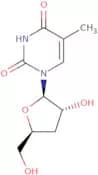
CAS :3'-Deoxy-5-methyluridine (3'-DMAU) is a synthetic nucleoside that is used in the treatment of viral infections. 3'-DMAU has antiviral and anticancer activity, and it has been used to synthesize DNA for genetic engineering. It has shown promising results in the treatment of HIV as well as in the prevention of cancer metastasis. 3'-DMAU inhibits DNA synthesis by binding to the enzyme RNA polymerase, which blocks its interaction with ribonucleosides, thus inhibiting RNA synthesis. In addition, 3'-DMAU causes cell death by inhibiting protein synthesis. The drug is activated by phosphorylation to form 5'-triphosphate and 5'-diphosphate derivatives, which inhibit DNA and RNA synthesis at multiple sites within the cell.Formule :C10H14N2O5Degré de pureté :Min. 95%Couleur et forme :PowderMasse moléculaire :242.23 g/molUridine-3',5'-cyclic monophosphate sodium salt
CAS :Uridine-3',5'-cyclic monophosphate sodium salt is a phosphotriester that is an intermediate in the biosynthesis of nucleosides. It is also a phosphodiesterase inhibitor, which means it inhibits the breakdown of cyclic nucleotides and allows them to accumulate. This drug has been shown to increase platelet production and has anti-inflammatory effects. Uridine-3',5'-cyclic monophosphate sodium salt is a human metabolite that can be synthesized from uridine, which is present in DNA, RNA, and food sources such as meat, eggs, and milk. The synthesis of uridine-3',5'-cyclic monophosphate sodium salt requires phosphoramidite as a precursor.
Formule :C9H10N2O8P·NaDegré de pureté :Min. 98 Area-%Couleur et forme :White PowderMasse moléculaire :328.2 g/mol4'-α-C-Methylcytidine
CAS :4'-a-C-Methylcytidine is a nucleoside that is synthesized from 4'-a-C-methyluridine. It has antiviral and anticancer properties, and has been shown to be a potent activator of the immune system. The modified nucleosides in this compound are thought to be less toxic than other cytotoxic agents. 4'-a-C-Methylcytidine is also used as a building block for the synthesis of DNA, RNA and phosphoramidites.Degré de pureté :Min. 95%Couleur et forme :PowderMasse moléculaire :257.24 g/mol2'-Amino-2'-deoxycytidine
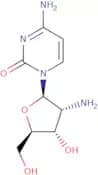
CAS :2'-Amino-2'-deoxycytidine is a modified nucleoside, based on cytidine. In this compound 2'-hydroxyl group has been replaced by an amino group, which can change hydrogen bonding patterns potentially affecting how it interacts with biomolecules.Formule :C9H14N4O4Degré de pureté :Min. 95%Couleur et forme :PowderMasse moléculaire :242.24 g/mol2',3'-Dideoxy-2',3'-didehydro-2'-fluorocytidine
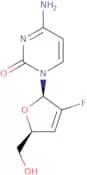
CAS :2',3'-Dideoxy-2',3'-didehydro-2'-fluorocytidine (ddC) is a nucleoside with antiviral activity. The mechanism of action is not well understood, but ddC has been shown to inhibit the proliferation of human immunodeficiency virus (HIV). It is also active against isolates of herpes simplex virus and vesicular stomatitis virus. The elimination half-life of ddC in humans is about 8 hours. In humans, this drug is eliminated by methylation and glucuronidation reactions. The pharmacokinetics of ddC have been studied in animals, including rats and rabbits, with preliminary indications that the elimination half-life may be longer than in humans.Formule :C9H10FN3O3Degré de pureté :Min. 95%Masse moléculaire :227.19 g/mol2'-O-Propargyladenosine
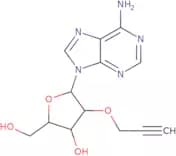
CAS :2'-O-Propargyladenosine is a modified nucleoside that belongs to the group of deoxyribonucleosides. It is an activator of viral DNA polymerases, which causes the synthesis of viral DNA to stop. This compound has antiviral and anticancer activities. 2'-O-Propargyladenosine has been shown to be effective against various human cancer cell lines in vitro and in vivo. It is a synthetic nucleoside with high purity, showing no detectable impurities by HPLC analysis.
Formule :C13H15N5O4Degré de pureté :Min. 95%Couleur et forme :White PowderMasse moléculaire :305.29 g/molThymidine-5'-triphosphate sodium salt - 100mM aqueous solution
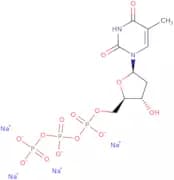
CAS :Thymidine-5'-triphosphate sodium salt is a modified nucleoside with anticancer properties. It is a high-quality, high-purity ribonucleoside that can be used as an activator for the synthesis of deoxyribonucleosides and phosphoramidites. Thymidine-5'-triphosphate sodium salt has antiviral activity, which is due to its ability to inhibit viral DNA replication and transcription. This compound also has the potential to be used in the treatment of cancer cells by inhibiting DNA synthesis and cell division.Formule :C10H17N2O14P3·xNaDegré de pureté :Min. 95%Couleur et forme :PowderMasse moléculaire :482.17 g/molThymidine-3',5'-diphosphate disodium salt
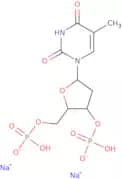
CAS :Thymidine-3',5'-diphosphate disodium salt is an antiviral and anticancer drug. It is a modified nucleoside which is synthesized from thymidine-3',5'-diphosphate and sodium bicarbonate (NaHCO3). This drug inhibits the synthesis of DNA and RNA, thereby inhibiting viral replication. Thymidine-3',5'-diphosphate disodium salt also has an antitumor effect by preventing the production of DNA in tumor cells.Formule :C10H14N2Na2O11P2Degré de pureté :Min. 95%Couleur et forme :PowderMasse moléculaire :446.15 g/molALS-8176
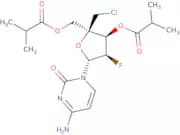
CAS :ALS-8176 is a benzimidazole compound that has been shown to be effective against both wild-type and syncytial viruses. It is also active against the hepatitis B virus, which causes fulminant hepatitis in humans and death in 30% of cases. The antiviral activity of ALS-8176 was demonstrated by its ability to inhibit viral DNA synthesis and to prevent the release of new viral particles. ALS-8176 has also been shown to have a broad spectrum of activity against paramyxoviruses, including mumps, measles, and respiratory syncytial virus (RSV). This drug can be used for the treatment of influenza A and B when administered during the early stages of infection. ALS-8176 blocks the antibody response to influenza virus infection as well as monoclonal antibody binding sites on the hemagglutinin protein, preventing fusion between infected cells.Formule :C18H25ClFN3O6Degré de pureté :Min. 95%Couleur et forme :PowderMasse moléculaire :433.86 g/molAdenosine 2',3'-cyclic monophosphate
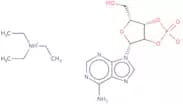
CAS :Adenosine 2',3'-cyclic monophosphate triethylammonium salt (AMP-TEA) is a structural analogue of adenosine. It is a potent inhibitor of protein synthesis by preventing the phosphodiesterase activity of cyclic nucleotide phosphodiesterases and cyclic nucleotide phosphodiesterase. AMP-TEA can be used as a tool to study translation in tissue culture, as well as to examine the effects on protein synthesis and other biochemical reactions that are regulated by cyclic nucleotides. It is also used for the preparation of tissue samples for enzymatic analysis or for radiolabeling experiments. AMP-TEA has an optimum pH of 4.5, but can be used at lower or higher pH values. The optimal temperature range for use is between 0°C and 50°C, with the maximum stability occurring at 37°C.Formule :C10H12N5O6PDegré de pureté :Min. 95%Couleur et forme :PowderMasse moléculaire :329.21 g/mol