Vitamines
Les vitamines sont des composés organiques nécessaires en petites quantités pour des fonctions physiologiques essentielles et une bonne santé globale. Elles jouent des rôles cruciaux dans le métabolisme, la fonction immunitaire et le maintien cellulaire. Dans cette catégorie, vous trouverez une large gamme de vitamines, incluant des types solubles dans l'eau et dans les graisses, nécessaires pour la recherche en nutrition, biochimie et sciences de la santé. Chez CymitQuimica, nous proposons des vitamines de haute qualité pour soutenir vos efforts de recherche et développement, garantissant la précision et l'efficacité de vos études sur les fonctions et les carences en vitamines.
1122 produits trouvés pour "Vitamines"
Trier par
Degré de pureté (%)
0
100
|
0
|
50
|
90
|
95
|
100
Thyroxine-13C6
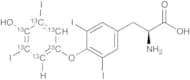
CAS :<p>Applications One of the thyroid hormones involved in the maintenance of metabolic homeostasis. Synthesized and stored as amino acid residues of thyroglobulin, the major protein component of the thyroid follicular colloid. Synthesis and secretion are regulated by the pituitary hormone (TSH). Deiodinated in peripheral tissues to the active metabolite, liothyronine. The D-form has very little activity as a thyroid hormone, but has been used to treat hyperlipidemia.<br>References Post, A., et al.: Anal. Profiles Drug Subs., 5, 225 (1976), Nelson, J.C., et al.: Clin. Chem., 34, 1737 (1988), Fischer, D.A., et al.: Clin. Chem., 42, 135 (1996), Cavalieri, R.R., et al.: Thyroid, 7, 177 (1997),<br></p>Formule :C913C6H11I4NO4Couleur et forme :White To Light BrownMasse moléculaire :782.83Dexamethasone Phosphate
CAS :<p>Applications A pro-drug of Dexamethasone (D298800), an anti-inflammatory glucocorticoid. It was found that liposomal DXM-P inhibited both chronic inflammation and joint destruction, whereas free DXM-P failed to prevent joint destruction.<br>References Kodelja, V., et al.: J. Immunol., 160, 1411 (1998), Metselaar, J., et al.: Arthritis Rheum., 48, 2059 (2003), Buttgereit, F., et al.: Arthritis Rheum., 50, 3408 (2004), Martinez, F., et al.: Front Biosci., 13, 453 (2008),<br></p>Formule :C22H30FO8PCouleur et forme :White To Light BrownMasse moléculaire :472.44Daidzein-d6
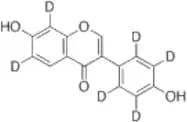
CAS :Produit contrôlé<p>Applications The labelled aglucon of Daidzin.<br>References Am. J. Respir. Cell Mol. Biol., 7, 637 (1992), Biochim. Biophys. Acta 1221, 29 (1994), Huang, R.Q.; Fang, M.J.; Dillon, G.H., Mol. Brain Res. 67: 177-183 (1999)<br></p>Formule :C152H6H4O4Couleur et forme :Off White SolidMasse moléculaire :260.27LG 100268
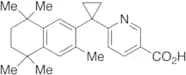
CAS :Produit contrôlé<p>Applications LG 100268 is a potent RXR agonist for evaluation in the treatment of non-insulin-dependent (type II) diabetes mellitus (NIDDM).<br>References Clyne, C., et al.: J. Biol. Chem., 277, 20591 (2002), Santen, R., et al.: J. Clin. Endocrinol. Metab., 87, 3007 (2002), Falender, A., et al.: Endocrinology, 144, 3598 (2003), Sablin, E., et al.: Mol. Cell., 11, 1575 (2003)<br></p>Formule :C24H29NO2Couleur et forme :NeatMasse moléculaire :363.49β-Nicotinic Acid Mononucleotide
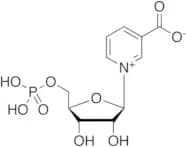
CAS :Produit contrôlé<p>Stability Hygroscopic<br>Applications A nucleotide of nicotinic acid which is produced from quinolinic acid by quinolinate phosphoribosyltransferase via transfer of a phosphoribose group. It is an intermediate of nicotinic acid adenine dinucleotide (NaAD) which is then converted to NAD via amidation and in turn converted to NADPH.<br>References Petrelli, R. et al.: Curr. Med. Chem., 18, 1973 (2011); Shibata, K. et al.: J. Chrom. B Biomed. Sci. Appl., 749, 281 (2000); Evans, C. et al.: BMC Chem. Biol., 10, 2 (2010);<br></p>Formule :C11H14NO9PCouleur et forme :NeatMasse moléculaire :335.2Eupatilin
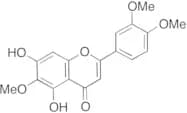
CAS :Produit contrôlé<p>Stability Hygroscopic<br>Applications Eupatilin maintains anticoagulant and antiplatelet activity isolated from the Artemisia princeps Pampanini flower.<br>References Ryu, R. et al.: Prev. Nutr. Food Sci., 18, 181 (2013);<br></p>Formule :C18H16O7Couleur et forme :Light Yellow To BeigeMasse moléculaire :344.32(S)-Naringenin
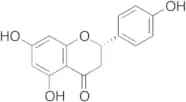
CAS :<p>Applications (S)-Naringenin, an active flavanone, maintains antioxidative, anti-inflammatory and antitumorigenic activities. Used in the treatment of praquat (PQ)-induced oxidative stress.<br>References Podder, B. et al.: J. Microbiol. Biotech., 24, 605 (2014); Abd El Azim, M. et al.: Org. Chem. An Ind. J., 10,410 (2014);<br></p>Formule :C15H12O5Couleur et forme :Light BrownMasse moléculaire :272.2510-Formyl-5,6,7,8-tetrahydro Folic Acid Disodium (Technical Grade)
CAS :Produit contrôlé<p>Stability Hygroscopic, Light Sensitive, Temperature Sensitive<br>Applications 10-Formyl-5,6,7,8-tetrahydro Folic Acid Disodium Salt is the disodium salt of F701085, which is a Folic Acid (F680300) derivative. Folic Acid is a vitamin needed to synthesize DNA, conduct DNA repair and methylate DNA, it also acts as a cofactor in biological reactions involving folate.10-Formyl-5,6,7,8-tetrahydro Folic Acid Disodium Salt is also used in the diagnosis and prevention and therapy of cerebral folate dificiency in relation to formation of folate receptor autoantibodies and treatment with reduced folate and antioxidants.<br>References Slieker, L.J., et al.: Mol. Pharmacol., 25, 294-302 (1984); Xu, L., et al.: Mol. Pharm., 7, 1311 (2010); Everette, J., et al.: J. Agric. Food Chem., 58, 8139 (2010); Alshatwi, A., et al.: Food, Chem., Toxicol., 48, 1881 (2010); McKay, D., et al.: Nut. J., 9 (2010)Ramaekers, WO 2006119589, (2006)<br></p>Formule :C20H21N7Na2O7Couleur et forme :NeatMasse moléculaire :517.4Vitamin D2-d3
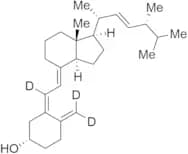
CAS :Produit contrôléFormule :C282H3H41OCouleur et forme :NeatMasse moléculaire :399.67Cholesterol-d6
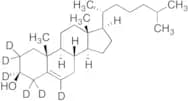
CAS :Produit contrôlé<p>Stability Hygroscopic<br>Applications Labelled Cholesterol (C432501). Cholesterol is the principal sterol of the higher animals. Cholesterol was found in all body tissues, especial in the brain, spinal cord, and in animal fats or oils. Cholesterol is the main constituent of gallstones.<br>References Rosin, Z., et al.: Physiol. Chem., 124, 282 (1923), Schoenheimer, et al.: J. Biol. Chem., 105, 355 (1934), Gemant, et al.: Life Sci., 1, 233 (1962), Johnson, K., et al.: 4, 457 (1964),<br></p>Formule :C272H6H40OCouleur et forme :Off White SolidMasse moléculaire :392.69D-γ-Tocotrienol
CAS :<p>Stability Light Sensitive<br>Applications γ-Tocotrienol exhibits antioxidant properties and belongs to the vitamin E family. It is naturally found in wheat germ oil and bran. In addition, α-tocopherol and γ-tocotrienol derivatives are potential lead compounds for developing anticancer and antiproliferative agents against MCF-7 and MDA-MB-231 breast cancer cells and the A549 lung cancer cells.<br>References Gagic, Z., et al.: Eur. J. Pharm. Sci. 88, 59 (2016); Guardiola, F., et al.: Food Chem. Toxicol., 34, 193 (1996); Kong, S., et al.: Food Chem., 120, 278 (2010); Aggarwal, B., et al.: Biochem. Pharmacol., 80, 1613 (2010)<br></p>Formule :C28H42O2Couleur et forme :YellowMasse moléculaire :410.63(+)-Biotin (+)-Sulfoxide
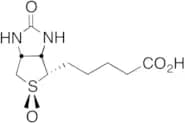
CAS :Produit contrôlé<p>Stability Hygroscopic<br>Applications (-)-Biotin Sulfoxide, is a metabolite of Biotin (B389040), which is a growth factor present in minute amounts in every living cell, and plays an indispensable role in numerous naturally occurring carboxylation reactions.<br>References du Vigneaud, et al.: J. Biol. Chem., 146, 475 (1942), Traub, et al.: Nature, 178, 649 (1956), Siegel, H., et al.: Experienta, 37, 789 (1981), Vesely, D.L., Science, 216, 1329 (1982), Hugues, M., et al.: Biochemistry, 31, 12 (1992),<br></p>Formule :C10H16N2O4SCouleur et forme :NeatMasse moléculaire :260.314-Aminobenzoic Acid
CAS :Produit contrôléFormule :C7H7NO2Couleur et forme :NeatMasse moléculaire :137.14Magnolol
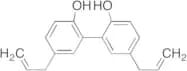
CAS :Produit contrôlé<p>Applications Magnolol is the bioactive phytochemicals found in Magnolia officinalis (1). Magnolol has been used to treat anxiety, cough, headache and allergies (2). It also inhibits tumor necrosis factor-α-*induced ICAM-1 expression in human lung epithelial cells.<br> Not a dangerous good if item is equal to or less than 1g/ml and there is less than 100g/ml in the package<br>References (1) Amorati, R., et al.: J Org Chem. (2015) 80:10651-9.(2) Wu, C., et. al.: Inflammation (2014) 37:1957-67<br></p>Formule :C18H18O2Couleur et forme :Off-WhiteMasse moléculaire :266.33Oleuropein
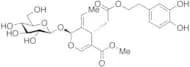
CAS :<p>Applications Oleuropein is a tyrosol ester derivative of elenolic acid and phenolic glycoside found in olive oil. Oleuropein shows antioxidant, anti-ischemic and hypolipidemic activity. Oleuropein has also been used as an immunomodulator .<br>References Speroni, E. et al.: Phytother. Res., 12, S98 (1998); Andreadou, I. et al.: J. Nutrit., 136, 2213 (2006):;Giamarellos-Bourboulis, E.J. et al.: Shock, 26, 410 (2006);<br></p>Formule :C12H17O7Degré de pureté :>95%Couleur et forme :NeatMasse moléculaire :540.51Vitamin K2(5)
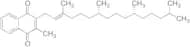
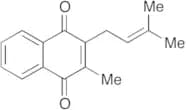
CAS :Produit contrôlé<p>Applications Vitamin K2(5) is an analog of Vitamin K that acts as a reducing agent and also acts as an electron carrier in the electron transport chain of many bacteria. Intake of Vitamin K2(5) is associated with a reduced risk of coronary heart disease.<br>References Fu, Q., et al.: Biodegradation, 20, 109 (2009); Gelejinse, J., et al.: J. Nut., 134, 3100 (2004); Jiang, M., et al.: Biochemistry, 47, 3426 (2008)<br></p>Formule :C16H16O2Couleur et forme :NeatMasse moléculaire :240.3Pantothenic Acid-13C3,15N Hemicalcium Salt
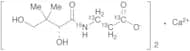
CAS :<p>Applications Labelled Pantothenic Acid. A member of the B complex vitamins; essential vitamin for the biosynthesis of coenzyme A in mammalian cells. Occurs ubiquitously in all animal and plant tissue. The richest common source is liver, but jelly of the queen bee contains 6 times as much as liver. Rice bran and molasses are other good sources.<br>References Gardner, P., et al.: Food Chem., 68, 471 (2000), Ou, B., et al.: J. Agric. Food Chem., 50, 2772 (2002), Bahorun, T., et al.: J. Sci. Food Agric., 84, 1553 (2004),<br></p>Formule :C3C6H1615NO5·CaCouleur et forme :BeigeMasse moléculaire :484.47Oxythiamine Hydrochloride
CAS :Produit contrôlé<p>Stability Hygroscopic<br>Applications Oxythiamine HCl (cas# 136-16-3) is a useful research chemical.<br></p>Formule :C12H15N3O2S·HClCouleur et forme :NeatMasse moléculaire :301.799-cis-Retinal
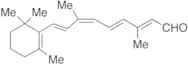
CAS :Produit contrôlé<p>Stability Light Sensitive, Temperature Sensitive<br>Applications 9-cis-Retinal is an isomer of all-trans-Retinal (R240000).<br>References Yan, E., et al.: Biochemistry, 43, 10867 (2004), Kukura, P., et al.: Science, 310, 1006 (2005), Ridge, K., et al.: J. Biol. Chem., 282, 9297 (2007),<br></p>Formule :C20H28OCouleur et forme :NeatMasse moléculaire :284.44