Nucléosides
3569 produits trouvés pour "Nucléosides"
Trebler phosphoramidite
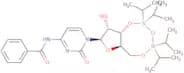
CAS :Please enquire for more information about Trebler phosphoramidite including the price, delivery time and more detailed product information at the technical inquiry form on this pageFormule :C86H101N2O14PMasse moléculaire :1,417.7 g/molN4-Benzoyl-3',5'-O-(1,1,3,3-tetraisopropyl-1,3-disiloxanediyl)cytidine
CAS :N4-Benzoyl-3',5'-O-(1,1,3,3-tetraisopropyl-1,3-disiloxanediyl)cytidine is a boron trifluoride etherate catalyst that catalyzes the synthesis of cytidine from uridine. This catalyst is stable and can be used for many reactions. It yields a trifluoromethanesulfonate as a byproduct. The trifluoromethanesulfonate can be converted to a boronic acid or ester by treatment with base or acid respectively. The etherate can also be converted to an alcohol using hydrogen chloride gas and methanol. N4-Benzoyl-3',5'-O-(1,1,3,3-tetraisopropyl-1,3-disiloxanediyl)cytidine has been shown to catalyze the isomerFormule :C28H43N3O7Si2Degré de pureté :Min. 95%Couleur et forme :PowderMasse moléculaire :589.83 g/mol5-(Carboxyhydroxymethyl)uridine methyl ester
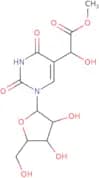
CAS :5-(Carboxyhydroxymethyl)uridine methyl ester is a modified form of uridine that is used in biochemical reactions. It is found in the ovary, where it interacts with acidic environments to produce the corresponding hydroxymethyl derivatives. The hydroxymethyl derivatives are then converted to the corresponding 5-carboxy-hydroxymethyl derivatives by conjugates and modifications, which can be analyzed using various assays. 5-(Carboxyhydroxymethyl)uridine methyl ester has also been shown to have epigenetic effects on cellular activity and cancer.
Formule :C12H16N2O9Degré de pureté :Min. 95 Area-%Couleur et forme :Slightly Yellow Clear LiquidMasse moléculaire :332.26 g/molArchaeosine
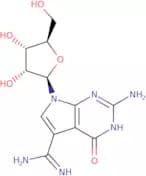
CAS :Archaeosine is a low energy chemical compound that inhibits the enzyme transcriptase polymerase chain reaction (PCR), which is an enzyme that catalyzes the synthesis of DNA from RNA. Archaeosine has significant interactions with human proteins, such as leukocyte antigen, and can be used to study protein-protein interactions and enzyme kinetics. The asymmetric synthesis of archaeosine has been studied in rat liver microsomes, which is a type of cell found in the tissues of the liver. Archaeosine also prevents bacterial enzymes from synthesizing DNA.
Formule :C12H16N6O5Degré de pureté :Min. 95%Masse moléculaire :324.29 g/mol3'-Amino-2',3'-dideoxycytidine-5'-triphosphate lithium salt - 100 mM aqueous solution
CAS :3'-Amino-2',3'-dideoxycytidine's lack of a 3'-hydroxyl group makes it a chain terminator for DNA polymerase, a key application in Sanger sequencing. Additionally, the 3'-amino group serves as a functional handle for modifying the 3' end of oligonucleotides with various labels or conjugates, expanding their utility in research and diagnostics. The lithium salt ensures better handling and solubility.Formule :C9H17N4O12P3(freeacid)Degré de pureté :Min. 95%Couleur et forme :Clear LiquidMasse moléculaire :466.17 g/mol[(2S,6R)-6-{N2-(Isobutyryl)-O6-(diphenylcarbomoyl)guanin-9-yl}-4-tritylmorpholin-2-yl]methyl dimethyl-phosphoramidochloridate
CAS :[(2S,6R)-6-{N2-(Isobutyryl)-O6-(diphenylcarbamoyl)guanin-9-yl}-4-tritylmorpholin-2-yl]methyl dimethylphosphoramidochloridate is a novel antiviral agent that is structurally related to the nucleoside analogues. It is synthesized by reacting an N2-(isobutyryl)O6-(diphenylcarbamoyl)guanin with 2,6-bis(trityl)morpholine and methyl dimethyl phosphite in dichloromethane. This compound has been shown to be active against herpes simplex virus type 1 (HSV1), HSV type 2 (HSV2), and cytomegalovirus (CMV). [(2S,6R)-6-{N2-(Isobutyryl)-OFormule :C48H48ClN8O6PDegré de pureté :Min. 95%Masse moléculaire :899.37 g/mol7-Deaza-3'-deoxyadenosine
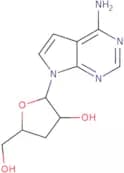
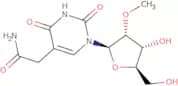
CAS :7-Deaza-3'-deoxyadenosine is a synthetic nucleoside that is used in the synthesis of DNA. It has antiviral activity and is effective against HIV, herpes simplex virus and hepatitis B. 7-Deaza-3'-deoxyadenosine also has anticancer activity and can be used as a chemotherapeutic agent for leukemia, lymphoma, and breast cancer. This drug has been shown to inhibit the growth of cultured human tumor cells by inhibiting DNA synthesis through inhibition of DNA polymerase alpha and beta.Formule :C11H14N4O3Degré de pureté :Min. 95%Masse moléculaire :250.25 g/mol5-Carbamoylmethyl-2'-O-methyluridine
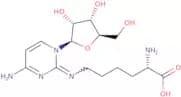
CAS :5-Carbamoylmethyl-2'-O-methyluridine is a nucleoside analog that inhibits the synthesis of proteins by inhibiting the translation process. It has been shown to be effective against tuberculosis and other mycobacterial diseases. 5-Carbamoylmethyl-2'-O-methyluridine binds to the ribosomal RNA, preventing protein synthesis and causing cell death. This drug has pleiotropic effects on cells, including inhibition of frameshifting, which is a mechanism used by some viruses to avoid immune responses. 5-Carbamoylmethyl-2'-O-methyluridine also interacts with cellular genes in response to stress (e.g., ultraviolet radiation). The mechanism of action for this drug is similar to that of 5-methoxycarbonylmethyl 2'-thiouridine (5MMCU), which inhibits protein synthesis by binding to the 30S ribosomal subunit and blocking the formation ofFormule :C12H17N3O7Degré de pureté :Min. 95%Couleur et forme :PowderMasse moléculaire :315.28 g/molLysidine
CAS :Derivative of cytidine found in tRNA which enhances translation fidelityFormule :C15H25N5O6Degré de pureté :Min. 95%Masse moléculaire :371.39 g/mol5-Amino-1-β-D-ribofuranosyl-1H-imidazole-4-carboxamide
CAS :Formule :C9H14N4O5Degré de pureté :95%Couleur et forme :SolidMasse moléculaire :258.23133'-Deoxy-3'-fluoro-5'-O-toluoylcytidine
CAS :3'-Deoxy-3'-fluoro-5'-O-toluoylcytidine is a monophosphate nucleoside of cytidine. It is a phosphoramidite building block for the synthesis of DNA, an antiviral and anticancer agent. 3'-Deoxy-3'-fluoro-5'-O-toluoylcytidine has been shown to inhibit the replication of HIV and herpes simplex virus (HSV) in cell cultures and to induce apoptosis in cancer cells by inhibiting protein synthesis and inducing oxidative stress. This nucleoside is synthesized from deoxythymidine 5' phosphate using phosphorus pentoxide as oxidizing agent, followed by a reaction with toluene. The novel 3'-deoxy-3'-fluoro-5'-O-toluoylcytidine can be used as an activator for other modified nucleotides in DNA synthesis or as scaffold for the
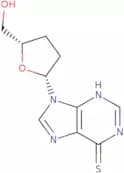
Degré de pureté :Min. 95%2',3'-Dideoxy-6-thio-inosine
CAS :2',3'-Dideoxy-6-thio-inosine is a nucleoside analog that is used in vitro for the investigation of viral replication. 2',3'-Dideoxy-6-thio-inosine is a potent inhibitor of human immunodeficiency virus type 1 (HIV-1) infection, and has been shown to inhibit the synthesis of viral dna. The in vitro activity of this drug against HIV has been shown to be greater than 200 times more potent than zidovudine or didanosine. 2',3'-Dideoxy-6-thio-inosine also inhibits the growth of some cell lines, including those derived from infected T cells, indicating that it may have cytocidal effects.
Formule :C10H12N4O2SDegré de pureté :Min. 95%Masse moléculaire :252.29 g/mol5-Ethynyl-2'-O-methyluridine triphosphate
5-Ethynyl-2'-O-methyluridine triphosphate is a novel nucleoside that contains a methyl group at the 5 position of the uracil ring. It is an antiviral agent for use in the treatment of HIV, herpes simplex virus, cytomegalovirus, and influenza virus infections. 5-Ethynyl-2'-O-methyluridine triphosphate is also used as a precursor to synthesize DNA and RNA. This compound has been shown to have anticancer properties against breast cancer cells.
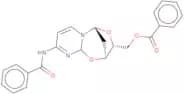
Degré de pureté :Min. 95%2,3'-Anhydro-5'-O-benzoyl-N4-benzoyl-2'-deoxycytidine
2,3'-Anhydro-5'-O-benzoyl-N4-benzoyl-2'-deoxycytidine is a novel nucleoside analog that has been shown to have anticancer, antiviral and antiretroviral activities. It binds to the ribonucleotide reductase enzyme and inhibits deoxyribonucleoside synthesis in cells. 2,3'-Anhydro-5'-O-benzoyl-N4-benzoyl-2'-deoxycytidine is also an activator of ribonucleotide reductase. This drug has been shown to be effective in treating leukemia, lymphoma, and breast cancer cells.
Formule :C23H21N3O5Degré de pureté :Min. 95%Masse moléculaire :419.44 g/mol9-(3'-O-Methyl-b-D-xylofuranosyl)adenine
9-(3'-O-methyl-β-D-xylofuranosyl)adenine is a synthetic nucleoside that is an activator of viral DNA polymerase. 9-(3'-O-methyl-β-D-xylofuranosyl)adenine is a novel nucleoside that has been shown to be active against both DNA and RNA viruses. This compound also has anticancer activity. 9-(3'-O-methyl-β-D-xylofuranosyl)adenine is the phosphorylated form of adenine and has high purity and quality. The CAS number for this product is 53110-86-2.
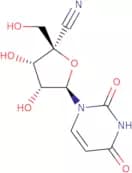
Degré de pureté :Min. 95%4’-Cyanouridine
CAS :4’-Cyanouridine is a nucleoside that is used in the synthesis of DNA and RNA. It is often used as a precursor in the production of phosphoramidites and nucleosides, which are important for DNA synthesis. 4’-Cyanouridine can be used to inhibit viral replication by blocking the activity of reverse transcriptase, an enzyme required for the synthesis of viral DNA. 4’-Cyanouridine can also be used to treat cancer cells by preventing the growth of cells. This compound has been shown to activate RNA polymerase II, which is required for protein synthesis and cell division. The high purity and novel nature of this product make it ideal for use in research laboratories or other specialized settings where high quality products are required.
Degré de pureté :Min. 95%Cytidine based prodrug with gemcitabine
Cytidine based prodrug with gemcitabine is a nucleoside analog that has antiviral and anticancer properties. It is a modified cytidine-based prodrug with gemcitabine which is an anticancer drug. Cytidine based prodrug with gemcitabine inhibits viral DNA synthesis by competitively inhibiting the incorporation of deoxycytidine monophosphate into the viral DNA chain. The prodrug also inhibits the proliferation of cancer cells by interfering with DNA synthesis, which leads to cell death.
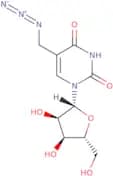
Degré de pureté :Min. 95%5-(Azidomethyl)uridine
CAS :5-(Azidomethyl)uridine (5-AZA-U) is a cytosolic nucleoside analog that inhibits the replication of herpes simplex virus type 1 (HSV-1). It is resistant to degradation by cellular nucleases and is fluorescent, making it a clickable substrate for microscopy. 5-AZA-U has been shown to inhibit the transcription of viral DNA and the synthesis of viral proteins in mammalian cells. This drug has also been shown to be effective against cancer and hepatitis B virus (HBV). 5-AZA-U can be used as an antiviral agent because of its ability to inhibit the posttranscriptional gene expression of HSV-1. 5-(Azidomethyl)uridine is also an analog of uridine, which can be used to study intracellular signaling pathways that regulate proliferation, differentiation, or apoptosis in mammalian cells.
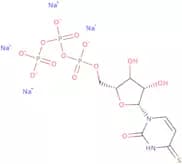
Formule :C10H13N5O6Degré de pureté :Min. 95%Couleur et forme :PowderMasse moléculaire :299.24 g/mol4-Thiouridine-5'-triphosphate sodium salt - aqueous solution
CAS :4-Thiouridine-5'-triphosphate sodium salt - aqueous solution (4TUTP) is an analog of uridine and can be used as a template for the synthesis of single-stranded DNA. 4TUTP has been shown to have a high affinity for dsDNA, allowing it to form a ternary complex with DNA polymerase and single-stranded DNA template. 4TUTP can also be used to prepare samples for profiling experiments or other molecular studies. It is reactive, so should be handled with caution in order to avoid unwanted crosslinking. 4TUTP may also be used in chloroplast research.Formule :C9H15N2O14P3S·xNaDegré de pureté :Min. 95 Area-%Couleur et forme :Clear LiquidMasse moléculaire :500.20 g/mol5'-Amino-5'-deoxy-2'-O-methyluridine
5'-Amino-5'-deoxy-2'-O-methyluridine is a novel nucleoside analog with antiviral and anticancer properties. 5'-Amino-5'-deoxy-2'-O-methyluridine is an activator of the immune system, which may be due to its ability to inhibit DNA synthesis by inhibiting ribonucleotide reductase and DNA polymerase. This drug has shown activity against a variety of human tumor cell lines in vitro and in vivo. 5'-Amino-5'-deoxy-2'-O-methyluridine also inhibits the growth of several bacterial strains, including methicillin resistant Staphylococcus aureus (MRSA) and Mycobacterium avium complex.
Degré de pureté :Min. 95%4’-C-Methyl-2-thiouridine
CAS :4’-C-Methyl-2-thiouridine is an activator that has anticancer properties. It is a modified nucleoside with antiviral and antifungal activities, which has been shown to inhibit the growth of human tumor cells in vitro. 4’-C-methyl-2-thiouridine is able to inhibit viral replication in vitro and has been shown to be active against herpes simplex virus type 1 (HSV1) and herpes simplex virus type 2 (HSV2). Interestingly, this compound was found to have no effect on the intracellular levels of thymidine kinase or on cellular DNA synthesis.
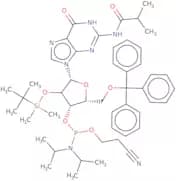
Formule :C10H14N2O5SDegré de pureté :Min. 95%Masse moléculaire :274.29 g/mol2'-O-tert-Butyldimethylsilyl-N2-Isobutyryl-5'-O-tritylguanosine 3'-CE phosphoramidite
2'-O-tert-Butyldimethylsilyl-N2-Isobutyryl-5'-O-tritylguanosine 3'-CE phosphoramidite is an anticancer nucleoside, which is used as a building block to synthesize DNA and RNA. The compound has been shown to be effective against HIV and herpes simplex virus. It also has antiviral effects against influenza A virus, cytomegalovirus, and Epstein Barr virus.
Formule :C48H64N7O7PSiDegré de pureté :Min. 95%Masse moléculaire :910.15 g/molN6-Benzoyl-5'-O-trityl-adenosine
N6-Benzoyl-5'-O-trityl-adenosine is a novel nucleoside, which has been synthesized to be a phosphoramidite. It is an anticancer drug that inhibits the growth of tumor cells by competitively inhibiting the synthesis of DNA and RNA. In addition, N6-Benzoyl-5'-O-trityl-adenosine has antiviral properties, which may be due to its ability to inhibit viral DNA polymerase. This compound also shows high purity and quality.
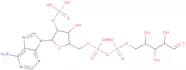
Formule :C36H31N5O5Degré de pureté :Min. 95%Masse moléculaire :613.66 g/molAdenosine-5'-O-diphosphoribose phosphate
CAS :Potential metabolite of NADP+
Formule :C15H24N5O17P3Degré de pureté :Min. 95 Area-%Couleur et forme :PowderMasse moléculaire :639.3 g/molN2-Isobutyryl-N-trityl-morpholino guanine
CAS :N2-Isobutyryl-N-trityl-morpholino guanine is a synthetic nucleoside analogue. It has been shown to be an activator of ribonucleotide reductase, and it is a potential anticancer agent. N2-Isobutyryl-N-trityl-morpholino guanine has also been shown to inhibit the replication of DNA and RNA viruses. This compound is being studied for its possible use in the treatment of HIV infection, as well as other viral infections that affect the central nervous system.
Degré de pureté :Min. 95%N6-Benzoyl-8-hydroxy-2'-O-methyladenosine
N6-Benzoyl-8-hydroxy-2'-O-methyladenosine is a nucleoside analogue that inhibits the replication of RNA and DNA. It is a monophosphate, which can be converted to a diphosphate through phosphorylation. N6-Benzoyl-8-hydroxy-2'-O-methyladenosine has been shown to inhibit cancer cells and may have potential for use in antiviral therapy. This compound was synthesized from 2,4,5,6 tetrahydrobenzyl alcohol and 2'-deoxyadenosine. The CAS number for this compound is 79430-89-1.
Degré de pureté :Min. 95%3'-O-Amino-2'-deoxycytidine
CAS :3'-O-Amino-2'-deoxycytidine (3'-AAC) is an activator nucleoside that has antiviral and anticancer properties. It can be used with other anticancer agents such as doxorubicin, methotrexate, and 5-fluorouracil to increase the efficacy of these compounds. 3'-AAC is a phosphoramidite monophosphate that can be used in the synthesis of oligodeoxynucleotides. This product is also a novel chemical entity that has not been previously described in any publication or patent application.
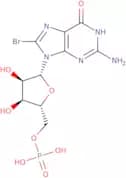
Formule :C9H14N4O4Degré de pureté :Min. 95%Masse moléculaire :242.23 g/mol8-Bromoguanosine-5'-monophosphate
CAS :8-Bromoguanosine-5'-monophosphate (8BrGMP) is a nucleotide analog that modulates the expression of genes involved in circulatory and metabolic processes. 8BrGMP has been shown to be effective in clinical studies, including neonates with hypoxemia or low blood pressure. It also has a dose-dependent effect on the newborn's circulation and blood pressure, and can be used to treat neonatal transition. 8BrGMP is an advance in neonatal care due to its ability to improve oxygenation and promote better cardiovascular stability.
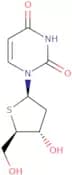
Formule :C10H13BrN5O8PDegré de pureté :Min. 95%Masse moléculaire :442.12 g/mol2'-Deoxy-4'-thiouridine
CAS :2'-Deoxy-4'-thiouridine (2dT) is a synthetic purine nucleoside analogue that has antiviral activity against herpes simplex virus and hepatitis B virus. It is a lead compound for the development of therapeutic agents for human immunodeficiency virus type 1 and varicella, and it has potential applications in the treatment of renal toxicity. 2dT inhibits viral replication by inhibiting viral thymidine kinase, which converts 2dT to 2'-deoxy-4'-thioguanosine monophosphate (2'TGMP). The 2'TGMP inhibits intracellular phosphorylation reactions necessary for DNA synthesis and cell division. This inhibition leads to death of the infected cells.
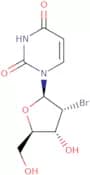
Formule :C9H12N2O4SDegré de pureté :Min. 95%Masse moléculaire :244.27 g/mol2'-Bromo-2'-deoxyuridine
CAS :2'-Bromo-2'-deoxyuridine is a synthetic nucleoside analog of deoxyuridine, in which the 2'-hydroxyl group of the ribose sugar is replaced with a bromine atom (Br) at the 2' position. This modification allows it to be incorporated into DNA during DNA synthesis, where it can replace the normal thymidine. This molecule can potentially be used in molecular biology and cell biology as a thymidine analog to study DNA replication, cell proliferation, and DNA repair.
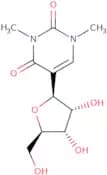
Formule :C9H11BrN2O5Degré de pureté :Min. 95%Couleur et forme :PowderMasse moléculaire :307.1 g/mol1,3-Dimethylpseudouridine
CAS :1,3-Dimethylpseudouridine is a methylated derivative of pseudouridine, which is a naturally occurring modified nucleoside found in RNA. This compounds can be used in research applications
Formule :C11H16N2O6Degré de pureté :Min. 95%Couleur et forme :PowderMasse moléculaire :272.25 g/molPolyinosinic-polycytidylic acid sodium salt
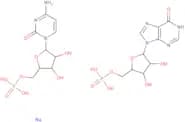
CAS :Polyinosinic acid-polycytidylic acid (Poly I:C), an agonist of TLR3 toll-like receptors, is a synthetic double-stranded RNA analog, consisting of polyinosinic acid (poly I) paired with polycytidylic acid (poly C), forming a stable duplex structure. PolyI:C stimulates the secretion of pro-inflammatory cytokines and type I interferon through its interaction with endosomal Toll-like receptor 3 (TLR-3) and the cytoplasmic receptors melanoma differentiation-associated gene 5 (MDA-5) and retinoic acid-inducible gene I (RIG-I). This immunostimulant activity makes Poly I:C a useful vaccine adjuvant and is used in vaccine formulations. Poly I:C and its stabilized analogs (e.g., poly-ICLC) are also being actively researched for their dual role in oncology: directly targeting tumors and acting as immune potentiators. For example Poly I:C can induce apoptosis in tumor cells and stimulate immunogenic cell death and is therefore being explored alongside chemotherapy, radiotherapy, and checkpoint inhibitors, helping to overcome resistance mechanisms and strengthen treatment outcomes. We can supply PolyI:C to all stages of your project - from R&D and preclinical phases right up to GMP commercial manufacture. Contact our team for custom Poly I:C products.
For more on poly I:C read out blog 'Poly I:C: A Vaccine Adjuvant With Oncological Potential.'Formule :(C10H13N4O8P)x•(C9H14N3O8P)x•NaxCouleur et forme :White PowderN1,N2,N2-Trimethyl-psi-isocytidine
N1,N2,N2-Trimethylpsi-isocytidine is a novel nucleoside analog that has antiviral, anticancer, and immunosuppressive activities. It is an activator of diphosphate kinase and inhibits the formation of deoxyribonucleotides in DNA synthesis. N1,N2,N2-Trimethylpsi-isocytidine is a modified form of cytidine that contains three methyl groups. This agent has been shown to be active against human leukemic cells and can be used for the treatment of cancer and HIV infections.
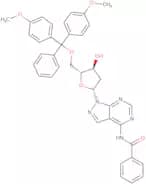
Degré de pureté :Min. 95%8-Aza-N6-benzoyl-7-deaza-2'-deoxy-5'-O-DMT-adenosine
CAS :8-Aza-N6-benzoyl-7-deaza-2'-deoxy-5'-O-DMT-adenosine is a nucleoside analog that has been modified by replacing the ribose moiety with deoxyribose. This modification increases its stability in vivo and in vitro. 8-Aza-N6-benzoyl-7-deaza-2'-deoxy-5'-O-DMT adenosine is an activator of DNA polymerase, which can be used to synthesize DNA. It is also an antiviral agent, active against herpes simplex virus type 1 and 2, vaccinia virus, and cytomegalovirus. This compound has shown promising anticancer activity against human breast cancer cells grown in culture.
Formule :C38H35N5O6Degré de pureté :Min. 95%Masse moléculaire :657.71 g/mol9-(2’-Deoxy-2’-fluoro-arabinofuranosyl)adenine 5’-triphosphate triethyl ammonium salt
Ai Product Descriptions 50 Creative
Degré de pureté :Min. 95%3-Cyanovinyl-9-(5’-O-DMT-2’-deoxyribofuranosyl)carbazole
CAS :3-Cyanovinyl-9-(5’-O-DMT-2’-deoxyribofuranosyl)carbazole is a nucleoside analog that is an antiviral and anticancer agent. It is a monophosphate, which has been shown to inhibit the replication of DNA by binding to the enzyme DNA polymerase. 3-Cyanovinyl-9-(5’-O-DMT-2’-deoxyribofuranosyl)carbazole also inhibits protein synthesis and cell division by preventing the production of proteins vital for cell division. This drug has shown high purity and quality, as well as novel properties.
Formule :C41H36N2O5Degré de pureté :Min. 95%Masse moléculaire :636.74 g/molN6-Benzoyl-2'-O-methyladenosine
CAS :N6-Benzoyl-2'-O-methyladenosine is a novel nucleoside that has been synthesized by chemical modification of adenosine. It is an activator of the ribonucleotide reductase enzyme and is currently being studied as an anticancer and antiviral agent. N6-Benzoyl-2'-O-methyladenosine has shown antitumor activity against human breast cancer cells in vitro and in vivo, inhibiting tumor growth. It also inhibits the replication of herpes simplex virus type 1 (HSV1) and type 2 (HSV2).
Formule :C18H19N5O5Masse moléculaire :385.37 g/mol2'-Deoxy-2'-fluoro-L-uridine
CAS :2'-Deoxy-2'-fluoro-L-uridine is a synthetic nucleoside analog of uridine where the sugar is both fluorinated at the 2' position and in the L-configuration, which is the mirror image of naturally occurring D-nucleosides. This modification makes it structurally distinct and biologically significant for certain applications in drug development and biochemical research.
Formule :C9H11FN2O5Degré de pureté :Min. 95%Couleur et forme :White PowderMasse moléculaire :246.2 g/mol1-(2'-Deoxy-5'-O-DMT-b-D-xylofuranosyl)cytosine
1-(2'-Deoxy-5'-O-DMT-b-D-xylofuranosyl) cytosine is a modified nucleoside that is phosphoramidite activated by the addition of a diphosphate. The diphosphate group on the sugar moiety may be hydrolyzed to form 1-(2'-deoxy-5'-O-DMT-b-D-xylofuranosyl)cytosine monophosphate. Cytidine is an antiviral and antifungal agent that is used in the treatment of herpes zoster, chronic myeloid leukemia, and other cancers. It has been shown to inhibit DNA synthesis and viral replication in vitro.
!--More-->
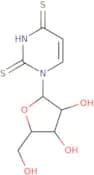
Cytidine is an antiviral and antifungal agent that is used in the treatment of herpes zoster, chronic myeloid leukemia, and other cancers. It has been shown to inhibit DNADegré de pureté :Min. 95%2,4-Dithiouridine
CAS :2,4-Dithiouridine is a nucleoside for use in a variety of applications
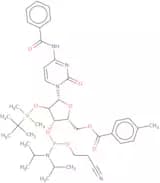
Formule :C9H12N2O4S2Degré de pureté :Min. 95%Couleur et forme :PowderMasse moléculaire :276.33 g/molN4-Benzoyl-2'-O-tert-butyldimethylsilyl-5'-O-toluoylcytidine 3'-CE phosphoramidite
N4-Benzoyl-2'-O-tert-butyldimethylsilyl-5'-O-toluoylcytidine 3'-CE phosphoramidite is an anticancer agent that acts by inhibiting the formation of DNA and RNA. It is a nucleoside analogue that has been modified to contain a benzoyl group at the 2' carbon atom, which leads to increased cytotoxicity. N4-Benzoyl-2'-O-tert-butyldimethylsilyl-5'-O-toluoylcytidine 3'-CE phosphoramidite is a synthetic nucleoside analogue with novel properties. It inhibits the synthesis of DNA and RNA in cells, which may be due to its ability to inhibit DNA polymerases and ribonucleases.
Formule :C39H54N5O8PSiDegré de pureté :Min. 95%Masse moléculaire :779.95 g/molN6-Benzoyl-3'-O-benzyl-5'-O-DMT-adenosine
CAS :N6-Benzoyl-3'-O-benzyl-5'-O-DMT-adenosine is a modified nucleoside that is synthesized by the phosphoramidite method. It has antiviral activity and can be used as an anticancer drug. N6-Benzoyl-3'-O-benzyl-5'-O-DMT-adenosine has been shown to inhibit the growth of cancer cells in vitro. The compound also inhibits DNA replication, RNA synthesis, and protein synthesis.
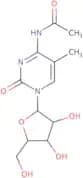
Formule :C45H41N5O7Degré de pureté :Min. 95%Masse moléculaire :763.84 g/molN4-Acetyl-5-methylcytidine
CAS :N4-Acetyl-5-methylcytidine is a novel, modified nucleoside with antiviral and anticancer properties. It is an activator of RNA polymerase II and inhibits DNA synthesis by inhibiting the activity of DNA polymerase. N4-Acetyl-5-methylcytidine has been shown to be effective in treating cancers that are sensitive to chemotherapy, such as lymphomas, myelomas, and leukemias. It can be used as a substitute for cytosine in the synthesis of oligonucleotides and phosphoramidites.
Degré de pureté :Min. 95%Cytidine 5'-triphosphate disodium salt
CAS :Please enquire for more information about Cytidine 5'-triphosphate disodium salt including the price, delivery time and more detailed product information at the technical inquiry form on this page
Formule :C9H14N3Na2O14P3Degré de pureté :Min. 97 Area-%Masse moléculaire :527.12 g/mol2,2'-Anhydro-5'-O-toluoyluridine
2,2'-Anhydro-5'-O-toluoyluridine is a synthetic nucleoside analog that is used as an antiviral agent for the treatment of herpes simplex virus. It activates ribonucleotide reductase and inhibits DNA synthesis by inhibiting the enzyme DNA polymerase. 2,2'-Anhydro-5'-O-toluoyluridine has been shown to be active against colon cancer cells in vitro and in vivo. This drug has also been shown to inhibit the growth of certain types of leukemia cells and may be useful in treating patients with chronic myeloid leukemia.
Formule :C17H16N2O6Degré de pureté :Min. 95%Masse moléculaire :344.32 g/mol5-Carboxy-2’-deoxycytidine
CAS :Please enquire for more information about 5-Carboxy-2’-deoxycytidine including the price, delivery time and more detailed product information at the technical inquiry form on this page
Formule :C10H13N3O6Masse moléculaire :271.23 g/mol3'-Azido-3'-deoxythymidine-b-D-glucuronide sodium salt
CAS :3'-Azido-3'-deoxythymidine-b-D-glucuronide sodium salt is an antiviral and anticancer agent that inhibits the synthesis of DNA, RNA, and protein. It has shown to be effective against a variety of viruses including HIV-1, herpes simplex virus type 1, influenza A virus, vaccinia virus, and vesicular stomatitis virus. 3'-Azido-3'-deoxythymidine-b-D-glucuronide sodium salt also inhibits the growth of cancer cells in vitro. This drug is a modified nucleoside with a phosphoramidite backbone and a 3'-azido group at one end. The other end contains a beta D glucuronic acid moiety. The modifications allow for the inhibition of DNA synthesis by blocking the incorporation of deoxyribonucleotides into DNA chains.
Formule :C16H20N5NaO10Degré de pureté :Min. 95%Couleur et forme :PowderMasse moléculaire :465.35 g/mol5-(Aminomethyl)-2-thiouridine
CAS :5-(Aminomethyl)-2-thiouridine is a bifunctional molecule that can be used in chromatography and as a precursor for the epigenetic modifications of DNA. 5-(Aminomethyl)-2-thiouridine has been shown to have an effect on the methyltransferase pathway, which is involved in the epigenome. This molecule has also been shown to affect the growth rate of bacteria in vitro.
Formule :C10H15N3O5SDegré de pureté :Min. 95%Masse moléculaire :289.31 g/molPolyinosinic acid tripotassium salt
CAS :Polyinosinic acid is a single stranded RNA analog which is combined with polycytidylic acid (poly C) to form a stable duplex structure known as Polyinosinic acid-polycytidylic acid (Poly I:C). PolyI:C stimulates the secretion of pro-inflammatory cytokines and type I interferon through its interaction with endosomal Toll-like receptor 3 (TLR-3) and the cytoplasmic receptors melanoma differentiation-associated gene 5 (MDA-5) and retinoic acid-inducible gene I (RIG-I). This immunostimulant activity makes Poly I:C a useful vaccine adjuvant and is used in vaccine formulations. Poly I:C and its stabilized analogs (e.g., poly-ICLC) are also being actively researched for their dual role in oncology: directly targeting tumors and acting as immune potentiators. For example Poly I:C can induce apoptosis in tumor cells and stimulate immunogenic cell death and is therefore being explored alongside chemotherapy, radiotherapy, and checkpoint inhibitors, helping to overcome resistance mechanisms and strengthen treatment outcomes. We can supply PolyI:C to all stages of your project - from R&D and preclinical phases right up to GMP commercial manufacture. Contact our team for custom Poly I:C products.
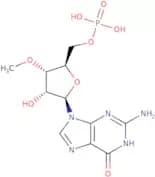
For more on poly I:C read out blog 'Poly I:C: A Vaccine Adjuvant With Oncological Potential.'Degré de pureté :Min. 95%3'-O-Methyl-5'-guanylic acid
CAS :3'-O-Methyl-5'-guanylic acid is a novel antiviral, synthetic deoxyribonucleoside which is activated by phosphoramidites to produce 3'-O-methyl-5'-guanylic acid phosphoramidite. It has high purity and quality and can be used as a nucleoside activator for DNA synthesis. 3'-O-Methyl-5'-guanylic acid has been shown to be an anticancer agent that inhibits the growth of cancer cells in vitro by inhibiting DNA synthesis and cell division. This drug also has a potential use as an antiviral agent.
Formule :C11H16N5O8PDegré de pureté :Min. 95%Masse moléculaire :377.25 g/molCytidine 5'-monophosphate sodium salt
CAS :Cytidine 5'-monophosphate sodium salt is a nucleotide that is found in RNA and DNA. Cytidine 5'-monophosphate sodium salt is an intermediate in the biosynthesis of uridine, choline, and saccharose. It also plays an important role in the immune system as it can be a precursor for immunoglobulins. The reaction rate of cytidine 5'-monophosphate sodium salt with lipase has been shown to be constant at pH 7.5-8.0 and 37°C. This product has been shown to have emulsifying properties by forming micelles with water-immiscible solvents such as hexane or heptane, which may be due to its ability to form hydrogen bonds with other molecules such as saccharose or guanosine. Cytidine 5'-monophosphate sodium salt can also be used as a chromatographic material for separating saccharose from other sugars
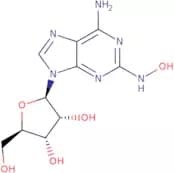
Formule :C9H14N3O8P·xNaDegré de pureté :Min. 95 Area-%Couleur et forme :White Off-White PowderMasse moléculaire :323.2 g/mol2-Hydroxyaminoadenosine
CAS :2-Hydroxyaminoadenosine (2-HAA) is a novel nucleoside that is used as an activator of ribonucleotide reductase. It has been shown to be effective against cancer cells in vitro and in vivo. 2-HAA also inhibits the synthesis of viral DNA, which may be due to its ability to inhibit the ribonuclease activity of the virus. 2-HAA has also been shown to have antiviral activity against herpes simplex virus type 1 (HSV-1).
Formule :C10H14N6O5Degré de pureté :Min. 95%Masse moléculaire :298.26 g/molGuanosine hydrate
CAS :Please enquire for more information about Guanosine hydrate including the price, delivery time and more detailed product information at the technical inquiry form on this page
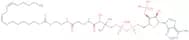
Formule :C10H13N5O5·xH2ODegré de pureté :Min. 98 Area-%Masse moléculaire :283.24 g/molLinoleoyl coenzyme A
CAS :Linoleoyl coenzyme A (LCA) is a fatty acid that is a component of the cell membrane. LCA is synthesized from linoleic acid and coenzyme A in the mitochondria. In humans, LCA is an important component of the mitochondrial protein. The production of this enzyme can be enhanced by dietary supplementation with linoleic acid. Linoleoyl coenzyme A has been used as a model system to study energy metabolism in mitochondria. It has been shown to be involved in carthamus tinctorius, human mitochondrial, rat liver microsomes, and dietary models. LCAs have also been used as analytical methods for measuring the amount of fatty acids within cells or tissues.
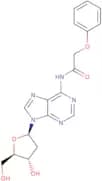
Formule :C39H66N7O17P3SDegré de pureté :Min. 95%Masse moléculaire :1,029.97 g/mol2'-Deoxy-N6-phenoxyacetyladenosine
CAS :2'-Deoxy-N6-phenoxyacetyladenosine is a cyclic oligonucleotide analog that has been shown to be efficient in inhibiting the replication of RNA. It binds to the RNA polymerase, preventing transcription and replication of the nucleic acid. 2'-Deoxy-N6-phenoxyacetyladenosine is also an effective inhibitor of DNA synthesis and can inhibit the synthesis of proteins by binding to ribosomes. This drug is structurally similar to deoxyadenosine, which is a component of DNA, and it has been shown to be more potent than other analogs.
Formule :C18H19N5O5Degré de pureté :Min. 97 Area-%Masse moléculaire :385.38 g/molN4-Benzoyl-2'-deoxy-3'-O-levulinoylcytidine
N4-Benzoyl-2'-deoxy-3'-O-levulinoylcytidine is a nucleoside that is used as an antiviral and anticancer agent. It is a modified deoxyribonucleoside that has antiviral activity against HSV-1, HSV-2, and HIV. N4-Benzoyl-2'-deoxy-3'-O-levulinoylcytidine also has anticancer effects against leukemia cells in mice. This drug is synthesized from 2′,3′,5′triacetyladenosine by the reaction of 4-(1H)-benzoyloxymethyl)phenylacetic acid with triethylamine and levulinic acid chloride.
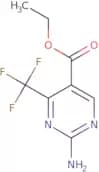
Formule :C21H23N3O7Degré de pureté :Min. 95%Masse moléculaire :429.43 g/molEthyl 2-amino-4-(trifluoromethyl)pyrimidine-5-carboxylate
CAS :Ethyl 2-amino-4-(trifluoromethyl)pyrimidine-5-carboxylate is a small molecule that is a potent inhibitor of diacylglycerol acyltransferase. The compound has been shown to be an efficient inhibitor of this enzyme, which is involved in the synthesis of diacylglycerol. Diacylglycerol acyltransferase catalyzes the transfer of an acyl group from an acyl-carrier protein (ACP) to glycerol 3-phosphate, forming lysophosphatidic acid and releasing CoA. The inhibition of this enzyme leads to drastically reduced levels of diacylglycerol, which may have implications for the treatment of metabolic syndrome and diabetes.
Formule :C8H8F3N3O2Degré de pureté :Min. 95%Masse moléculaire :235.16 g/mol3'-O-Aminoacetoxythymidine 5'-O-triphosphate triethylammonium salt
Please enquire for more information about 3'-O-Aminoacetoxythymidine 5'-O-triphosphate triethylammonium salt including the price, delivery time and more detailed product information at the technical inquiry form on this page
Formule :C13H22N3O14P3•(C6H15N)xDegré de pureté :Min. 99 Area-%Couleur et forme :PowderMasse moléculaire :537.25 g/mol5'-O-DMT-2'-O-(2-methoxyethyl)uridine
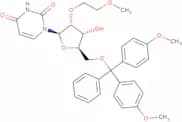
CAS :5'-O-DMT-2'-O-(2-methoxyethyl)uridine is a modified nucleoside that is an antiviral and anticancer agent. It was first synthesized in the early 1980s, and has been shown to be active against a variety of viruses, such as herpes simplex virus (HSV), varicella zoster virus (VZV), cytomegalovirus (CMV), hepatitis B virus (HBV), and Epstein-Barr virus (EBV). 5'-O-DMT-2'-O-(2-methoxyethyl)uridine inhibits the growth of cancer cells by interfering with DNA synthesis. This drug also has been shown to be an activator for DNA polymerases and is used as a building block for antiretroviral drugs.
Formule :C33H36N2O9Degré de pureté :Min. 95%Masse moléculaire :604.65 g/mol5-Aminoallyl 2'-deoxycytidine-5'-triphosphate lithium, 100mM aqueous solution
5-Aminoallyl 2'-deoxycytidine-5'-triphosphate lithium salt - 100mM aqueous solution is a novel modified nucleoside that can be activated to the corresponding phosphoramidite.
Formule :C12H17N4O13P3•Li4Degré de pureté :Min. 95%Couleur et forme :Clear LiquidMasse moléculaire :545.97 g/molrac-Lamivudine acid
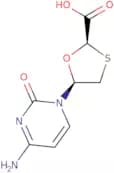
CAS :Lamivudine is an antiviral drug that is used as a nucleoside analogue. It is a prodrug that is converted to its active form, which inhibits the viral enzyme reverse transcriptase by interfering with the synthesis of viral DNA. Racemic lamivudine acid (LAM) crystallizes in the form of chains with hydrogen bonds oriented in an impurity plane. The LAM molecule has two substituents, one carboxylate and one oxathiolane group.
Formule :C8H9N3O4SDegré de pureté :Min. 95%Masse moléculaire :243.24 g/mol5-[4-(4,4,5,5-tetramethyl-[1,3,2]dioxaborolan-2-yl)-benzylidene]-pyrimidine-2,4,6-trione
Ribonuclease is an enzyme that cleaves the phosphodiester backbone of ribonucleotide to produce a 5'-phosphate and a 2'-deoxyribonucleoside. Ribonuclease is an activator that activates the synthesis of ribonucleotides, deoxyribonesucleotides and nucleosides. Ribonuclease has antiviral properties which may be due to its ability to inhibit DNA polymerase by catalyzing the hydrolysis of the 2'-deoxyribose-5'-phosphate bond in DNA. Ribonuclease has also been shown to have anticancer activity, which may be due to its ability to inhibit protein synthesis.
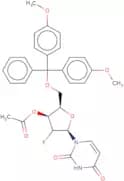
Degré de pureté :Min. 95%3'-O-Acetyl-2'-deoxy-5'-O-DMT-2'-fluorouridine
3'-O-Acetyl-2'-deoxy-5'-O-DMT-2'-fluorouridine is a novel, activator, ribonucleosides, deoxyribonucleosides, diphosphate, phosphoramidites, modified nucleosides. It can be used as an anticancer and antiviral agent.
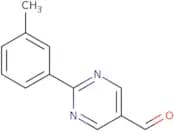
Formule :C32H31FN2O8Degré de pureté :Min. 95%Masse moléculaire :590.6 g/mol2-(3-Methylphenyl)pyrimidine-5-carbaldehyde
CAS :2-(3-Methylphenyl)pyrimidine-5-carbaldehyde is a monophosphate nucleoside analog that can be used as an antiviral drug. It has shown cytotoxic activity against cells with a high DNA content, and it inhibits the synthesis of RNA and DNA. This compound could be useful for the treatment of HIV and other viral diseases.Formule :C12H10N2ODegré de pureté :Min. 95%Masse moléculaire :198.22 g/mol5-Bromo-2-methylsulfanyl-pyrimidine-4-carboxylic acid
CAS :5-Bromo-2-methylsulfanyl-pyrimidine-4-carboxylic acid is a pyrimidine derivative that inhibits protein kinases. The compound has been shown to inhibit the activity of protein kinase C, which is involved in mediating inflammatory responses, and phosphorylation of the insulin receptor substrate 1. 5-Bromo-2-methylsulfanyl-pyrimidine-4-carboxylic acid is an efficient inhibitor of kinases and can be used as a lead compound for the development of new compounds with therapeutic potential.Formule :C6H5BrN2O2SDegré de pureté :Min. 95%Masse moléculaire :249.09 g/mol2',3',5'-Tri-O-acetylinosine
CAS :2′,3′,5′-Tri-O-acetylinosine is a protected form of the nucleoside inosine, with potential for use in the preparation of modified nucleotides and nucleoside analogs.
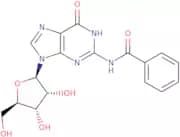
Formule :C16H18N4O8Degré de pureté :Min. 95%Couleur et forme :White To Off-White SolidMasse moléculaire :394.34 g/molN2-Benzoylguanosine
CAS :N2-Benzoylguanosine is a nucleotide derivative that is formed by the acetylation of guanosine. It has been shown to act as a buffer in alkaline solutions and isomerizes to its n-oxide form when heated. N2-Benzoylguanosine reacts with peroxides such as hydrogen peroxide, glyoxal, and organic peroxides, forming hydroperoxide intermediates that can be converted into other products. The acidic hydrolysis of N2-benzoylguanosine yields the corresponding 6-benzoyladenosines. It has been shown to enhance the activity of uridine in inhibiting bacterial growth, while also acting as an inhibitor of viral RNA synthesis. This compound also reacts with nitrous acid to form an n6-benzoyladenosine derivative that inhibits the formation of RNA chains during transcription.
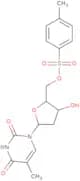
Formule :C17H17N5O6Degré de pureté :Min. 95%Couleur et forme :White to beige solid.Masse moléculaire :387.35 g/mol5'-O-Tosylthymidine
CAS :5'-O-Tosylthymidine is a bifunctional reagent that is used in the synthesis of DNA. It is a nucleophilic, inorganic compound that reacts with the electrophilic acrylonitrile group on 5'-hydroxythymidine to form a stable thiophosphate linkage. The reaction takes place stepwise and is catalyzed by an enzyme called DNA polymerase. This product has been used as an antimetabolite in medicine, mainly for treating leukemia.
Formule :C17H20N2O7SDegré de pureté :Min. 95%Masse moléculaire :396.42 g/mol



![[(2S,6R)-6-{N2-(Isobutyryl)-O6-(diphenylcarbomoyl)guanin-9-yl}-4-tritylmorpholin-2-yl]methyl dimet…](/_next/image/?url=https%3A%2Fstatic.cymitquimica.com%2Fproducts%2F3D%2Fthumb-webp%2FNI58200.webp&w=3840&q=75)





























![5-[4-(4,4,5,5-tetramethyl-[1,3,2]dioxaborolan-2-yl)-benzylidene]-pyrimidine-2,4,6-trione](/_next/image/?url=https%3A%2Fstatic.cymitquimica.com%2Fproducts%2F3D%2Fthumb-webp%2FNT44284.webp&w=3840&q=75)