Nucléosides
3569 produits trouvés pour "Nucléosides"
1-(2’-Deoxy-2’-fluoro-arabinofuranosyl)-5-hydroxymethyluracil
CAS :1-(2’-Deoxy-2’-fluoro-arabinofuranosyl)-5-hydroxymethyluracil (also abbreviated as FMAU-OH) is a modified nucleoside analog. It consists of a fluorinated sugar moiety (2’-deoxy-2’-fluoro-arabinofuranose) attached to a uracil base with a hydroxymethyl (-CH₂OH) group at the 5-position. The 2’-fluoro substitution and arabinose sugar configuration can enhance its stability and affect its incorporation into DNA or RNA. It has the potential to be used as an inhibitor of viral polymerases and can be used in research.
Formule :C10H13FN2O6Degré de pureté :Min. 95%Couleur et forme :PowderMasse moléculaire :276.22 g/mol8-Methylthioguanosine
CAS :8-Methylthioguanosine is a purine nucleoside that is synthesized from guanosine by the enzyme nucleoside phosphorylase. 8-Methylthioguanosine is used in the treatment of leukemia cells and has been shown to have homogeneity, with a single peak on paper chromatography. It is also an inhibitor of purine nucleotide phosphorylase, which prevents the conversion of guanosine to inosine monophosphate and leads to depletion of intracellular ATP levels. This drug binds tightly to the active site of purine nucleotide phosphorylase and inhibits its activity. 8-Methylthioguanosine may be used as a radiosensitizer for cancer therapy and can be administered intravenously or orally.
Degré de pureté :Min. 95%2'-Deoxy-5'-O-DMT-2'-fluoro-L-uridine
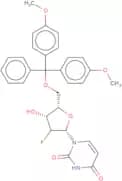
2'-Deoxy-5'-O-DMT-2'-fluoro-L-uridine is a nucleoside with anticancer and antiviral properties. It is used in the production of oligonucleotides, which are short chains of nucleic acids that can be synthesized in vitro to serve as probes for specific DNA or RNA sequences. 2'-Deoxy-5'-O-DMT-2'-fluoro-L-uridine is also a substrate for phosphoramidite synthesis, which converts it into 2'-deoxy-5'-O-(4,4',4''-(1,3,2-triazole)-tris(o-tolyl))uronium tetrafluoroborate (TOTU). This product has been shown to inhibit the activity of HIV reverse transcriptase and prevent the infection of cells by HIV.
Formule :C30H29FN2O7Degré de pureté :Min. 95%Masse moléculaire :548.57 g/mol5'-Amino-5'-deoxy-2'-O-methyluridine
5'-Amino-5'-deoxy-2'-O-methyluridine is a novel nucleoside analog with antiviral and anticancer properties. 5'-Amino-5'-deoxy-2'-O-methyluridine is an activator of the immune system, which may be due to its ability to inhibit DNA synthesis by inhibiting ribonucleotide reductase and DNA polymerase. This drug has shown activity against a variety of human tumor cell lines in vitro and in vivo. 5'-Amino-5'-deoxy-2'-O-methyluridine also inhibits the growth of several bacterial strains, including methicillin resistant Staphylococcus aureus (MRSA) and Mycobacterium avium complex.
Degré de pureté :Min. 95%2'-Deoxycytidine 3'-O-L-valinyl ester
CAS :2'-Deoxycytidine 3'-O-L-valinyl ester is a replication inhibitor that is used in biochemical research. It binds to the NS3 protease of the hepatitis C virus, preventing it from cleaving the polyprotein into functional proteins. This molecule also inhibits autophagy and may be a potential therapeutic agent for cancer.
Formule :C14H22N4O5Degré de pureté :Min. 95%Masse moléculaire :326.35 g/mol2'-Deoxy-2'-fluoro-5-methylcytidine
CAS :2'-Deoxy-2'-fluoro-5-methylcytidine is a nucleoside analog that is a modified version of cytidine, where the sugar (deoxyribose) has a fluoro modification at the 2' carbon and a methyl group is attached at the 5' position of the cytosine base. This modification confers unique properties that can be useful in research and drug development.
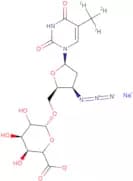
Formule :C10H14FN3O4Degré de pureté :Min. 95%Couleur et forme :Off-White PowderMasse moléculaire :259.23 g/mol3'-Azido-3'-deoxythymidine-b-D-glucuronide sodium salt
CAS :3'-Azido-3'-deoxythymidine-b-D-glucuronide sodium salt is an antiviral and anticancer agent that inhibits the synthesis of DNA, RNA, and protein. It has shown to be effective against a variety of viruses including HIV-1, herpes simplex virus type 1, influenza A virus, vaccinia virus, and vesicular stomatitis virus. 3'-Azido-3'-deoxythymidine-b-D-glucuronide sodium salt also inhibits the growth of cancer cells in vitro. This drug is a modified nucleoside with a phosphoramidite backbone and a 3'-azido group at one end. The other end contains a beta D glucuronic acid moiety. The modifications allow for the inhibition of DNA synthesis by blocking the incorporation of deoxyribonucleotides into DNA chains.
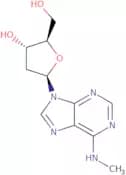
Formule :C16H20N5NaO10Degré de pureté :Min. 95%Couleur et forme :PowderMasse moléculaire :465.35 g/mol2'-Deoxy-N6-methyladenosine
CAS :2'-Deoxy-N6-methyladenosine (2DMA) is a nucleoside that has been found to inhibit the phosphorylation of p2y receptors in rat kidney cells. 2DMA inhibits the production of collagen, which may have a matrix effect on cells. Studies have shown that 2DMA can be used as a sample preparation reagent for nuclear DNA. It has also been shown to be effective at inhibiting transcription and replication of human mitochondrial DNA.
Formule :C11H15N5O3Degré de pureté :Min. 95%Couleur et forme :White PowderMasse moléculaire :265.27 g/mol7-Methyl-6-thioguanosine inner salt
CAS :7-Methyl-6-thioguanosine inner salt is a compound that inhibits the activity of creatine kinase and phosphatase, which are enzymes involved in energy metabolism. It also binds to actin filaments and prevents their depolymerization. The binding mechanism of 7-methyl-6-thioguanosine inner salt is believed to be due to its ability to form disulfide bonds with cysteine residues on the surface of the enzyme. This inhibition has been shown to reduce the ATP production in mammalian cells and has been used as a model system for studying cellular processes.
Formule :C11H15N5O4SDegré de pureté :Min. 95 Area-%Couleur et forme :White PowderMasse moléculaire :313.33 g/mol5-(Aminomethyl)-2-thiouridine
CAS :5-(Aminomethyl)-2-thiouridine is a bifunctional molecule that can be used in chromatography and as a precursor for the epigenetic modifications of DNA. 5-(Aminomethyl)-2-thiouridine has been shown to have an effect on the methyltransferase pathway, which is involved in the epigenome. This molecule has also been shown to affect the growth rate of bacteria in vitro.
Formule :C10H15N3O5SDegré de pureté :Min. 95%Masse moléculaire :289.31 g/mol4-[(1Z)-2-(4-Chlorophenyl)vinyl]pyridine
CAS :4-[(1Z)-2-(4-Chlorophenyl)vinyl]pyridine is a modified nucleoside that is used in anticancer drugs. It has shown antiviral and antitumor effects. 4-[(1Z)-2-(4-Chlorophenyl)vinyl]pyridine is synthesized by condensing 4-chlorobenzaldehyde and 2,3-dichloropyridine. The nucleoside has been modified to be phosphorylated at the 5′ position and contains a ribonucleotide moiety and a deoxyribonucleotide moiety. This product is of high purity and quality, with an activator group at the 5′ position.
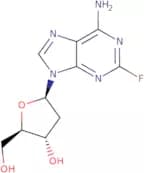
Formule :C13H10ClNDegré de pureté :Min. 95%Masse moléculaire :215.68 g/mol2'-Deoxy-2-fluoroadenosine
CAS :2'-Deoxy-2-fluoroadenosine is an adenosine member and an organofluorine compound
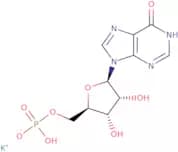
Formule :C10H12FN5O3Degré de pureté :Min. 98 Area-%Couleur et forme :White PowderMasse moléculaire :269.23 g/molPolyinosinic acid tripotassium salt
CAS :Polyinosinic acid is a single stranded RNA analog which is combined with polycytidylic acid (poly C) to form a stable duplex structure known as Polyinosinic acid-polycytidylic acid (Poly I:C). PolyI:C stimulates the secretion of pro-inflammatory cytokines and type I interferon through its interaction with endosomal Toll-like receptor 3 (TLR-3) and the cytoplasmic receptors melanoma differentiation-associated gene 5 (MDA-5) and retinoic acid-inducible gene I (RIG-I). This immunostimulant activity makes Poly I:C a useful vaccine adjuvant and is used in vaccine formulations. Poly I:C and its stabilized analogs (e.g., poly-ICLC) are also being actively researched for their dual role in oncology: directly targeting tumors and acting as immune potentiators. For example Poly I:C can induce apoptosis in tumor cells and stimulate immunogenic cell death and is therefore being explored alongside chemotherapy, radiotherapy, and checkpoint inhibitors, helping to overcome resistance mechanisms and strengthen treatment outcomes. We can supply PolyI:C to all stages of your project - from R&D and preclinical phases right up to GMP commercial manufacture. Contact our team for custom Poly I:C products.
For more on poly I:C read out blog 'Poly I:C: A Vaccine Adjuvant With Oncological Potential.'Degré de pureté :Min. 95%Cyclic inosine diphosphate ribose
CAS :Cyclic inosine diphosphate ribose is a synthetic, fluorescent compound that can be used as a probe for assays. It has been synthesized by the solid-phase synthesis of a specific antibody and is bioconjugated with an oligo(ethylene glycol) moiety. Cyclic inosine diphosphate ribose can be used to measure lymphocyte activation, which is important for the study of autoimmune diseases and cancer. Cyclic inosine diphosphate ribose has also been shown to bind to the ryanodine receptor, which causes an increase in intracellular calcium concentration.
Formule :C15H20N4O14P2Degré de pureté :Min. 95%Masse moléculaire :542.29 g/molNonadecanoyl coenzyme A
CAS :Nonadecanoyl coenzyme A is a fatty acid that is produced by the bovine liver and has been shown to have anabolic effects. Nonadecanoyl CoA is involved in the synthesis of various lipids, such as phospholipids, cholesterol, and glycolipids. It also plays a role in biosynthesis of fatty acids and in regulating ATP production. Nonadecanoyl CoA is synthesized from acetate by the enzyme acetyl-CoA carboxylase (ACC). ACC catalyzes the conversion of acetyl-CoA to malonyl-CoA, which can then be used for fatty acid synthesis. Nonadecanoyl CoA has been found to play an important role in regulating mitochondrial function through its ability to activate long-chain acyl-CoAs desaturase (LCAD). LCAD converts long-chain acyl-CoAs into their corresponding dicarboxylic acids.
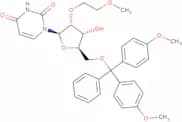
Formule :C40H72N7O17P3SDegré de pureté :Min. 95%Masse moléculaire :1,048.02 g/mol5'-O-DMT-2'-O-(2-methoxyethyl)uridine
CAS :5'-O-DMT-2'-O-(2-methoxyethyl)uridine is a modified nucleoside that is an antiviral and anticancer agent. It was first synthesized in the early 1980s, and has been shown to be active against a variety of viruses, such as herpes simplex virus (HSV), varicella zoster virus (VZV), cytomegalovirus (CMV), hepatitis B virus (HBV), and Epstein-Barr virus (EBV). 5'-O-DMT-2'-O-(2-methoxyethyl)uridine inhibits the growth of cancer cells by interfering with DNA synthesis. This drug also has been shown to be an activator for DNA polymerases and is used as a building block for antiretroviral drugs.
Formule :C33H36N2O9Degré de pureté :Min. 95%Masse moléculaire :604.65 g/mol2',3'-Dideoxy-2',2'-difluorocytidine
CAS :2',3'-Dideoxy-2',2'-difluorocytidine is a monophosphate derivative of the antiviral and anticancer drug 2',3'-dideoxycytidine. It is an activator of DNA synthesis, nucleosides, and nucleotides. It is also a phosphoramidite for the synthesis of oligonucleotides and modified ribonucleosides. 2',3'-Dideoxy-2',2'-difluorocytidine has CAS number 124708-94-7. It is available in high purity and quality, which makes this product suitable for research purposes.
Degré de pureté :Min. 95%2'-Deoxy-5'-O-DMT-N2-isobutyryl-guanosine-3'-lcaa-CPG
2'-Deoxy-5'-O-DMT-N2-isobutyryl-guanosine-3'-lcaa-CPG is a modified nucleoside, which is synthetically prepared. It is an activator of DNA polymerase and has been shown to be active against human leukemia cells. 2'-Deoxy-5'-O-DMT-N2-isobutyryl Guanosine 3'-lcaa CPG has also been shown to inhibit the replication of the herpes simplex virus type 1 in vitro. The compound is a novel high quality nucleoside phosphoramidite that can be used as a building block in the synthesis of deoxyribonucleosides and modified nucleosides with novel chemical structures.
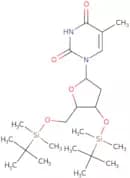
Degré de pureté :Min. 95%3',5'-Bis-O-(t-butyldimethylsilyl)thymidine
CAS :3',5'-Bis-O-(t-butyldimethylsilyl)thymidine is a novel nucleoside phosphoramidite that can be used in the synthesis of oligonucleotides. This compound has antiviral and anticancer activities and is an excellent building block for the synthesis of modified nucleosides. 3',5'-Bis-O-(t-butyldimethylsilyl)thymidine is a high quality, high purity chemical with a CAS number of 40733-26-4.
Formule :C22H42N2O5Si2Degré de pureté :Min. 95%Masse moléculaire :470.7 g/mol3',5'-Di-O-acetyl-2'-deoxyguanosine
CAS :3',5'-Di-O-acetyl-2'-deoxyguanosine is a nucleoside that is activated by hypochlorous acid to form a reactive intermediate, which can then react with other molecules. 3',5'-Di-O-acetyl-2'-deoxyguanosine has been shown to be selectively cytotoxic to human tumor cells and may be used as a radiosensitizer for cancer treatment. The reaction products of this compound include hypochlorite and hydrogen peroxide, which are strong oxidizing agents that cause tissue injury. This compound is also an effective reagent for the detection of myeloperoxidase in plasma samples.
Formule :C14H17N5O6Degré de pureté :Min. 95%Couleur et forme :PowderMasse moléculaire :351.32 g/mol3'-Azido-5'-O-tert-butyldimethylsilyl-2',3'-dideoxy-N2-isobutyrylguanosine
CAS :3'-Azido-5'-O-tert-butyldimethylsilyl-2',3'-dideoxy-N2-isobutyrylguanosine is a novel nucleoside phosphoramidite. The 3'-azido group can be used to protect the 5' hydroxyl group during phosphitylation, which is essential for the synthesis of modified nucleosides. The 2',3'-dideoxy configuration ensures that the sugar moiety is not cleaved from the base during polymerization, and that no undesired side reactions occur during purification. This product has been shown to have antiviral and anticancer activity in vitro.
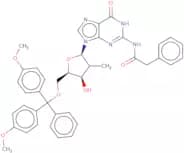
Formule :C20H32N8O4SiDegré de pureté :Min. 95%Masse moléculaire :476.61 g/mol5'-O-DMT-N2-phenylacetylguanosine
CAS :5'-O-DMT-N2-phenylacetylguanosine is a novel synthetic nucleoside phosphoramidite which can be used for the synthesis of modified oligonucleotides. It has been shown to be an activator, anticancer, and antiviral agent in vitro. 5'-O-DMT-N2-phenylacetylguanosine is also a monophosphate, which can inhibit viral replication by interacting with the ribose sugar moiety of the nucleic acid strand. The antiviral activity has been demonstrated on human immunodeficiency virus type 1 (HIV-1), herpes simplex virus type 2 (HSV-2), and influenza A virus.
Formule :C39H37N5O8Degré de pureté :Min. 95%Masse moléculaire :703.76 g/molNicotinic acid-13C6 riboside
CAS :Please enquire for more information about Nicotinic acid-13C6 riboside including the price, delivery time and more detailed product information at the technical inquiry form on this page
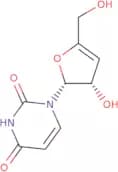
Formule :C6C5H13NO6Degré de pureté :Min. 95%Masse moléculaire :260.17 g/mol3'-deoxy-3',4'-didehydrouridine
CAS :3'-deoxy-3',4'-didehydrouridine is a synthetic nucleoside that inhibits viral replication. It is an antiviral agent that has been shown to be effective against DNA and RNA viruses. The synthesis of this compound has been described in the literature. This product is available in high purity and high quality, and CAS No. 2166167-51-5. 3'-deoxy-3',4'-didehydrouridine has also been shown to have anticancer activity, and is a novel synthetic nucleoside.
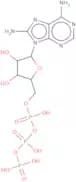
Formule :C9H10N2O5Degré de pureté :Min. 95%Masse moléculaire :226.19 g/mol8-Aminoadenosine-5'-triphosphate sodium salt - 10mM aqueous solution
CAS :8-Aminoadenosine-5'-triphosphate sodium salt is a phosphoramidite that is used to synthesize antiviral nucleosides. It is a high quality product that can be used as an activator in the synthesis of ribonucleosides and deoxyribonucleosides. 8-Aminoadenosine-5'-triphosphate sodium salt has been shown to inhibit the growth of cancer cells.Formule :C10H17N6O13P3·xNaDegré de pureté :Min. 95%Masse moléculaire :522.2 g/mol2',5'-Dideoxyinosine
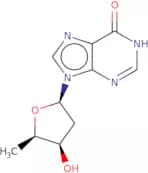
CAS :2',5'-Dideoxyinosine is a nucleoside that can be used as an antiviral or anticancer agent. It is synthesized from the natural nucleoside inosine by phosphorylation of the hydroxyl group on position 5 of the sugar ring and replacement of the hydroxyl group on position 2 with a deoxyribose. The resulting product has a higher potency than the natural form, and is more stable to enzymatic hydrolysis. 2',5'-Dideoxyinosine has been shown to inhibit DNA polymerase in vitro, and also inhibits RNA synthesis, leading to cell death. In addition, it has been shown to be active against leukemia cells as well as breast cancer cells in vivo.
Formule :C10H12N4O3Degré de pureté :Min. 95%Masse moléculaire :236.23 g/molIsowyosine
CAS :Isowyosine is a protein that catalyzes the synthesis of purines, which are essential for DNA synthesis and repair. Isowyosine is found in mammalian cells, where it has been observed to play a role in the translation of messenger RNA (mRNA). Isowyosine also plays a role in the synthesis of viral proteins and viral replication. It has been shown to be active against various viruses, including herpes simplex virus and influenza virus. Isowyosine may also have anti-cancer properties due to its ability to inhibit tumor growth.
Formule :C14H17N5O5Degré de pureté :Min. 95%Couleur et forme :PowderMasse moléculaire :335.32 g/molCytidine 5'-monophosphate sodium salt
CAS :Cytidine 5'-monophosphate sodium salt is a nucleotide that is found in RNA and DNA. Cytidine 5'-monophosphate sodium salt is an intermediate in the biosynthesis of uridine, choline, and saccharose. It also plays an important role in the immune system as it can be a precursor for immunoglobulins. The reaction rate of cytidine 5'-monophosphate sodium salt with lipase has been shown to be constant at pH 7.5-8.0 and 37°C. This product has been shown to have emulsifying properties by forming micelles with water-immiscible solvents such as hexane or heptane, which may be due to its ability to form hydrogen bonds with other molecules such as saccharose or guanosine. Cytidine 5'-monophosphate sodium salt can also be used as a chromatographic material for separating saccharose from other sugars
Formule :C9H14N3O8P·xNaDegré de pureté :Min. 95 Area-%Couleur et forme :White Off-White PowderMasse moléculaire :323.2 g/molN4-Benzoyl-2'-deoxy-3'-O-levulinoylcytidine
N4-Benzoyl-2'-deoxy-3'-O-levulinoylcytidine is a nucleoside that is used as an antiviral and anticancer agent. It is a modified deoxyribonucleoside that has antiviral activity against HSV-1, HSV-2, and HIV. N4-Benzoyl-2'-deoxy-3'-O-levulinoylcytidine also has anticancer effects against leukemia cells in mice. This drug is synthesized from 2′,3′,5′triacetyladenosine by the reaction of 4-(1H)-benzoyloxymethyl)phenylacetic acid with triethylamine and levulinic acid chloride.
Formule :C21H23N3O7Degré de pureté :Min. 95%Masse moléculaire :429.43 g/mol5-Isopropyl-2'-deoxyuridine
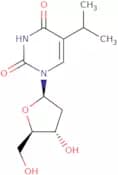
CAS :5-Isopropyl-2'-deoxyuridine is a nucleoside analog that is used in the treatment of inflammatory bowel disease. It has been shown to be effective in the treatment of Crohn's disease, ulcerative colitis, and indeterminate colitis. 5-Isopropyl-2'-deoxyuridine inhibits bacterial growth by inhibiting RNA synthesis, which leads to cell death. This drug also inhibits the production of inflammatory mediators such as prostaglandins and leukotrienes that are released from cells infected with bacteria. 5-Isopropyl-2'-deoxyuridine is converted into an active form by hydrolysis or oxidation followed by phosphorylation. This drug binds to the 5' end of bacterial DNA and prevents the formation of hydrogen bonds between adjacent bases, causing strand breakage.
Formule :C12H18N2O5Degré de pureté :Min. 95%Masse moléculaire :270.28 g/mol2'-Deoxyadenosine phosphoramidite dimer
2'-Deoxyadenosine phosphoramidite dimer is a novel nucleoside analog that has been shown to be an effective anticancer agent in vitro. It has also been shown to inhibit viral replication and induce apoptosis in infected cells. This product is used as a DNA monophosphate, diphosphate, and triphosphate activator to increase the efficiency of DNA synthesis. It is also used as a precursor for the synthesis of other nucleosides such as 2'-deoxycytidine phosphoramidite dimer.
Degré de pureté :Min. 95%5’-Azido-2’,5’-dideoxyuridine
CAS :5’-Azido-2’,5’-dideoxyuridine (5ADU) is a pyrimidine nucleoside that has been used to treat cancer. It is converted to 5-azidouracil which inhibits the synthesis of thymidylate, an essential component of DNA. 5ADU is also active against herpes virus and can be used as an antiviral agent. This drug has been shown to protect against radiation damage by inhibiting the formation of free radicals. The protonation of 5ADU leads to a stereochemical rearrangement that prevents the formation of free radicals. 5ADU does not inhibit bacterial enzymes, but it does have some effect on viruses, such as herpes virus, because they contain DNA or RNA similar to human cells.
Formule :C9H11N5O4Degré de pureté :Min. 95%Masse moléculaire :253.21 g/molrac-Lamivudine acid
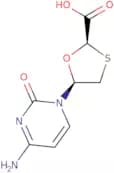
CAS :Lamivudine is an antiviral drug that is used as a nucleoside analogue. It is a prodrug that is converted to its active form, which inhibits the viral enzyme reverse transcriptase by interfering with the synthesis of viral DNA. Racemic lamivudine acid (LAM) crystallizes in the form of chains with hydrogen bonds oriented in an impurity plane. The LAM molecule has two substituents, one carboxylate and one oxathiolane group.
Formule :C8H9N3O4SDegré de pureté :Min. 95%Masse moléculaire :243.24 g/mol5,6-Dichloropurine-1-(2,3,5-tri-O-acetyl-b-D-ribofuanosyl)-1H-benzimidazole
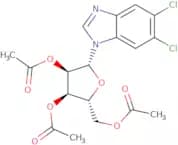
CAS :5,6-Dichloropurine-1-(2,3,5-tri-O-acetyl-b-D-ribofuranosyl)-1H-benzimidazole is an antiviral agent that has shown activity against RNA viruses. It is a modified nucleoside monophosphate that inhibits the synthesis of viral ribonucleic acid (RNA) by binding to the enzyme RNA polymerase. 5,6-Dichloropurine is also a novel anticancer drug with antiangiogenic and antitumor properties. The compound was found to be effective in inhibiting the growth of human cancer cells in vitro. 5,6-Dichloropurine has been shown to inhibit protein synthesis through inhibition of diphosphate activation of ribonucleotide reductase and DNA polymerase. This product is synthesized using high purity and high quality reagents with excellent yield. It can be used as anFormule :C18H18Cl2N2O7Degré de pureté :Min. 95%Masse moléculaire :445.25 g/mol2'-Deoxycytidine-5'-carboxylic acid
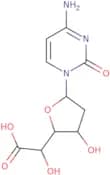
CAS :2'-Deoxycytidine-5'-carboxylic acid (2'-DC) is a modified nucleoside that has been used as an anticancer, antiviral, and synthetic agent. 2'-DC inhibits the synthesis of DNA by binding to the enzyme DNA polymerase. It also inhibits viral replication by inhibiting the activity of reverse transcriptase and can be used as a potential anti-HIV drug. In addition, 2'-DC has been shown to have cytotoxic effects against cancer cells in vitro. This compound is synthesized from cytidine 5-monophosphate and phosphoramidite reagents in high purity and quantity. The CAS number for this compound is 4603-72-9.
Formule :C9H11N3O5Degré de pureté :Min. 95%Masse moléculaire :241.2 g/mol2’-Deoxy-2-methyladenosine
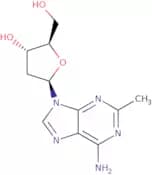
CAS :2’-Deoxy-2-methyladenosine is a nucleoside that is chemically synthesized by the phosphorylation of 2,6-diaminopurine. It has been shown to be an effective activator of RNA polymerase and it also has anticancer properties. 2’-Deoxy-2-methyladenosine can be used as a substitute for thymidine in DNA synthesis. This nucleoside has also been shown to inhibit bacterial growth in culture by inhibiting DNA synthesis and protein synthesis. It is a modified nucleoside that can be used for the synthesis of DNA, RNA, or ribonucleic acids. The CAS number for this compound is 110952-90-4.
Degré de pureté :Min. 95%8-Aza-2'-deoxyadenosine
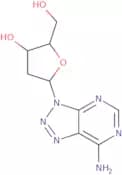
8-Aza-2'-deoxyadenosine is an anion that is cytotoxic to cells and can be activated to form a phosphate ester. It has been shown to have a higher cytotoxicity than adenosine in cell cultures, but is less effective in animal studies. 8-Aza-2'-deoxyadenosine has been shown to have a significant toxicity in rats and mice when administered at doses greater than 500 mg/kg body weight. The activation of 8-aza-2'-deoxyadenosine into the phosphate ester can be stereoselective. This activation has also been shown to cause enhancement of tumor growth inhibition.
Degré de pureté :Min. 95%5'-O-DMT-2'-O-propylphthalimidouridine
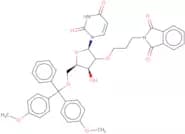
5'-O-DMT-2'-O-propylphthalimidouridine is a synthetic nucleoside that has antiviral and anticancer properties. It is used as a precursor for the synthesis of other nucleosides, including uridine and cytidine. 5'-O-DMT-2'-O-propylphthalimidouridine can be modified with phosphoramidites to create novel modified nucleosides. The chemical name is 1-(5'-O-dimethoxytrityl)-2-[(2' -propyl)thio]uracil. This drug has CAS number 61381-14-4 and molecular weight of 271.11 g/mol.
Formule :C41H39N3O10Degré de pureté :Min. 95%Masse moléculaire :733.78 g/mol5-Methyl-2',3'-stannyluridine
5-Methyl-2',3'-stannyluridine is a nucleoside analog that is a potent inhibitor of viral replication and can be used for the treatment of HIV. It has been shown to inhibit the activity of RNA polymerase, thereby preventing transcription and replication. 5-Methyl-2',3'-stannyluridine also inhibits DNA synthesis by inhibiting the activity of DNA polymerase. This drug also acts as an antitumor agent and has been shown to inhibit tumor growth in animal models. The high purity of this drug makes it suitable for use in pharmaceutical applications.
5-Methyl-2',3'-stannyluridine is a modified nucleoside that has been modified with a stannyl group at the 2' position on the sugar moiety and an allyl group at the 3' position on the sugar moiety. The phosphoramidites are synthesized from 5-methyl-2',3'-stannylDegré de pureté :Min. 95%6-Methyl-3-(β-D-2-deoxyribofuranosyl)furano-[2,3-d]pyrimidin-2-one
CAS :6-Methyl-3-(β-D-2-deoxyribofuranosyl)furano-[2,3-d]pyrimidin-2-one is a novel nucleoside analog that has been modified to contain an antiviral agent. It is phosphorylated at the 2' position to form a monophosphate. This compound is a potent inhibitor of HIV reverse transcriptase and human DNA polymerases α and β. The structure of this compound contains a furano ring fused with the pyrimidine moiety, which is substituted with methyl groups on C6 and C3 positions. The CAS number for 6-Methyl-3-(β-D-2-deoxyribofuranosyl)furano-[2,3-d]pyrimidin-2-one is 383897−60−7.Formule :C12H14N2O5Degré de pureté :Min. 95%Masse moléculaire :266.25 g/mol2'-Deoxy-N2-isobutyrylcytidine
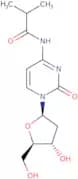
CAS :2'-Deoxy-N2-isobutyrylcytidine is a nucleoside analogue of cytidine that has been modified with a 2-amino-2-deoxyribose moiety. The transaminated product is more stable than the parent compound and has improved anticoagulant activity. It has also been shown to be active in inhibiting DNA synthesis and cell proliferation in vitro. 2'-Deoxy-N2-isobutyrylcytidine inhibits the growth of bacteria by binding to their ribosomes, preventing protein synthesis. This compound has also been shown to inhibit the formation of blood clots in mice.
Formule :C13H19N3O5Degré de pureté :Min. 95%Masse moléculaire :297.31 g/mol2-(3-Methylphenyl)pyrimidine-5-carbaldehyde
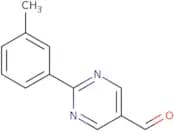
CAS :2-(3-Methylphenyl)pyrimidine-5-carbaldehyde is a monophosphate nucleoside analog that can be used as an antiviral drug. It has shown cytotoxic activity against cells with a high DNA content, and it inhibits the synthesis of RNA and DNA. This compound could be useful for the treatment of HIV and other viral diseases.Formule :C12H10N2ODegré de pureté :Min. 95%Masse moléculaire :198.22 g/molUridylyl-3'-5'-cytidine ammonium salt
Uridylyl-3'-5'-cytidine ammonium salt is a monophosphate of cytidine. It is an antiviral agent that inhibits the replication of human immunodeficiency virus type 1 (HIV-1). Uridylyl-3'-5'-cytidine ammonium salt is synthesized by the reaction of uridyl 3'-5' -adenosine monophosphate with cytidine. This compound has been shown to be effective in inhibiting the proliferation of cancer cells. Uridylyl-3'-5'-cytidine ammonium salt has shown activity against a variety of cancers, including breast, lung, and colon cancers.
Formule :C18H27N6O13PDegré de pureté :Min. 95%Masse moléculaire :566.41 g/mol3'-Deoxy-L-thymidine
CAS :3'-Deoxy-L-thymidine is a nucleoside analog that inhibits HIV replication by interfering with the synthesis of viral DNA. The drug binds to the enzyme thymidine phosphorylase, which converts thymidine into deoxyuridine monophosphate, and prevents conversion of deoxyuridine to deoxythymidine monophosphate. This leads to inhibition of both DNA synthesis and the production of RNA. 3'-Deoxy-L-thymidine has dose-limiting toxicity at high doses and is not active against other viruses such as herpes simplex virus or cytomegalovirus. It is metabolized in the liver by enzymes such as 5-fluorocytosine, which converts it into its active form, 5-fluorouracil.
Formule :C10H14N2O4Degré de pureté :Min. 95%Masse moléculaire :226.23 g/molN6-Benzoyl-2'-deoxy-5'-O-DMT-adenosine-3'-lcaa-CPG
N6-Benzoyl-2'-deoxy-5'-O-DMT-adenosine-3'-lcaa-CPG is a nucleotide analog with antiviral and anticancer activity. It is considered to be a novel nucleoside analogue. It is synthesized by attaching an acetyl group to the 2' position of the adenosine moiety, which prevents phosphorylation by kinase enzymes. This inhibits DNA synthesis and induces apoptosis in cancer cells.
Degré de pureté :Min. 95%Couleur et forme :PowderGuanosine hydrate
CAS :Please enquire for more information about Guanosine hydrate including the price, delivery time and more detailed product information at the technical inquiry form on this page
Formule :C10H13N5O5·xH2ODegré de pureté :Min. 98 Area-%Masse moléculaire :283.24 g/mol2',3'-Dideoxyadenosine-5'-triphosphate lithium salt - 100mM aqueous solution
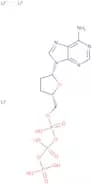
CAS :2',3'-Dideoxyadenosine-5'-triphosphate lithium salt is a novel antiviral nucleoside that has the potential to be used in the treatment of various viral infections. It is synthesized from 2',3'-dideoxyadenosine monophosphate and lithium salt, and has been shown to have high antiviral activity against DNA viruses such as herpes simplex virus and adenovirus. It also inhibits the replication of RNA viruses such as influenza A virus, vesicular stomatitis virus, and measles virus. 2',3'-Dideoxyadenosine-5'-triphosphate lithium salt is a modified nucleoside that is phosphoramidite activated with a group at the 2' position on the ribose sugar. The phosphate group can be removed by hydrolysis or enzymatic catalysis, which leaves behind an unsaturated sugar moiety. This leads to an increased rate of incorporation into
Formule :C10H12N5O11P3·4LiDegré de pureté :Min. 95%Couleur et forme :PowderMasse moléculaire :498.91 g/mol5-Fluorouridine
CAS :5-Fluorouridine is an anticancer drug that belongs to the group of modified nucleosides. It is a synthetic nucleoside analogue that inhibits viral and DNA synthesis and can be used as antiviral agents. 5-Fluorouridine has also been shown to inhibit RNA synthesis in vitro. This compound is converted to uracil by deoxyribonucleotide reductase, which results in the formation of 5-fluoro-2'-deoxyuridine monophosphate (5FdUMP) and 5-fluoro-2'-deoxyuridine diphosphate (5FdUDP). The latter has been shown to inhibit DNA synthesis in vitro.
Formule :C9H11FN2O6Degré de pureté :Min. 95%Masse moléculaire :262.19 g/molN,7-Dimethyl- 2'- O- methylguanosine
CAS :N,7-Dimethyl-2'-O-methylguanosine (DMOG) is a modified nucleoside with antiviral and anticancer properties. DMOG can be used as an activator of transcription, which activates the synthesis of viral RNA and dsDNA. This compound has shown to inhibit the activity of HIV by preventing reverse transcriptase from synthesizing DNA from viral RNA. It also inhibits tumor cell proliferation by inhibiting DNA synthesis and protein synthesis. DMOG is synthesized in high purity by chemical phosphoramidite chemistry.
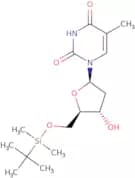
Formule :C13H20N5O5Degré de pureté :Min. 95%Masse moléculaire :326.33 g/mol5'-O-tert-Butyldimethylsilylthymidine
CAS :5'-O-tert-Butyldimethylsilylthymidine is a nucleoside that is used for the synthesis of oligoribonucleotides. It can be prepared by treating 5'-O-tert-butyldimethylsilylthymidine with alkyl bromides in the presence of microwaves and catalytic amounts of a base such as sodium methoxide. The product is purified by vacuum distillation or column chromatography and can be hydrolyzed to uridine, which has been shown to have anti-inflammatory properties. 5'-O-tert-Butyldimethylsilylthymidine can also be converted into deoxyribose through the use of ultrasound.Formule :C16H28N2O5SiDegré de pureté :Min. 95%Masse moléculaire :356.5 g/mol5-Aminoallyl 2'-deoxycytidine-5'-triphosphate lithium, 100mM aqueous solution
5-Aminoallyl 2'-deoxycytidine-5'-triphosphate lithium salt - 100mM aqueous solution is a novel modified nucleoside that can be activated to the corresponding phosphoramidite.
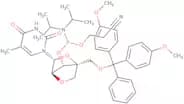
Formule :C12H17N4O13P3•Li4Degré de pureté :Min. 95%Couleur et forme :Clear LiquidMasse moléculaire :545.97 g/mol5'-O-DMT-2'-O,4'-C-methylene-5-methyluridine 3'-CE-phosphoramidite
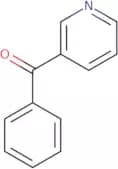
CAS :5'-O-DMT-2'-O,4'-C-methylene-5-methyluridine 3'-CE-phosphoramidite is a high purity, novel DNA monophosphate that is synthesized from 2',4'-diaminotoluene and 5'-O-dimethoxytritylthymidine. It has antiviral and anticancer properties and has shown to be an activator of RNA polymerase II in vitro. This product is used in many applications such as the synthesis of oligonucleotide probes for DNA sequencing, the synthesis of RNA for gene expression studies, and for the production of oligonucleotides for therapeutic purposes.Formule :C41H49N4O9PDegré de pureté :Min. 95%Masse moléculaire :772.82 g/mol3-Benzoylpyridine
CAS :3-Benzoylpyridine is a natural product that has been isolated from the plant Plectranthus fruticosus. It is an aromatic compound, with a trifluoromethyl group and a hydroxy group. 3-Benzoylpyridine has been shown to react with amines in the presence of hydrogen gas to form 1H-1,2,3-triazole derivatives. This reaction is catalyzed by light or UV irradiation. The absorption maxima for 3-benzoylpyridine are at 270 nm and 330 nm in water and ethanol, respectively. In addition, 3-benzoylpyridine is able to combine with hydroxide ions to form the corresponding salt, which can be reduced to yield the nitrogen containing heterocyclic ring (3-benzo[b]pyridin).
Formule :C12H9NODegré de pureté :Min. 95%Masse moléculaire :183.21 g/mol2'-O-Methyl-5'-O-DMT-pseudouridine 3'-CE phosphoramidite
CAS :2'-O-Methyl-5'-O-DMT-pseudouridine 3'-CE phosphoramidite is a novel nucleoside analog. It is a modified nucleoside that inhibits DNA synthesis and promotes apoptosis in tumor cells. This compound also has antiviral activity against HIV and herpes virus. 2'-O-Methyl-5'-O-DMT-pseudouridine 3'-CE phosphoramidite binds to the viral dsDNA and blocks viral replication by inhibiting DNA synthesis and protein translation.
Formule :C40H49N4O9PDegré de pureté :Min. 95%Masse moléculaire :760.81 g/mol2,2'-Anhydro-5'-O-DMT-thymidine
2,2'-Anhydro-5'-O-DMT-thymidine (2,2'-ADT) is a synthetic nucleoside that is structurally similar to thymidine. It has antiviral and anticancer properties. 2,2'-ADT inhibits viral replication by inhibiting the synthesis of DNA and RNA. This drug has also been shown to inhibit cancer cell growth in vitro and in vivo. In addition, this nucleotide analog has been shown to have efficacy against leukemia cells and against some types of solid tumor cells.
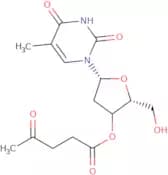
Degré de pureté :Min. 95%2'-Deoxy-3'-O-levulinoylthymidine
CAS :2'-Deoxy-3'-O-levulinoylthymidine is a novel antiviral agent and a synthetic deoxyribonucleoside that is structurally similar to thymidine. It has been studied in vitro and in vivo for its antiviral activity against various viruses, including HIV type 1, HIV type 2, herpes simplex virus (HSV), varicella zoster virus (VZV), cytomegalovirus (CMV), and influenza A virus. 2'-Deoxy-3'-O-levulinoylthymidine has also shown anticancer properties in vitro. This drug inhibits the synthesis of DNA by competing with other nucleotides for incorporation into DNA during the elongation phase of replication. It also inhibits the synthesis of RNA by competing with other nucleotides for incorporation into RNA during transcription.
Formule :C15H20N2O7Degré de pureté :Min. 95%Masse moléculaire :340.33 g/mol8-(2-Deoxy-b-D-ribofuranosyl)-imidazo[1,2-a]-1,3,5-triazine-2,4(3H,8H)-dione
CAS :8-(2-Deoxy-b-D-ribofuranosyl)-imidazo[1,2-a]-1,3,5-triazine-2,4(3H,8H)-dione is a monophosphate nucleotide analog that inhibits viral DNA polymerases. It is a novel and high quality nucleoside phosphoramidite. 8-(2-Deoxy-b-D-ribofuranosyl)-imidazo[1,2-a]-1,3,5-triazine-2,4(3H,8H)-dione is synthesized from 2'-deoxyribonucleosides and modified ribonucleosides. The CAS number for the compound is 35763855 2.
Formule :C10H12N4O5Degré de pureté :Min. 95%Masse moléculaire :268.23 g/molThymidine-5'-diphosphate-b-L-fucose
Thymidine-5'-diphosphate-b-L-fucose is a ketone that can be used to catalyze the hydroxylation of an organic compound. It has been shown to modulate the activity of hydroxy group, orbital, and dehydrogenation in ketones. Thymidine-5'-diphosphate-b-L-fucose can be used to investigate radical elimination and hypothesized mechanisms of action. This ketone competes with amino groups for binding to the enzyme s-adenosylmethionine and hyperconjugation.
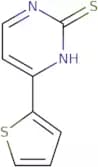
Degré de pureté :Min. 95%4-(2-Thienyl)-2-pyrimidinethiol
CAS :Ribonucleosides are nucleosides that contain a ribose sugar. They are important in the synthesis of DNA and RNA. Ribonuclesides are nucleosides containing a ribose sugar with a phosphate group on the 5' carbon. The phosphate is attached to the 4' carbon on the sugar, instead of the 3' carbon as in deoxyribonucleosides. Ribonucleosides are important in the synthesis of DNA and RNA. Ribonucleotides are nucleotides that contain a ribose sugar with a phosphate group on the 5’ carbon. The phosphate is attached to the 4’ carbon on the sugar, instead of the 3’ carbon as in deoxyribonucleotides. Ribonucleotides are important in the synthesis of DNA and RNA.
In addition, Ribonucleside can be used as antiviral agent for HIV-1 through inhibition at viral reverse transcriptase (RT) step by competingFormule :C8H6N2S2Degré de pureté :Min. 95%Masse moléculaire :194.28 g/molN2-Isobutyl-2'-deoxyguanosine
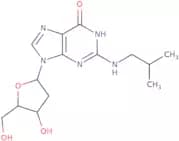
CAS :N2-Isobutyl-2'-deoxyguanosine is a novel, synthetic nucleoside analogue that has been shown to inhibit cancer cells and also to be an antiviral and anticancer agent. It has been shown to induce dsDNA breaks in DNA strands of human leukemia cells and also inhibits the replication of the Influenza A virus. N2-Isobutyl-2'-deoxyguanosine is a high purity, deoxyribonucleoside with a CAS number of 142554-22-1.
Formule :C14H21N5O4Degré de pureté :Min. 95%Masse moléculaire :323.35 g/molU-13C10, U-[15N2]-mono-Labelled Thymidylyl-3'-5'-thymidine ammonium (compound A)
U-13C10, U-[15N2]-mono-Labelled Thymidylyl-3'-5'-thymidine ammonium (compound A) is a novel anticancer drug that is synthesized by phosphoramidite chemistry. It is an activator of DNA synthesis and has been shown to be cytotoxic against cancer cells in vitro. This compound is also a high quality nucleoside analogue. The molecular weight of this compound is 434.4 g/mol and it has a CAS number of 81633-09-9.Formule :C20H30N5O12PDegré de pureté :Min. 95%Masse moléculaire :563.45 g/molN6-Benzoyl-2'-deoxy-5'-O-DMT adenosine-3'-Q Linker CPG 1000 Å
N6-benzoyl-2'-deoxy-5'-O-DMT adenosine-3'-Q Linker CPG 1000 Å is a novel nucleoside with antiviral activity. It is synthesized by the condensation of 2'-deoxyadenosine monophosphate and 3'-Q linker CPG 1000 Å. The molecular weight of N6-benzoyl-2'-deoxy-5'-O-DMT adenosine-3'-Q Linker CPG 1000 Å is 878.36 g/mol, and its CAS number is 628674-06-4. This substance has antiviral activity against herpes simplex virus type 1 (HSV1) and herpes simplex virus type 2 (HSV2). N6-benzoyl-2'-deoxy-5'-O-DMT adenosine can be used as an anticancer drug because it inhibits the growth
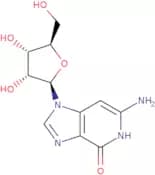
Degré de pureté :Min. 95%3-Deazaguanosine
CAS :3-Deazaguanosine is a nucleotide that is found in uridine, which is present in the nucleic acids of all cells. It has been shown to be cytotoxic to colorectal adenocarcinoma and carcinoma cell lines, and this cytotoxicity may be due to its ability to inhibit energy metabolism. 3-Deazaguanosine has also been shown to significantly inhibit viral replication, including HIV and herpes simplex virus type 1. It binds with high affinity to monoclonal antibodies that are specific for nucleotide levels. 3-Deazaguanosine inhibits tissue culture enzyme activity and can cause significant changes in adenine nucleotide levels in cell culture.
Formule :C11H14N4O5Degré de pureté :Min. 95%Couleur et forme :PowderMasse moléculaire :282.25 g/mol2'-Deoxy-5'-O-DMT-5-iodocytidine
2'-Deoxy-5'-O-DMT-5-iodocytidine is a modified nucleoside that has antiviral and anticancer properties. 2'-deoxy-5'-O-DMT-5-iodocytidine is able to activate the DNA polymerase, ribonucleotide reductase, and deoxyribonucleotide reductase enzymes. This product can be used as a monophosphate or diphosphate. The CAS number for this compound is 141475-07-4.
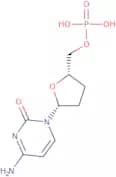
Degré de pureté :Min. 95%2',3'-Dideoxycytidine 5'-monophosphate
CAS :Dideoxycytidine 5'-monophosphate (DDCMP) is a molecule that inhibits HIV infection by inhibiting the synthesis of DNA. It binds to the dna template strand, preventing the addition of new nucleotides and thus blocking the progression of HIV infection. DDCMP has been shown to be potent in vitro and in vivo in clinical studies. In cell culture, DDCMP has been shown to inhibit DNA duplexes, leading to a decrease in lymphocytic leukemia cells activated by T-cell receptor stimulation. Structural biology studies have revealed that DDCMP inhibits HIV-1 reverse transcriptase through binding at the M2 subunit of the enzyme's active site.
Formule :C9H14N3O6PDegré de pureté :Min. 95%Couleur et forme :PowderMasse moléculaire :291.2 g/mol2',3'-Dideoxy-3'-thia-cytidine-5'-triphosphate (L isomer), lithium salt
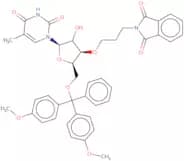
2',3'-Dideoxy-3'-thia-cytidine-5'-triphosphate (L isomer) is a synthetic nucleoside that acts as an antiviral, anticancer and antineoplastic agent. It has been shown to inhibit the replication of DNA and RNA by inhibiting the activity of ribonucleoides. 2',3'-Dideoxy-3'-thia-cytidine-5'-triphosphate (L isomer) can be used in combination with other antiviral agents such as acyclovir or valacyclovir to treat herpes simplex virus type 1 infections. The drug is also effective against HIV, with a potency similar to that of zidovudine. It has been shown to be active in the treatment of leukemia, lymphoma, Hodgkin's disease and some solid tumors.Degré de pureté :Min. 95%5'-O-DMT-5-methyl-3'-O-propylphthalimidouridine
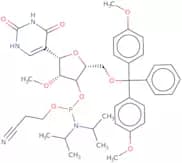
5'-O-DMT-5-methyl-3'-O-propylphthalimidouridine is a novel phosphoramidite monophosphate. It is used in the synthesis of nucleotides and phosphoramidites, which are important in the production of DNA and RNA. 5'-O-DMT-5-methyl-3'-O-propylphthalimidouridine has antiviral activity against herpes simplex virus type 1 and cytomegalovirus. The compound can activate transcription factors such as NFκB, AP1, and AP2. 5'-O-DMT-5-methyl-3'-O-propylphthalimidouridine has been shown to inhibit the growth of prostate cancer cells by inhibiting cell proliferation and inducing apoptosis.
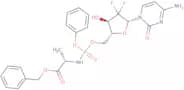
Formule :C42H41N3O10Degré de pureté :Min. 95%Masse moléculaire :747.81 g/molN-(2'-Deoxy- 2', 2'- difluorocytidine 5'-P- phenyl phosphate) L- alanine benzyl ester
CAS :N-(2'-Deoxy- 2', 2'- difluorocytidine 5'-P- phenyl phosphate) L- alanine benzyl ester, also known as Acelarin, is primarily used in cancer treatment, including leukemia and solid tumors.
Formule :C25H27F2N4O8PDegré de pureté :Min. 98 Area-%Couleur et forme :PowderMasse moléculaire :580.47 g/mol5-Fluorocytosine arabinoside
CAS :5-Fluorocytosine arabinoside (5FCA) is an analog of fluorocytosine and a degradable prodrug that is converted to fluorouracil (5FU) in the human liver. It acts as an inhibitor of DNA synthesis and has been used for the treatment of leukemias. 5-Fluorocytosine arabinoside is rapidly degraded by tissue culture cells, which may be due to its reactive functional groups. The inhibitory activity of this drug against cell culture was found to be minimal at low concentrations and reached a maximum at concentrations greater than 1 mM. The affinity ligands for this compound are reactive functional groups such as sulfhydryl, hydroxyl, and carboxyl groups, but not ester or amide bonds. This drug can be used in the synthesis of affinity ligands with a reactive functional group.
Formule :C9H12FN3O5Degré de pureté :Min. 95%Masse moléculaire :261.21 g/molPyrimidine-4-carboxylic acid hydrazide
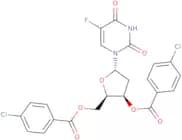
CAS :Pyrimidine-4-carboxylic acid hydrazide (PCAH) is an antimycobacterial agent that inhibits the growth of Mycobacterium tuberculosis and other related species. PCAH is a ligand that binds to redox active metal ions, forming a supramolecular complex. The carboxyl group on PCAH reacts with the hydroxide ion in the presence of water to produce hydrogen peroxide, which in turn oxidizes the mycolic acids in the cell wall of M. tuberculosis, leading to cell death. The pyridine ring on PCAH is nucleophilic and can react with nucleophiles such as thiols or amines, which are found in proteins or peptides. This reaction results in nucleophilic substitutions, which inhibit bacterial protein synthesis and lead to cell death.Formule :C5H6N4ODegré de pureté :Min. 95%Masse moléculaire :138.13 g/mol3',5'-Di-O-p-chlorobenzoyl-2'-deoxy a-5-fluorouridine
CAS :3',5'-Di-O-p-chlorobenzoyl-2'-deoxy a-5-fluorouridine is a nucleoside that is used in the antiviral drug Aciclovir. It is an analog of 2'-deoxyadenosine and inhibits viral DNA synthesis by acting as a chain terminator. 3',5'-Di-O-p-chlorobenzoyl-2'-deoxy a-5-fluorouridine has shown some anticancer activity against human tumor cells in culture, but its mechanism of action is not well understood.
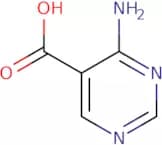
Formule :C23H17Cl2FN2O7Degré de pureté :Min. 95%Masse moléculaire :523.29 g/mol4-Aminopyrimidine-5-carboxylic acid
CAS :4-Aminopyrimidine-5-carboxylic acid is an aminopyrimidone that has been synthesized to be used as a new class of antihypertensive agents. It has dose-dependent blood pressure lowering effects, which are likely due to its ability to block angiotensin receptors. 4-Aminopyrimidine-5-carboxylic acid also has antibacterial and antifungal properties. This compound is metabolized in vivo into the pharmacologically active amine 6-aminonicotinamide and excreted in the urine. In vitro studies have shown that 4-aminopyrimidine-5 carboxylic acid inhibits the growth of bacteria by binding to DNA gyrase and topoisomerase IV enzymes required for cell division.
Formule :C5H5N3O2Degré de pureté :Min. 95%Masse moléculaire :139.11 g/mol6-Amino-1-methyluracil
CAS :6-Amino-1-methyluracil is a synthetic drug that is used in the treatment of inflammatory diseases, including rheumatoid arthritis and psoriasis. It is also used to treat cancer, such as leukemia and in the treatment of bacterial infections. 6-Amino-1-methyluracil inhibits the synthesis of DNA by inhibiting the enzyme thymidylate synthetase. This inhibition prevents DNA replication and transcription, which leads to cell death. 6-Amino-1-methyluracil binds to cellular proteins through its amino group and hydroxyl group, which are not involved in its chemical reactions. 6-Amino-1-methyluracil has shown great promise as a template molecule for the synthesis of new drugs.
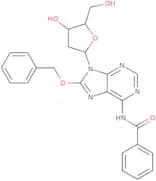
Degré de pureté :Min. 95%N6-Benzoyl-8-benzyloxy-2'-deoxyadenosine
CAS :N6-Benzoyl-8-benzyloxy-2'-deoxyadenosine is a novel nucleoside with anticancer and antiviral properties. It is an antiviral that inhibits the synthesis of viral DNA by blocking the incorporation of ribonucleotide triphosphates into DNA, while leaving intact the synthesis of deoxyribonucleotides and phosphoramidites. In addition, it is a potent inhibitor of cellular DNA polymerases that catalyze synthesis of DNA from deoxyribonucleoside triphosphates. N6-Benzoyl-8-benzyloxy-2'-deoxyadenosine also has antitumor activity in animal models.
Formule :C24H23N5O5Degré de pureté :Min. 95%Masse moléculaire :461.5 g/mol5'-O-p-Anisoyl-3'-fluoro-3'-deoxythymidine
5'-O-p-Anisoyl-3'-fluoro-3'-deoxythymidine is a novel anticancer agent that has been shown to be active against leukemia, lymphoma and myeloma. The compound is a nucleoside analogue that inhibits DNA synthesis by inhibiting the activity of DNA polymerase. It has been shown to have antiviral activity in vitro against herpes simplex virus type 1 and type 2, influenza A virus and HIV. 5'-O-p-Anisoyl-3'-fluoro-3'-deoxythymidine can also inhibit protein synthesis by blocking the incorporation of amino acids into protein. This drug is synthesized from 3',5'-dideoxyuridine (dU) and fluoroacetyl chloride to produce 5'-O-p-anisoyl-3',5'-difluoroacetyl dU (ADUF). ADUF is then reacted with anisole to produce 5
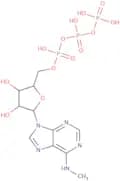
Formule :C18H19FN2O6Degré de pureté :Min. 95%Masse moléculaire :378.4 g/molN6-Methyladenosine-5'-triphosphate sodium salt - 10 mM aqueous solution
CAS :Modulator of P2Y receptors
Formule :C11H18N5O13P3Degré de pureté :Min. 95%Masse moléculaire :521.21 g/mol3'-O-Aminoacetoxythymidine 5'-O-triphosphate triethylammonium salt
Please enquire for more information about 3'-O-Aminoacetoxythymidine 5'-O-triphosphate triethylammonium salt including the price, delivery time and more detailed product information at the technical inquiry form on this page
Formule :C13H22N3O14P3•(C6H15N)xDegré de pureté :Min. 99 Area-%Couleur et forme :PowderMasse moléculaire :537.25 g/molN6-2-(4-Aminophenyl)ethyladenosine
CAS :N6-2-(4-Aminophenyl)ethyladenosine is a carbamazepine prodrug that is converted to the active form, carbamazepine, by esterases. It has been shown to inhibit the binding of adenosine to adenosine receptor subtypes and to have an antagonistic effect on the activity of endogenous adenosine at these receptors. N6-2-(4-Aminophenyl)ethyladenosine has also been shown to act as an antagonist at the A3 adenosine receptor. This drug has been shown to reduce bronchoconstrictor responses in animal models and may be used for treating asthma.
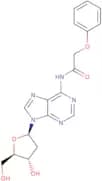
N6-2-(4-Aminophenyl)ethyladenosine has also been shown in vitro studies using human papillary muscle cells to enhance polymerase chain reactions (PCR).Degré de pureté :Min. 95%2'-Deoxy-N6-phenoxyacetyladenosine
CAS :2'-Deoxy-N6-phenoxyacetyladenosine is a cyclic oligonucleotide analog that has been shown to be efficient in inhibiting the replication of RNA. It binds to the RNA polymerase, preventing transcription and replication of the nucleic acid. 2'-Deoxy-N6-phenoxyacetyladenosine is also an effective inhibitor of DNA synthesis and can inhibit the synthesis of proteins by binding to ribosomes. This drug is structurally similar to deoxyadenosine, which is a component of DNA, and it has been shown to be more potent than other analogs.
Formule :C18H19N5O5Degré de pureté :Min. 97 Area-%Masse moléculaire :385.38 g/mol3'-epi-5-chloro-2'-deoxyuridine
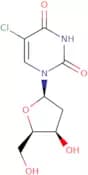
CAS :3'-epi-5-chloro-2'-deoxyuridine is a nucleotide analog that has been shown to inhibit the growth of cells in tissue culture. It is not active against bacteria, but can be used as an antineoplastic agent for the treatment of cancer. 3'-epi-5-chloro-2'-deoxyuridine is metabolized by a number of enzymes, including mononucleotide reductase, thymidylate synthase, and cytosine deaminase. The reaction mechanism for this drug has been studied using nuclear dna polymerases and proteases. The metabolism of 3'-epi-5-chloro-2'-deoxyuridine results in its incorporation into DNA by means of an enzymatic reaction with DNA polymerase. The incorporation of the analog into DNA leads to cell death due to lysis or inhibition of protein synthesis.
Formule :C9H11ClN2O5Degré de pureté :Min. 95%Masse moléculaire :262.65 g/mol3',3'-Cyclic guanosine monophosphate-adenosine monophosphate
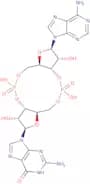
CAS :3',3'-Cyclic guanosine monophosphate-adenosine monophosphate is a molecule that is a stimulator of lymphocytic leukemia. It has been shown to induce chronic lymphocytic leukemia in mice and humans, which is an indication of its clinical relevance. 3',3'-Cyclic guanosine monophosphate-adenosine monophosphate induces cancer by inhibiting the production of cyclic nucleotide phosphodiesterases, which are enzymes that break down cyclic nucleotides. This leads to elevated levels of cyclic nucleotides and an increase in intracellular cAMP levels. The anticancer effect of 3',3'-cyclic guanosine monophosphate-adenosine monophosphate may also be due to its ability to inhibit the growth factor activity of staphylococcus aureus.
Formule :C20H22N10O13P2·2NaDegré de pureté :Min. 95%Masse moléculaire :718.38 g/mol5-Aminoallyl-2'-deoxyuridine
CAS :5-Aminoallyl-2'-deoxyuridine is a bifunctional alkylating agent that has low affinity for DNA. It is used in the laboratory to measure the rate of synthesis of thymidylate, which is one of the four deoxythymidylate needed for DNA synthesis. 5-Aminoallyl-2'-deoxyuridine has been shown to be a stable complex with sulfoxide, which can be used as an alkylation agent in the laboratory. 5-Aminoallyl-2'-deoxyuridine has also been shown to have high affinity for cellular nucleic acids in l1210 cells and have a high uptake. The sequence of 5-aminoallyl-2'-deoxyuridine is: 5-(N-(2-(5-aminoallylamino)ethyl)-N-(carboxyethyl)glycine)-2',3',5'-triiod
Formule :C12H18N4O4Degré de pureté :Min. 95%Couleur et forme :PowderMasse moléculaire :282.3 g/molEthyl 2-amino-4-(trifluoromethyl)pyrimidine-5-carboxylate
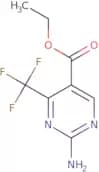
CAS :Ethyl 2-amino-4-(trifluoromethyl)pyrimidine-5-carboxylate is a small molecule that is a potent inhibitor of diacylglycerol acyltransferase. The compound has been shown to be an efficient inhibitor of this enzyme, which is involved in the synthesis of diacylglycerol. Diacylglycerol acyltransferase catalyzes the transfer of an acyl group from an acyl-carrier protein (ACP) to glycerol 3-phosphate, forming lysophosphatidic acid and releasing CoA. The inhibition of this enzyme leads to drastically reduced levels of diacylglycerol, which may have implications for the treatment of metabolic syndrome and diabetes.
Formule :C8H8F3N3O2Degré de pureté :Min. 95%Masse moléculaire :235.16 g/mol3',5'-O-(Di-tert-butylsilanediyl)uridine
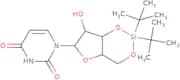
CAS :3',5'-O-(Di-tert-butylsilanediyl)uridine is a novel antiviral agent that is synthesized from uridine and has been shown to be effective against herpes simplex virus. This compound was also shown in vitro to inhibit the replication of human immunodeficiency virus type 1 (HIV-1). 3',5'-O-(Di-tert-butylsilanediyl)uridine binds to single stranded DNA, preventing the synthesis of DNA by the viral enzyme reverse transcriptase. It also inhibits the production of viral proteins by binding to viral RNA polymerase. This drug may also have anticancer activity due to its ability to inhibit ribonucleotide reductase, an enzyme required for DNA synthesis.
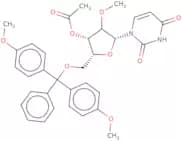
Degré de pureté :Min. 95%3'-O-Acetyl-5'-O-DMT-2'-O-methyuridine
3'-O-Acetyl-5'-O-DMT-2'-O-methyuridine is a novel nucleoside analogue with anticancer activity. 3'-O-Acetyl-5'-O-DMT-2'-O-methyuridine is a modified deoxyribonucleoside monophosphate, which is activated by phosphorylation to the corresponding diphosphate form and then converted to an antiviral agent. 3'-O-Acetyl-5'-O-DMT-2'-O-methyuridine has been shown to have antiviral activity against herpes simplex virus type 1 (HSV1) and Epstein Barr virus (EBV). This compound also inhibits the proliferation of human cancer cells in vitro and in vivo.
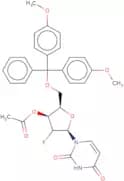
Formule :C33H34N2O9Degré de pureté :Min. 95%Masse moléculaire :602.63 g/mol3'-O-Acetyl-2'-deoxy-5'-O-DMT-2'-fluorouridine
3'-O-Acetyl-2'-deoxy-5'-O-DMT-2'-fluorouridine is a novel, activator, ribonucleosides, deoxyribonucleosides, diphosphate, phosphoramidites, modified nucleosides. It can be used as an anticancer and antiviral agent.
Formule :C32H31FN2O8Degré de pureté :Min. 95%Masse moléculaire :590.6 g/mol3',5'-O-[Tetrakis(1-methylethyl)-1,3-disiloxanediyl]-guanosine
CAS :3',5'-O-[Tetrakis(1-methylethyl)-1,3-disiloxanediyl]-guanosine is a nucleoside phosphoramidite that is synthesized by the reaction of 3',5'-O-[Tetrakis(trimethylsiloxy)silyl]guanosine with tetrakis(1-methylethyl) siloxane. It is a novel monophosphate analogue of guanosine and has antiviral, anticancer and activator properties. 3',5'-O-[Tetrakis(1-methylethyl)-1,3-disiloxanediyl]-guanosine is not toxic to cells and can be used in the treatment of cancer.
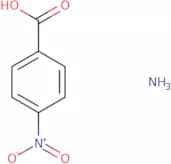
Formule :C22H39N5O6Si2Degré de pureté :Min. 95%Masse moléculaire :525.75 g/molAmmonium 4-nitrobenzoate dihydrate
CAS :Ammonium 4-nitrobenzoate dihydrate is a corrosion inhibitor that prevents the corrosion of metal parts and other materials. It is used in the production of plastics, coatings, adhesives, and lubricants. The corrosion inhibition activity of aminobenzoates can be attributed to their ability to form hydrogen phosphate (HPO) anions as well as their ability to complex with metal ions. The hydration process is also important for the corrosion inhibition activity of ammonium 4-nitrobenzoate dihydrate. This process involves the release of water molecules from the ammonium salt, which provide a protective coating around the metal surface. Ammonium 4-nitrobenzoate dihydrate also has additive properties that are beneficial for other industrial applications such as antistatic agents, surfactants, and stabilizers.
Degré de pureté :Min. 95%3'-Azido-3'-deoxythymidine-methyl-D3-b-D-glucuronide sodium salt
Produit contrôlé3'-Azido-3'-deoxythymidine-methyl-D3-b-D-glucuronide sodium salt is a novel antiviral nucleoside phosphoramidite that has been shown to be an effective activator in the synthesis of diphosphate and triphosphate analogs. The novel antiviral nucleoside phosphoramidite was synthesized from 3'-azido-3'-deoxythymidine, methyl bromoacetate and sodium hydroxide in methanol at room temperature. It is structurally similar to the natural nucleosides, deoxyribonucleosides and ribonucleosides with modifications on the sugar moiety and phosphate group. This compound is a high quality synthetic material for use in pharmaceutical research, as an anticancer agent and as a potential antiviral drug.Formule :C16H17D3N5NaO10Degré de pureté :Min. 95%Couleur et forme :PowderMasse moléculaire :468.36 g/mol5-Bromo-2-methylsulfanyl-pyrimidine-4-carboxylic acid
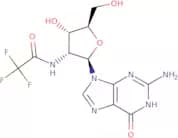
CAS :5-Bromo-2-methylsulfanyl-pyrimidine-4-carboxylic acid is a pyrimidine derivative that inhibits protein kinases. The compound has been shown to inhibit the activity of protein kinase C, which is involved in mediating inflammatory responses, and phosphorylation of the insulin receptor substrate 1. 5-Bromo-2-methylsulfanyl-pyrimidine-4-carboxylic acid is an efficient inhibitor of kinases and can be used as a lead compound for the development of new compounds with therapeutic potential.Formule :C6H5BrN2O2SDegré de pureté :Min. 95%Masse moléculaire :249.09 g/mol2'-TFA-NH-dG
CAS :2'-TFA-NH-dG is a novel nucleoside analog that is used as an antiviral and anticancer agent. It is a synthetic monophosphate with a modified 2'-hydroxyl group and a deoxyribose sugar backbone. It has been shown to inhibit HIV replication in vitro by interfering with the synthesis of viral DNA and RNA, which may be due to its ability to bind to the viral reverse transcriptase enzyme. 2'-TFA-NH-dG has also been shown to have anticancer activity against human A549 cells in vitro by inhibiting the proliferation of these cells. This drug is available for purchase as a white powder at CAS No. 144089-98-5.
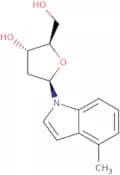
Formule :C12H13F3N6O5Degré de pureté :Min. 95%Masse moléculaire :378.26 g/mol1-(2-Deoxy-b-D-ribofuranosyl)-4-methylindole
CAS :1-(2-Deoxy-b-D-ribofuranosyl)-4-methylindole is a nucleoside that can be used as an activator for phosphoramidite synthesis. It is also known to have antiviral, anticancer, and antimalarial properties. 1-(2-Deoxy-b-D-ribofuranosyl)-4-methylindole has been shown to inhibit the proliferation of human leukemia cells in culture. It has also been shown to suppress HIV replication in vitro by inhibiting viral RNA synthesis.Formule :C14H17NO3Degré de pureté :Min. 95%Masse moléculaire :247.3 g/mol2’-Chloro-2’-deoxyadenosine
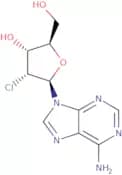
CAS :2’-Chloro-2’-deoxyadenosine (2CDA) is a synthetic nucleoside analogue that is used as an antineoplastic agent for the treatment of non-Hodgkin lymphoma and histiocytic lymphoma. It is typically used in combination with other cytotoxic drugs. 2CDA has been shown to be effective against resistant tumor cell lines and has been used to treat patients with metastatic breast cancer, Hodgkin lymphoma, and multiple myeloma. The drug can cause thrombocytopenia, which may be due to its effects on platelets or bone marrow cells. Other toxicities include bone marrow suppression, nausea, vomiting, diarrhea, anorexia, and liver damage. Patients who are at risk for these toxicities should be closely monitored.
Formule :C10H12ClN5O3Degré de pureté :Min. 95%Couleur et forme :PowderMasse moléculaire :285.69 g/molN6-Benzoyl-3'-O-benzoyl-2'-deoxyadenosine
6-Benzoyl-3'-O-benzoyl-2'-deoxyadenosine (BBD) is a synthetic nucleoside that has antiviral activity. It is an activator of DNA polymerase and also a novel monophosphate nucleotide. BBD has been shown to inhibit the replication of RNA in cells infected with HIV and HSV.
Degré de pureté :Min. 95%5-Acetoxymethyl-2'-deoxycytidine
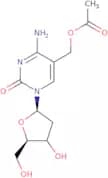
5-Acetoxymethyl-2'-deoxycytidine (5-AO-dC) is a nucleoside that is used as an anticancer agent. It is a modified form of cytidine and has been shown to be effective in the treatment of cancer cells. 5-AO-dC inhibits the production of DNA by binding to deoxyribonucleotide triphosphate and preventing its conversion into diphosphate, thereby inhibiting DNA synthesis. The drug also inhibits viral replication by binding to viral RNA and interfering with the synthesis of viral proteins. 5-AO-dC may also inhibit HIV replication by competing with HIV reverse transcriptase for the incorporation of deoxyadenosine monophosphate into DNA.
5-AO-dC is not active against bacteria or fungi but it does bind to human ribonucleosides and can inhibit the synthesis of both DNA and RNA in human cells.Formule :C12H17N3O6Degré de pureté :Min. 95%Masse moléculaire :299.28 g/mol8-Oxo-N2-isobutyryl-2-deoxyguanosine
CAS :8-Oxo-N2-isobutyryl-2-deoxyguanosine is a modified synthetic nucleoside. It finds applications in understanding mutagenesis and DNA repair mechanisms.
Formule :C14H19N5O6Degré de pureté :Min. 95%Masse moléculaire :353.33 g/mol5’-O-DMT cET-N2-isopropylguanosine 3’-OCE amidite
CAS :Please enquire for more information about 5'-ODMT cEt G Phosphoramidite including the price, delivery time and more detailed product information at the technical inquiry form on this page
Formule :C46H56N7O9PMasse moléculaire :881.95 g/mol2',3',5'-Tri-O-benzoyl-2-thiouridine
CAS :2',3',5'-Tri-O-benzoyl-2-thiouridine is an analog of the nucleoside thiouracil, which is a modified nucleoside. It inhibits the synthesis of DNA and RNA by competitively inhibiting the enzyme thymidylate synthase. 2',3',5'-Tri-O-benzoyl-2-thouridine has been shown to exhibit anticancer activity in vitro and in vivo. This compound also exhibits antiviral properties against herpes simplex virus type 1 (HSV1) and Herpes simplex virus type 2 (HSV2).
Formule :C30H24N2O8SDegré de pureté :Min. 95%Masse moléculaire :572.59 g/mol9-(2'-Deoxy-2'-fluoro-b-D-ribofuranosyl)-2-fluoroadenine
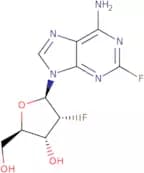
CAS :9-(2'-Deoxy-2'-fluoro-b-D-ribofuranosyl)-2-fluoroadenine is a modified nucleoside that is used as an antiviral and anticancer agent. It acts as an activator for the synthesis of DNA, RNA, and protein. 9-(2'-Deoxy-2'-fluoro-b-D-ribofuranosyl)-2-fluoroadenine also inhibits the growth of cancer cells by interfering with the division process. This drug is synthesized from 9-(5'-deoxy-5'-iodo-b-D-ribofuranosyl) -2,6 difluoro adenine (diFdA). The Ribonucleosides are then prepared in a similar manner to other nucleosides by using phosphoramidites. The product is then purified using HPLC.
Formule :C10H11F2N5O3Degré de pureté :Min. 95%Couleur et forme :White PowderMasse moléculaire :287.23 g/mol2'-O-Hexylaminoguanosine
2'-O-Hexylaminoguanosine is a modified nucleoside that has antiviral properties. It is an activator of the human immune system and is used to treat cancer. 2'-O-Hexylaminoguanosine inhibits the synthesis of DNA by phosphoramidite addition to the monophosphate form of guanosine, which prevents RNA synthesis and therefore also protein synthesis. It also has anticancer effects by inhibiting the growth of cells in culture.
Degré de pureté :Min. 95%









![4-[(1Z)-2-(4-Chlorophenyl)vinyl]pyridine](/_next/image/?url=https%3A%2Fstatic.cymitquimica.com%2Fproducts%2F3D%2Fthumb-webp%2FNC65881.webp&w=3840&q=75)













![6-Methyl-3-(β-D-2-deoxyribofuranosyl)furano-[2,3-d]pyrimidin-2-one](/_next/image/?url=https%3A%2Fstatic.cymitquimica.com%2Fproducts%2F3D%2Fthumb-webp%2FIQA89760.webp&w=3840&q=75)





![8-(2-Deoxy-b-D-ribofuranosyl)-imidazo[1,2-a]-1,3,5-triazine-2,4(3H,8H)-dione](/_next/image/?url=https%3A%2Fstatic.cymitquimica.com%2Fproducts%2F3D%2Fthumb-webp%2FND145594.webp&w=3840&q=75)

![U-13C10, U-[15N2]-mono-Labelled Thymidylyl-3'-5'-thymidine ammonium (compound A)](/_next/image/?url=https%3A%2Fstatic.cymitquimica.com%2Fproducts%2F3D%2Fthumb-webp%2FTM32169.webp&w=3840&q=75)








![3',5'-O-[Tetrakis(1-methylethyl)-1,3-disiloxanediyl]-guanosine](/_next/image/?url=https%3A%2Fstatic.cymitquimica.com%2Fproducts%2F3D%2Fthumb-webp%2FNT16564.webp&w=3840&q=75)