Nucléosides
3570 produits trouvés pour "Nucléosides"
3'-O-Acetyl-5'-O-DMT-2'-O-methyl-5-naphthyl-b-methylaminocarbonyl-uridine
CAS :3'-O-Acetyl-5'-O-DMT-2'-O-methyl-5-naphthyl-b-methylaminocarbonyl-uridine is a modified nucleoside that has antiviral and anticancer activity. 3'-O-Acetyl-5'-O-DMT-2'-O-methyl-5-naphthyl-b -methylaminocarbonyluridine is synthesized by the direct condensation of 5-(3',4',5',6'-tetraacetyl)aminoimidazole with 2-(dimethylamino)ethanol in the presence of sodium acetate. The product is then purified by high performance liquid chromatography (HPLC). This compound has been shown to inhibit HIV replication and induce apoptosis in cancer cells.
Degré de pureté :Min. 95%3'-Azido-3'-deoxy-L-uridine
3'-Azido-3'-deoxy-L-uridine is a nucleoside that is a modified form of uridine with an azide group. It has antiviral, anticancer, and novel properties. 3'-Azido-3'-deoxy-L-uridine is synthesized from the corresponding ribonucleosides and diphosphates in high purity and quality. This compound can be used as an antiviral agent in the treatment of AIDS and herpes. It also has anticancer activity, which may be due to its ability to inhibit DNA synthesis or to bind to DNA and induce oxidative stress. 3'-Azido-3'-deoxy-L-uridine is synthesized by the enzymatic conversion of uridines with a monophosphate group at the 3' position into nucleosides with an azide group at the 3' position.
Formule :C9H11N5O5Degré de pureté :Min. 95%Masse moléculaire :269.21 g/mol4’-C-Methyl-5-methylcytidine
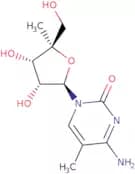
CAS :4’-C-Methyl-5-methylcytidine is a phosphoramidite nucleoside that is used as a reagent in the synthesis of DNA. It is modified with a 4′-methyl and 5′-methyl group at the C4 and C5 positions of the cytosine base, respectively. The 4′-C methyl group is an antiviral agent that inhibits viral replication by inhibiting reverse transcriptase. The 5′-methyl group prevents deamination of cytosine residues by inhibiting uracil glycosylase. This product has anticancer properties due to its ability to inhibit cell division and activate apoptosis in tumor cells.
Degré de pureté :Min. 95%3-Cyanovinyl-9-(5’-O-DMT-2’-deoxyribofuranosyl)carbazole
CAS :3-Cyanovinyl-9-(5’-O-DMT-2’-deoxyribofuranosyl)carbazole is a nucleoside analog that is an antiviral and anticancer agent. It is a monophosphate, which has been shown to inhibit the replication of DNA by binding to the enzyme DNA polymerase. 3-Cyanovinyl-9-(5’-O-DMT-2’-deoxyribofuranosyl)carbazole also inhibits protein synthesis and cell division by preventing the production of proteins vital for cell division. This drug has shown high purity and quality, as well as novel properties.
Formule :C41H36N2O5Degré de pureté :Min. 95%Masse moléculaire :636.74 g/mol3’-O-Levulinyl-2’-deoxyadenosine
CAS :3’-O-Levulinyl-2’-deoxyadenosine is a nucleoside and a prodrug for the anticancer drug 2’,3’-dideoxyadenosine. 3’-O-Levulinyl-2’-deoxyadenosine is an activator of deoxyribonucleic acid (DNA) synthesis and also inhibits DNA repair. In mammals, 3’-O-levulinyl-2’deoxyadenosine is converted to 2’,3′ dideoxyadenosine monophosphate (ddAMP), which can be phosphorylated to ddATP in cells. 3′ -O -levulinyl -2′ -deoxyadenosine has been shown to inhibit the growth of cancer cells in vitro and in vivo.
Degré de pureté :Min. 95%6-O-Methyl-5’(R)-C-methylinosine
6-O-Methyl-5’(R)-C-methylinosine is a modified nucleoside that is an antiviral agent. It inhibits the synthesis of viral DNA and RNA by inhibiting the activity of ribonucleotide reductase. 6-O-Methyl-5’(R)-C-methylinosine has been shown to inhibit the growth of certain cancer cells and may be useful in treating prostate cancer. This drug has been synthesized from deoxyribonucleosides and diphosphate, which are phosphoramidites that were used as starting materials. 6-O-Methyl-5’(R)-C-methylinosine was first described in a patent in 1979, with CAS number 827076.
Degré de pureté :Min. 95%N6-Benzoyl-2'-O-methyladenosine
CAS :N6-Benzoyl-2'-O-methyladenosine is a novel nucleoside that has been synthesized by chemical modification of adenosine. It is an activator of the ribonucleotide reductase enzyme and is currently being studied as an anticancer and antiviral agent. N6-Benzoyl-2'-O-methyladenosine has shown antitumor activity against human breast cancer cells in vitro and in vivo, inhibiting tumor growth. It also inhibits the replication of herpes simplex virus type 1 (HSV1) and type 2 (HSV2).
Formule :C18H19N5O5Masse moléculaire :385.37 g/mol1-(3'-Deoxy-3'-fluoro-b-D-xylofuranosyl)cytosine
1-(3'-Deoxy-3'-fluoro-b-D-xylofuranosyl)cytosine is a novel nucleoside that has been synthesized and characterized as a phosphoramidite monophosphate. It is a high purity, synthetic, DNA nucleoside that has shown antiviral and anticancer activities in vitro. 1-(3'-Deoxy-3'-fluoro-b-D-xylofuranosyl)cytosine is an activator of DNA polymerase δ and can be used as a modified nucleotide in nucleic acid synthesis. This compound has the CAS number 4384802-52-5.
Degré de pureté :Min. 95%Fmoc morpholino adenosine monomer
Fmoc-morpholino adenosine monomer is a synthetic nucleoside that is used in the synthesis of oligonucleotides for use as antiviral and anticancer agents. Fmoc-morpholino adenosine monomer has been synthesized by modifying the deoxyribonucleosides, which are then phosphoramidite derivatives of ribonucleosides. This novel chemical compound has shown high activity against DNA-dependent RNA polymerase, suggesting that it may be an effective antiviral agent.
Formule :C34H32ClN7O7PDegré de pureté :Min. 95%Couleur et forme :PowderMasse moléculaire :717.09 g/mol1-(2'-Deoxy-5'-O-DMT-b-D-xylofuranosyl)cytosine
1-(2'-Deoxy-5'-O-DMT-b-D-xylofuranosyl) cytosine is a modified nucleoside that is phosphoramidite activated by the addition of a diphosphate. The diphosphate group on the sugar moiety may be hydrolyzed to form 1-(2'-deoxy-5'-O-DMT-b-D-xylofuranosyl)cytosine monophosphate. Cytidine is an antiviral and antifungal agent that is used in the treatment of herpes zoster, chronic myeloid leukemia, and other cancers. It has been shown to inhibit DNA synthesis and viral replication in vitro.
!--More-->
Cytidine is an antiviral and antifungal agent that is used in the treatment of herpes zoster, chronic myeloid leukemia, and other cancers. It has been shown to inhibit DNADegré de pureté :Min. 95%1-Methylxanthosine
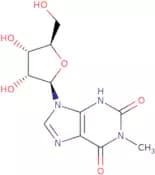
CAS :Produit contrôlé1-Methylxanthosine is a caffeine derivative that was first isolated from xanthosine in 1887. It is an acidic compound and has been shown to have antiinflammatory effects, which may be due to its inhibition of prostaglandin synthesis. 1-Methylxanthosine has also been shown to have anticarcinogenic properties, possibly through the inhibition of the enzyme nitrous oxide synthase.
Formule :C11H14N4O6Degré de pureté :Min. 95%Masse moléculaire :298.25 g/mol3'-Amino-2',3'-dideoxy-5'-O-toluoyluridine
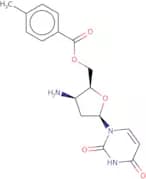
3'-Amino-2',3'-dideoxy-5'-O-toluoyluridine is an antiviral and anticancer agent. It inhibits the activity of DNA polymerase, which is essential for DNA replication. 3'-Amino-2',3'-dideoxy-5'-O-toluoyluridine also inhibits ribonucleotide reductase, which is essential for RNA synthesis. This drug has been shown to be effective against herpes simplex virus (HSV) and human immunodeficiency virus (HIV). 3'-Amino-2',3'-dideoxy-5'-O-toluoyluridine has been shown to be active against a number of tumor cell lines in vitro and in vivo, including breast cancer cells.
Formule :C17H19N3O5Degré de pureté :Min. 95%Masse moléculaire :345.35 g/mol2'-Deoxy-5'-O-DMT-2'-fluoro-L-uridine
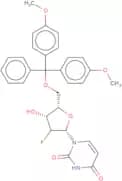
2'-Deoxy-5'-O-DMT-2'-fluoro-L-uridine is a nucleoside with anticancer and antiviral properties. It is used in the production of oligonucleotides, which are short chains of nucleic acids that can be synthesized in vitro to serve as probes for specific DNA or RNA sequences. 2'-Deoxy-5'-O-DMT-2'-fluoro-L-uridine is also a substrate for phosphoramidite synthesis, which converts it into 2'-deoxy-5'-O-(4,4',4''-(1,3,2-triazole)-tris(o-tolyl))uronium tetrafluoroborate (TOTU). This product has been shown to inhibit the activity of HIV reverse transcriptase and prevent the infection of cells by HIV.
Formule :C30H29FN2O7Degré de pureté :Min. 95%Masse moléculaire :548.57 g/molO6-Methylguanosine-5'-monophosphate
CAS :O6-Methylguanosine-5'-monophosphate is an antiviral agent that is modified ribonucleoside. It has been shown to inhibit the replication of human cytomegalovirus (HCMV) and herpes simplex virus type 1 (HSV-1) in cell culture. O6-Methylguanosine-5'-monophosphate inhibits viral DNA synthesis by competitively inhibiting the activity of diphosphorylated guanosine triphosphate, which is needed for DNA synthesis. This drug also inhibits the growth of cancer cells in culture and can be used as a potential anticancer agent.
Degré de pureté :Min. 95%Furano-dt cep
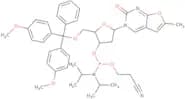
CAS :Furano-dt cep is a novel antiviral drug that has been shown to inhibit the production of viral nucleic acid and to activate the immune system. Furano-dt cep is a phosphoramidite compound that is synthesized from ribonucleosides and deoxyribonucleosides, which are modified with 2,2-dithiobis(propionitrile). Furano-dt cep binds to the 5'-terminal phosphate group on the DNA strand, preventing RNA synthesis. Furano-dt cep also inhibits tumor growth by causing cell death through apoptosis.
Formule :C42H49N4O8PDegré de pureté :Min. 95%Masse moléculaire :768.8 g/molN3-Methyl-5-methyluridine
CAS :N3-Methyl-5-methyluridine is a monophosphate of deoxyribonucleosides, which is a novel and modified nucleotide. It can be used as an antiviral agent and as a reagent in DNA synthesis. N3-Methyl-5-methyluridine is also an activator of ribonucleic acid (RNA) synthesis and has anticancer activity. It can be used for the production of phosphoramidites and DNA synthesis, as well as for the treatment of cancer.
Degré de pureté :Min. 95%N6-Benzoyl-3'-O-benzyl-5'-O-DMT-adenosine
CAS :N6-Benzoyl-3'-O-benzyl-5'-O-DMT-adenosine is a modified nucleoside that is synthesized by the phosphoramidite method. It has antiviral activity and can be used as an anticancer drug. N6-Benzoyl-3'-O-benzyl-5'-O-DMT-adenosine has been shown to inhibit the growth of cancer cells in vitro. The compound also inhibits DNA replication, RNA synthesis, and protein synthesis.
Formule :C45H41N5O7Degré de pureté :Min. 95%Masse moléculaire :763.84 g/mol3'-Azido-3'-deoxythymidine-5'-monophosphate lithium salt - 100 mM aqueous solution
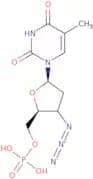
CAS :3'-Azido-3'-deoxythymidine-5'-monophosphate lithium salt - 100 mM aqueous solution is an azidothymidine (AZT) analog that inhibits HIV replication. AZT is a nucleoside reverse transcriptase inhibitor that blocks the progression of HIV by preventing the virus from duplicating its DNA. This product has been shown to be effective in treating AIDS and related diseases, as well as other infectious diseases such as hepatitis B and C. 3'-Azido-3'-deoxythymidine-5'-monophosphate lithium salt - 100 mM aqueous solution is often used in combination with other drugs to increase their efficacy. It has also been shown to be an effective chemotherapeutic agent against cancer cells.
Formule :C10H14N5O7P·xLiDegré de pureté :Min. 95%Masse moléculaire :347.22 g/molPolyinosinic-polycytidylic acid sodium salt
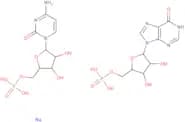
CAS :Polyinosinic acid-polycytidylic acid (Poly I:C), an agonist of TLR3 toll-like receptors, is a synthetic double-stranded RNA analog, consisting of polyinosinic acid (poly I) paired with polycytidylic acid (poly C), forming a stable duplex structure. PolyI:C stimulates the secretion of pro-inflammatory cytokines and type I interferon through its interaction with endosomal Toll-like receptor 3 (TLR-3) and the cytoplasmic receptors melanoma differentiation-associated gene 5 (MDA-5) and retinoic acid-inducible gene I (RIG-I). This immunostimulant activity makes Poly I:C a useful vaccine adjuvant and is used in vaccine formulations. Poly I:C and its stabilized analogs (e.g., poly-ICLC) are also being actively researched for their dual role in oncology: directly targeting tumors and acting as immune potentiators. For example Poly I:C can induce apoptosis in tumor cells and stimulate immunogenic cell death and is therefore being explored alongside chemotherapy, radiotherapy, and checkpoint inhibitors, helping to overcome resistance mechanisms and strengthen treatment outcomes. We can supply PolyI:C to all stages of your project - from R&D and preclinical phases right up to GMP commercial manufacture. Contact our team for custom Poly I:C products.
For more on poly I:C read out blog 'Poly I:C: A Vaccine Adjuvant With Oncological Potential.'Formule :(C10H13N4O8P)x•(C9H14N3O8P)x•NaxCouleur et forme :White Powder2'-O-Methylcytidine
CAS :Cis-2'-O-methylcytidine is a modified nucleoside that has shown antiviral and anticancer activity. It is a monophosphate analog of cytidine with high antiviral activity against HIV, HSV-1, HSV-2, EBV, and CMV. Cis-2'-O-methylcytidine also inhibits tumor growth in mice by inhibiting the synthesis of DNA. Cis-2'-O-methylcytidine has been synthesized from ribonucleosides and deoxyribonucleosides to provide high purity and quality.
Formule :C10H15N3O5Masse moléculaire :257.24 g/molN1,N2,N2-Trimethyl-psi-isocytidine
N1,N2,N2-Trimethylpsi-isocytidine is a novel nucleoside analog that has antiviral, anticancer, and immunosuppressive activities. It is an activator of diphosphate kinase and inhibits the formation of deoxyribonucleotides in DNA synthesis. N1,N2,N2-Trimethylpsi-isocytidine is a modified form of cytidine that contains three methyl groups. This agent has been shown to be active against human leukemic cells and can be used for the treatment of cancer and HIV infections.
Degré de pureté :Min. 95%2,2'-Anhydro-5'-O-toluoyluridine
2,2'-Anhydro-5'-O-toluoyluridine is a synthetic nucleoside analog that is used as an antiviral agent for the treatment of herpes simplex virus. It activates ribonucleotide reductase and inhibits DNA synthesis by inhibiting the enzyme DNA polymerase. 2,2'-Anhydro-5'-O-toluoyluridine has been shown to be active against colon cancer cells in vitro and in vivo. This drug has also been shown to inhibit the growth of certain types of leukemia cells and may be useful in treating patients with chronic myeloid leukemia.
Formule :C17H16N2O6Degré de pureté :Min. 95%Masse moléculaire :344.32 g/molN4-Benzyl-2'-deoxy-5'-O-MMT-cytidine 3'-CE phosphoramidite
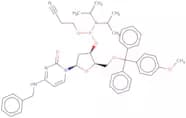
N4-Benzyl-2'-deoxy-5'-O-MMT-cytidine 3'-CE phosphoramidite is a monophosphate nucleoside that is used as an activator of anticancer agents, such as cytosine arabinoside. It has been modified to include an N4-benzyl group and a 2'-deoxy-5'-O-methyl moiety at the 5' position. The novel modifications have been shown to improve the efficacy of anticancer drugs against leukemia cells. In addition, it has been shown that this compound is more potent than other phosphoramidites in inhibiting the synthesis of viral RNA and DNA.
Formule :C45H52N5O6PDegré de pureté :Min. 95%Masse moléculaire :789.92 g/mol4’-C-Methyl-2-thiouridine
CAS :4’-C-Methyl-2-thiouridine is an activator that has anticancer properties. It is a modified nucleoside with antiviral and antifungal activities, which has been shown to inhibit the growth of human tumor cells in vitro. 4’-C-methyl-2-thiouridine is able to inhibit viral replication in vitro and has been shown to be active against herpes simplex virus type 1 (HSV1) and herpes simplex virus type 2 (HSV2). Interestingly, this compound was found to have no effect on the intracellular levels of thymidine kinase or on cellular DNA synthesis.
Formule :C10H14N2O5SDegré de pureté :Min. 95%Masse moléculaire :274.29 g/mol6-Amino-1-(2',3',5'-tri-O-benzoyl-b-D-ribofuranosyl)-4-methoxy-1H-pyrazolo[3,4-d]pyrimidine
6-Amino-1-(2',3',5'-tri-O-benzoyl-b-D-ribofuranosyl)-4-methoxy-1H-pyrazolo[3,4-d]pyrimidine is a deoxyribonucleoside with antiviral activity. It was synthesized by the reaction of 2,3,5'-triacetylpyrazolo[3,4-d]pyrimidinium triflate and bromoacetaldehyde diethyl acetal. The compound has been shown to be an activator of DNA and to inhibit cancer cell growth in vitro. 6ABA is a novel nucleoside that can be used as a base for further modification.
Degré de pureté :Min. 95%2'-Deoxy-N2-isobutyryl-5'-O-levulinoyladenosine
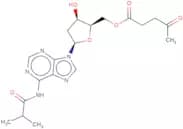
2'-Deoxy-N2-isobutyryl-5'-O-levulinoyladenosine is a modified nucleoside that has been shown to have anticancer and antiviral properties. It is synthesized as a phosphoramidite, and the synthesis of this compound has been patented internationally. This novel nucleoside is an activator for both DNA and RNA synthesis. The compound also has high purity, high quality, and is readily available to order from the supplier.
Formule :C19H25N5O6Degré de pureté :Min. 95%Masse moléculaire :419.44 g/mol5-Ethynyl-2'-O-methyluridine triphosphate
5-Ethynyl-2'-O-methyluridine triphosphate is a novel nucleoside that contains a methyl group at the 5 position of the uracil ring. It is an antiviral agent for use in the treatment of HIV, herpes simplex virus, cytomegalovirus, and influenza virus infections. 5-Ethynyl-2'-O-methyluridine triphosphate is also used as a precursor to synthesize DNA and RNA. This compound has been shown to have anticancer properties against breast cancer cells.
Degré de pureté :Min. 95%5'-Oxo-2'-deoxy-8,5'-cycloadenosine
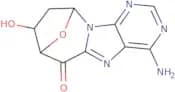
CAS :5'-Oxo-2'-deoxy-8,5'-cycloadenosine is a novel anticancer agent that belongs to the group of deoxyribonucleosides. It has been shown to inhibit the proliferation of cancer cells in vitro and in vivo. The mechanism of action for 5'-oxo-2' -deoxy-8,5'-cycloadenosine may be due to its ability to cause DNA damage, leading to cell death by apoptosis. This drug also inhibits viral replication and may have antiviral activity. 5'-Oxo-2'-deoxy-8,5'-cycloadenosine can be used as an intermediate in the synthesis of phosphoramidites, ribonucleosides or diphosphate nucleotides.
Formule :C10H9N5O3Degré de pureté :Min. 95%Masse moléculaire :247.21 g/mol3'-Deoxy-3'-fluoro-5'-O-toluoylcytidine
CAS :3'-Deoxy-3'-fluoro-5'-O-toluoylcytidine is a monophosphate nucleoside of cytidine. It is a phosphoramidite building block for the synthesis of DNA, an antiviral and anticancer agent. 3'-Deoxy-3'-fluoro-5'-O-toluoylcytidine has been shown to inhibit the replication of HIV and herpes simplex virus (HSV) in cell cultures and to induce apoptosis in cancer cells by inhibiting protein synthesis and inducing oxidative stress. This nucleoside is synthesized from deoxythymidine 5' phosphate using phosphorus pentoxide as oxidizing agent, followed by a reaction with toluene. The novel 3'-deoxy-3'-fluoro-5'-O-toluoylcytidine can be used as an activator for other modified nucleotides in DNA synthesis or as scaffold for the
Degré de pureté :Min. 95%Cytidine 5'-triphosphate disodium salt
CAS :Please enquire for more information about Cytidine 5'-triphosphate disodium salt including the price, delivery time and more detailed product information at the technical inquiry form on this page
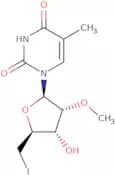
Formule :C9H14N3Na2O14P3Degré de pureté :Min. 97 Area-%Masse moléculaire :527.12 g/mol5’-Deoxy-5’-iodo-2’-O-methyluridine
CAS :5’-Deoxy-5’-iodo-2’-O-methyluridine is a nucleoside that is modified with the substitution of an iodine atom for a hydrogen atom on the 5′ carbon. It has antiviral and anticancer properties. The high purity and novel structure make this compound useful in DNA synthesis. This product can also be used as a phosphoramidite or deoxyribonucleoside building block in DNA synthesis.
Degré de pureté :Min. 95%N6-Benzoyl-2’-chloro-2’-deoxyadenosine
CAS :N6-Benzoyl-2’-chloro-2’-deoxyadenosine is a synthetic nucleoside that has antiviral properties. It is used to treat viral diseases, such as herpes and hepatitis B. N6-Benzoyl-2’-chloro-2’-deoxyadenosine can be used in the synthesis of DNA or RNA, and it is also used as an activator for other phosphoramidites. This product has been shown to have high purity and quality.
Formule :C17H16ClN5O4Degré de pureté :Min. 95%Masse moléculaire :389.79 g/mol3′-UMP
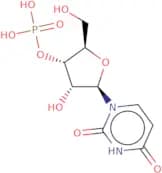
CAS :3′-UMP is a modified nucleoside that has antiviral activity, and is synthesized by the phosphoramidite method. It is a novel compound, which has not been previously reported. 3′-UMP is an activator of ribonucleotide reductase and can be used to treat viral infections. This drug also has anticancer effects and can be used as a chemotherapeutic agent for the treatment of leukemia. 3′-UMP has high purity and high quality.
Formule :C9H13N2O9PDegré de pureté :Min. 95%Masse moléculaire :324.18 g/mol2’-Deoxy-2’-fluoro-N3-(2S)-[2-(tert-butoxycarbonyl)-amino-3-carbonyl]propyluridine
2’-Deoxy-2’-fluoro-N3-(2S)-[2-(tert-butoxycarbonyl)-amino-3-carbonyl]propyluridine is a nucleoside, modified with fluorine at the 2’ position. It is an activator of phosphoramidites in the synthesis of DNA and RNA. This product has shown anticancer activity in vitro. 2'DFNAPU has also been shown to inhibit the replication of HIV virus and herpes simplex virus type 1 in cell culture, which may be due to its ability to inhibit viral DNA polymerase.
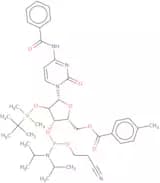
Degré de pureté :Min. 95%N4-Benzoyl-2'-O-tert-butyldimethylsilyl-5'-O-toluoylcytidine 3'-CE phosphoramidite
N4-Benzoyl-2'-O-tert-butyldimethylsilyl-5'-O-toluoylcytidine 3'-CE phosphoramidite is an anticancer agent that acts by inhibiting the formation of DNA and RNA. It is a nucleoside analogue that has been modified to contain a benzoyl group at the 2' carbon atom, which leads to increased cytotoxicity. N4-Benzoyl-2'-O-tert-butyldimethylsilyl-5'-O-toluoylcytidine 3'-CE phosphoramidite is a synthetic nucleoside analogue with novel properties. It inhibits the synthesis of DNA and RNA in cells, which may be due to its ability to inhibit DNA polymerases and ribonucleases.
Formule :C39H54N5O8PSiDegré de pureté :Min. 95%Masse moléculaire :779.95 g/mol2-Amino-6-chloro-9-(2’-O-propargyl-b-D-ribofuranosyl)purine
CAS :2-Amino-6-chloro-9-(2'O-propargyl-bDribofuranosyl)purine is a modified nucleoside that has antiviral and anticancer properties. It has been shown to inhibit DNA synthesis in the presence of deoxyribonucleosides, diphosphate, and Nucleosides. The compound was also found to inhibit the replication of herpes simplex virus type 1 (HSV-1) by interfering with viral DNA polymerase and causing chain termination. 2-Amino-6-chloro-9-(2'O-propargyl-bDribofuranosyl)purine is a novel compound that can be used as a high quality pharmaceutical ingredient for cancer treatments.
Degré de pureté :Min. 95%2'-Deoxycytidine 3'-O-L-valinyl ester
CAS :2'-Deoxycytidine 3'-O-L-valinyl ester is a replication inhibitor that is used in biochemical research. It binds to the NS3 protease of the hepatitis C virus, preventing it from cleaving the polyprotein into functional proteins. This molecule also inhibits autophagy and may be a potential therapeutic agent for cancer.
Formule :C14H22N4O5Degré de pureté :Min. 95%Masse moléculaire :326.35 g/molN6-Benzoyl-8-hydroxy-2'-O-methyladenosine
N6-Benzoyl-8-hydroxy-2'-O-methyladenosine is a nucleoside analogue that inhibits the replication of RNA and DNA. It is a monophosphate, which can be converted to a diphosphate through phosphorylation. N6-Benzoyl-8-hydroxy-2'-O-methyladenosine has been shown to inhibit cancer cells and may have potential for use in antiviral therapy. This compound was synthesized from 2,4,5,6 tetrahydrobenzyl alcohol and 2'-deoxyadenosine. The CAS number for this compound is 79430-89-1.
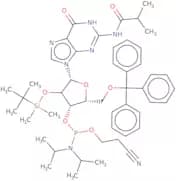
Degré de pureté :Min. 95%2'-O-tert-Butyldimethylsilyl-N2-Isobutyryl-5'-O-tritylguanosine 3'-CE phosphoramidite
2'-O-tert-Butyldimethylsilyl-N2-Isobutyryl-5'-O-tritylguanosine 3'-CE phosphoramidite is an anticancer nucleoside, which is used as a building block to synthesize DNA and RNA. The compound has been shown to be effective against HIV and herpes simplex virus. It also has antiviral effects against influenza A virus, cytomegalovirus, and Epstein Barr virus.
Formule :C48H64N7O7PSiDegré de pureté :Min. 95%Masse moléculaire :910.15 g/mol5’-Deoxy-5’-iodo-2’-O-methyl-5-methyluridine
CAS :5’-Deoxy-5’-iodo-2’-O-methyl-5-methyluridine is a monophosphate nucleoside. It is an antiviral and anticancer agent that inhibits viral replication by inhibiting the synthesis of viral DNA. It also has been shown to have antitumor activity, but it can only be used in cancer treatments when combined with other drugs such as 5FU. The chemical formula for 5’-Deoxy-5’-iodo-2’O methyl -5 methyl uridine is C10H14N4O8P.
Degré de pureté :Min. 95%5-Methyl-7-(2-C-methyl-b-D-ribofuranosyl)-7H-pyrrolo[2,3-d]pyrimidin-4-amine
CAS :5-Methyl-7-(2-C-methyl-b-D-ribofuranosyl)-7H-pyrrolo[2,3-d]pyrimidin-4-amine is a synthetic nucleoside analog of 2'-deoxyadenosine. It is an activator of DNA synthesis and replication by virtue of its ability to inhibit the enzyme ribonucleotide reductase. The compound has antiviral and anticancer activities, as well as antitumor activity. 5-Methyl-7-(2-C-methyl-b-Dribofuranosyl)-7H-[1,2] pyrrolo[2,3]-d]pyrimidin--4--amine has shown good results in treating chronic myelogenous leukemia.
Formule :C13H18N4O4Degré de pureté :Min. 95%Masse moléculaire :294.31 g/mol7-Deaza-2'-deoxy-7-iodoadenosine
CAS :7-Deaza-2'-deoxy-7-iodoadenosine (7DADI) is a modified nucleoside that has antiviral and anticancer properties. It is synthesized by the reaction of 2'-deoxyadenosine with iodine in the presence of an activator such as sodium hypochlorite. 7DADI binds to ribonucleosides, forming a phosphoramidate bond at the 3' position, which leads to inhibition of viral RNA synthesis and DNA replication. This drug also inhibits the growth of cancer cells by inhibiting DNA synthesis and protein synthesis. 7DADI is novel because it is not found in nature or produced by any other organism.
Formule :C11H13IN4O3Degré de pureté :Min. 98 Area-%Masse moléculaire :376.16 g/mol7-Deaza-2'-deoxy-7-iodoguanosine
CAS :The phosphoramidite 7-Deaza-2'-deoxy-7-iodoguanosine is a modified nucleotide that is used in the synthesis of DNA. This compound has antiviral and anticancer properties, as it inhibits viral replication by preventing the synthesis of viral RNA or DNA. It also prevents the production of cancer cells by inhibiting ribonucleotide reductase, an enzyme that reduces ribonucleotides to deoxyribonucleotides for DNA synthesis. The purity of this product is high and the novel nature of this product makes it a valuable reagent for research.
Formule :C11H13IN4O4Degré de pureté :Min. 97 Area-%Masse moléculaire :392.16 g/molTFA-aha-dC
TFA-aha-dC is a modified nucleoside analog that is an antiviral and anticancer drug. It inhibits the enzyme DNA polymerase, which is required for replication of viral and bacterial DNA. TFA-aha-dC binds to the active site of the enzyme, preventing it from binding to DNA and blocking its activity. TFA-aha-dC also has demonstrated anti-inflammatory properties.
Formule :C20H28F3N5O6Degré de pureté :Min. 95%Masse moléculaire :491.46 g/molOBEA-Fluorescein-2'-deoxy-5'-O-DMT-cytidine 3'CE-amidite
OBEA-Fluorescein-2'-deoxy-5'-O-DMT-cytidine 3'CE-amidite is an anticancer drug that belongs to the class of deoxyribonucleosides. It is a novel nucleoside analogue that has been modified with fluorescein and a cytidine derivative. The synthesis of this compound is carried out by coupling a cytidine derivative with fluorescein and the phosphoramidite of the corresponding ribonucleotide. OBEA-Fluorescein-2'-deoxy-5'-O-DMT-cytidine 3'CE amidite has antiviral activity against DNA viruses, such as hepatitis B virus and human immunodeficiency virus, as well as RNA viruses, such as influenza A virus. This compound also has antiinflammatory activities.
Degré de pureté :Min. 95%5'-O-DMT-5-(furan-2-yl)-2'-O-methylcytidine
5'-O-DMT-5-(furan-2-yl)-2'-O-methylcytidine is a novel nucleoside that can be used as a drug for the treatment of cancers. It is an analog of cytidine, which inhibits the synthesis of DNA and RNA, thereby preventing the replication of cancer cells. 5'-O-DMT-5-(furan-2-yl)-2'-O-methylcytidine has been shown to have antiviral activity against HIV and hepatitis B virus in vitro. The compound also has anticancer activity and is a phosphoramidite monophosphate. This compound is soluble in water and is available at high purity with CAS No. 89937-60-4.
Degré de pureté :Min. 95%Chloro-AlaOiPr-amidite
Chloro-AlaOiPr-amidite is an anticancer drug that is a modified form of the nucleoside 2'-deoxyadenosine. It has been shown to be active against both DNA and RNA tumor cells in vitro. Chloro-AlaOiPr-amidite was also found to be effective against HIV-1 when tested in vivo, showing antiviral activity. The drug is synthesized by reacting an acid chloride with the amine group of AlaOiPr. In this reaction, the chloride ion attacks the amine group, displacing a proton from the nitrogen atom and forming a chloroamine species. The chloramine then reacts with the nucleoside to give rise to an intermediate called chloro-AlaOiPr-amidite which can then be reacted with a phosphoramidite or ribonucleotide to yield chloro-AlaOiPr-phosphoramidite
Degré de pureté :Min. 95%N′-[9-(2-Deoxy-2-fluoro-β-D-arabinofuranosyl)-6,9-dihydro-6-oxo-1H-purin-2-yl]-N,N-dimethylmethanimidamide
CAS :Please enquire for more information about N′-[9-(2-Deoxy-2-fluoro-β-D-arabinofuranosyl)-6,9-dihydro-6-oxo-1H-purin-2-yl]-N,N-dimethylmethanimidamide including the price, delivery time and more detailed product information at the technical inquiry form on this page
Formule :C13H17FN6O4Degré de pureté :Min. 95%Masse moléculaire :340.31 g/mol2-Amino-8-aza-7-deaza-7-iodoguanosine
2-Amino-8-aza-7-deaza-7-iodoguanosine is a deoxyribonucleoside that is structurally related to guanosine and inosine. It is an antiviral agent with high purity and modified properties, which can be synthesized using phosphoramidite chemistry. 2-Amino-8-aza-7-deaza-7-iodoguanosine has shown antiviral activity against herpes simplex virus type 1 (HSV1) in a cell culture assay. The compound also inhibits the growth of HSV1 by suppressing viral DNA synthesis, RNA synthesis, and protein synthesis. This drug may have potential for use as a topical antiviral treatment for HSV1 infections of the skin or mucous membranes such as those in the mouth or genitals.
Degré de pureté :Min. 95%N4-Benzoyl-1-(b-L-threonyl)cytosine
N4-Benzoyl-1-(b-L-threonyl)cytosine is a cytidine nucleoside with antiviral and anticancer activities. It is synthesized by the reaction of 2,4-diaminobutyric acid, 2'-deoxyadenosine, and 1,3-bis(2',4',6'-trichlorophenyl)-2H-1,2,3-triazine in the presence of tetrazole. N4-Benzoyl-1-(bL threonyl)cytosine is a novel nucleoside analogue that has been shown to inhibit the replication of human immunodeficiency virus (HIV). N4-Benzoyl cytidine also inhibits DNA synthesis and may be useful in cancer chemotherapy.
Degré de pureté :Min. 95%N6-Benzoyl-5'-O-trityl-adenosine
N6-Benzoyl-5'-O-trityl-adenosine is a novel nucleoside, which has been synthesized to be a phosphoramidite. It is an anticancer drug that inhibits the growth of tumor cells by competitively inhibiting the synthesis of DNA and RNA. In addition, N6-Benzoyl-5'-O-trityl-adenosine has antiviral properties, which may be due to its ability to inhibit viral DNA polymerase. This compound also shows high purity and quality.
Formule :C36H31N5O5Degré de pureté :Min. 95%Masse moléculaire :613.66 g/mol6-Amino-4-hydroxyamino-2-(b-D-ribofuranosyl)-2H-pyrazolo[3,4-d]pyrimidine
6-Amino-4-hydroxyamino-2-(b-D-ribofuranosyl)-2H-pyrazolo[3,4-d]pyrimidine is a novel synthetic ribonucleotide that inhibits the growth of tumor cells by interfering with DNA synthesis. This compound has been shown to inhibit the replication of HIV and herpes simplex virus type 1. The phosphoramidite monomer is readily available and can be synthesized in high purity and high quality. 6-Amino-4-hydroxyamino-2-(b-D-ribofuranosyl)-2H-pyrazolo[3,4-d]pyrimidine is a modified nucleoside that is activated by phosphorylation at the 5' position. CAS No.: 10266890
Degré de pureté :Min. 95%2’C-Methyl-2-thiouridine
CAS :2’C-Methyl-2-thiouridine is a novel nucleoside phosphoramidite that has been synthesized to serve as an activator for DNA polymerases. 2’C-Methyl-2-thiouridine is a potent antiviral agent that inhibits the replication of the hepatitis C virus in vitro. It also has antiproliferative effects against certain cancer cells and can be used as an anticancer drug. 2’C-Methyl-2-thiouridine contains a methylated thiol group, which confers a high degree of resistance to degradation by thiols, including glutathione (GSH). This compound is stable to hydrolysis and may be used in the synthesis of deoxyribonucleosides or monophosphate nucleotides.
Degré de pureté :Min. 95%2'-Deoxyguanosine-5'-carboxylic acid
CAS :2'-Deoxyguanosine-5'-carboxylic acid is a synthetic nucleoside that has antiviral and anticancer properties. It is an activator of DNA polymerase, which is used in the synthesis of DNA. 2'-Deoxyguanosine-5'-carboxylic acid also inhibits the activity of ribonucleotide reductase and deoxyribonucleotide reductase, which are enzymes that catalyze the conversion of ribose-5-phosphate to deoxyribose-5-phosphate. This substance also blocks viral replication by inhibiting RNA synthesis in cells infected with HIV or herpes simplex virus type 1.
Formule :C10H11N5O5Degré de pureté :Min. 95%Masse moléculaire :281.23 g/mol2'-C-Methyl-6-S-methyl-6-thioinosine
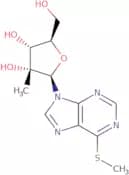
CAS :2'-C-Methyl-6-S-methyl-6-thioinosine is a modified nucleoside that can be used as an antiviral and anticancer agent. It has been shown to activate the immune system by inducing cytokine production, which leads to increased cytotoxicity against tumor cells. 2'-C-Methyl-6-S-methyl-6-thioinosine has also been shown to inhibit DNA synthesis and induce apoptosis in cancer cells. This product is of high purity and quality, with a CAS number of 172722-76-8.
Degré de pureté :Min. 95%Deoxyribonucleic acid, sodium salt, ex salmon testes
CAS :Deoxyribonucleic acid, sodium salt, ex salmon testes is a natural product that is produced by the electrochemical biosensor. It is used to study the interaction of DNA with carbanion and modified DNA. This product can be immobilized on a substrate to obtain a specific location for analysis. Deoxyribonucleic acid, sodium salt, ex salmon testes has been shown to be effective in catalyzing transfer reactions in aldehydes and nitroaldol reactions.
Cytidine based prodrug with gemcitabine
Cytidine based prodrug with gemcitabine is a nucleoside analog that has antiviral and anticancer properties. It is a modified cytidine-based prodrug with gemcitabine which is an anticancer drug. Cytidine based prodrug with gemcitabine inhibits viral DNA synthesis by competitively inhibiting the incorporation of deoxycytidine monophosphate into the viral DNA chain. The prodrug also inhibits the proliferation of cancer cells by interfering with DNA synthesis, which leads to cell death.
Degré de pureté :Min. 95%3'-Amino-N4-benzoyl-5'-O-tert-butyldimethylsilyl-2',3'-dideoxycytidine
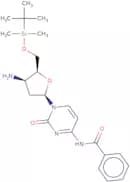
CAS :3'-Amino-N4-benzoyl-5'-O-tert-butyldimethylsilyl-2',3'-dideoxycytidine (3'-ABT) is a novel diphosphate nucleoside that has been used in clinical trials as an activator of anticancer drugs. 3'-ABT is also used as a building block for synthesis of 2',3'-dideoxyuridine, which has antiviral properties. 3'-ABT can be synthesized by reacting N4-benzoyl-5'-O-tert-butyldimethylsilylcytosine with sodium bis(trimethylsilyl)amide and 2,6,8,10,-dodecatriene.
Formule :C22H32N4O4SiDegré de pureté :Min. 95%Masse moléculaire :444.6 g/mol2'-Deoxy-N2-DMF-5'-O-tritylguanosine 3'-CE phosphoramidite
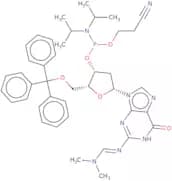
2'-Deoxy-N2-DMF-5'-O-tritylguanosine 3'-CE phosphoramidite is a novel phosphoramidite nucleoside of the antiviral agent N2-DMF-5'-O-tritylguanosine, which has been modified to contain a deoxyribonucleoside at the 5' position. The phosphoramidite nucleotide is synthesized by reacting 2'-deoxyadenosine with DMF and 2,4,6-trichlorobenzoyl chloride in an organic solvent such as dichloromethane. It is then purified by recrystallization or chromatography to remove impurities such as DMF, 2,4,6-trichlorobenzoyl chloride, and other non-reacted compounds. This product can be used in the synthesis of oligonucleotides for use in DNA sequencing.
Formule :C41H49N8O5PDegré de pureté :Min. 95%Masse moléculaire :764.87 g/mol5-(Aminomethyl)-2-thiouridine
CAS :5-(Aminomethyl)-2-thiouridine is a bifunctional molecule that can be used in chromatography and as a precursor for the epigenetic modifications of DNA. 5-(Aminomethyl)-2-thiouridine has been shown to have an effect on the methyltransferase pathway, which is involved in the epigenome. This molecule has also been shown to affect the growth rate of bacteria in vitro.
Formule :C10H15N3O5SDegré de pureté :Min. 95%Masse moléculaire :289.31 g/molPolyinosinic acid tripotassium salt
CAS :Polyinosinic acid is a single stranded RNA analog which is combined with polycytidylic acid (poly C) to form a stable duplex structure known as Polyinosinic acid-polycytidylic acid (Poly I:C). PolyI:C stimulates the secretion of pro-inflammatory cytokines and type I interferon through its interaction with endosomal Toll-like receptor 3 (TLR-3) and the cytoplasmic receptors melanoma differentiation-associated gene 5 (MDA-5) and retinoic acid-inducible gene I (RIG-I). This immunostimulant activity makes Poly I:C a useful vaccine adjuvant and is used in vaccine formulations. Poly I:C and its stabilized analogs (e.g., poly-ICLC) are also being actively researched for their dual role in oncology: directly targeting tumors and acting as immune potentiators. For example Poly I:C can induce apoptosis in tumor cells and stimulate immunogenic cell death and is therefore being explored alongside chemotherapy, radiotherapy, and checkpoint inhibitors, helping to overcome resistance mechanisms and strengthen treatment outcomes. We can supply PolyI:C to all stages of your project - from R&D and preclinical phases right up to GMP commercial manufacture. Contact our team for custom Poly I:C products.
For more on poly I:C read out blog 'Poly I:C: A Vaccine Adjuvant With Oncological Potential.'Degré de pureté :Min. 95%5'-Cytidylic acid
CAS :Please enquire for more information about 5'-Cytidylic acid including the price, delivery time and more detailed product information at the technical inquiry form on this page
Formule :C9H14N3O8PDegré de pureté :Min. 98.0 Area-%Masse moléculaire :323.20 g/mol8-Oxo-N2-isobutyryl-2-deoxyguanosine
CAS :8-Oxo-N2-isobutyryl-2-deoxyguanosine is a modified synthetic nucleoside. It finds applications in understanding mutagenesis and DNA repair mechanisms.
Formule :C14H19N5O6Degré de pureté :Min. 95%Masse moléculaire :353.33 g/molCytidine 5'-monophosphate sodium salt
CAS :Cytidine 5'-monophosphate sodium salt is a nucleotide that is found in RNA and DNA. Cytidine 5'-monophosphate sodium salt is an intermediate in the biosynthesis of uridine, choline, and saccharose. It also plays an important role in the immune system as it can be a precursor for immunoglobulins. The reaction rate of cytidine 5'-monophosphate sodium salt with lipase has been shown to be constant at pH 7.5-8.0 and 37°C. This product has been shown to have emulsifying properties by forming micelles with water-immiscible solvents such as hexane or heptane, which may be due to its ability to form hydrogen bonds with other molecules such as saccharose or guanosine. Cytidine 5'-monophosphate sodium salt can also be used as a chromatographic material for separating saccharose from other sugars
Formule :C9H14N3O8P·xNaDegré de pureté :Min. 95 Area-%Couleur et forme :White Off-White PowderMasse moléculaire :323.2 g/mol3'-O-Aminoacetoxythymidine 5'-O-triphosphate triethylammonium salt
Please enquire for more information about 3'-O-Aminoacetoxythymidine 5'-O-triphosphate triethylammonium salt including the price, delivery time and more detailed product information at the technical inquiry form on this page
Formule :C13H22N3O14P3•(C6H15N)xDegré de pureté :Min. 99 Area-%Couleur et forme :PowderMasse moléculaire :537.25 g/molGuanosine hydrate
CAS :Please enquire for more information about Guanosine hydrate including the price, delivery time and more detailed product information at the technical inquiry form on this page
Formule :C10H13N5O5·xH2ODegré de pureté :Min. 98 Area-%Masse moléculaire :283.24 g/molLauroyl coenzyme A
CAS :Lauroyl CoA is a body-fat molecule that can be formed from acetyl-coenzyme A, which is an intermediate in the metabolism of fatty acids. It is used in analysis as a standard for enzyme activities and as a substrate for reactions involving enzymes with coenzyme A. Reaction mechanisms are determined using titration calorimetry and structural analyses are performed using analytical methods such as infrared spectroscopy and nuclear magnetic resonance spectroscopy. Lauroyl CoA is also used to study the effects of the protein toll-like receptor 4 on hepatic steatosis. The wild-type strain of Escherichia coli was used to measure the activity of bacterial synthetases containing lauroyl CoA.
Formule :C33H58N7O17P3SDegré de pureté :Min. 95%Couleur et forme :PowderMasse moléculaire :949.84 g/mol2',3',5'-Tri-O-acetylinosine
CAS :2′,3′,5′-Tri-O-acetylinosine is a protected form of the nucleoside inosine, with potential for use in the preparation of modified nucleotides and nucleoside analogs.
Formule :C16H18N4O8Degré de pureté :Min. 95%Couleur et forme :White To Off-White SolidMasse moléculaire :394.34 g/molN2-Benzoylguanosine
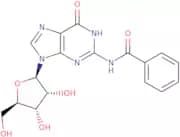
CAS :N2-Benzoylguanosine is a nucleotide derivative that is formed by the acetylation of guanosine. It has been shown to act as a buffer in alkaline solutions and isomerizes to its n-oxide form when heated. N2-Benzoylguanosine reacts with peroxides such as hydrogen peroxide, glyoxal, and organic peroxides, forming hydroperoxide intermediates that can be converted into other products. The acidic hydrolysis of N2-benzoylguanosine yields the corresponding 6-benzoyladenosines. It has been shown to enhance the activity of uridine in inhibiting bacterial growth, while also acting as an inhibitor of viral RNA synthesis. This compound also reacts with nitrous acid to form an n6-benzoyladenosine derivative that inhibits the formation of RNA chains during transcription.
Formule :C17H17N5O6Degré de pureté :Min. 95%Couleur et forme :White to beige solid.Masse moléculaire :387.35 g/mol
















![6-Amino-1-(2',3',5'-tri-O-benzoyl-b-D-ribofuranosyl)-4-methoxy-1H-pyrazolo[3,4-d]pyrimidine](/_next/image/?url=https%3A%2Fstatic.cymitquimica.com%2Fproducts%2F3D%2Fthumb-webp%2FNA162942.webp&w=3840&q=75)





![2’-Deoxy-2’-fluoro-N3-(2S)-[2-(tert-butoxycarbonyl)-amino-3-carbonyl]propyluridine](/_next/image/?url=https%3A%2Fstatic.cymitquimica.com%2Fproducts%2F3D%2Fthumb-webp%2FND162843.webp&w=3840&q=75)



![5-Methyl-7-(2-C-methyl-b-D-ribofuranosyl)-7H-pyrrolo[2,3-d]pyrimidin-4-amine](/_next/image/?url=https%3A%2Fstatic.cymitquimica.com%2Fproducts%2F3D%2Fthumb-webp%2FNM14093.webp&w=3840&q=75)







![N′-[9-(2-Deoxy-2-fluoro-β-D-arabinofuranosyl)-6,9-dihydro-6-oxo-1H-purin-2-yl]-N,N-dimethylmethani…](/_next/image/?url=https%3A%2Fstatic.cymitquimica.com%2Fproducts%2F3D%2Fthumb-webp%2FNF183584.webp&w=3840&q=75)



![6-Amino-4-hydroxyamino-2-(b-D-ribofuranosyl)-2H-pyrazolo[3,4-d]pyrimidine](/_next/image/?url=https%3A%2Fstatic.cymitquimica.com%2Fproducts%2F3D%2Fthumb-webp%2FNA162982.webp&w=3840&q=75)