Nucléosides
3569 produits trouvés pour "Nucléosides"
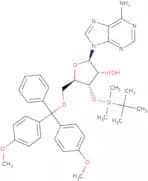
3'-O-tert-Butyldimethylsilyl-5'-O-DMT-adenosine
CAS :3'-O-tert-Butyldimethylsilyl-5'-O-DMT-adenosine is a nucleoside that is used in the synthesis of oligonucleotides. It is a modified nucleoside that can be used as an antiviral or anticancer agent. It has been shown to have high purity and quality. The synthesis of this compound involves the use of a novel activator, which is also available for purchase from this website. This nucleoside has been modified with tert-butyldimethylsilyl groups at the 3' and 5' positions of the ribose moiety, which prevents the hydrolysis of the phosphate ester bond by alkaline phosphatase enzymes, thus allowing for sequence determination.Degré de pureté :Min. 95%1,3-Dimethyl-5-[4-(4,4,5,5-tetramethyl-[1,3,2]dioxaborolan-2-yl)-benzyl]-pyrimidine-2,4,6-trione
CAS :1,3-Dimethyl-5-[4-(4,4,5,5-tetramethyl-[1,3,2]dioxaborolan-2-yl)-benzyl]-pyrimidine-2,4,6-trione is an organic semiconductor material. It is a dielectric with a high transition temperature and good electrical conductivity. This compound is a metal silicide with a low resistivity and high electron mobility. It can be used as an active layer in thin film transistors or as a field effect transistor channel material. 1,3-Dimethyl-5-[4-(4,4,5,5-tetramethyl-[1,3,2]dioxaborolan-2-yl)-benzyl]-pyrimidine-2,4,6-trione has been shown to have good chemical stability and thermal stability in air at temperatures up to 400°C.Degré de pureté :Min. 95%6-Chloro-N4-methyl-4,5-pyrimidinediamine
CAS :6-Chloro-N4-methyl-4,5-pyrimidinediamine is a monophosphate nucleotide. It is a synthetic compound that is used as an antiviral agent and as an anticancer drug. The compound has been shown to inhibit the replication of DNA by inhibiting the activity of DNA polymerase. 6-Chloro-N4-methyl-4,5-pyrimidinediamine also inhibits the synthesis of RNA by inhibiting the enzyme RNA polymerase. As a result, this compound is toxic to cells because it prevents protein production and replication. This product has high purity and high quality. It can be used in phosphoramidites, which are necessary for the production of DNA and RNA in cells.Degré de pureté :Min. 95%Adenylosuccinic acid
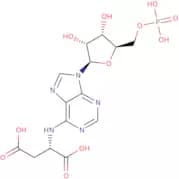
CAS :Adenylosuccinic acid is an organic acid that is synthesized through the deamination of adenosine monophosphate. It is used in transfection experiments to inhibit polymerase chain reaction (PCR) and reverse transcriptase. Adenylosuccinic acid inhibits DNA synthesis by targeting enzymes such as the ribonucleotide reductase and the DNA polymerase β-subunit. Adenylosuccinic acid also inhibits protein synthesis, which may be due to its ability to inhibit energy metabolism, leading to cellular death. This drug has been shown to have a wide range of pharmacological effects, including anti-inflammatory, analgesic, and antifungal activity.
Formule :C14H18N5O11PDegré de pureté :Min. 95%Couleur et forme :PowderMasse moléculaire :463.29 g/mol2'-Deoxy-a-uridine
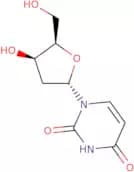
CAS :2'-Deoxy-a-uridine is a nucleoside that is used in the synthesis of DNA. It is one of the building blocks for the synthesis of RNA. 2'-Deoxy-a-uridine is an activator, which can phosphoramidate DNA and activate it to form new strands. This product can also be used as an antiviral agent and antineoplastic agent due to its inhibition of viral replication and cancer cell proliferation. It has been shown to bind to double-stranded DNA by intercalation, thereby preventing the strand from uncoiling and exposing a single strand for further binding by other agents. This product can also inhibit cell growth by inhibiting protein synthesis. 2'-Deoxy-a-uridine has been shown to have anticancer properties, including cytotoxic effects on leukemia cells in culture, as well as inducing apoptosis in tumor cells with low levels of p53 expression.
2'-Deoxy-a-uridineFormule :C9H12N2O5Degré de pureté :Min. 95%Couleur et forme :Off-white solid.Masse moléculaire :228.21 g/mol2'-TFA-NH-dC
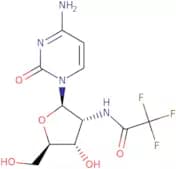
CAS :2'-TFA-NH-dC is a novel nucleoside analogue that has been modified to have antiviral and anticancer properties. The chemical structure of 2'-TFA-NH-dC closely resembles dC, which is a natural DNA nucleotide, but with the addition of an extra fluorine atom at the 2' position. This modification increases the potency of 2'-TFA-NH-dC by making it more difficult for enzymes in cells to break down the drug. The compound can be used as a monophosphate or diphosphate, and is synthesized from 2'-deoxyadenosine 5'-phosphoramidite and 1,2,4-triazole in water.Formule :C11H13F3N4O5Degré de pureté :Min. 95%Masse moléculaire :338.24 g/mol4-(Isobutylamino)-2-(Methylthio)Pyrimidine-5-Carboxylic Acid
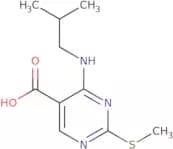
CAS :4-(Isobutylamino)-2-(Methylthio)Pyrimidine-5-Carboxylic Acid is a nucleoside analogue that inhibits viral replication by acting as an antiviral agent. It blocks the enzymatic activity of DNA polymerases, including reverse transcriptase, and prevents the synthesis of new viral DNA. 4-(Isobutylamino)-2-(Methylthio)Pyrimidine-5-Carboxylic Acid is also an activator for HIV integrase, which is an enzyme that integrates HIV DNA into the host genome. This compound has been shown to be effective against HIV and herpes viruses in vitro.Formule :C10H15N3O2SDegré de pureté :Min. 95%Masse moléculaire :241.31 g/molo-Methoxytopolin riboside
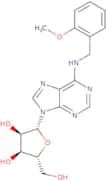
CAS :o-Methoxytopolin Riboside is a novel phosphoramidite that can be used for the synthesis of ribonucleotides and deoxyribonucleosides. This product has antiviral and anticancer properties, as well as the ability to inhibit tumor growth by inducing apoptosis in cancer cells. It is synthesized from the natural compound o-methoxytyrosine by the addition of a phosphate group to the 3-position. The phosphate group is then modified to produce monophosphate or diphosphate forms. OMTPR has been shown to have anti-inflammatory properties and has been found to reduce inflammation in mice with colitis.
Formule :C18H21N5O5Degré de pureté :Min. 95%Couleur et forme :PowderMasse moléculaire :387.39 g/mol5'-O-DMT-2-thiouridine
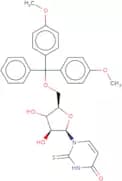
5'-O-DMT-2-thiouridine is a synthetic nucleoside that can be used as an antiviral and anticancer drug. It is the first novel nucleoside with a ribonucleoside moiety, which was synthesized by modifying uridine with 2,4,6-trimethoxybenzoyl chloride. The synthesis of 5'-O-DMT-2-thiouridine has been patented in China (CN101115587B) and the United States (US8483384).Formule :C30H30N2O7SDegré de pureté :Min. 95%Masse moléculaire :562.63 g/mol5'-O-DMT-N4-ethylcytidine
5'-O-DMT-N4-ethylcytidine is a novel nucleoside analogue. It has been used as a building block for the synthesis of modified oligonucleotides. 5'-O-DMT-N4-ethylcytidine is an antiviral agent that inhibits HIV replication by inhibiting reverse transcriptase, which is an enzyme that is necessary for the production of viral DNA from host cell RNA. The drug also has anticancer activity, which may be due to its ability to inhibit DNA synthesis and cellular proliferation.Formule :C32H35N3O7Degré de pureté :Min. 95%Masse moléculaire :573.64 g/mol5'-Amino-5'-deoxy-5'-N-MMT-thymidine 3'-CE phosphoramidite
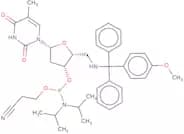
CAS :5'-Amino-5'-deoxy-5'-N-MMT-thymidine 3'-CE phosphoramidite is a high purity, novel, modified, antiviral and anticancer nucleotide. It is an analog of thymidine which has the methyl group at the 5' position replaced with a 5' amino group. This modification prevents conversion of the nucleoside to thymine and therefore inhibits DNA synthesis. The phosphoramidite is used as a building block for oligonucleotides in chemical synthesis. The phosphoramidite has shown antiviral activity against HIV by preventing reverse transcription of viral RNA into DNA. It also has been tested for its anticancer effects on human cells in vitro by inhibiting DNA synthesis and inducing apoptosis in cancer cells.Formule :C39H48N5O6PDegré de pureté :Min. 95%Masse moléculaire :713.8 g/mol2',3'-Dideoxy-2',3'-didehydroinosine
CAS :2',3'-Dideoxy-2',3'-didehydroinosine is a synthetic pyrimidine compound that has been shown to inhibit tumor growth in animal models. It is used to prepare 2',3'-dideoxy-2',3'-didehydroinosine-5'-triphosphate, which inhibits the synthesis of DNA and RNA by binding to the enzyme ribonucleotide reductase. This inhibition leads to cell death by inducing crosslinkers and inhibiting polymerase chain reaction. 2',3'-Dideoxy-2',3'-didehydroinosine can be synthesized from hydrochloric acid and carbonyl compounds such as glyoxal, acetaldehyde, or benzaldehyde. 2',3'-Dideoxy-2',3'-didehydroinosine is an important part of phylogenetic tree analysis because it provides information about evolutionary relationships between bacteria.Formule :C10H10N4O3Degré de pureté :Min. 95 Area-%Couleur et forme :White PowderMasse moléculaire :234.21 g/molCyclic diguanosine monophosphate
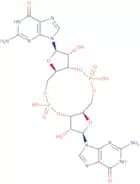
CAS :Cyclic diguanosine monophosphate (c-di-GMP) is a nucleotide that is involved in bacterial cell signaling. It has been shown to be essential for the formation of bacterial biofilms and plays an important role in the development of infectious diseases. c-di-GMP is synthesized from guanosine triphosphate through a series of enzymatic reactions and then hydrolyzed by cyclic diguanosine monophosphatase, which leads to its termination as a second messenger. c-di-GMP interacts with proteins that regulate the expression of genes involved in biofilm formation, motility, and virulence. The synthesis and hydrolysis of c-di-GMP are regulated by multiple enzymes, including protein phosphatases, that control cellular physiology such as biofilm formation.Formule :C20H24N10O14P2Degré de pureté :Min. 95%Masse moléculaire :690.41 g/mol3'-O-tert-Butyldiphenylsilyl-2'-O-methyluridine
3'-O-tert-Butyldiphenylsilyl-2'-O-methyluridine is a novel nucleoside with antiviral and anticancer properties. It has been shown to inhibit the growth of human tumor cells in culture and induce apoptosis, as well as inhibit viral replication. 3'-O-tert-Butyldiphenylsilyl-2'-O-methyluridine is an analogue of uridine, which can be used for the synthesis of DNA or RNA. The phosphate group is attached to the 3' carbon on the sugar moiety. This nucleoside has been modified from a natural ribonucleoside by substitution of a tertiary butylphenylsilyl group at the 2' position with an o-methyl group. 3'-O-tert-Butyldiphenylsilyl-2'-O-methyluridine is supplied as a white powder with purity greater than 99Degré de pureté :Min. 95%2'-Deoxy-N2-DMF-5'-DMT-2'-fluoroguanosine 3'-CE phosphoramidite
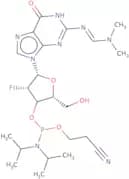
2'-Deoxy-N2-DMF-5'-DMT-2'-fluoroguanosine 3'-CE phosphoramidite is a nucleoside analog that is structurally similar to the natural substrate of DNA polymerase. It can be used in the synthesis of oligonucleotides and as a reagent for the synthesis of modified DNA. The phosphoramidite has antiviral activity and has been shown to have anticancer effects in animal models. It is also used as an activator for deoxyribonucleotide activation, which increases the efficiency of DNA synthesis.
Formule :C43H52FN8O7PDegré de pureté :Min. 95 Area-%Couleur et forme :PowderMasse moléculaire :842.89 g/mol2',3'-Di-O-methylguanosine
2',3'-Di-O-methylguanosine is a nucleoside, which is a chemical compound composed of a nitrogenous base, a five-carbon sugar, and one phosphate group. It is an analog of guanosine that has been modified by replacing the 2' hydroxyl group with a methyl group. This modification prevents the phosphorylation of the monophosphate form to the diphosphate form. This modification also makes 2',3'-Di-O-methylguanosine an activator of DNA polymerase and RNA polymerase. The novel features of this compound make it an excellent candidate for anticancer and antiviral treatments.
Degré de pureté :Min. 95%2-[2-(2-Naphthalenyl)ethoxy]adenosine
CAS :2-[2-(2-Naphthalenyl)ethoxy]adenosine is a structural determinant that belongs to the class of adenosine derivatives. It is an antagonist of adenosine receptors, binding to the A1 receptor with high affinity and blocking the effects of adenosine. 2-[2-(2-Naphthalenyl)ethoxy]adenosine has been shown to have a high affinity for benzyl and thioether groups in its structure, which are important for binding to the A1 receptor. This compound has been used in assays to determine the binding of other compounds with adenosine receptors. 2-[2-(2-Naphthalenyl)ethoxy]adenosine has also been shown as a radioligand for competitive binding studies with human brain membranes.Formule :C22H23N5O5Degré de pureté :Min. 95%Masse moléculaire :437.45 g/mol3'-O-DMT-thymidine
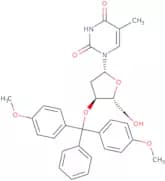
CAS :3'-O-DMT-thymidine is a nucleoside analogue that is synthesized from thymidine. It has been shown to bind to the proviral dna of HIV and inhibit viral replication when present in a complex with the other nucleosides. 3'-O-DMT-thymidine is also stable at high temperatures and binds to carboxamide groups on proteins. This compound has been shown to be effective as a binder for surfaces and membranes, which may be due to its ability to form stable complexes with terminal phosphates. The stability of these complexes can be influenced by the presence of denaturants such as temperature, pH, or ionic strength parameters. 3'-O-DMT-thymidine also forms stable complexes with linkers that are sensitive to thermal denaturation.Formule :C31H32N2O7Degré de pureté :Min. 95%Masse moléculaire :544.6 g/mol8-Aza-7-deaza-2'-deoxy-N2-DMF-5'-O-DMT-guanosine 3'-CE phosphoramidite
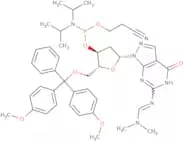
CAS :8-Aza-7-deaza-2'-deoxy-N2-DMF-5'-O-DMT-guanosine 3'-CE phosphoramidite is a novel monophosphate derivative of 2' deoxyN2,8-diaminofluorene 5'-O-(4,4′-dimethoxytrityl) guanosine. It can be used as an activator in DNA synthesis or as a precursor for the synthesis of other modified purines and pyrimidines. This compound has been shown to have anticancer activity in mice. It also has antiviral effects against HIV and HSV1. 8-Aza-7-deaza-2'-deoxyN2,8-diaminofluorene 5'-O-(4,4′dimethoxytrityl) guanosine 3′ CE phosphoramidite is soluble in methanol and ethanol andFormule :C43H53N8O7PDegré de pureté :Min. 95%Couleur et forme :PowderMasse moléculaire :824.9 g/mol6-O-Benzyl-2'-deoxyguanosine
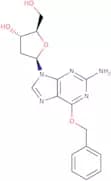
CAS :6-O-Benzyl-2'-deoxyguanosine is a synthetic nucleoside analog that inhibits the synthesis of DNA. It is used in animal studies as a pancreatic carcinogen, and has been shown to inhibit tumor growth in mice. This drug specifically binds to DNA at the O6 position of guanine and methylates the adjacent cytosine residue, thereby preventing synthesis of DNA. 6-O-Benzyl-2'-deoxyguanosine also inhibits the activity of an enzyme called methyltransferase, which converts S-adenosylmethionine into S-adenosylhomocysteine, an intermediate in one of the pathways that produce methionine from homocysteine. This inhibition leads to an accumulation of methionine and its metabolites, including homocysteine and cystathione beta synthase, which can cause cell death.Formule :C17H19N5O4Degré de pureté :Min. 95%Masse moléculaire :357.36 g/mol

![1,3-Dimethyl-5-[4-(4,4,5,5-tetramethyl-[1,3,2]dioxaborolan-2-yl)-benzyl]-pyrimidine-2,4,6-trione](/_next/image/?url=https%3A%2Fstatic.cymitquimica.com%2Fproducts%2F3D%2Fthumb-webp%2FND44283.webp&w=3840&q=75)





![2-[2-(2-Naphthalenyl)ethoxy]adenosine](/_next/image/?url=https%3A%2Fstatic.cymitquimica.com%2Fproducts%2F3D%2Fthumb-webp%2FNN16559.webp&w=3840&q=75)