Nucléosides
3569 produits trouvés pour "Nucléosides"
4-Amino-6-methyl-8-(2'-deoxy-b-D-ribofuranosyl)-7-pteridone
CAS :4-Amino-6-methyl-8-(2'-deoxy-b-D-ribofuranosyl)-7-pteridone (4AMD) is an adenosine analog that is fluorescent. 4AMD is not hydrolyzed by adenosine deaminase and has a higher affinity for the A1 receptor than for the A2a receptor. This makes it a useful probe for the study of adenosine mediated, yields, and analogs. The fluorescence properties of 4AMD were studied in different solvents at various temperatures to monitor the interaction of 4AMD with catalysis. The monomeric form of 4AMD was used to measure its fluorescence properties.Formule :C12H15N5O4Degré de pureté :Min. 95%Masse moléculaire :293.28 g/mol3',5'-Di-O-acetyl-N4-benzoyl-2'-deoxycytidine
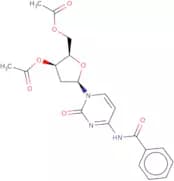
3',5'-Di-O-acetyl-N4-benzoyl-2'-deoxycytidine is a novel, phosphoramidite monophosphate nucleoside. It is synthesized by reacting deoxydinucleosides with 3',5'-di-O-acetyl-N4-benzoyl-2'-deoxycytidine in the presence of a coupling agent. The product has been shown to be an excellent activator for DNA polymerases and may have antiviral effects. The chemical name of this compound is 2',3'-dideoxyadenosine 5' -triphosphate N4 -(beta, beta, beta, beta,-triethoxypropionyl) benzoyl ester.
Formule :C20H21N3O7Degré de pureté :Min. 95%Masse moléculaire :415.41 g/mol3'-Azido-5'-O-tert-butyldimethylsilyl-2',3'-dideoxy-N2-isobutyrylguanosine
CAS :3'-Azido-5'-O-tert-butyldimethylsilyl-2',3'-dideoxy-N2-isobutyrylguanosine is a novel nucleoside phosphoramidite. The 3'-azido group can be used to protect the 5' hydroxyl group during phosphitylation, which is essential for the synthesis of modified nucleosides. The 2',3'-dideoxy configuration ensures that the sugar moiety is not cleaved from the base during polymerization, and that no undesired side reactions occur during purification. This product has been shown to have antiviral and anticancer activity in vitro.
Formule :C20H32N8O4SiDegré de pureté :Min. 95%Masse moléculaire :476.61 g/mol4',5'-Didehydro-5'-deoxy-2'-O-methyluridine
CAS :4',5'-Didehydro-5'-deoxy-2'-O-methyluridine is a novel nucleoside phosphoramidite. It is a monophosphate, high purity and high quality. 4',5'-Didehydro-5'-deoxy-2'-O-methyluridine is an activator of DNA polymerase and can be used in the synthesis of DNA. 4',5'-Didehydro-5'-deoxy-2'-O-methyluridine also has antiviral properties and can be used to synthesize deoxyribonucleosides. It has been modified to have a diphosphate group at the 5' end, which allows it to be incorporated into DNA during synthesis.
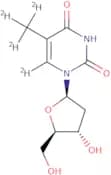
Formule :C11H13NO5Degré de pureté :Min. 95%Masse moléculaire :239.22 g/molThymidine-a,a,a,6-D4
CAS :Produit contrôléThymidine-a,a,a,6-D4 is a nucleoside analogue that inhibits the replication of the hepatitis B virus. It is an analogue of thymidine and is activated by phosphorylation to its active form. This drug prevents viral replication by inhibiting early events in the viral life cycle. Thymidine-a,a,a,6-D4 has been shown to inhibit the synthesis of viral DNA and to inhibit the incorporation of thymidine into newly synthesized DNA. Thymidine-a,a,a,6-D4 also inhibits telbivudine resistance mutations in vitro.
Formule :C10H10N2O5D4Degré de pureté :Min. 95%Masse moléculaire :246.25 g/mol2,5'-Anhydro-5,6-didehydro-2'-deoxy-2',2'-difluorouridine
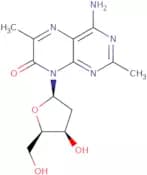
2,5'-Anhydro-5,6-didehydro-2'-deoxy-2',2'-difluorouridine is a novel ribonucleoside that has been synthesized as a phosphoramidite. It is an anticancer agent with antiviral and antiretroviral properties. The 2,5'-Anhydro-5,6-didehydro-2'-deoxy-2',2'-difluorouridine is a modified nucleoside that has the potential to be used in the treatment of certain cancers. It can also be used to inhibit viral replication by inhibiting RNA synthesis. This compound inhibits the enzyme diphosphate kinase, which converts ATP into ADP and phosphate. This leads to an accumulation of ADP in cells and inhibition of DNA synthesis.Formule :C9H10F2N2O5Degré de pureté :Min. 95%Masse moléculaire :264.18 g/mol4-Amino-2,6-dimethyl-8-(2'-deoxy-b-D-ribofuranosyl)-7-pteridone
CAS :4-Amino-2,6-dimethyl-8-(2'-deoxy-b-D-ribofuranosyl)-7-pteridone is a fluorescent probe that can be used to monitor nucleic acid synthesis. It is an analog of adenosine and interacts with the enzyme RNA polymerase in a process that is mediated by the adenosine receptor, which leads to termination of transcription. This compound has been shown to yield high fluorescence yields at room temperature and has minimal interaction with other monomers or dimers. 4-Amino-2,6-dimethyl-8-(2'-deoxy-b-D-ribofuranosyl)-7-pteridone can be used as a probe for monitoring DNA synthesis in vitro and in vivo.Formule :C13H17N5O4Degré de pureté :Min. 95%Masse moléculaire :307.31 g/molN6-Benzoyl-5'-O-DMT-2'-O-(2-methylacetamido)-adenosine 3'-CE phosphoramidite
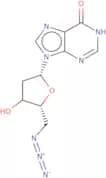
N6-Benzoyl-5'-O-DMT-2'-O-(2-methylacetamido)-adenosine 3'-CE phosphoramidite is a modified nucleoside that is used in the synthesis of DNA. It is an activator for antiviral and anticancer drugs, as well as a ribonucleoside monophosphate, diphosphate, or deoxyribonucleoside. N6-Benzoyl-5'-O-DMT-2'-O-(2-methylacetamido)-adenosine 3'-CE phosphoramidite has been shown to have a novel anticancer activity.Degré de pureté :Min. 95%5'-Azido-2',5'-dideoxyinosine
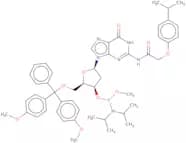
CAS :5'-Azido-2',5'-dideoxyinosine is a novel nucleoside which has been synthesized to investigate its anticancer and antiviral properties. 5'-Azido-2',5'-dideoxyinosine is an activator of ribonucleosides and deoxyribonucleosides, converting them into the corresponding monophosphate or diphosphate form. This product can be used as a building block for the synthesis of phosphoramidites and modified nucleosides. 5'-Azido-2',5'-dideoxyinosine has shown activity against cancer cells in vitro, in particular leukemia cell lines. It also has antiviral activity against HIV, herpes simplex virus type 1, and human cytomegalovirus (HCMV).Formule :C10H11N7O3Degré de pureté :Min. 95%Masse moléculaire :277.24 g/mol2'-Deoxy-5'-O-DMT-N2-(4-isopropylphenoxyacetyl)guanosine 3'-Me phosphoramidite
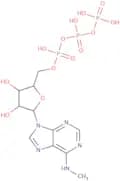
2'-Deoxy-5'-O-DMT-N2-(4-isopropylphenoxyacetyl)guanosine 3'-Me phosphoramidite is a modified nucleoside monophosphate with antiviral and anticancer activity. It is synthesized by the reaction of 2'-deoxyguanosine 5'-O-DMT (dG) with 4-isopropylphenoxyacetic acid in the presence of triethylamine and tetrazole. The product is purified by crystallization. This compound has been shown to inhibit replication of human immunodeficiency virus type 1 (HIV-1) in human lymphocytes, which may be due to its ability to inhibit the synthesis of DNA, RNA, or both.Formule :C49H59N6O9PDegré de pureté :Min. 95%Masse moléculaire :907.03 g/molN6-Methyladenosine-5'-triphosphate sodium salt - 10 mM aqueous solution
CAS :Modulator of P2Y receptors
Formule :C11H18N5O13P3Degré de pureté :Min. 95%Masse moléculaire :521.21 g/mol8-(2-Amino-1-methyl-6-phenylimidazo[4,5-b]pyridyl)-2'-deoxyguanosine
CAS :8-(2-Amino-1-methyl-6-phenylimidazo[4,5-b]pyridyl)-2'-deoxyguanosine (8-APdG) is a mutagen that induces genotoxic effects and mutations in mammalian cells. It has been shown to react with DNA to form covalent complexes and induce point mutations or transversions. 8-APdG has been found in the environment as a result of environmental pollution by polycyclic aromatic hydrocarbons and tobacco smoke. 8-APdG also induces genetic damage in human lymphoblastoid cells in vitro, including mutations at the HPRT locus.Formule :C23H23N9O4Degré de pureté :Min. 95%Masse moléculaire :489.49 g/molDecanoyl coenzyme A, free acid
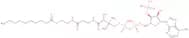
CAS :Decanoyl CoA, free acid, is a substrate of the enzyme fatty acid synthetase. This enzyme catalyzes the formation of long-chain fatty acids from acetyl-CoA and malonyl-CoA. The product decanoyl-CoA is then used in other metabolic pathways to synthesize acyl chains for phospholipids, triglycerides, and cholesterol. Decanoyl CoA has been shown to inhibit carnitine acyltransferase activity in rat liver microsomes. It also inhibits mitochondrial beta-oxidation by competing with carnitine at the level of the carnitine acyltransferase reaction. The expression plasmid pET21a was used to express the decanoyl CoA synthetase protein in Escherichia coli cells grown in LB medium with aminotransferase activity as a measure of decanoyl CoA synthetase activity. Decanoyl CoAFormule :C31H54N7O17P3SDegré de pureté :Min. 95%Masse moléculaire :921.78 g/molT-705RTP sodium
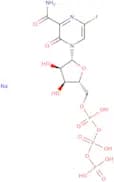
CAS :T-705RTP sodium is a novel, modified diphosphate nucleotide that activates the formation of DNA and RNA. It is used as an antiviral and anticancer agent. T-705RTP sodium has been shown to be more potent than adenosine in inhibiting viral replication and has cytotoxic effects on cancer cells. The chemical formula for T-705RTP sodium is C6H14N5O7P.Formule :C10H15FN3O15P3·xNaDegré de pureté :Min. 95%2'-Azido-2'-deoxyuridine-5'-triphosphate
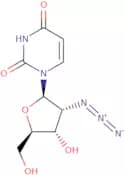
CAS :2'-Azido-2'-deoxyuridine-5'-triphosphate is a nucleotide analog that is inactive in the presence of an intact receptor. It is an allosteric inhibitor of many DNA polymerases and causes cell growth inhibition. 2'-Azido-2'-deoxyuridine-5'-triphosphate binds to the phosphate group of ATP and inhibits protein synthesis. In particular, it inhibits the polymerase activity of herpes simplex virus type 1 by binding to the active site of the enzyme, thereby preventing viral replication. 2'-Azido-2'-deoxyuridine-5'-triphosphate also binds to cytosolic Ca2+ and activates Ca2+ signaling pathways, leading to cell death.Formule :C9H14N5O14P3Degré de pureté :Min. 95%Masse moléculaire :509.15 g/mol9-(b-D-Arabinofuranosyl)adenine 5'-triphosphate triethyammonium salt
9-(B-D-arabinofuranosyl)adenine 5'-triphosphate triethyammonium salt is a nucleoside analog that inhibits viral replication by inhibiting the DNA polymerase enzyme. It has been shown to be safe and well tolerated in healthy volunteers and patients with cancer, including those with advanced solid tumors. 9-(B-D-arabinofuranosyl)adenine 5'-triphosphate triethyammonium salt is an antiviral agent that has been shown to be active against HIV, herpes simplex virus type 1, herpes simplex virus type 2, cytomegalovirus, and varicella zoster virus. This compound also has anticancer properties and has been shown to inhibit tumor cell proliferation in vitro.Degré de pureté :Min. 95%Cholest-5-en-3-ol, 3-(6-(((2-cyanoethoxy)(diisopropylamino)phosphino)oxy)hexyl)carbemate
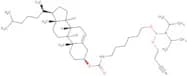
CAS :Cholest-5-en-3-ol, 3-(6-(((2-cyanoethoxy)(diisopropylamino)phosphino)oxy)hexyl)carbemate, is a novel nucleotide analog that has antiviral and anticancer properties. It is synthesized by the reaction of 2,4,6-trihydroxyacetophenone with 6-(chlorohexyl)-1,3-bis(2-(cyanoethoxy)phosphinooxy)hexane in the presence of tetrakis(triphenylphosphine), palladium chloride, and potassium carbonate. Cholest-5-en-3-ol, 3-(6((2-(cyanoethoxy)(diisopropylamino))(phosphino)oxy)(hexyl))carbamate may be used as a monophosphate or phosphoramidite to make DNA or RNA. This compound has been shown toDegré de pureté :Min. 95%2-Cyanoadenosine
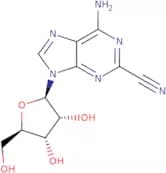
CAS :2-Cyanoadenosine is a derivative of adenosine. It is an inhibitor of the enzyme adenosine deaminase, which converts adenosine to inosine. 2-Cyanoadenosine prevents the conversion of ATP to AMP and may be useful for treating neurological disorders. 2-Cyanoadenosine has been shown to have cardiovascular effects, such as increasing the force of contraction and relaxation in isolated rat hearts.Degré de pureté :Min. 95%3'-epi-5-chloro-2'-deoxyuridine
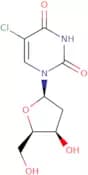
CAS :3'-epi-5-chloro-2'-deoxyuridine is a nucleotide analog that has been shown to inhibit the growth of cells in tissue culture. It is not active against bacteria, but can be used as an antineoplastic agent for the treatment of cancer. 3'-epi-5-chloro-2'-deoxyuridine is metabolized by a number of enzymes, including mononucleotide reductase, thymidylate synthase, and cytosine deaminase. The reaction mechanism for this drug has been studied using nuclear dna polymerases and proteases. The metabolism of 3'-epi-5-chloro-2'-deoxyuridine results in its incorporation into DNA by means of an enzymatic reaction with DNA polymerase. The incorporation of the analog into DNA leads to cell death due to lysis or inhibition of protein synthesis.
Formule :C9H11ClN2O5Degré de pureté :Min. 95%Masse moléculaire :262.65 g/mol2'-O-Allylguanosine
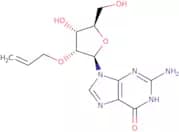
CAS :2'-O-Allylguanosine is an intermediate in the synthesis of 2,6-diaminopurine riboside. It is synthesized from allyl chloride and guanosine by an allylation reaction. The yield for this reaction is high, which makes it a useful synthon. Deamination of the product yields 2'-O-allylguanosine 5'-monophosphate, which can be converted to 2',6-diaminopurine riboside by hydrolysis with phosphoric acid. This intermediate is used in research on nucleic acids sequences and hydrogen bonding.Formule :C13H17N5O5Degré de pureté :Min. 95%Couleur et forme :White PowderMasse moléculaire :323.3 g/mol






![8-(2-Amino-1-methyl-6-phenylimidazo[4,5-b]pyridyl)-2'-deoxyguanosine](/_next/image/?url=https%3A%2Fstatic.cymitquimica.com%2Fproducts%2F3D%2Fthumb-webp%2FNA04649.webp&w=3840&q=75)