Nucléosides
Les nucléosides sont des building blocks fondamentaux des acides nucléiques, composés d'une base azotée attachée à une molécule de sucre. Dans cette section, vous trouverez une large gamme de nucléosides essentiels pour la recherche en biologie moléculaire, biochimie et pharmacologie. Ces composés jouent des rôles cruciaux dans la synthèse de l'ADN et de l'ARN, et sont également vitaux dans divers processus métaboliques. Les nucléosides sont utilisés pour étudier le matériel génétique, développer des thérapies antivirales et anticancéreuses, et comprendre les mécanismes cellulaires. Chez CymitQuimica, nous proposons des nucléosides de haute qualité pour soutenir vos besoins en recherche et développement, garantissant pureté et fiabilité pour vos applications expérimentales.
3567 produits trouvés pour "Nucléosides"
Trier par
Degré de pureté (%)
0
100
|
0
|
50
|
90
|
95
|
100
L-Cystine dihydrochloride
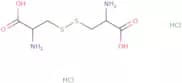
CAS :<p>L-Cystine dihydrochloride is a white crystalline powder that is used to treat acute radiation syndrome. It is an amino acid that contains two cysteine residues linked by a disulfide bond. Cysteine is necessary for the formation of proteins and peptides, which are important in antibody production. L-Cystine dihydrochloride has been shown to increase the uptake of radioactive substances in cells. This drug also increases the amount of bioactive molecules such as glutathione, which protects cells from oxidative damage caused by radiation. The effects of L-cystine dihydrochloride are dose dependent, with higher doses leading to greater cellular death.<br>The unpaired cysteines in L-cystine dihydrochloride can react with each other, forming a new molecule called S-thiolactone. This reaction is catalyzed by porcine pancreatic lipase (PPLL), a membrane protein found in pancreat</p>Formule :C6H14Cl2N2O4S2Degré de pureté :Min. 95%Masse moléculaire :313.2 g/molN2-Isobutyryl-2'-O-(2-methylacetamido)guanosine
<p>N2-Isobutyryl-2'-O-(2-methylacetamido)guanosine is a modified nucleoside with antiviral, anticancer and antiretroviral activity. It is a novel monophosphate that has been shown to be effective against hepatitis B and HIV. N2-Isobutyryl-2'-O-(2-methylacetamido)guanosine inhibits the synthesis of viral DNA by acting as an activator of DNA polymerases.</p>Degré de pureté :Min. 95%Adenosine 2',3'-O-phenylboronate
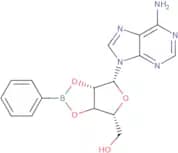
CAS :<p>Adenosine 2',3'-O-phenylboronate is a nucleoside that is used as an antiviral and anticancer drug. It is used in the treatment of AIDS, leukemia, and lymphoma. Adenosine 2',3'-O-phenylboronate inhibits viral replication by preventing the formation of viral DNA. This nucleoside has also been shown to have antitumor properties and can be used to inhibit cancer cell growth.<br>br>br><br>Adenosine 2',3'-O-phenylboronate can be modified with phosphoramidites, which allow for the synthesis of modified adenosine 2',3'-O-phenylboronates. These modifications include substituting one or more hydrogen atoms with a variety of substituents, including fluorines, chlorine, bromines, nitro groups, alkyl groups, alkoxy groups and others. This modification provides for a novel type of anti</p>Formule :C16H16BN5O4Degré de pureté :Min. 95%Masse moléculaire :353.14 g/molN4-Benzoyl-5'-O-DMT-2'-O-(2-methoxyethyl)-5-methylcytidine 3'-O succinate TEA salt
<p>N4-Benzoyl-5'-O-DMT-2'-O-(2-methoxyethyl)-5-methylcytidine 3'-O succinate TEA salt is a novel, modified nucleoside analogue that is used as an antiviral agent. It inhibits the synthesis of viral DNA and RNA by competing with natural nucleosides during the process of nucleic acid synthesis. The drug binds to the enzyme ribonucleotide reductase, which is essential for DNA synthesis. N4-Benzoyl-5'-O-DMT-2'-O-(2-methoxyethyl)-5-methylcytidine 3'-O succinate TEA salt has been shown to be effective in treating patients with cancer.</p>Degré de pureté :Min. 95%9-(2'-Deoxy-2'-fluoro-b-D-ribofuranosyl)-2-fluoroadenine
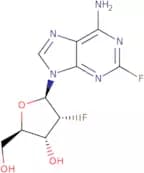
CAS :<p>9-(2'-Deoxy-2'-fluoro-b-D-ribofuranosyl)-2-fluoroadenine is a modified nucleoside that is used as an antiviral and anticancer agent. It acts as an activator for the synthesis of DNA, RNA, and protein. 9-(2'-Deoxy-2'-fluoro-b-D-ribofuranosyl)-2-fluoroadenine also inhibits the growth of cancer cells by interfering with the division process. This drug is synthesized from 9-(5'-deoxy-5'-iodo-b-D-ribofuranosyl) -2,6 difluoro adenine (diFdA). The Ribonucleosides are then prepared in a similar manner to other nucleosides by using phosphoramidites. The product is then purified using HPLC.</p>Formule :C10H11F2N5O3Degré de pureté :Min. 95%Couleur et forme :White PowderMasse moléculaire :287.23 g/molThymidine-5'-diphosphate-6-deoxy-D-allose
<p>Thymidine-5'-diphosphate-6-deoxy-D-allose (TDP) is a high quality monophosphorylated nucleoside that is used as an activator, anticancer, and antiviral agent. TDP has been modified to improve the efficacy and safety of cancer treatments by enhancing the cytotoxicity of chemotherapeutics. TDP also has antiviral properties and can be used in the treatment of HIV infections by inhibiting viral replication.</p>Degré de pureté :Min. 95%Adenosine 5′-O-(1-thiotriphosphate) sodium, mixture of R and S isomers
<p>Please enquire for more information about Adenosine 5′-O-(1-thiotriphosphate) sodium, mixture of R and S isomers including the price, delivery time and more detailed product information at the technical inquiry form on this page</p>Formule :C10H16N5O12P3S•Na3Degré de pureté :Min. 95%Masse moléculaire :592.25 g/mol2'-Amino-2'-deoxycytidine
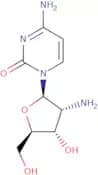
CAS :<p>2'-Amino-2'-deoxycytidine is a modified nucleoside, based on cytidine. In this compound 2'-hydroxyl group has been replaced by an amino group, which can change hydrogen bonding patterns potentially affecting how it interacts with biomolecules.</p>Formule :C9H14N4O4Degré de pureté :Min. 95%Couleur et forme :PowderMasse moléculaire :242.24 g/molN4-Acetyl-2'-O-tert-butyldimethylsilylcytidine
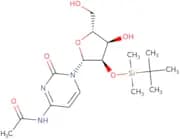
CAS :<p>N4-Acetyl-2'-O-tert-butyldimethylsilylcytidine is a novel nucleoside that has been extensively studied for its anticancer and antiviral properties. It is a modified nucleoside that inhibits the production of DNA, RNA, and protein. This product is also used as an activator in the synthesis of oligonucleotides. N4-Acetyl-2'-O-tert-butyldimethylsilylcytidine can be used in vitro to study the effects of different cancer cells on DNA replication. It has been shown to inhibit the growth of human leukemia cells in culture.</p>Formule :C17H29N3O6SiDegré de pureté :Min. 95%Couleur et forme :PowderMasse moléculaire :399.51 g/molOleoyl coenzyme A lithium salt
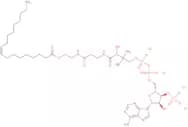
CAS :<p>Oleoyl coenzyme A lithium salt is a fatty acid that belongs to the class of organic compounds known as aliphatic acyl-coenzyme A. It is synthesized by the enzyme synthetase and can be used to diagnose cascading, linear response, and aldehyde synthesis in carbon nanotubes. Oleoyl coenzyme A lithium salt has been shown to bind to sephadex G-100 and immobilize it on a surface. This immobilization process aids in the diagnosis of various diseases such as diabetes mellitus, cancer, and cardiovascular problems. The chloride anion present in oleoyl coenzyme A lithium salt buffers and stabilizes the pH levels during this process. Oleoyl coenzyme A lithium salt also binds to multi-walled carbon nanotubes (MWNTs) due to its hydrophobic nature, which aids in the detection of markers such as lipids or proteins using immunological techniques.</p>Formule :C39H68N7O17P3S·xLiDegré de pureté :Min. 95%Masse moléculaire :1,031.98 g/mol[(2S,6R)-6-{Thymin-1-yl}-4-tritylmorpholin-2-yl]methyl dimethyl-phosphoramidochloridate
CAS :<p>[(2S,6R)-6-{Thymin-1-yl}-4-tritylmorpholin-2-yl]methyl dimethyl-phosphoramidochloridate (TMP) is a Ribonucleoside and Deoxyribonucleoside Activator that is synthesized from Thymine (T), Thymidine (Td), and Phosphoramidites. TMP is a novel synthetic derivative of thymine with the ability to activate DNA synthesis reactions. TMP has been shown to provide high quality nucleotides with high purity in a single step reaction.</p>Formule :C31H34ClN4O5PDegré de pureté :Min. 95%Couleur et forme :White To Light (Or Pale) Red SolidMasse moléculaire :609.05 g/molRibavirin 5'-triphosphate triethylammonium salt - 10 mM aqueous solution
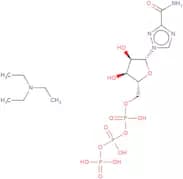
CAS :<p>Ribavirin triphosphate is the biologically active metabolite of antiviral nucleoside analog ribavirin. In cells, the prodrug ribavirin gets triphosphorylated and in it inhibits viral RNA polymerases, interfering with the synthesis of newly formed RNA.</p>Formule :C8H15N4O14P3•(C6H15N)xDegré de pureté :Min. 95 Area-%Couleur et forme :Clear LiquidMasse moléculaire :789.735'-C-Methylcytidine
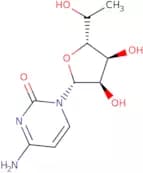
CAS :<p>5'-C-Methylcytidine is an analogue of cytidine</p>Degré de pureté :Min. 95%4'-α-C-Methylcytidine
CAS :<p>4'-a-C-Methylcytidine is a nucleoside that is synthesized from 4'-a-C-methyluridine. It has antiviral and anticancer properties, and has been shown to be a potent activator of the immune system. The modified nucleosides in this compound are thought to be less toxic than other cytotoxic agents. 4'-a-C-Methylcytidine is also used as a building block for the synthesis of DNA, RNA and phosphoramidites.</p>Degré de pureté :Min. 95%Couleur et forme :PowderMasse moléculaire :257.24 g/molDMT-2′O-TC-rC(ac) Phosphoramidite
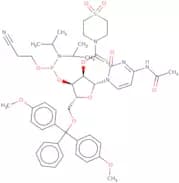
CAS :<p>DMT-2²O-TC-rC(ac) Phosphoramidite is a novel nucleoside that has been modified with a 2,2'-O, TC-rC(ac) group. This compound is an analogue of the natural nucleoside cytidine and can be used in both DNA and RNA synthesis. DMT-2²O-TC-rC(ac) Phosphoramidite is phosphorylated by ATP to form diphosphate, which is then incorporated into DNA or RNA. The CAS number for this compound is 1219089-87-8.</p>Formule :C46H57N6O11PS2Degré de pureté :Min. 95%Couleur et forme :PowderMasse moléculaire :965.08 g/mol(-)-Emtricitabine triphosphate sodium salt
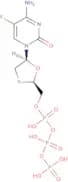
CAS :<p>Emtricitabine is a nucleoside reverse transcriptase inhibitor with activity against human immunodeficiency virus and hepatitis B virus</p>Formule :C8H9FN3Na4O12P3SDegré de pureté :Min. 95%Masse moléculaire :575.11 g/molUridine diphosphate choline (UDPC) sodium
CAS :<p>Uridine diphosphate choline (UDPC) sodium is a nucleotide that is used as a phosphoramidite for DNA synthesis. The chemical formula for UDPC is C8H14N4O8P. The activation of the molecule occurs in acidic conditions, which may be due to the formation of an amide bond between the terminal phosphate and the amino group on the phosphorylcholine. This same reaction can also occur in alkaline conditions. UDPC has been shown to inhibit viral replication, including HIV-1, by blocking reverse transcription of viral RNA into DNA. It also has anticancer effects, as it inhibits cell proliferation and induces apoptosis in cancer cells. UDPC does not have any known side effects or toxicity.</p>Formule :C14H25N3O12P2•NaDegré de pureté :Min. 95%Couleur et forme :PowderMasse moléculaire :512.3 g/molGuanosine5'-diphosphate
CAS :<p>Pyruvate kinase substrate</p>Formule :C10H15N5O11P2Degré de pureté :Min. 95%Couleur et forme :PowderMasse moléculaire :443.2 g/molN6-Benzoyl-2'-deoxy-3'-O-DMT-adenosine 5'-CE phosphoramidite
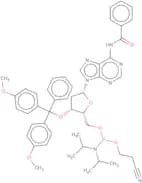
CAS :<p>A 5'-3’ “reverse” (or “inverse”) amidites</p>Formule :C47H52N7O7PDegré de pureté :Min. 95%Masse moléculaire :857.93 g/mol2-Fluoroadenosine
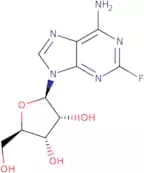
CAS :<p>2-Fluoroadenosine is a nucleoside that has shown high resistance to the enzyme cyclase. This property may be due to its structural and conformational properties, which are different from those of adenosine. 2-Fluoroadenosine has been shown to inhibit the synthesis of ATP in ventricular myocardium and fat cells, as well as increase levels of adenylate kinase in blood. It has also been shown to have potential as a drug target for autoimmune diseases, such as multiple sclerosis. 2-Fluoroadenosine can be used for biochemical and pharmacokinetic studies because it is rapidly metabolized by the liver and excreted in urine.<br>2-Fluoroadenosine can also be used to measure changes in the ratio of adenylate kinase:adenylate kinase reductase (AKAR) in blood plasma.</p>Formule :C10H12FN5O4Degré de pureté :Min. 95%Couleur et forme :White Slightly Yellow PowderMasse moléculaire :285.23 g/mol





![[(2S,6R)-6-{Thymin-1-yl}-4-tritylmorpholin-2-yl]methyl dimethyl-phosphoramidochloridate](/_next/image/?url=https%3A%2Fstatic.cymitquimica.com%2Fproducts%2F3D%2Fthumb-webp%2FNT58203.webp&w=3840&q=75)